
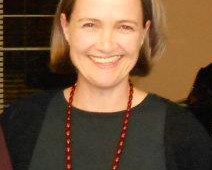
Johannesburg-based composer Dr Clare Loveday is the Composer-in-Residence for the 2014 Johannesburg International Mozart Festival (JIMF), which takes place from 25 January to 9 February.
In an effort to foster the development of new South African music, JIMF commissions a local composer each year, to create a new piece of work for premiere at the Festival, and to lend their expertise to the programme. Clare Loveday is an obvious choice for 2014, as a multi-facetted composer and active proponent of the theory and practice of both classical and new music.
Striving to convey through music the complications of life in a post-colonial society, Loveday’s works – which have been performed on four continents – have been described by critics in turn as ‘obstinate and fierce, big-boned and raw’, ‘subtle’ and ‘elusive’. She is said to have ‘quite individual post-tonal harmonic language’ and to write works that are ‘exciting to listen to and yet obviously also enjoyable to play’.
Loveday completed a Bachelor of Music at the University of the Witwatersrand in 1990 and was awarded her Doctorate of Music in 2009. After her undergraduate studies Loveday worked as a pianist, playing in musicals and theatre venues around South Africa and on cruise ships on the Southern African oceans. During this time she also worked in the advertising industry as a jingle writer, freelanced at corporate events as a performer and musical director, and taught piano privately and at Sacred Heart College.
A hand injury put an end to Loveday’s performing career causing her to temporarily change direction, working as a freelance copywriter and copy editor in both advertising and academics; and also for a time as co-ordinator for the National Research Foundation’s Travelling Institute for Music Research.
In the late 1990s, Loveday returned to academic life as a part-time lecturer in music theory, embarking on a Masters in Composition in 2000, through which she became increasingly involved in new music. As she became more prolific, she became known particularly for her innovations in interdisciplinary and collaborative work, and her works for the ‘straight’ saxophone. Her interest in the instrument had started several years before when she chose to write her first commission (from the Foundation for the Creative Arts, to accompany a commissioned choreographed dance for 1996 Dance Umbrella) for alto saxophone and piano. This instrumentation – chosen for purely practical reasons – marked the beginning of a long-lasting and compositionally productive fascination with the instrument.
Loveday took up a fulltime lectureship in music theory and composition at Wits University in 2004, and began work on her D. Mus in composition. It was during this time that her interest in the saxophone developed into the focus of her doctoral study. One of the early works in her doctorate, Untitled for saxophone quartet, was premiered by the Stockholm Saxophone Quartet in 2006. The years of study finally culminated in Duodectet for 12 saxophones, which was selected from the independent entries for performance at the 2010 International Society of Contemporary Music (ISCM) World New Music Days in Sydney. It was performed at the festival by the Sydney Conservatorium of Music Saxophone Ensemble, conducted by Michael Duke. The same work, arranged for eight saxophones, was performed three days later at the Royal College of Music in London, conducted by Kyle Horch; and at the 2013 Scandinavian Saxophone Festival in Århus, Denmark.
Loveday has been commissioned by many commissioning bodies, performers and creative artists. Her first international commission came from Ensemble Reconsil in Vienna, for whom she wrote Blink, which premiered at the Arnold Schönberg Centre in Vienna in 2007 by the ensemble, with Sabine Zwick and Tomas Schön on soprano and tenor saxophones respectively.
Loveday has worked on numerous collaborations, and relishes the process of working with creative artists from different disciplines. Her years at the Wits School of Arts coincided with a strong focus on and support for interdisciplinary and innovative creative work, which facilitated a number of collaborative projects. Most notable of these was The Collision Project, created with fine artist and scenographer Gerhard Marx who lectured at the time in the Division of Dramatic Arts. Featuring a car wreck with attached string parts, this was a part installation, part concert performance and was described by critics as ‘provocative’ and ‘wickedly innovative’. The work was chosen to represent South Africa at the 2008 World New Music Days festival in Lithuania, but could not be performed due to financial and visa constraints.
Loveday’s other collaborative partners have included Jill Trappler, a Cape Town-based artist, with whom she worked on Arc for solo baritone saxophone in response to Trapplers’ abstract painting Stella Rosa. The Floating Underwater series, a DVD resulting from another collaborative project with Trappler, features virtuoso birbyne player Darius Klisys (the birbyne is a tradition nal Lithuanian reed pipe) and was created with video artist Nick Potgieter. The DVD was selected as part of the Waters – Vesiä – Amanzi exhibition to tour Finland in 2011. Clare has also worked with Nandipha Mnthambo, the 2011 Standard Bank Young Artist of the Year, on a number of projects, including Paso Doble, a reinterpretation of the traditional Spanish dance that accompanied the artist’s video of the same name; and Origami on the Gariep, a solo piano work for a short movie as part of the Puma Films4Peace project.
Although composition is her main focus, Loveday is also developing research interests, most particularly in the straight saxophone and issues of identity around art music composition in the global south. She has enjoyed post-doctoral research fellowships at Wits University and the University of KwaZulu-Natal and is currently with North-West University. She is actively involved in the new music scene in South Africa, served for many years on the executive committee of NewMusic South Africa, and is involved in SoundMindLab.
Presented in partnership with the Goethe Institut in Johannesburg, a Sound Installation Concert and Panel Discussion will feature a new commission by Loveday. Through collaboration with Waldo Alexander (violin) and Nandipha Mntambo (artist), the work considers shifting and distorting memories, most obviously experienced in the dark difficulties of love (thus working within the scope of the JIMF theme ‘Un’ aura amorosa – love’s delights and dilemmas’). The work will consist of sculptural elements, as well as a live performer playing music within the installation at scheduled times. A series of contextual formats will allow for reflection on the creative process towards and behind the new work; exploring aspects of performance, compositional aesthetics, interdisciplinarity and pedagogy.
The Final Concert features a performance of Loveday’s composition, ‘Ribbons’ (2013), and the world-premiere of a new piano concerto, commissioned by JIMF and the SAMRO Foundation, entitled ‘Three Portraits of Intimacy’.
“Until now, all my larger-scale works have been performed overseas. It is so exciting to have a work such as the commissioned piano concerto performed to Johannesburg audiences, with a pianist of Florian Uhlig’s calibre and an orchestra made up of musicians I know and deeply admire, with some friends and family in the audience.” says Loveday. She continues, “The collaboration with Nandipha Mntambo is a rare chance to push at creative boundaries in the supportive setting of the Goethe Institute, with the backing of a well-established festival. These are unusual treats for any composer, and ones I intend to relish!”
As always, the JIMF presents a varied programme comprising performances and masterclasses, presented by local and international musicians, giving credence to classical music and allowing room for exploratory practice. In addition to attendance at the performance events, musical enthusiasts are encouraged to take part in the annual ‘Orchestra from Scratch’. Open to anyone who can play a musical instrument (minimum of Grade 3), participation should be arranged through contacting the JIMF office on (011) 447 9264.
A special Post-Festival Valentine’s Concert entitled ‘Love is a Many Splendored Thing’ will be held on Sunday 16 February at the Linder Auditorium at 15:00. Please note the venue change for the Literature/Choreography Concert taking place on 31 January – now at the Wits Space Frame and not Villa Arcadia.
Full details of the programme for the 6th Johannesburg International Mozart Festival (JIMF) are available on the Festival’s website. Venues for this year’s Festival include the Goethe Institut, Linder Auditorium, Musaion Concert Hall, Northwards House, Scott Gym, St. George’s Church, The Bioscope, The Edge at St Mary’s School in Waverley, University Chapel at the University of Pretoria and Villa Arcadia. Tickets (from R80 to R240) are available from Computicket or the JIMF Office, with special prices for senior citizens and students on selected concerts. Please contact (011) 447 9264 or visit www.join-mozart-festival.org for more information, and “like” the Johannesburg International Mozart Festival page on Facebook for regular updates on Festival happenings.
Author: Fiona Gordon from The Famous Idea.
No of Images Uploaded: Two
More Info link: http://www.join-mozart-festival.org/
Twitter:
Facebook: https://www.facebook.com/JOIN.Mozart.Festival

Clare Loveday.
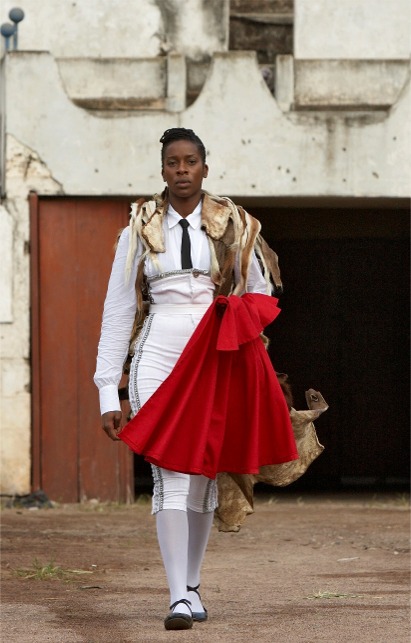
Nandipha Mntambo.
YouTube:
Submit your press release to MyPR.co.za.
Track Your Press Release HERE:
Check Online Visibility
Verify where this release is currently indexed:
