
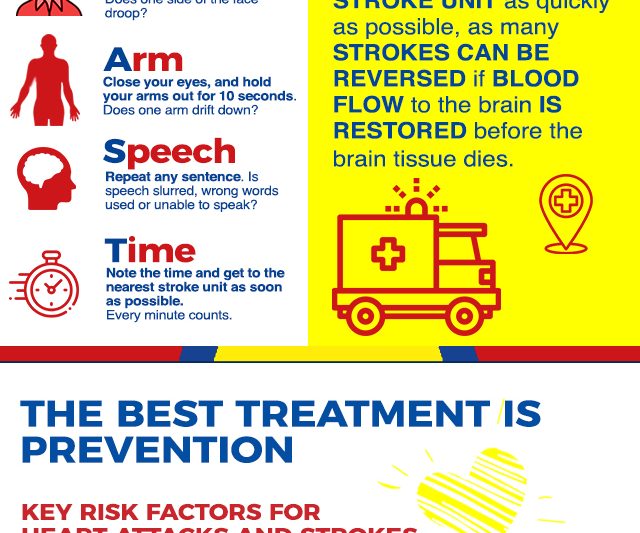
 Strokes are South Africa’s 4th biggest killer overall, and the second biggest killer of women. However, the good news is 80% of deaths by stroke are preventable.
With simple lifestyle changes, you can dramatically reduce your risk of having a stroke. Find out how now:
What is a stroke?
An important part of Stroke Awareness Week is to know what is meant by a ‘stroke’.
A stroke can also be referred to as a ‘brain attack’ because the brain is affected the same way that a heart attack affects the heart.
A brain attack refers to the most common type of stroke – ischaemic stroke. This occurs when blood supply to the brain is interrupted and starved of oxygen. This lack of blood and oxygen damages the brain and can cause a stroke.
The other main type is a haemorrhagic stroke. This is caused by a burst blood vessel within the skull that causes bleeding into or around the brain. It can also happen as the result of a brain aneurysm or abnormally formed blood vessels within the brain.
How can you prevent strokes?
Although you cannot prevent all strokes, the following tips can dramatically reduce your risk.
Reduce your blood pressure
This can be done through lifestyle changes such as:
• Losing weight
• Drinking less alcohol
• Giving up smoking
• Exercising more
• Reducing stress levels
Manage any other underlying conditions
There are more conditions than just hypertension that can increase your risk of a stroke, such as diabetes, high cholesterol and atrial fibrillation.
Although following blood pressure reduction advice is good practice for overall good health, you should also understand your own individual conditions and how they may contribute to your overall risk.
Eat healthily
Unhealthy food can increase blood pressure and cholesterol levels – two risk factors. However, a balanced diet is not just recommended for aiding weight loss or managing other conditions. It is standalone good practice.
The recommended diet for stroke prevention is a low-fat, high-fibre diet – eat plenty of wholegrains, and fruit and vegetables (five a day), and reduce your salt intake to no more six grams a day. Processed foods should also be limited.
The most important thing, however, is that your diet is balanced.
Omega-3 fatty acids assist in decreasing blood pressure, can reduce blood clotting, decrease the risk of stroke and heart failure and may also reduce irregular heartbeats. Lucky Star products are also approved by The Heart and Stroke Foundation of South Africa, against stringent measures and through continuous testing
CLICK HERE to submit your press release to MyPR.co.za.
Track Your Press Release HERE:
Check Online Visibility
Verify where this release is currently indexed:
 President celebrates Adopt-a-School Foundation’s billion rand investment that reaches over 1 million learners
