
As a DIY Investor it is sometimes daunting to expand my portfolio or continue investing in shares that I already own.
After a bumpy ride yesterday my 3 Easy Equities Portfolios are still showing fairly decent growth – My ZAR Account is up 17.89%, my USD Account is up 0.36% and my TFSA Account is up 3.06%
With a tranche of cash just deposited in my Easy Equities Account I have decided that this month I will base my buy decision on the Dividend Yield of 4 stocks – all paying out dividends between 22 June and 22 July.
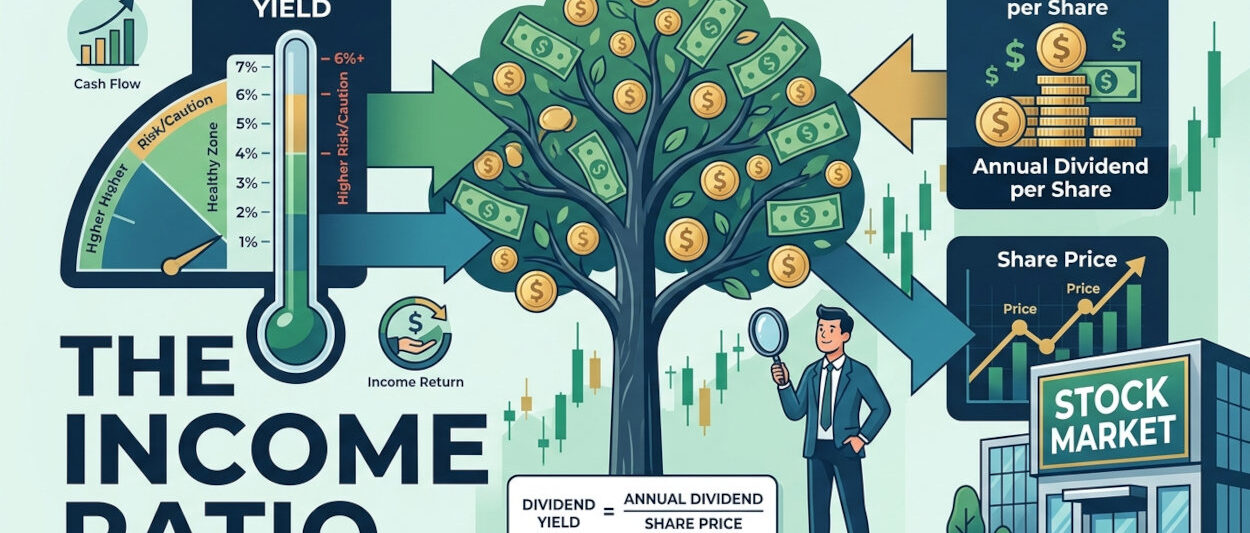
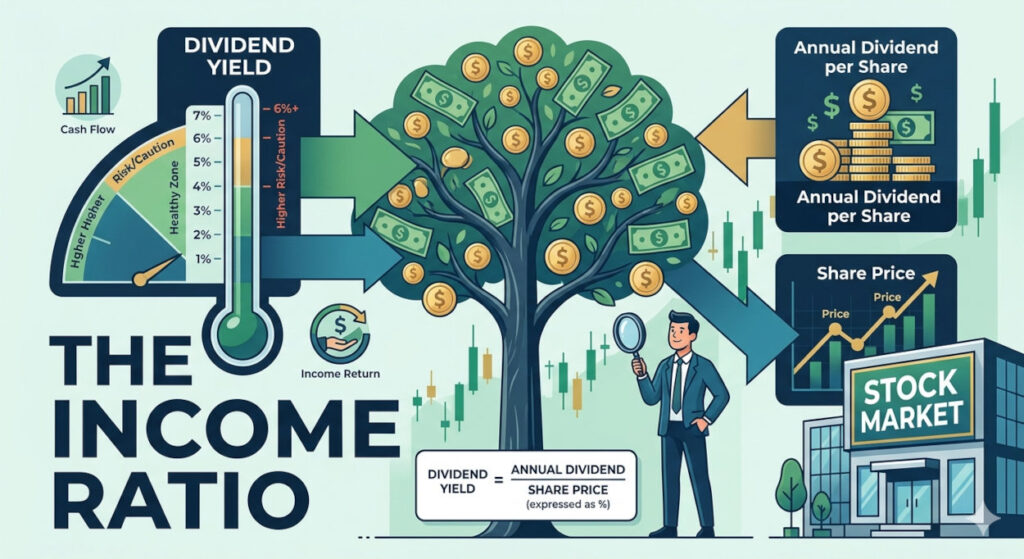
Dividend Yield is simple to calculate – Annual Dividend per Share / Current Price per Share x 100
Dividend Yields:
- Araxi – 3.09%
- Tiger Brands – 5.77%
- Altron – 6.80%
- Datatec – 2.90%
So based on the above, the best dividend return for me will be Altron Shares which are offering a R1.92 dividend per share on a share price currently at R28.20 and a Pay Date of 22 June after an Ex-Date of 17 June.
How do you choose which shares to buy?
By the way if you join +2 million investors on Easy Equities here: you will get R50 – Ts&Cs apply
What dividend yields should show cause for concern
While dividend yields between 2% and 6% are generally considered “good” or healthy, yields that climb significantly above this range – often toward 10% or higher – should be viewed with caution.
An unusually high dividend yield is often not a sign of a generous company, but rather a warning sign known as a “dividend trap” or “value trap”.
Why High Yields Can Be a Red Flag
A dividend yield is calculated by dividing the annual dividend payment by the share price. Because the dividend amount is the numerator and the share price is the denominator, the yield can spike for one of two reasons:
The company increased the dividend: This is typically a positive sign of financial health.
The share price crashed: This is the most common reason for an abnormally high yield. If investors lose confidence in a company’s future profitability, they sell the stock, driving the price down and mathematically forcing the yield upward.
Warning Signs to Watch For
If you see a yield that seems “too good to be true,” investigate these three metrics to assess the risk of a dividend cut:
Yield Thresholds: Historically, yields above 4% have been flagged as higher risk. Research has shown that large-cap companies with yields significantly above this level are statistically much more likely to cut their dividends than those with lower, more stable yields.
Payout Ratio: This measures what percentage of net income is paid out as dividends. A pay out ratio above 80% suggests the company may be overextended, leaving little room to reinvest in growth or pay down debt. If the ratio exceeds 100%, the company is paying out more than it earns, which is inherently unsustainable.
Dividend Coverage Ratio: This indicates how many times a company can pay its current dividend out of net income. A ratio below 1.5 is a common warning sign that a dividend cut might be forthcoming.
Context Matters
Before dismissing a high-yield stock, check the “why” behind the numbers:
- Sector Norms: Certain sectors, like Real Estate Investment Trusts (REITs), are legally required to pay out a large portion of their income (often 90%), which naturally leads to higher yields that may not necessarily signal distress.
- Undervaluation: If a company’s fundamentals are strong, high debt is not an issue, and earnings are stable, a high yield might simply mean the stock is temporarily undervalued rather than fundamentally broken.
In summary: If a stock’s yield is significantly higher than its historical average or its industry peers, it is often a sign that the market is pricing in a likely dividend cut. Always prioritize a company’s history of steady dividend growth and financial stability over the current “attractive” yield.
Images:
Links:
Boilerplate and Editor’s Notes.
More Info on Is Purchasing Stock Based on Dividend Yield a ‘Good Thing’? here:
X: https://twitter.com/MyPE
LinkedIn: https://www.linkedin.com/in/alanstraton/
Facebook: https://www.facebook.com/StratonElectrical/
CLICK HERE to submit your press release to MyPR.co.za.
Track Your Press Release HERE:
Check Online Visibility
Verify where this release is currently indexed:
 Development Bank of Southern Africa (DBSA) Supports Expansion of Electric Mobility Infrastructure Through Strategic Investment into Zimi’s EV Ecosystem
