

One is almost tempted to say that South African expat Ian Fleming could become the Elon Musk of Rat eXterminators From Local Roots to Global Innovation: The Story of Ian Fleming and Vulcan Pest's Genius Rat Trap Finally - a better Rat Trap Editor: This is NOT a paid for or asked for post. Forgive us if we get excited when we see entrepreneurs with South African Roots making real waves in countries outside our borders. They raise the profile of South Africa and, in a small way, that encourages people to travel to, invest in and just talk about the country that we love so much. So think about this wonderful news as MyPR's small way of thanking Ian for flying our flag high. Every great invention starts with a common frustration. For Ian Fleming, founder of Vulcan Pest, the breaking point was a relentless rat invasion in the lush Santa Cruz Mountains of California. But long before designing a revolutionary pest-control device, Fleming's path was shaped by a background of resilience, resourcefulness, and a problem-solving mindset forged early in life. South African Connection Fleming (Ian Oki Fleming) spent his early life growing up in South Africa spending time in the bush with his father who was a hunter, before moving to the United States. He settled in California, working as an engineer in Silicon Valley before leaving his job in January 2026 to focus full-time on Vulcan Pest, which he began developing in 2021 after dealing with a severe rat infestation at his home in the Santa Cruz Mountains. While innovators often adopt a global outlook, the grit required to disrupt an established industry frequently traces back to formative personal roots. Growing up navigating diverse landscapes and unique infrastructural and environmental challenges instils a distinct brand of practical ingenuity. For Fleming, that background cultivated an engineer's instinct - an ethos of building things that actually work under harsh, real-world conditions rather than just …

Old JPG on a Memory Stick? Vectorization Studio in Observatory Redraws Faded and Low-Resolution Logos by Hand
The Cape Town studio rebuilds logos from JPGs, scans, sketches and embroidery into clean SVG, EPS and PDF files for signs, vehicles, uniforms and print. CAPE TOWN, South Africa - Most small businesses only find out their logo is a problem when a sign maker or embroiderer asks for "the vector". What they have is a 200 pixel JPG from an old website, a photocopy, or a sketch on the back of an invoice. Vectorization Studio, a hand redraw studio in Observatory, Cape Town, has published its logo redraw services for exactly that moment. Starting from whatever survives The studio works from JPG, PNG and flattened PDF logos, scans from paper, faded and worn artwork, pencil sketches and even embroidered references. Redraws are set up for the job they are going to: signage with simpler outlines, vehicle branding where lines and spacing must hold at scale, uniforms and embroidery, rubber stamps, packaging, favicons that still read at tiny sizes, and website and social profile versions. Badge, crest, seal, mascot, monogram, signature and text logos each get their own approach, and one colour versions are drawn for marking and single colour print. Trace or redraw The studio is open about when an automatic trace is enough. For a very simple shape it can be, and rough auto-traced artwork can also be cleaned up. For most logos a trace copies the old flaws: crooked curves, soft corners and uneven spacing. "A trace follows the pixels, mistakes and all. We follow the letterforms," said the studio's lead illustrator. "If the C was always a bit lopsided because somebody scanned it squint years ago, we fix the curve rather than preserve it." Files a printer can open Finished artwork is delivered as SVG for web and digital use, EPS for print workflows, vector PDF for sharing and approvals, and editable Illustrator master files where a client needs them. Colour setup, outlines and file structure are checked so the job opens cleanly at a printer in Cape Town or a sign maker in …
Track Your Press Release HERE:
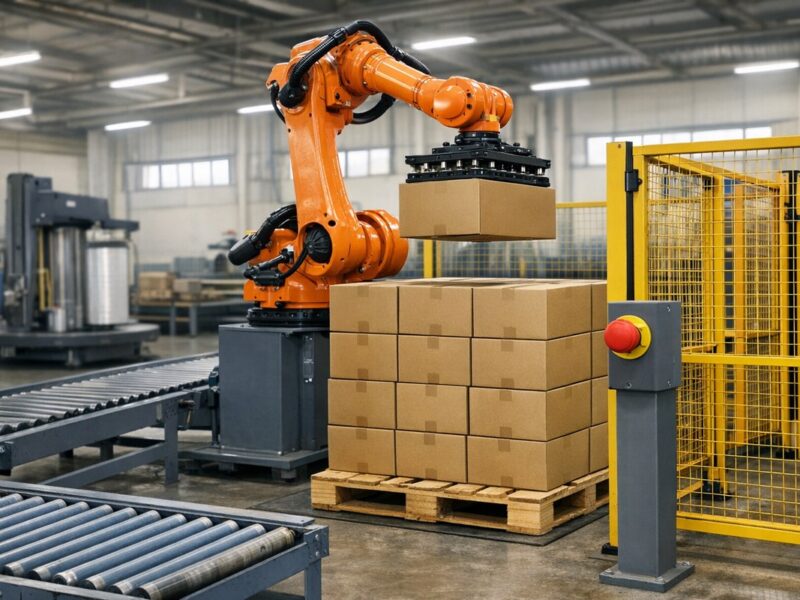
ReAutomated Adds Robot Palletising and Case Packing Cells to Existing South African Packing Lines Without Stripping Out the Conveyors
The Kempton Park integrator retrofits robot cells, cobots, guarding and controls onto live packing lines, starting from a survey of the line already on site. KEMPTON PARK, South Africa - Plenty of South African packing halls still end the old way: a conveyor runs out at a pallet, and two people lift every carton by hand for the whole shift. The conveyor, the case erector and the wrapper are often still in good order. ReAutomated, a robotics integrator in Spartan, Kempton Park, has published its range of robotic retrofits for packing and palletising lines for plants that want to automate those last few metres without buying a new line. Built around what is already on the floor The range covers carton, bag, shrink pack, drum and mixed case palletisers, single line and dual line cells, and high infeed and low level layouts for conveyors that discharge at awkward heights. On the packing side there are case packer, bottle and can packing retrofits, pouch packing cells, tray loading robots and crate handling robots. Supporting kit includes slip sheet feeders, pallet dispensers, turntables and layer forming units, with vacuum, clamp and bag grippers on a quick-change system for lines that run more than one pack. Every project starts with a site line survey. Conveyor heights, transfer points, guarding, access routes and operator movement are checked, along with the real bottleneck on the line. Sometimes that is not the lifting at all. "Half the time the robot isn't the problem. The cases arrive skew, or two at once, and the cell spends its day waiting or correcting," said ReAutomated's controls and commissioning lead. "We would rather fix the infeed and the spacing first. A cobot on a well-fed line will outwork a big robot on a badly fed one." Cobot or full cell ReAutomated recommends a cobot where floor space is tight and products are light to medium, and a traditional robot cell where duty cycles are higher or more reach is needed. Sound conveyors stay; …
Track Your Press Release HERE:
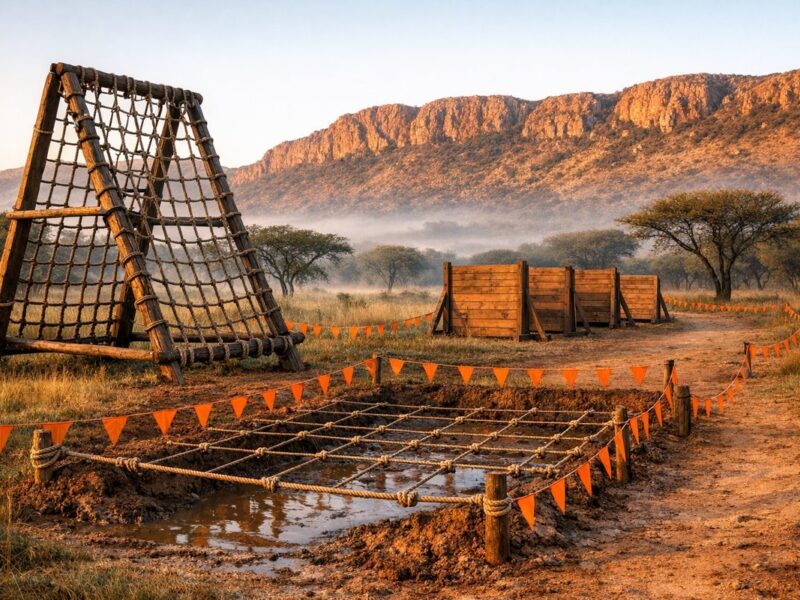
From a 5 KM Sprint to an Ultra: Punisher Sets Out Its Magaliesberg Obstacle Race Formats for First Timers, Teams and Fitness Clubs
The Hekpoort organiser runs obstacle races from 5 km sprints and night challenges to relay, carry, river crossing and ultra endurance formats. HEKPOORT, South Africa - The first obstacle race most people enter is chosen by a friend in a group chat. Punisher, an obstacle course race organiser based in Hekpoort at the foot of the Magaliesberg, would rather people chose the format that suits their legs. It has published its full obstacle race series, from short first-timer runs to long days for experienced racers. Distance and pace The series starts with a 5 km sprint for first timers and fast runners, a 10 km classic that mixes running, mud, carries and technical sections, and a half marathon OCR for sustained effort. Endurance lap races test pacing over repeat loops, speed OCR keeps transitions short and sharp, and the ultra endurance format is reserved for experienced entrants. There are beginner heats for people who want the obstacles without the pressure, and competitive heats for a sharper pace. Terrain and strength Some formats lean on the landscape: a farm trail hybrid across fields and climbs, a hill climb OCR on steep ascents and descents, a river crossing race with safe water crossings, a mud heavy course and seasonal heat wave and winter mud races. Others lean on the body, with a carry challenge, a grip test series, a strength OCR with lifting and dragging between runs, and an obstacle skills race built around walls, ropes and balance sections. A night challenge adds the dark. Groups Groups can enter team relays, buddy pairs or mixed, women's and men's heats, and fitness clubs and bootcamps can book their own race days. Company teams, supervised school-leaver groups and family supporters can all enter, and an adventure weekender suits groups who want to stay over. "Pick the race for the legs you'll have on the day, not the ones you had at twenty-five," said Punisher's race director. "The Magaliesberg is dusty, windy and hot by mid-morning. A …
Track Your Press Release HERE:
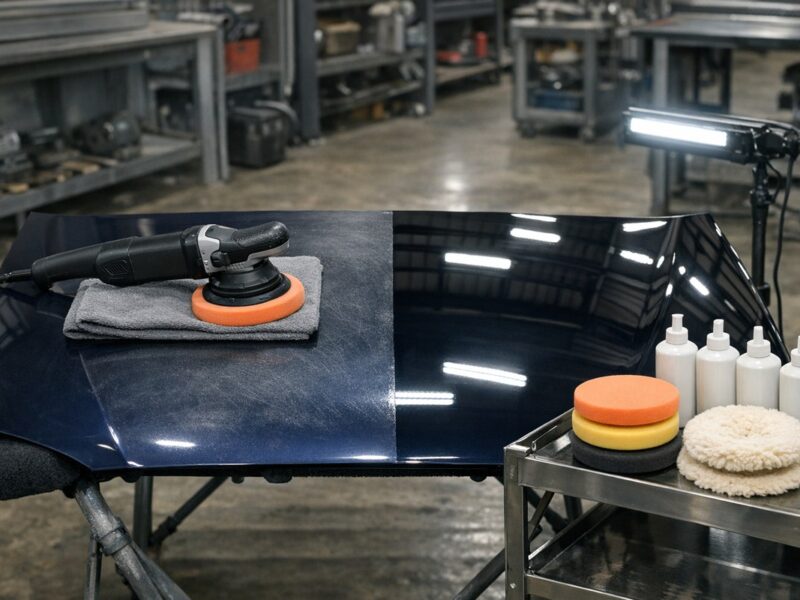
Rotary or Dual Action? Germiston’s Polisher Lists Its Machines, Buffs and Compounds for Car Paint and Metal Finishing
The Germiston supplier sells rotary and dual-action polishers, wool, foam and microfibre pads, sisal and cotton buffs and staged compounds, with starter kits. GERMISTON, South Africa - The swirl marks on a dark car usually tell the story of the wrong machine, the wrong pad or too much compound. Polisher, a polishing tools supplier in Germiston, has published its range of polishers, buffs and compounds for detailers, panel shops, fabricators and hobbyists, with a plain guide to which combination suits which surface. Machines The line-up includes 1200 W and 1600 W rotary polishers for heavier correction on oxidised paint and metal, a mini rotary for pillars, edges and small fabricated parts, a standard dual-action polisher, a long throw DA for broad panels and a mini DA for bumpers and spoilers. Variable speed and soft start models help control heat and stop compound slinging across the workshop. Backing plates come in 125 mm and 75 mm. Polisher's advice is simple: rotary machines cut directly and suit experienced hands and metal work, while dual-action machines move in a random orbit and are the safer way to learn paint finishing. Pads, buffs and compounds For paint there are wool cutting pads, foam cutting, polishing and finishing pads, and microfibre cutting and finishing pads for darker colours. For metal there are sisal buff wheels for the first heavy cut, spiral sewn buffs for the middle stages, cotton buffs for refining and loose leaf buffs for the final shine. Compounds are staged as cutting, medium and finishing, with dedicated aluminium, stainless steel and general metal polishing compounds. A headlight pad kit, panel wipe spray, pad cleaning brush, spur wheel cleaner and microfibre cloth packs round out the range. "Most of the scratches we get asked about were put in by a dirty pad, not by the machine," said Polisher's finishing trainer. "Clean the pad between passes, use less compound than you think, and change worn pads before they start …
Track Your Press Release HERE:

PadPrinters Medical in Westmead Pad Prints Graduations, Symbols and Legends on Small Medical and Electronic Parts
The Pinetown pad printer marks syringe, diagnostic and sensor parts, switch caps and enclosures, with fixtures, plates and adhesion samples before each run. PINETOWN, South Africa - A dosage scale that rubs off after a week of handling, or a polarity symbol printed two millimetres off centre, can send a whole batch of moulded parts back to the line. PadPrinters Medical, a pad printing shop in Westmead, Pinetown, has set out its pad printing services for medical and electronic parts, from single colour marks on small housings to multi colour legends on control panels. What gets printed On the medical side the shop marks syringe related parts, selected catheter components and accessories, diagnostic device housings, knobs and sample holders, and tube clamps and clips. For electronics it prints button and switch cap legends, connector polarity marks, dial faces, instrument panels, sensor housings, enclosure branding and marks on plastic carriers used around PCB assemblies. Scales, tick marks and dosage style graduations, serial numbers and micro print are all listed, along with work on curved and irregular surfaces that are hard to mark any other way. The setup is most of the job Every new part starts with the component rather than the artwork. The print area is planned, the artwork is checked or redrawn so line weights suit the process, and a fixture is made to hold the part still. Plates are either steel clichés etched for repeat production or polymer plates for shorter and development runs. Silicone pads are chosen by shape, hardness and size to suit the part geometry. "Glossy plastics and mixed materials don't all take ink the same way, even when they look identical," said PadPrinters Medical's quality coordinator. "So we run adhesion test samples before production. The customer still validates the device, but they validate it with a mark that we already know sits and cures properly." Inks, curing and repeat runs Ink options include solvent based pad …
Track Your Press Release HERE:
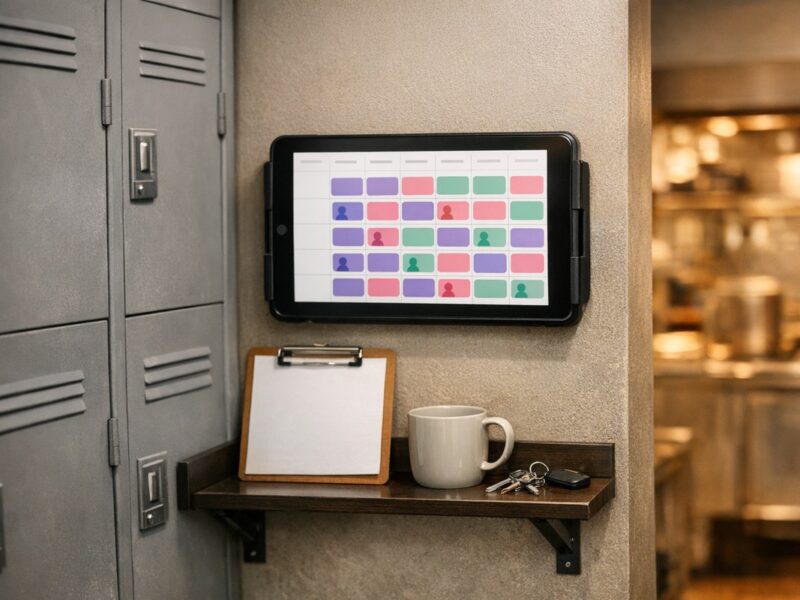
OurTeam Puts Weekly Rosters, Shift Swaps and Staff Messages in One App for South African Shift Teams
The Rosebank rostering app covers weekly and monthly rosters, open shifts, swaps with manager approval, leave blocks, team messages and multi-site rosters. JOHANNESBURG, South Africa - In a lot of restaurants, shops and clinics the roster still lives on a printed sheet by the lockers and a WhatsApp group that nobody can scroll back through. OurTeam, a staff rostering and team app based in Rosebank, Johannesburg, has set out its full list of app features for managers who are tired of rebuilding next week's shifts from voice notes. Building the roster Managers can build weekly rosters, plan a month ahead around busy weeks and leave, and switch between day view, week view and a calendar layout. Shifts can be planned by role so key positions stay covered, by location for businesses with more than one branch, and as night, weekend, split or holiday shifts. Availability views, leave blocks and absence notes sit in the same place, and colour coding separates teams and shift types at a glance. Part-time and full-time teams can be rostered side by side. When the plan changes Staff can request a shift swap or raise a cover request in the app, and managers approve swaps, leave and changes before they appear on the final roster. Uncovered shifts can be listed as open shifts so the right people can pick them up. Late change alerts flag last-minute adjustments, shift notes and handover messages carry the context for the next team, and break planning sits inside the roster itself. "The swap is where rosters fall apart, because two people agree in the passage and the manager finds out when nobody pitches," said OurTeam's onboarding lead. "If the swap is requested in the app and approved in the app, the roster on the wall is the roster that actually happens." Messages and activities Team messages, group updates, private chat and staff notices keep roster news out of personal chat threads, and activity plans, team groups and reminders cover inductions, check ins and staff …
Track Your Press Release HERE:
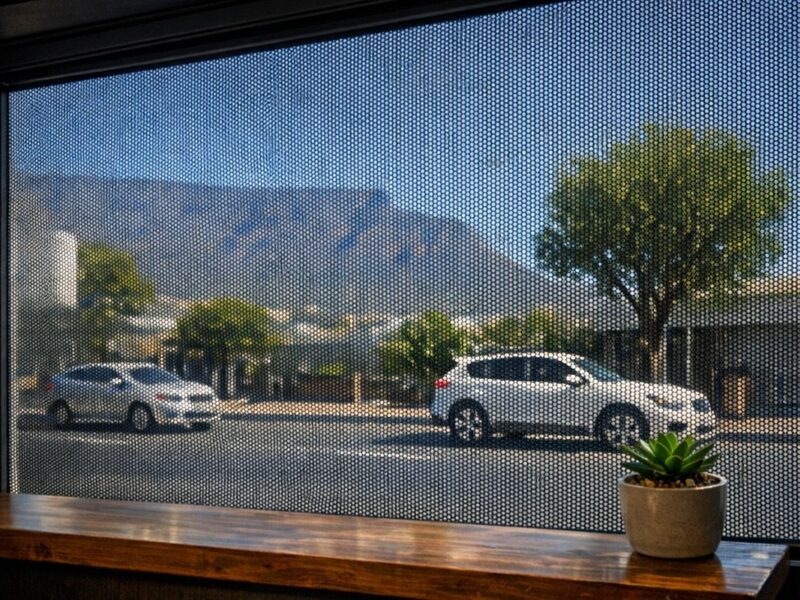
OneWayVision Brings Perforated One-Way Window Film in Four Ratios to Shopfronts and Fleets From Montague Gardens
The Cape Town supplier prints, laminates and fits perforated window film for shop glass, office partitions and vehicle rear windows, and dispatches nationwide. CAPE TOWN, South Africa - A shopfront window is the biggest advertising space most small retailers have, and the one they are least willing to cover. OneWayVision, a window film supplier in Montague Gardens, Cape Town, has listed its perforated one-way vision films for shops, offices and fleets that want a printed graphic outside and a clear view from inside. The ratio question The film is perforated PVC: the printed face is seen from the street, and the holes let light and the view through from inside. OneWayVision stocks four ratios. 70/30 gives the boldest graphic from across the road; 60/40 is the common choice for shopfronts and vehicles; 50/50 balances image and view; and the more open 40/60 keeps the inside view clearest. The effect works best with a bright exterior and a darker interior, which is why the same artwork can look quite different on a sunny Johannesburg street and a shaded office in Bellville. White face film carries the printed graphic and a black backing creates the one-way effect, with grey back film for a softer look inside. Print films are listed for solvent, eco-solvent and UV print workflows. Protection and the rules of the road Optical laminate protects the print while keeping the holes clear, and anti graffiti laminate makes marks easier to clean off exposed glass. Removable adhesive suits campaigns; permanent adhesive suits long-term branding. For vehicles, rear screen and rear side film panels are cut around demister lines, wipers, trim and seals. The company is clear that the driver's view must stay legal and that current road traffic rules should be checked before a layout is approved. "Fine print is the first thing to disappear on this film," said OneWayVision's installation supervisor. "The holes break up small text. Bold type and strong contrast read from …
Track Your Press Release HERE:

Minipress in Paarden Eiland Matches Home Juicers and Cold Presses to the Way South African Households Actually Juice
The Cape Town supplier sells slow, centrifugal and cold press juicers with spare augers, seals and strainers, and delivers across South Africa. CAPE TOWN, South Africa - Many home juicers end up at the back of a cupboard, and the reason is rarely the juice. It is the noise at six in the morning, the chopping, or the fine screen that takes ten minutes to scrub. MiniPress, a home juicer supplier in Paarden Eiland, Cape Town, has put its full range of home juicers and cold presses online with that in mind. Three ways to press Centrifugal juicers are the quick option for firmer produce on a weekday morning, with an entry model and a higher-capacity family model. Slow masticating juicers turn at a gentler pace for leafy greens, celery and mixed fruit, and come as a compact model for small counters, a family size, a wide chute version that cuts down on chopping and an everyday green juicer. Upright and horizontal cold presses are for households that press larger batches. There is also a citrus press, a quiet morning juicer for flats and early starts, and models suited to soft fruit or to carrots, beetroot and ginger. Picking one MiniPress suggests starting with the routine, not the machine: how often the household juices, how much time there is, whether the unit has to fit under the cupboards beside the sink, and how easy the parts are to lift, rinse and dry. "People ask which juicer is best, and the honest answer is the one you'll still be using in March," said MiniPress's kitchen product advisor. "If you only have ten minutes before the school run, buy the one that's easy to rinse, not the one with the most parts." Spares keep it running Seal and gasket kits, spare augers, fine and coarse strainer kits, feed pushers, hopper extensions and cleaning brush packs are sold separately, so a leak or a worn screen does not mean a new machine. Before replacing a unit that leaks, vibrates or gets louder, the first checks are the seal, the fit of the parts and the …
Track Your Press Release HERE:

Label Paper in Pinetown Slits and Rewinds Self-Adhesive Label Stock to Fit the Printer, the Core and the Cold Room
The Westmead supplier stocks paper, thermal and film label stock with permanent, removable and freezer adhesives on 25, 40 and 76 mm cores. PINETOWN, South Africa - A label roll can be the right size and still stop a packing line. The core is too big for the bench printer, the labels are wound outside when the machine wants inside, or the adhesive lets go in the cold room by lunchtime. Label Paper, a label stock supplier and converter in Westmead, Pinetown, has listed its full self-adhesive label stock range with those failures in mind. Face, adhesive, liner Paper face stocks run from semi gloss and matt to top coated paper for thermal transfer and uncoated paper for handwriting and stamping. Direct thermal paper suits short-life labels printed without ribbon; thermal transfer paper is for scuff resistance and longer image life. Film stocks include white and clear polypropylene for moisture resistance and a no-label look, and white polyethylene for squeezable containers. Void label stock leaves evidence when a seal is lifted. Adhesives come as permanent, removable, freezer, hotmelt and acrylic, and liners as glassine for consistent die-cutting and dispensing or kraft for a sturdier backing. Rolls for the job Ready formats include barcode, shipping, scale, price marking, shelf edge, pallet, carton seal and fragile warning rolls, plus blank thermal rolls for dates and codes, preprinted rolls with space for variable data, and asset label stock for equipment and shelving. Rolls are converted onto 25 mm, 40 mm and 76 mm cores, in short and long runs, inner wound where the printer path needs it, or as fanfold stacks. "Before a roll goes out we check the core, the outside diameter and which way it's wound," said Label Paper's slitting and rewinding lead. "A face-out roll on a face-in printer is a dead stop on somebody's packing line, and it takes a minute to check before the roll leaves Westmead." Coastal humidity and chilled goods The company points out …