

Plastics SA, the umbrella body representing the entire local plastics industry, is helping turn waste into economic opportunity through its Innovative Solutions for Waste (ISOW) project and a newly launched Waste Beneficiation Centre in Thulamahashe, Mpumalanga. Located in Section B, within Bushbuckridge Local Municipality, the centre brings together government, industry, traditional leadership and residents to strengthen recycling, divert materials from landfill and support local enterprise development. Led by Plastics SA, with support from the Promoting Women’s Employment for Africa’s Green Transformation (WE4D) programme, ISOW combines infrastructure, accredited training, household education and business mentorship. Its initial programme targets 1 049 households, supported by schools and local waste reclaimers. “Recycling works when the different parts of the value chain work together. Households need practical collection arrangements, reclaimers need skills and access to materials, and operators need equipment, business support and markets. ISOW is helping bring these elements together,” says Anton Hanekom, Executive Director of Plastics SA. Building a practical partnership The centre follows baseline and feasibility studies by Moss Group, site visits and stakeholder consultations. It stands on land belonging to the Amashangane Traditional Council, whose involvement, alongside the municipality, has been central to its establishment. Kruger to Canyons Biosphere Region (K2C) helped connect stakeholders. A memorandum of understanding between Plastics SA and Bushbuckridge Local Municipality formalises the collaboration and provides a foundation for implementation and further funding. “For municipalities, the challenge extends beyond collecting waste. It includes recovering materials, supporting livelihoods and sustaining community participation. Industry brings resources and expertise, while municipalities and traditional leaders contribute …

Sustainability Isn’t a Trend. It’s a Choice
Ask any chef what keeps them up at night, and having enough customers through the door is likely high on the list, particularly when the economy is tight. Then there are food costs, margins, staffing and the supplier who swears the delivery is on its way. Which is why food waste deserves more attention than it sometimes gets. Anything that lands in the bin has already cost the business money: to buy, store and often prepare without earning anything in return. That’s where sustainability becomes less abstract and more about daily choices. The big-picture reality in South Africa is sobering: CSIR¹ research estimates that 10.3 million tonnes of edible food is lost or wasted each year, equal to about 34% of local food production. Against that backdrop, World Food Day on 16 October and International Chefs Day on 20 October offered foodservice establishments an opportunity to look at food differently. This year’s World Food Day theme, “Innovate today. Nourish tomorrow,” focused on the future of food, while International Chefs Day celebrated the culinary profession through its Food Explorers campaign, encouraging greater understanding of ingredients and where they come from. Together, these observances highlight an important question for professional kitchens: how can innovation and creativity help ensure more of the food we buy is actually eaten? “This doesn't have to mean new equipment or radical reinvention,” says Yonela Motloung, Marketing Director for Unilever Food Solutions South Africa. “Sometimes it starts with looking at a familiar ingredient, process or habit and asking what could be done differently, because that's often where innovation and creativity begin." Before it hits the bin Giving ingredients more than one life is hardly new. Yesterday's bread rolls can become a modern take on bread-and-butter pudding. Vegetable offcuts can head for the stockpot; suitable trimmings could end up in a pickle jar. “It's a smart habit, but rescuing …
Track Your Press Release HERE:
Pretoria Zoo to Offer R27 Admission on the 27th of Every Month Until September 2027
Following the strong public response to its 126th birthday campaign, the National Zoological Garden of South Africa (Pretoria Zoo) will extend its birthday admission initiative for a further 12 months as the Zoo marks its 127th birthday. Visitors can enter for R27 on the 27th of every month for another year. The extended initiative begins on Tuesday, 27 October 2026, when Pretoria Zoo marks its 127th anniversary. It will run until 27 September 2027 and applies to all admission ticket categories, excluding other paid offerings. The year-long 126th birthday celebration drew a marked rise in general visits and school participation, while creating wider public interest in the Zoo's conservation and education work. Attendance on the promotional dates was more than 60% higher than the corresponding historical average, showing how strongly the public responded to a more accessible opportunity to visit. “Last year's celebration reminded us that the Pretoria Zoo's story is shared with the people who visit, learn and make memories here,” says Mr Leslie Mudimeli, General Manager of the National Zoological Garden of South Africa. “Extending this initiative gives more families and schools an opportunity to experience it while engaging with the conservation work that takes place here every day.” The October programme places education and animal care at the centre of the anniversary month. Weekday school lessons will continue through much of October, while weekends will feature animal talks and the Zoo Adventure programme. Visitors can also attend selected feeding and enrichment sessions across the Zoo. Selected October highlights include: 10 October: African Penguin Day and migratory bird activities, together with the weekend animal talks and Zoo Adventure programme. 21 October: Reptile Awareness Day, including a reptile encounter later in the day. 27 October: Pretoria Zoo’s 127th anniversary and the first R27 admission day in the extended …
Track Your Press Release HERE:
Four New African Penguin Chicks Bring Hope as National Zoological Garden Marks African Penguin Awareness Day
This International African Penguin Awareness Day, the National Zoological Garden (NZG) is celebrating new life in its African penguin colony while highlighting the urgent need to protect this Critically Endangered species in the wild. Observed on Saturday, 10 October 2026, this year’s African Penguin Awareness Day is being marked under the #NotOnOurWatch theme, a call to action to protect African penguins and prevent further declines in their wild populations. The NZG is currently home to 14 African penguins and is celebrating the arrival of four chicks as the colony begins breeding again. One of the chicks has started venturing out of its nest and is beginning to look different from the adults. African penguin chicks grow blue-grey juvenile plumage 20-30 days after hatching and are often referred to as baby blues or “blues”. They develop their distinctive black-and-white adult plumage after their first major moult. The other three chicks remain in their nests and are still too small to be seen by visitors. There is more good news in the colony. Another breeding pair laid two eggs last week, with an incubation period of approximately 38–42 days. Both parents share responsibility for incubating the eggs and raising their chicks. The NZG’s work with its African penguins extends beyond breeding. Each penguin is individually identified using a coloured tag attached to its flipper. Males are tagged on the right flipper and females on the left, allowing keepers to identify individuals and monitor the birds as a colony. The penguins are hand-fed three times a day and eat pilchards, with additional vitamins added to their food. As an interesting fact, African penguins also have special glands above their eyes that help remove excess salt from their bodies. When they eat fish from the sea, these glands filter out the excess salt, which is released through their nostrils. This natural process helps them regulate the amount of salt in their bodies. This is why the …
Track Your Press Release HERE:
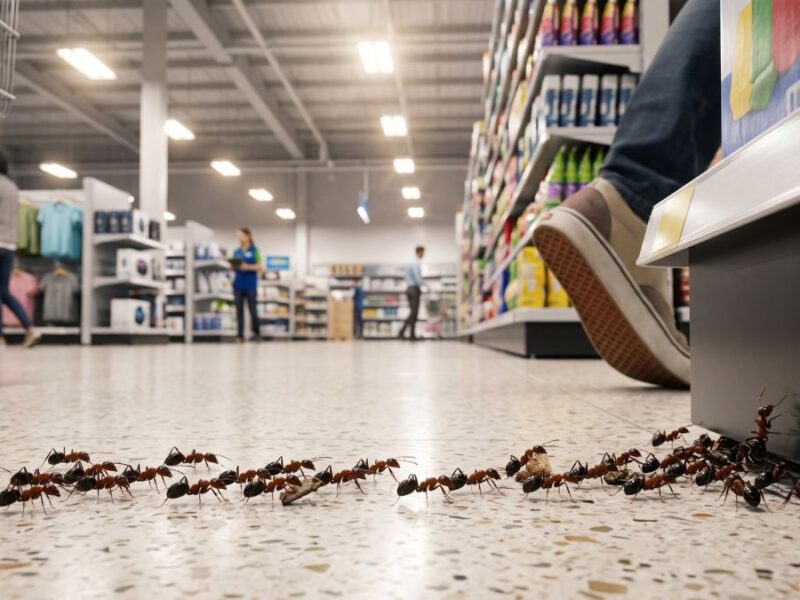
Eco Smart Pest Control Looks at Ant Control for Johannesburg Retail Stores
Eco Smart Pest Control's guide to ant control for retail stores helps Johannesburg managers protect stock and brand reputation while keeping the doors open. Johannesburg, South Africa – Eco Smart Pest Control has published a guide to ant control for retail stores and supermarkets, tackling a problem that is small in size but large in consequence. A few ants near a checkout or a food display can be seen, photographed and shared long before a manager hears about it. For retailers, pest activity is not just a maintenance item. Stock contamination, customer complaints and one bad online review are the fallout, and the review tends to outlast the ants by a long way. Stores also face a particular difficulty: they can't simply close for a day to deal with it. Trading hours, deliveries and shoppers all have to be worked around. The article explores why retail environments attract ants, the early signs managers can watch for on a busy trading day, how discreet treatment protects a brand, and how to schedule it around your operating pattern. It also covers what SAPCA-approved standards mean for stores that need to stay compliant, and where professional ant control solutions fit into a retail setting. One point is worth knowing before you read on. Once a colony finds a reliable food source inside a store, activity tends to increase rather than resolve on its own. That is why early action matters more in retail than in most other settings, and the full guide shows what acting early involves. For the full breakdown, read Ant Control for Retail Stores: Protecting Brand and Inventory. About Eco Smart Pest Control Eco Smart Pest Control is a SAPCA-approved pest management company based in Johannesburg, serving residential, commercial and industrial clients across Gauteng. With a decade of experience, the team provides customised, eco-friendly treatment plans backed by a satisfaction guarantee. Contact Eco Smart Pest Control Airport Road, Gate 5, Lanseria …
Track Your Press Release HERE:
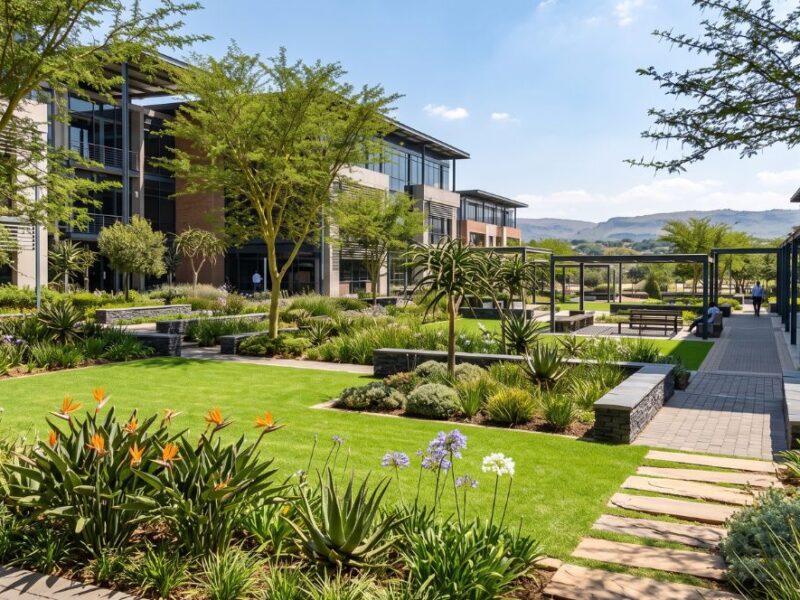
Green Cube Maintenance & Landscaping Publishes Guide on Using Commercial Landscaping as a Brand Asset for Pretoria Businesses
Green Cube Maintenance & Landscaping explains how commercial outdoor spaces function as brand touchpoints, and what intentional landscaping design means for Pretoria businesses opening or refreshing premises. PRETORIA, South Africa — Green Cube Maintenance & Landscaping has published a guide for business owners opening or refreshing commercial premises, addressing an aspect of brand presentation that rarely appears on a fit-out checklist: the outdoor space clients see before they see anything else. The guide argues that a generic entrance does not actively damage a brand, but it does nothing to build one either, and that the difference between the two is more deliberate than most businesses realise. For business owners who invest carefully in interior design, signage, and staff presentation, an unplanned outdoor space is a quiet inconsistency. It occupies the most visible position on the premises, seen by every client, visitor, and passerby, yet it is often the last element to receive the same level of design intention as everything else. In competitive commercial areas, where first impressions are forming before a single conversation takes place, that gap has consequences. The article explores what it means to design commercial landscaping around a business's identity rather than independently of it. Key areas addressed include how different business types call for different aesthetic approaches, the role of layout and planting choices in guiding visitors, how hard landscaping and greenery interact with signage and branding, and why functionality matters as much as appearance in a well-designed commercial space. One point the guide returns to that is easy to underestimate: a well-considered entrance tends to stay in a client's memory long after the specifics of a meeting have faded, quietly reinforcing brand positioning every time they return or refer someone else. For the full breakdown on designing outdoor spaces that work as a brand asset, …
Track Your Press Release HERE:
KZN South Coast’s Celebrity Croc Henry Gets Another International Screen Appearance
The much-beloved local celebrity at Crocworld Adventure & Conservation Centre – Henry the Nile crocodile – is featuring for international audiences once again after an Australian wildlife tour group completed filming on site in September. With his 126th birthday looming in December, Henry is believed to be the oldest Nile crocodile in captivity. And his fame is set to increase after Aussie Animal Tours and The Jungle visited Crocworld as part of their annual wildlife tour, creating content that will showcase both Henry and the centre’s conservation work. “We’re always delighted to welcome organisations that share our passion for conservation and education,” says Susan Badat, Manager of Crocworld Adventure & Conservation Centre. “Henry is undoubtedly a local celebrity, but what makes these visits particularly special is the opportunity to use his incredible story to spark a much wider conversation about the importance of conservation. The international exposure also helps shine a light on the important work being done here on the KZN South Coast.” Returning to meet Henry Rebecca Rasmussen, Co-Owner of The Jungle alongside Lance Jeffrey, explains the purpose of the trip: “Aussie Animal Tours and The Jungle share a very strong passion for conservation and, more importantly, for inspiring people to care about the natural world. Our goal is not simply to show our guests incredible animals, but to create meaningful experiences that stay with them long after they have returned home.” Aussie Animal Tours, run by Peter Birch, hosts this annual experience, which is designed to allow guests to encounter some of Africa’s most remarkable animals while learning about their behaviour, ecological importance, and the conservation challenges they face. “We want our guests to leave with more than just amazing photographs. We want them to leave with a story to tell, a deeper understanding of conservation, and a feeling that they too have a role to play in …
Track Your Press Release HERE:
MetPac-SA Calls for Action to Turn Packaging Waste Into Economic Value
South Africa’s shift from a “take, make and dispose” economy to a circular future depends on stronger partnerships, reliable research and shared responsibility. This was the message from Dr Ravi Nadar, Sustainability Manager at MetPac-SA, at the DFFE Circular Economy Summit 2026, held at the University of Limpopo from 14-16 October 2026. The theme of the summit was: “Empowering tomorrow’s leaders: Advancing the circular economy through entrepreneurship, innovation, research and collaboration.” Presenting on “South Africa’s EPR Landscape: Achievements, Challenges and Research Opportunities”, Dr Nadar highlighted progress made under Extended Producer Responsibility (EPR) and the barriers still limiting collection and recycling. “Packaging protects products, extends shelf life and gets goods safely to consumers. Its value should not end when the contents have been used. EPR extends producers’ responsibility beyond the point of sale, helping to fund and coordinate post-consumer collection and recovery,” Dr Nadar presented. According to BMI research, South Africa’s packaging market reached approximately 3.5 million tonnes, valued at R91 billion, in 2024. Continuing to extract, use and discard materials places growing pressure on natural resources and limited landfill space. However, a circular economy offers an alternative by designing out waste, keeping materials in use through reuse and recycling and recognising discarded packaging as a resource. It also creates opportunities for innovation, enterprise development and jobs. Since South Africa’s regulated EPR framework was introduced in 2021, achievements have included increased producer participation, dedicated investment, recycling infrastructure and waste-picker support. However, challenges remain, including the participation of some packaging producers who have yet to join PROs and contribute to EPR levies (commonly referred to as “free riders”), fragmented collection systems, infrastructure gaps and …
Track Your Press Release HERE:
Elusive Pickersgill’s Reed Frog Discovered on Crocworld Frogging Walk
A tiny frog with a big conservation story stole the spotlight at the first of Crocworld Adventure & Conservation Centre’s reintroduced Conservation Talks and Walks on Saturday (10 October). Led by renowned amphibian conservationist Dr Jeanne Tarrant (South Africa’s ‘Frog Lady’) of Anura Africa NPC, guests enjoyed an informative talk before heading into the Renishaw Hills’ wetlands for a hands-on frogging experience. The evening’s highlight was a sighting of the endangered Pickersgill’s reed frog, which is increasingly threatened by the decline of coastal KZN wetland habitats. Guests also spotted a brown water snake, painted reed frogs, Tinker reed frogs and other fascinating wetland wildlife. Commenting on the walk, Dr Tarrant said, “It was wonderful to be able to combine an outreach event with a meaningful conservation contribution from Citizen Science with the confirmation of Pickersgill's Reed Frog at the Renishaw Hills wetland. This record will be important for bringing attention back to these wetlands and the special species that the KZN coast is home to.” Susan Badat, Manager of Crocworld Adventure & Conservation Centre, says, “Crocworld’s wetlands and surrounding natural areas are an important part of the local ecosystem, supporting indigenous flora and fauna and providing opportunities to connect people with the biodiversity right on their doorstep.” Next up is Turtle Talk with Natalie Dos Santos on Saturday, 31 October at 11am at Fish Eagle Café, Crocworld. Guests will enjoy insights into her research on green turtles and hawksbills at Aliwal Shoal Marine Protected Area. Tickets cost R150 per, which includes the talk, breakfast, tea, coffee or juice. Bookings are essential, with a 50% deposit required to secure your place. Email crocworld@cbl.co.za by 26 October to secure your place. CLICK HERE to submit your press release to MyPR.co.za. Author: Agnes Matladi from Olivia Jones Communications on behalf of Crocworld. …
Track Your Press Release HERE:
Designer Pool Covers Highlights Energy Savings From Covered Pools
JOHANNESBURG, Gauteng, South Africa — Designer Pool Covers, a South African supplier and installer of pool covers, is drawing attention to the running costs that a covered pool avoids, arguing that heat retention and reduced evaporation make a cover one of the more cost-effective investments a pool owner can make. An uncovered pool loses heat from its surface, drives up chemical and filtration demand and accelerates water loss through evaporation. The company states that a well-fitted cover can reduce evaporation by up to 95 percent, a figure it attributes to the barrier a cover places between the water surface and the air. The company said the saving is not limited to water. A covered pool holds its temperature for longer, which reduces the energy required to heat it and the volume of sanitising chemicals consumed to keep it clear. Designer Pool Covers said those smaller monthly costs compound over a season, particularly for pool owners running pumps and heaters through summer. The company positions the argument as part of a broader move toward treating pool ownership as an energy and water decision, not only an aesthetic one. "A pool is one of the few home assets that quietly bills you every month," said Willem De Wet, founder of Designer Pool Covers. "Heating, chemicals, filtration and evaporation all add up. A cover attacks those costs at the source, because heat and water stay where they belong instead of going into the atmosphere." Designer Pool Covers supplies four cover types: thermal blankets, a pet and child safety cover, PoolDeck Slatted Automatic Covers and Automatic Vinyl Safety Covers. The company said thermal blankets are designed to lock in heat and reduce energy costs, while its automatic pool covers add convenience and, because they are approved safety devices, a barrier against accidental entry. The company states that its Automatic Vinyl Safety Covers can open and close in less than 60 seconds. Cost is the other half of the equation. …