

For decades, the early stages of a career have been built around doing the groundwork. Junior employees researched, prepared reports, drafted documents and handled administrative tasks, gaining experience along the way. AI is beginning to change that learning curve. Many of those tasks can now be completed in minutes, raising a bigger question for employers: if technology removes some of the work people traditionally learnt through, how do businesses ensure the next generation still develops the skills needed to lead? The missing first rung “The first rung of the career ladder was never only about completing relatively basic work. Junior employees sat in on customer conversations, made mistakes, watched how more experienced colleagues responded to them and gradually learnt which details mattered,” said George Mienie, CEO of AutoTrader. “Over time, that exposure helped build the context and judgement required to make more consequential decisions.” “The question, then, isn’t just whether AI will replace junior jobs. It’s how we develop the managers and leaders of tomorrow if AI is doing much of the work they traditionally learnt through.” This is a question shaped by experience. He has led AutoTrader through several fundamental shifts in technology and business structure, from its origins in print classifieds to a digital marketplace, then to a data-led business, and now to pioneering AI-powered automotive intelligence. Each transition changed more than the product AutoTrader offered its customers. It changed the work people did, the skills the business needed and where people added value. “Organisational structures were built, at least partly, around the fact that information was historically slow and expensive to gather, interpret and move. Junior employees gathered it, managers interpreted it and senior leaders made decisions from it. AI can now do some of that work almost immediately, shortening the chain and changing the role people play within it,” …
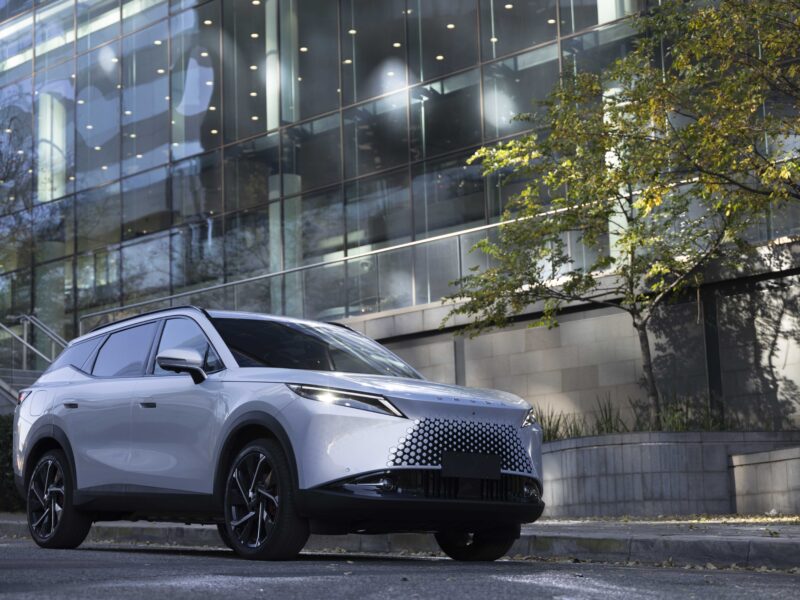
With Record Petrol Prices Looming, Do the Sums Favour a Hybrid?
Higher petrol prices make an already expensive car purchase harder to get right. Buyers trying to keep their monthly costs manageable have to weigh the repayment against what they will spend driving the car, and a more economical petrol engine is only one of the options. Where a hybrid or plug-in hybrid is available for similar money, the choice becomes as much about running costs as it is about the car itself. October could make that decision more pressing. Early Central Energy Fund data reported by BusinessTech points to potential petrol increases of R1.81 to R1.93 a litre. If those conditions persist, South Africa could face its highest petrol prices on record, exceeding June’s peak. The figures are provisional, with the rest of September’s oil-price and exchange-rate movements still to be reflected in the final adjustment. A record price is worrying enough for the next fill-up. Someone buying a car has to think about fuel bills over the next four or five years, without knowing where petrol will trade during that time. A vehicle that uses less fuel leaves the owner less exposed to each increase. The extra cost of buying a hybrid has often meant waiting years for fuel savings to make up the difference. That remains a concern where the premium is substantial. But some hybrids now cost roughly the same as their petrol equivalents, while a buyer comparing different brands may find a plug-in hybrid within the budget they had already set. Lexus offers a particularly clear example. Its NX 350 F Sport is listed at R1,276,500 and the NX 350h F Sport at R1,277,500. The petrol model offers more power, but the hybrid’s claimed combined consumption is 5.0 L/100 km against 8.1 L/100 km. A buyer choosing the hybrid pays only R1,000 more upfront. Over 1,500 km a month, those claimed figures imply a difference of 46.5 litres. At an illustrative R25 a litre, that amounts to approximately R1,163 a month in fuel savings. Each further R1 increase in petrol would widen …
Track Your Press Release HERE:

Loan on Cars: Keep Your Car While Raising Cash This Spring
Across South Africa the calendar has flipped into spring, and September tends to land with a distinctive weight: a new school term to fund, more hours spent behind the wheel as the days stretch out, and a fresh round of household and business expenses that need budgeting for. Against that backdrop, Loan On Cars, a local service that releases cash against a fully settled vehicle, is taking the seasonal shift as a moment to draw attention to the question its clients raise more than any other, namely whether they get to keep the car. The answer is yes: the vehicle is assessed, the money is handed over, and the owner drives away in the very car they arrived in. The car goes home with its owner For most people who have finished paying off a car, it reads as transport before it reads as an asset, and that instinct is sound. The same vehicle takes a family to work and school, hauls stock for a small trader, gets a parent to a clinic and turns a weekend visit to relatives into something possible. Trading that car for cash may settle one issue, but it opens another straight away, since the instant the keys are handed over, every daily routine built around them grinds to a halt. This is exactly the problem Loan On Cars was designed to avoid. Owners who start hunting for a way to pawn my car are hardly ever looking to surrender their wheels. Their aim is to unlock money against something they already own, without upending the rest of their week in the process. The company's model treats the paid-off car as security while keeping the owner firmly behind the wheel, so the deal never strips a household of its mobility. The distinction deserves to be spelled out, because the verb pawn ordinarily suggests giving the item up. Here the phrase people actually type into a search bar captures the reality far better. The reason so many South African drivers go looking specifically for a way to pawn my car and still drive it is that those last few words carry the entire point. …
Track Your Press Release HERE:

OMODA & JAECOO Brings Hybrid Power to the J5 With the All-New J5 SHS
OMODA & JAECOO South Africa has expanded the local J5 line-up with the introduction of the J5 SHS, adding a hybrid option alongside the existing ICE and the recently launched BEV models. The J5 SHS pairs a turbocharged 1.5-litre petrol engine with electric assistance to deliver 165 kW and 295 N.m, with claimed fuel consumption of 5.3 L/100 km and a theoretical range of up to 980 km from its 51-litre fuel tank. The new hybrid offers family-focused practicality, a strong safety specification and comprehensive warranty cover. OMODA & JAECOO South Africa is pleased to announce the local arrival of the J5 SHS, the new-energy variant of the J5 crossover introduced in September 2025. Its arrival follows the recent introduction of the fully electric J5 BEV, JAECOO’s first EV in South Africa. The addition of the hybrid derivative expands the J5 line-up to three distinct powertrains, giving South African consumers greater choice and providing an accessible entry point into electrified motoring. The J5 SHS is powered by a turbocharged 1.5-litre petrol engine paired with an electric motor, delivering combined outputs of 165 kW and 295 N.m of torque. A 1.83 kWh battery enables electric propulsion at low speeds and in traffic, contributing to a fuel consumption figure of 5.3 L/100 km. Paired with a 51-litre fuel tank, the J5 SHS is theoretically capable of covering up to 980 km on a tank of fuel. Power is sent to the front wheels via a Dedicated Hybrid Transmission (DHT). The J5 SHS uses MacPherson struts at the front and a multilink configuration at the rear, contributing to a composed, supple ride and responsive handling. Braking is handled by disc brakes all round, with ventilated discs fitted to the front wheels. The J5 SHS carries over the refined styling of its ICE sibling, with minimalist detailing giving the crossover a clean and premium appearance. It is fitted with 18-inch alloy wheels, a panoramic moonroof and automatic LED …
Track Your Press Release HERE:

Cloud Camper Puts Fitment First on Rooftop Tents for Cars
Vehicle fitment has moved to the top of Cloud Camper's agenda this September. The Johannesburg based rooftop camping specialist, working out of Genesis on Fairmount in Sandler Road, says the questions it hears most often from first time buyers are the ones that decide whether a setup succeeds, so it is bringing that advice forward instead of tucking it into the closing minutes of a sale. The timing lines up with South African travellers who are only now starting to map out the long summer touring season. There is a clear logic behind the shift. Not every vehicle takes a rooftop tent as a matter of course. The tent rides on a roof rack, it stacks weight above the roofline, and it depends on brackets that match both the unit itself and the bars it clamps to. In Cloud Camper's experience, a buyer who has those three factors clear before placing an order gets a rig that performs from the very first outing, whereas one who glosses over them risks buying gear that will not mount safely on their vehicle. With December still comfortably ahead, September gives buyers room to plan properly, which is exactly why the company is raising it now. Why fitment comes before the shopping list Cloud Camper supplies Roof Top Tents for Cars, and that final word carries genuine weight. According to the company, rooftop tents suit a broad spread of vehicles, from SUVs and bakkies through to ordinary cars, as long as a sturdy roof rack is fitted. It is the condition, not the vehicle list, that counts. Whether a tent will work comes down to what the roof and rack are rated to hold and the size of the bars the tent fastens onto, not the emblem on the bonnet. For that reason the company encourages buyers to measure their vehicle's weight capacity and roof dimensions against any tent under consideration, rather than picking purely on how many people it sleeps. A four sleeper looks tempting to a family, yet it weighs considerably more than a two berth model, and the roof beneath it has …
Track Your Press Release HERE:
Damaged Cars Wanted Handles NATIS Paperwork in Gauteng
Ask most people what stands between them and selling a wrecked vehicle, and they will say the money. Damaged Cars Wanted, the Johannesburg buying division of Lou Appel's Auto Spares, is spending September 2026 pointing at a different answer: the documents. Operating from Selby, the yard purchases accident damaged, non-running and high mileage vehicles throughout Gauteng, and with every deal it takes care of the NATIS change of ownership, the SAPS clearance and the deregistration itself, all handled internally. For someone with a wreck parked out back, it is usually that administrative tangle, rather than the offer, that keeps the vehicle where it sits. The logic behind it is not complicated. Until a change of ownership is lodged and processed, a vehicle remains on the national register under the name of its last recorded owner. Rolling it, burning it, flooding it or stripping it for parts changes none of that; a car that no longer runs does not slip off the record on its own. It stays tied to whoever appears on the registration document, and so does every obligation that comes with it. Plenty of people who sell damaged cars through a private deal, or who leave a written off car parked in a yard year after year, only later realise the file was never closed off correctly. Why the admin side decides how a sale ends Unfinished paperwork is something Damaged Cars Wanted encounters all the time. When a car is offloaded quickly to the first person to turn up with a bakkie and a tow rope, the seller ends up holding nothing: no clearance, no evidence of deregistration and no trace of where the vehicle went. The yard's purchasing method is deliberately the reverse. The documentation is finalised on the property, at the moment of sale, before the vehicle ever leaves. The seller is not sent off to a registering authority to tidy up loose ends later. It is also the reason the company requests a defined set of documents instead of settling for a handshake. The seller …
Track Your Press Release HERE:

Boksburg Takes Top Honours at OMODA & JAECOO’s 2026 Dealer Awards
OMODA JAECOO Boksburg was named Overall Dealer of the Year. OMODA JAECOO Sandton received the Sales Volume Dealer of the Year award. Dealers were recognised across large, medium and small categories for their performance in key areas of the business. OMODA & JAECOO South Africa recognised the leading performers within its national dealer network at its second annual Dealer Conference and Awards, held on 20 August 2026. OMODA JAECOO Boksburg received the event’s highest accolade, being named Overall Dealer of the Year, while OMODA JAECOO Sandton secured the Sales Volume Dealer of the Year award. Sandton also received the large-dealer awards for OMODA JAECOO Finance Dealer of the Year and Best Brand & Marketing of the Quarter. “A strong dealer network is not built on sales alone. The customer experience, aftersales support, finance and the way each dealership represents our brands in its community are all equally important,” said Shannon Gahagan, National Brand and Marketing Manager for OMODA & JAECOO South Africa. “These awards recognise the teams that have performed across those areas. We congratulate every winner and thank our entire dealer network for the work they continue to put in throughout the year.” In the sales categories, OMODA JAECOO Hatfield took Gold among the large dealers, followed by Fourways with Silver and Bryanston with Bronze. Among the medium dealers, OMODA JAECOO Gordon Road received Gold, Roodepoort took Silver and Bedfordview secured Bronze. In the small-dealer category, Vanderbijlpark finished first, followed by Port Shepstone and Springs. The Aftersales Dealer of the Year awards went to OMODA JAECOO Centurion in the large-dealer category, Bedfordview in the medium category and Newcastle in the small category. OMODA JAECOO Finance also recognised the strongest-performing dealerships in each category. Sandton, part of the Digi Cars Group, received the large-dealer award, while Umhlanga, part of the …
Track Your Press Release HERE:

Changan Unveils DEEPAL S05 REEV and UNI-S HEV at South Africa’s Festival of Motoring 2026
(GLOBE NEWSWIRE) -- Changan Automobile unveiled the new DEEPAL S05 REEV and UNI-S HEV at the 2026 WesBank Festival of Motoring in Kyalami, alongside the return of its commercial vehicle range. The launch marks another step forward in Changan’s regional footprint within South Africa’s growing new energy vehicle market. Designed in Italy and engineered in the UK, the DEEPAL S05 REEV is a premium mid-size SUV built on a range-extended electric vehicle platform, offering an EV driving experience without range anxiety. A single electric motor produces 160kW and 320Nm, while a 1.5-litre petrol engine (72kW/125Nm) functions solely as a generator, topping up the 27kWh battery on the move. Changan claims a combined driving range of more than 1,000km, including up to 200km of pure electric range, as well as a 20-minute fast-charging capability when connected to an EV charger. The S05 is further equipped with a 15.4-inch infotainment touchscreen, a 50-inch augmented reality head-up display and Level 2 ADAS. Joining the lineup is the new UNI-S HEV, which expands the UNI-S family with hybrid technology. The vehicle combines a 1.5-litre turbocharged petrol engine producing 110kW and 220Nm with an electric motor for a total system output of 166kW and 290Nm, paired with an electronic CVT transmission driving the front wheels. Changan claims a combined fuel consumption of 4.0L/100km. The UNI-S HEV also features Level 2 ADAS, a 540-degree HD camera system, wireless smartphone connectivity and a technology-focused cabin designed for modern mobility needs. Expanding Changan’s electrified product portfolio on display was the Changan Hunter, the world’s first super range-extended off-road pickup. Equipped with an electric-drive two-speed transfer case and e-4WD system, the Hunter delivers exceptional all-terrain capability while combining the efficiency and driving characteristics of electrified powertrains. Designed for both work and adventure, it integrates rugged off-road …
Track Your Press Release HERE:

iCAUR South Africa Introduces OEM-backed Vehicle Customisation Offering
Wraps, accessories and styling options give customers greater freedom to make their iCAUR their own, with the V23 providing an especially expressive canvas Customers can choose from decals, individual panel treatments and partial or full-vehicle wraps. Wraps are priced from R3,600 including VAT and may be financed as part of the vehicle purchase. The offering also includes interior and exterior accessories, while V23 customers can choose from more extensive body-kit transformations. iCAUR South Africa has introduced an OEM-backed customisation offering that allows customers to personalise their vehicles through wraps, decals, accessories and more extensive styling options. Personalisation has been central to iCAUR’s thinking from the outset. Rather than treating it as an aftermarket addition, the brand intends to make customisation part of the ownership experience, giving customers the freedom to create a vehicle that more closely reflects their personality. The philosophy finds an especially clear expression in the V23. Its upright shape, distinctive proportions and clearly defined exterior panels provide a natural canvas for contrasting colours, graphic treatments and accessories. “Life is too short to drive a boring car,” says Shannon Gahagan, National Brand and Marketing Manager at iCAUR and OMODA & JAECOO South Africa. “We want an iCAUR to feel like an invitation rather than a default setting. We bring the attitude, while our customers bring the personality.” Customer interest has already included colour-blocking across selected V23 panels, from subtle pastel treatments to darker wraps extending from the waistline to the roof. Wraps may also be used to incorporate personal designs or company branding without the permanence of a painted finish. Customers can develop their designs with the assistance of iCAUR’s preferred specialists, who also install the completed treatment. iCAUR views personalisation as a spectrum rather than a …
Track Your Press Release HERE:

Lepas Brings Feline Poise and New-Energy Ambition to the Festival of Motoring
The L4 EV, L6 EV and L8 PHEV will lead a five-model display showcasing the future direction of Lepas in South Africa. The L4 EV, L6 EV and L8 PHEV will lead the Lepas display at the Festival of Motoring. A special L6 EV pre-order package will include a home charger, installation and charging credit. The recently revealed L6 ICE will also be on display, supported by exclusive WesBank instalment offers. Lepas South Africa will place its new-energy ambitions firmly in the spotlight at the Festival of Motoring, taking place at Kyalami Grand Prix Circuit from 28 to 30 August 2026. At the heart of the brand’s display will be the fully electric L4 EV and L6 EV, alongside the L8 PHEV. Together, the three models signal the direction of Lepas in South Africa as electric and electrified vehicles become an increasingly important part of its local range. They will be joined by the recently revealed L6 ICE and the L4 ICE, completing a five-model display that brings together the brand’s current offering and the new-energy vehicles set to shape its next phase. The Festival appearance follows an encouraging start for Lepas. Since entering the local retail market in the first quarter of 2026, the brand has recorded more than 1,000 vehicle sales, providing a strong base from which to expand its presence and new-energy offering. New energy takes centre stage The Festival of Motoring will give visitors an early look at the next generation of the Lepas range, led by the L4 EV, L6 EV and L8 PHEV. The fully electric L6 EV will make an early public appearance ahead of its South African launch. Lepas will also introduce a special pre-order package* designed to simplify the move to electric motoring by covering several of the practical requirements associated with home charging. The package includes: A 7 kW home charger Full home-charger installation Vehicle-to-load capability A Type M charging cable A charging card and R5,000 charging …