

The OMODA X made its global debut in Wuhu, China, previewing the next evolution of OMODA’s Cyber Mecha design language. The X builds on the design direction introduced by the C4, which is due to launch and later enter production in South Africa in 2027. OMODA X forms part of a broader next-generation product push, with Mecha-inspired styling set to play a central role across future OMODA models. OMODA has unveiled the all-new OMODA X, offering the clearest indication yet of how the brand plans to evolve its crossover design language in the coming years. Revealed at OMODA X Night in Wuhu, China, on 20 October as part of the 2026 OMODA & JAECOO International User Summit, the X takes the brand’s Cyber Mecha design philosophy in a bolder direction, combining geometric forms with a more purposeful and rugged appearance. The design approach is not entirely new to the brand. Cyber Mecha was also previewed on the C4, which is destined for the South African market and is scheduled to enter local production at the Rosslyn manufacturing facility from the third quarter of 2027. With the X, OMODA expands the philosophy further. Mecha-inspired styling will form a central part of the next generation of vehicles, with the X offering an early look at how that design language will evolve across future models. The X represents the next evolution of OMODA’s CROSSVOLUTION philosophy, combining the everyday usability of a crossover with more expressive styling and a stronger focus on individuality. It pushes beyond the conventional urban crossover formula while retaining the versatility expected of the segment. “The OMODA X gives us a much clearer view of where the brand is heading from a design perspective,” says Shannon Gahagan, Head of Brand and Marketing for OMODA & JAECOO and iCAUR South Africa. “The C4 will introduce South African customers to OMODA’s Cyber Mecha design direction, and the X shows how that thinking can evolve across the wider …
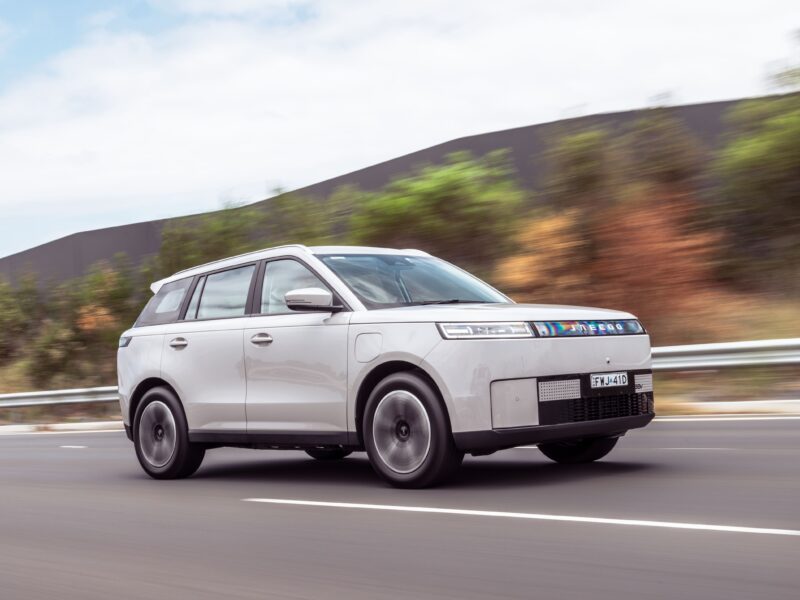
OMODA & JAECOO Officially Launch J5 SHS and J5 BEV, Expanding Its Electrified Line-up in South Africa
OMODA & JAECOO officially launch J5 SHS and J5 BEV, expanding its electrified line-up in South Africa OMODA & JAECOO South Africa has expanded the local J5 line-up with the J5 SHS and J5 BEV, giving customers a choice of petrol, hybrid and fully electric powertrains. The J5 SHS combines a turbocharged 1.5-litre petrol engine with electric assistance to produce 165 kW and 295 N.m, with claimed fuel consumption of 5.3 L/100 km and a theoretical range of up to 980 km. The J5 BEV pairs a 155 kW/288 N.m electric motor with a 58.9 kWh LFP battery, providing a claimed range of 402 km on the WLTC cycle, while supporting 11 kW AC and DC fast charging at up to 130 kW. OMODA & JAECOO South Africa has officially launched the J5 SHS and J5 BEV, expanding the local J5 range to three distinct powertrains. The two new-energy derivatives join the petrol-powered J5 introduced in September 2025, giving South African motorists the choice of conventional petrol, hybrid and fully electric propulsion according to their individual requirements. The J5 SHS is powered by a turbocharged 1.5-litre petrol engine paired with an electric motor, delivering combined outputs of 165 kW and 295 N.m of torque. A 1.83 kWh battery enables electric propulsion at low speeds and in traffic, contributing to claimed fuel consumption of 5.3 L/100 km. Paired with a 51-litre fuel tank, the J5 SHS is theoretically capable of covering up to 980 km on a tank of fuel. Power is sent to the front wheels via a Dedicated Hybrid Transmission (DHT). For buyers ready to make the move to fully electric motoring, the J5 BEV is powered by a single permanent magnet synchronous motor producing 155 kW and 288 N.m of torque. Energy is supplied by a 58.9 kWh lithium iron phosphate battery, providing a claimed driving range of 402 km on the WLTC cycle. The J5 BEV supports 11 kW AC charging as well as DC fast charging at up to 130 kW. When connected to a compatible DC fast charger, the …
Track Your Press Release HERE:
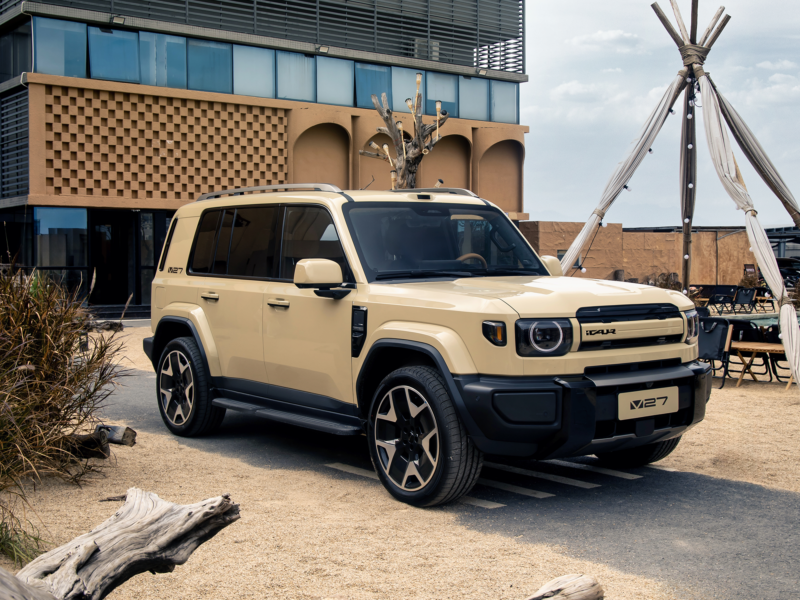
iCAUR V27 Brings Electric Efficiency and Long-Range Flexibility to Modern SUV Drivers
Built on the brand’s Golden REEV platform, the SUV offers up to 150 km of electric-only range and more than 1,000 km of combined driving range for cost-conscious consumers. The iCAUR V27 uses Golden REEV technology to deliver an electric-first driving experience with lower fuel consumption and reduced operating costs. A 34.3 kWh battery provides up to 150 km of electric-only range, while the full system extends total range to more than 1,000 km. With intelligent energy management and 6 kW V2L capability, the V27 is designed for both everyday practicality and longer-distance flexibility. Amid ongoing volatility in global energy markets and rising fuel prices, consumers are increasingly seeking mobility solutions that balance cost efficiency with flexibility and real-world practicality. This shift is accelerating demand for new energy vehicles that can adapt to diverse driving needs without compromising convenience or performance. iCAUR is responding to this transition with a broader vision for mobility, one that treats energy not simply as a power source, but rather as an integrated system shaping how vehicles perform in everyday life. At the centre of this approach is the iCAUR V27, an SUV built on the brand’s advanced Golden REEV (Range-Extended Electric Vehicle) architecture. Designed to address both daily commuting and long-distance travel, the V27 delivers a balance of electric efficiency and extended range, reducing dependence on charging infrastructure while maintaining a refined, electric-first driving experience. High-efficiency powertrain for lower operating costs The Golden REEV system represents a significant advancement over traditional range-extender technologies. It integrates a 1.5-litre turbocharged petrol engine (with a thermal efficiency of 45.79%), converting each litre of fuel into 3.71 kWh of electricity. This high conversion efficiency enables lower fuel consumption, reducing overall operating costs - particularly …
Track Your Press Release HERE:

iCAUR V25 Makes Global Debut With BEV and REEV Powertrains
iCAUR V25 makes global debut with BEV and REEV powertrains iCAUR has unveiled the new V25, joining the V23 and V27 to complete its V-Series SUV range. The V25 will be offered with BEV and REEV powertrains, intelligent all-wheel drive and extensive factory-integrated customisation options. iCAUR also showcased three officially customised V-Series models, with selected global market introductions planned from early 2027. iCAUR has unveiled the new V25 at the 2026 iCAUR International User Summit in Wuhu, China, completing its V-Series line-up alongside the V23 and V27. Positioned between the V23 and V27, the V25 combines the brand’s boxy SUV design language with a choice of range-extended electric (REEV) and battery-electric (BEV) powertrains, intelligent all-wheel drive and more than 20 integrated interfaces for vehicle customisation. The V25 continues iCAUR’s Future Classic design approach, retaining the upright proportions, round headlights and squared-off profile established across the V-Series. Its height-to-width ratio of 0.96 contributes to an almost square stance, while a flat front end, clamshell bonnet, upright windscreen, side-opening tailgate and full-size spare wheel reinforce its traditional off-road-inspired appearance. The packaging also contributes to a claimed longitudinal space efficiency of 66.4%, with the squared body shape intended to maximise passenger and luggage space. The cabin provides 41 storage compartments, while the V25 offers up to 1,549 litres of luggage capacity. The BEV version also adds a front luggage compartment and 22 litres of underfloor storage. The front seats can also fold flat to create a resting area with the rear seats, adding to the cabin’s versatility for outdoor use. Listed cabin features include an opening panoramic sunroof with a powered sunshade, heated and ventilated front seats with electric adjustment, driver’s seat memory and a 15-speaker sound system. Two powertrain configurations …
Track Your Press Release HERE:

AutoTrader Dealer Connect 2026 Brings the Dealer Community Together to Navigate What’s Next
South Africa’s automotive retail sector is changing rapidly, with advances in artificial intelligence, growing access to data and evolving customer expectations transforming how dealerships attract buyers, manage stock and make business decisions. Against this backdrop, AutoTrader will bring the dealer community together for Dealer Connect 2026, the most anticipated automotive event of the year, taking place in Sandton on 12 November 2026. More than a traditional dealer conference, this year’s Dealer Connect will put the changing automotive retail landscape at the centre of the conversation, bringing together dealers, industry leaders and international expertise to examine what is changing, what it means for dealerships and where new growth opportunities are emerging. Technology will be a central theme throughout the event, with a particular focus on the growing role of data and artificial intelligence in dealership operations, customer engagement and vehicle retail. “Automotive retail is moving quickly, and dealers are having to navigate changes in technology, customer behaviour and the competitive landscape at the same time,” says George Mienie, CEO of AutoTrader. “Dealer Connect allows us to bring the industry together, examine what is happening in the market and, importantly, translate those shifts into what they mean for dealers. The focus is not technology for technology’s sake. It is about using innovation to help dealers make better decisions, operate more efficiently and ultimately grow their businesses,” adds Mienie. From global trends to local action Dealer Connect 2026 will combine South African market intelligence with perspectives from beyond the local automotive industry. Timo Bolse, an experienced international product and technology executive with a background in some of the world’s major digital marketplace businesses, will examine the forces shaping marketplaces internationally and what those developments could mean for …
Track Your Press Release HERE:
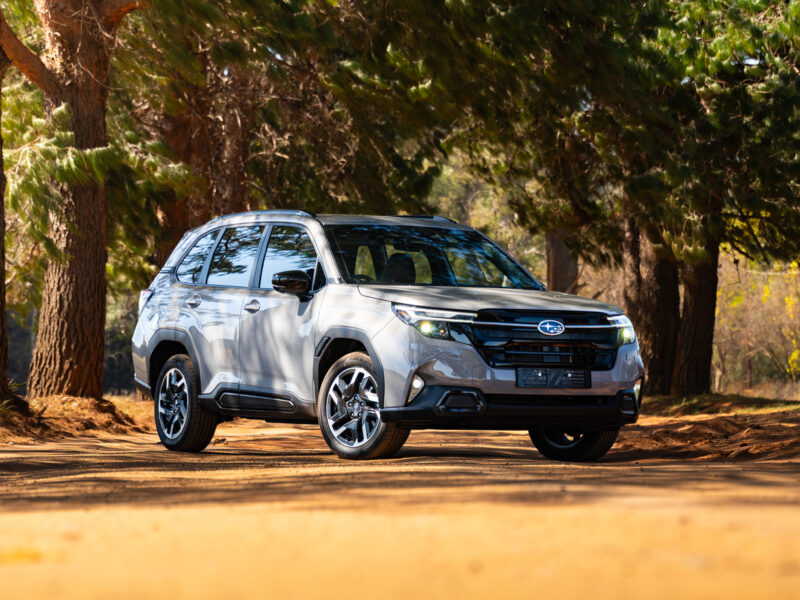
A Closer Look at the Subaru Forester Sport and Premium
The Subaru Forester Sport and Premium sit at the upper end of the Forester range, offering the same core SUV strengths with added comfort, convenience and visual appeal. Both models are powered by Subaru’s 2.5-litre Boxer petrol engine and feature standard Symmetrical All-Wheel Drive, strong practicality, generous safety equipment and a well-equipped cabin. The Sport introduces a more adventurous look and feel, while the Premium adds the most comfort-focused specification in the Forester range. Exterior design The Forester Sport and Premium both feature a confident SUV design, with LED headlamps with auto-levelling, LED side lamps, automatic headlights, steering-responsive headlights, LED front fog lamps and LED rear fog lamps fitted as standard. Both models also receive a roof spoiler with a high-mounted stop lamp, black front and rear under guards, rain-sensing windscreen wipers, UV protection glass for the windscreen and front side windows, and an exhaust tip. The Sport rides on 18-inch black alloy wheels and features matt black ladder-style roof rails, gloss charcoal door mirrors and matt black side garnish, giving it a more rugged and outdoorsy appearance. The Premium, meanwhile, rides on 18-inch black and silver machined alloy wheels and features black gloss low-profile roof rails, gloss black door mirrors and gloss black side garnish for a more polished look. Both models are fitted with a double-volume power sliding sunroof with a sunshade cover, adding to the sense of space and light inside the cabin. Performance and efficiency The Forester Sport and Premium are both powered by Subaru’s horizontally opposed 2.5-litre four-cylinder petrol engine. It produces 136 kW at 5,800 r/min and 247 N.m of torque at 3,700 r/min, and is paired with Subaru’s Lineartronic CVT. Both models feature Subaru’s Active Torque Split all-wheel-drive system, giving the Forester added confidence on wet roads, gravel surfaces and everyday urban routes. Performance is …
Track Your Press Release HERE:

AutoTrader Reports Softer August Sales as Average Used Car Price Falls
At a Glance – August 2026 Car Sales Used Cars Sales: 33,346 (-4.1% MoM, -3.1% YoY) Average price: R418,649 (-3.4% MoM, +0.1% YoY) Top seller (overall): Ford Ranger (1,955 units) Top seller (passenger car): Volkswagen Polo Vivo (1,226 units) Trend: Sales softened after July’s rebound, although Suzuki and four of the 10 best-selling models remained ahead of their August 2025 volumes. South Africa’s used car market lost some of July’s momentum in August 2026 with fewer vehicles changing hands and a lower average selling price. Suzuki was a notable exception to the broader annual decline, while the Ford Ranger remained the country’s most popular used vehicle, according to the latest AutoTrader sales data. A total of 33,346 used vehicles were sold in August, down -4.1% month-on-month (MoM) from July’s 34,759 units. Sales were also -3.1% lower year-on-year (YoY) than the 34,402 vehicles recorded in August 2025. Toyota retained first place among used car brands with 5,750 sales, down -5% MoM with barely any YoY change. Volkswagen followed with 4,287 units, a decline of -7% MoM and -10% YoY. Ford held third place with 3,460 sales, finishing only 20 units below July’s total, although volumes were -4% lower than a year earlier. Suzuki maintained fourth place with 2,426 sales. While this was -1% below July, the brand recorded +8% YoY growth, making it the only manufacturer in the top 10 to improve on its August 2025 performance. Hyundai remained fifth with 2,117 units, down -9% MoM and -11% YoY. BMW was the only top-10 brand to sell more used vehicles than in July. Its 1,937 sales were up 2% MoM, though volumes were still down 2% versus August last year. Mercedes-Benz and Nissan retained seventh and eighth place with 1,286 and 1,152 sales respectively, both recording monthly and annual declines. Renault moved ahead of Kia into ninth place with 1,013 units, despite a -9% MoM decrease. Kia’s sales fell -13% MoM to 982 units, while …
Track Your Press Release HERE:

Volkswagen T-Cross R-Line vs OMODA C7 Luxury: Trusted badge or more car for less?
At around R550,000, buyers have no shortage of compact SUVs to choose from. One of the most familiar is the Volkswagen T-Cross, which has built a solid reputation as a sensible, economical and easy-to-live-with crossover. The range-topping T-Cross 1.0 TSI R-Line currently costs R548,400. For R539,900, however, buyers can have the Omoda C7 1.6T Luxury, a vehicle that is considerably larger, more powerful and, in several areas, better equipped. These are not direct rivals in the traditional sense. The T-Cross is a compact crossover, while the C7 belongs to the class above. However, with just R8,500 separating them, buyers shopping according to budget rather than segment may well find both on the same shortlist. That makes this comparison less about which is the better compact SUV and more about whether Volkswagen’s badge, efficiency and familiarity are enough to offset what the larger Omoda offers for slightly less money. Performance and efficiency: Smaller engine or stronger outputs? Both models use turbocharged petrol engines paired with seven-speed dual-clutch transmissions, but the similarities largely end there. The T-Cross’s 1.0-litre three-cylinder engine produces 85 kW and 200 N.m of torque, sent to the front wheels through Volkswagen’s seven-speed DSG transmission. It accelerates from 0–100 km/h in a claimed 10.2 seconds and reaches a top speed of 193 km/h. Those outputs are adequate for a vehicle of this size, and the T-Cross’s 1,291 kg kerb weight means the engine does not have an especially large body to move around. It also claims fuel consumption of 5.6 L/100 km, which should make it the more affordable of the two to run. The C7 uses a turbocharged 1.6-litre four-cylinder engine producing 145 kW and 290 N.m, paired with a seven-speed dual-clutch transmission. Omoda does not quote an acceleration figure, so it is impossible to make a direct performance comparison beyond the numbers. The C7 is also almost 300 kg heavier than the Volkswagen, …
Track Your Press Release HERE:

Autotrader Data: Ranger Outsells Hilux by 29% — But Takes Nine Days Longer to Sell
Used cars took an average of 37 days to sell in the first half of 2026, but some popular models moved considerably sooner. AutoTrader’s mid-year figures give dealers more to work with when deciding what to stock. A used car can look like a good buy when it arrives at a dealership and a less appealing one six weeks later. Holding out for the right price has to be weighed against the cost of keeping it, particularly when the stock is financed. According to AutoTrader’s 2026 Mid-Year Industry Report, used vehicles took an average of 37 days to sell in South Africa during the first half of 2026. Eight of the ten best-selling models found buyers sooner, although the biggest sellers were not necessarily the quickest to leave the floor. The Ford Ranger comfortably led the sales rankings with 11,365 units, ahead of the Toyota Hilux on 8,809. Yet the Hilux took an average of 27 days to sell, compared with the Ranger’s 36. Both attracted plenty of buyers, but a dealer would want to factor in that nine-day difference when making an offer. Depending on how the stock is funded, it could mean less interest to cover and money available for the next purchase a little sooner. A similar, though smaller, gap existed between Volkswagen’s two popular hatchbacks. The Polo Vivo ranked third overall with 7,164 sales, ahead of the Polo, but took an average of 38 days to sell. The Polo needed 34. The Vivo’s popularity is clear; whether a dealer should carry more of them is a separate question. For dealerships selling smaller cars around the R200,000 mark, the Suzuki Swift and Hyundai Grand i10 both averaged less than a month on the floor. The Swift recorded 4,872 sales at an average price of R209,673, taking 28 days to find a buyer. The Grand i10 entered the top ten with 3,290 sales, an average price of R194,909 and a selling time of 29 days. The Fortuner is perhaps the more interesting result. At an average price of R502,389, it required considerably more money than either …
Track Your Press Release HERE:

iCAUR 03T REEV Poised for South African Debut With 800 km Combined Range
The 03T REEV will combine plug-in charging with a 1.5-litre turbocharged petrol range extender, giving drivers the flexibility to charge or refuel. Its rear-mounted electric motor produces 185 kW and 300 Nm, while the 33.67 kWh battery provides a claimed electric-only range of 190 km on the NEDC cycle. iCAUR quotes a combined range of 800 km, with 30–80% DC charging taking a claimed 20 minutes under suitable conditions. iCAUR is expanding its local footprint in South Africa with the Q4 arrival of the 03T REEV, bringing range-extended electric capability to its boxy compact SUV line. Under the skin, the 03T REEV pairs an electric motor with a turbocharged 1.5-litre petrol engine functioning strictly as a generator. While the motor powers the rear wheels directly, the petrol motor kicks in to top up the battery on the go—giving drivers the perk of everyday zero-emission commuting without any range anxiety on long-distance trips. “Range extenders are a practical fit for South African roads,” explains Shannon Gahagan, Head of Brand and Marketing at iCAUR and OMODA & JAECOO South Africa. “Drivers get the simplicity of charging at home during the weekly commute, plus the freedom to refill at a standard fuel station when heading out of town. The 03T REEV brings the best of both worlds.” Performance comes courtesy of a rear-mounted electric motor delivering 185 kW and 300 Nm of torque. iCAUR claims a 0–100 km/h sprint time of 7.9 seconds and a top speed of 170 km/h. Equipped with a 33.67 kWh lithium iron phosphate battery pack, the 03T REEV manages a claimed all-electric range of 190 km (NEDC). When the petrol range extender kicks in, total driving range climbs to an estimated 800 km. Charging flexibility is built in, supporting both AC and DC fast charging. On AC power, the system accepts up to 6.6 kW, while DC fast charging enables a 30–80% charge in around 20 minutes under optimal conditions. Vehicle-to-load (V2L) functionality is also …