
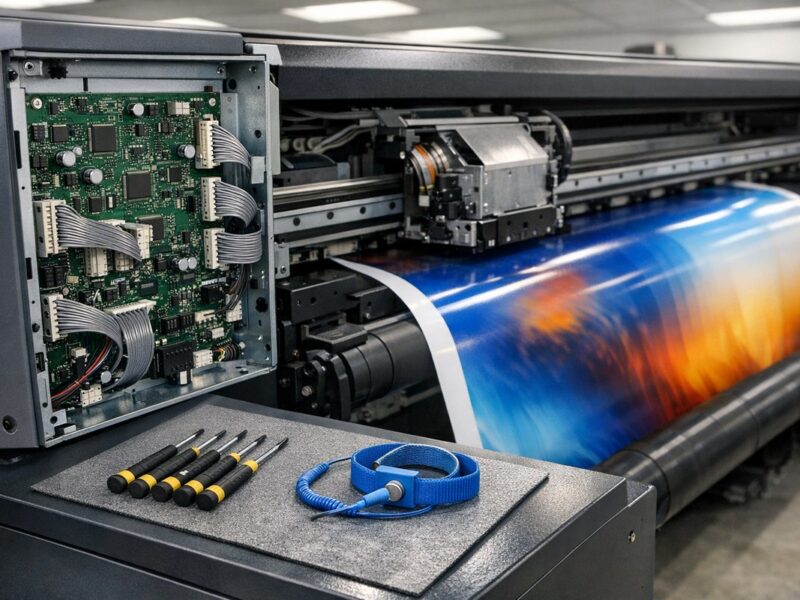
The Midrand specialist supplies printer control boards, printhead driver boards and RIP software modules, with remote setup for print shops nationwide. MIDRAND, South Africa - When a wide-format printer starts dropping channels in the middle of a vehicle wrap job, the shop owner usually suspects the printheads first. Often it is a board, a tired cable or a RIP setting that changed after the last update. InkFlow RIP, a Midrand specialist in printer electronics and RIP software, has listed its control boards and RIP software for print shops running wide-format inkjets. The hardware side The board range covers main control boards, printhead driver boards, carriage control, feed motor, ink pump, capping station, heater, vacuum and take-up boards, a head voltage module and a USB interface board, plus encoder sensor kits for positioning accuracy. InkFlow RIP holds common replacement boards locally as spare board stock, so a shop with a failed board is not left waiting on an import. Setup tools include a head alignment tool, a waveform setup pack and a test print pack for nozzle, alignment and feed checks during commissioning. The software side On the RIP side there is the core production RIP, a full RIP workstation package and a network licence for teams that share job submission. Add-on modules handle nesting to save roll media, step and repeat for labels and decals, white ink layers and underbase, variable data, cut marks for downstream trimming, dual roll control, raster speed and a job archive for repeat work. Colour profile sets and a colour calibration pack balance ink limits and linearisation on the media a shop actually runs. "A board can be perfectly fine and the printer still bands, because the profile was built for a different vinyl," said InkFlow RIP's colour workflow specialist. "We look at the whole path: the board, the driver, the RIP queue and the media. And we back the settings up before anyone touches anything." That backup point is a …
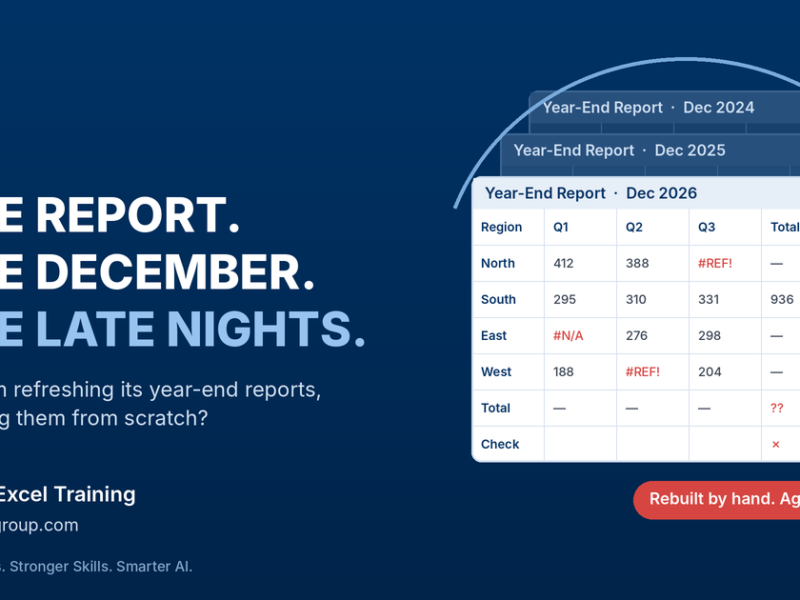
The Year-End Excel Crunch: Why Finance Teams Rebuild the Same Reports Every December
Johannesburg: As year-end approaches, many finance and reporting teams across South Africa are bracing for the same long nights: copying data between workbooks, fixing broken formulas and rebuilding reports that were built by hand last year, and the year before that. According to Arnold Muscat, Managing Director of College Africa Group (CAG), the problem is rarely a shortage of effort. "Most teams don't have a time problem at year-end. They have a process problem that shows up as a time problem," he says. "The same report gets rebuilt manually every cycle because nobody has had the chance to step back and fix how it is put together." Where the time goes Muscat points to a few patterns CAG sees repeatedly when working with finance, HR and operations teams: - Data is pasted in from system exports rather than connected, so every refresh starts from scratch. - Key formulas live in one person's head, and the workbook breaks when that person is on leave. - Lookups, totals and reconciliations are checked by eye instead of with built-in controls. - Reports are formatted manually each month, rather than built once as a reusable template. "This is where Advanced Excel skills pay for themselves," Muscat says. "When a team learns to structure its data properly and use tables, reliable lookup formulas, summaries and simple checks, the year-end pack stops being a rebuild and becomes a refresh." Fix it before the pressure starts His advice to managers is to act before the crunch, not during it. "December is the worst time to redesign a report. October and November are the right time. Pick the one report that causes the most pain, and fix that properly first." He also cautions against jumping straight to automation or AI tools without checking the basics. "If the source data is messy, automating it just produces wrong answers faster. Get the structure right, then automate, and always validate the output against the source." Practical steps for finance …
Track Your Press Release HERE:

After the Eastern Cape Floods, Bunkerise Shares a Free 72-Hour Household Plan for South Africa
South Africa's National Disaster Management Centre classified the impact of the severe weather that began on 9 June 2025, including heavy rainfall, flooding, snowfall and damaging winds, as a National Disaster. The gazetted notice records the Eastern Cape as the most affected province. According to SAnews, the government news agency, 6,869 households were affected and 4,724 people were left homeless. Bunkerise, a household readiness company based in Vancouver, B.C., Canada, is sharing its free 72-Hour Checklist and its 72-Hour Household Plan workbook with households in South Africa, as a practical first step that sits alongside official advice. Bunkerise starts with a plan rather than a shopping list. Its free 72-Hour Checklist sets out quantities per person, the water math and a last 60 seconds grab list. The 72-Hour Household Plan workbook turns that into meeting points, an out of area contact, utility shutoffs, medication, children, pets and wallet cards for everyone in the home. Both are written to be read in an evening and acted on in a weekend. Bunkerise guides are educational and are designed as a bridge to official guidance, not a replacement for it. In an emergency, instructions from local authorities come first. "The Eastern Cape floods showed how quickly water, power and roads can all go at once. A plan that fits on one page and a bag that is already packed give a family time to think," said Kathy Bunkerise, spokesperson for Bunkerise. The free checklist is available at bunkerise.com. About Bunkerise Bunkerise is a household readiness company based in Vancouver, B.C., Canada. It publishes field manual guides, including The 72-Hour Household Plan workbook, The Cascadia Earthquake Playbook and Wildfire Ready: The Evacuation Guide, and is preparing 72-hour kits packed to a published manifest. Its first guides are written for the Pacific Northwest; the household plan and free checklist apply anywhere. CLICK HERE to submit …
Track Your Press Release HERE:

El Niño Summer: Pack a Water Kit Like You’d Pack a Load-Shedding Kit, Says SANBWA
As forecasters warn of a hotter, drier summer and municipal supply stays under strain, the South African National Bottled Water Association shares a simple guide to storing safe drinking water at home. South Africans learnt to keep a torch, a power bank and a gas cooker on hand during load-shedding. This summer, the South African National Bottled Water Association (SANBWA) says every household should add one more item to that list: a properly stored emergency supply of drinking water. The South African Weather Service has warned that a strong El Niño is likely to bring below-normal rainfall and above-normal temperatures to most of the country from now until early 2027, with more frequent heatwaves. Global forecasters expect this El Niño to be stronger than the 2015/16 event that brought widespread drought to southern Africa. At the same time, residents in Johannesburg, Nelson Mandela Bay and many smaller towns already live with regular water outages, while last week's contamination of tap water in eastern Tshwane showed how quickly a safe supply can disappear. SANBWA CEO Charlotte Metcalf says: "Most people only think about drinking water when the tap runs dry or a boil-water notice goes out. A few minutes of planning now means your family has safe water for drinking, cooking and medication on the day you need it, especially in a heatwave, when the body needs more water, not less.” How much water do you need? International emergency guidance, including from the US Centres for Disease Control and Prevention, recommends storing about four litres per person per day: roughly two litres for drinking and the rest for food preparation and basic hygiene such as brushing teeth. A three-day supply, or 12 litres per person, means a family of four needs about 48 litres. Add extra for hot weather, babies and young children, pregnant and breastfeeding women, older people, anyone who is ill and pets. What to store Unopened, bottled water is the safest and …
Track Your Press Release HERE:

Why Tomorrow’s Drilling Professionals Need More Than Technical Skills
As World Youth Skills Day 2026 highlights the importance of building skills for a shared future, Rosond believes the next generation of drilling professionals will need technical expertise alongside the human-centred capabilities that enable safer, smarter and more collaborative operations. As the mining industry embraces new technologies, evolving operational practices and increasingly complex projects, the skills required of young professionals are changing. While technical expertise remains fundamental, tomorrow’s drilling professionals will also need to communicate effectively, collaborate across multidisciplinary teams, adapt to new technologies and develop the leadership capabilities that will shape the future of the industry. This year’s World Youth Skills Day, celebrated annually on 15 July, carries the theme ‘Skills for a Shared Future’, recognising that future workplaces will increasingly depend on a combination of technical, digital and human-centred skills. For leading drilling technology solutions provider Rosond, this reflects an approach that has long underpinned its investment in developing the next generation of industry professionals. “Technical competence will always be at the heart of what we do,” comments Glen McGavigan, Chief Executive Officer at Rosond. “However, the modern drilling environment demands far more than the ability to operate equipment. Our people need to solve problems under pressure, communicate clearly, work effectively as part of diverse teams and continuously adapt as technology and industry requirements evolve.” Collaboration drives safer operations Drilling projects involve multiple disciplines working together in environments where safety, efficiency and precision are paramount. Success depends on effective collaboration between operators, engineers, supervisors, maintenance teams and clients. Rosond therefore develops communication and teamwork alongside technical capability throughout its training …
Track Your Press Release HERE:

A Young Kimberley Boys High School Learner Turning Life Experiences Into Powerful Stories
At a young age, Neo Rapelang Kevin Lechwenyo is carving out a place for himself in the world of literature through poetry, storytelling and creative writing. The young talent from Kimberley, Northern Cape, is using words to express his emotions, reflect on life's challenges and inspire others through stories rooted in hope, resilience and self-discovery. As a learner at Kimberley Boys' High School, Neo's journey reflects the determination of a young person who is passionate about developing his creative abilities while continuing his education. His story is a reminder that talent can emerge at any stage of life and that young people can use their experiences to create work that resonates with others. Finding Strength Through Writing For Neo, writing is more than a hobby. It is a means of understanding himself and the world around him. Through poetry and storytelling, he explores emotions that are often difficult to put into words, giving expression to grief, love, pain, hope and the challenges of growing up. One of the most significant experiences in his life was losing his mother at the age of 15. Such a loss can profoundly affect a young person's life, and for Neo, writing became a way to process his emotions and navigate his grief. Rather than allowing difficult experiences to silence his voice, he has continued to develop his craft, transforming personal reflections into creative expression. His journey demonstrates how literature can offer comfort, encourage self-reflection and help people communicate feelings they may otherwise struggle to express. A Passion That Goes Beyond Poetry Neo's creative interests extend beyond poetry into fiction, music, screenwriting and storytelling. His willingness to explore different forms of expression reflects a desire to grow as a writer and connect with audiences in different ways. Among his published works is Sunset's Redemption, a story set in the Karoo that explores themes of healing, forgiveness, …
Track Your Press Release HERE:

Why Women Belong at the Heart of Mining Engineering
Resilience, representation and innovation will shape the future of engineering in Africa Celebrated annually on 23 June, International Women in Engineering Day (INWED) shines a spotlight on the achievements of women engineers around the world while encouraging greater diversity and inclusion within the profession. For Dr. Adwoa Boaduo, Group Head of Safety at Rosond, the day is also an opportunity to challenge outdated perceptions about women in mining and engineering. Dr. Boaduo’s journey into mining engineering was shaped by personal experiences growing up in Virginia in the Free State, where she witnessed both the opportunities and hardships associated with mining communities. “I remember seeing victims of mining incidents at the mining hospital, amputees in wheelchairs, and constantly asking myself why this was happening,” she says. “That experience later drove my technical focus towards mine safety and rock engineering.” She was equally impacted by the social and economic consequences that followed the closure of several gold mining operations in the area. “Almost overnight, the town changed from a vibrant community into what felt like a ghost town, with businesses shutting down and livelihoods affected,” she explains. “That experience shaped my research interest in the impact of mining on sustainable economic development and the long-term sustainability of mining communities.” These experiences, combined with a determination to challenge stereotypes around women in mining, ultimately inspired her career path. Breaking the stigma of women in mining Today, as Group Head of Safety at Rosond, Dr. Boaduo plays a strategic role in strengthening safety systems and operational risk management across the business. “My role focuses on driving safety strategy across the business, improving operational risk management, strengthening leadership engagement, and integrating technology and data into our safety systems.” She explains that effective …
Track Your Press Release HERE:
Rosond Expands Saudi Industrial Footprint Through Strategic Manufacturing Agreement With Bin Harkil
Collaboration to localise exploration drill rig manufacturing and strengthen regional mining capabilities Rosond South Africa, Rosond Arabia and Bin Harkil Co. Ltd. have signed a strategic agreement to localise the manufacturing and assembly of at least 30% of Rosond exploration drill rig structures and components within the Kingdom of Saudi Arabia. The rigs manufactured through this initiative will be deployed for operational use by Rosond Arabia within the Kingdom, directly supporting Saudi Arabia’s localisation and industrial development objectives under Vision 2030. The agreement, signed on 3 February 2026 at the Heavy Equipment Connect Forum & Expo in Saudi Arabia, will be executed in partnership with Bin Harkil Metal Industries, which will serve as Rosond Arabia’s local industrial partner for fabrication, assembly, integration and technical support. The initiative supports Saudi Arabia’s long-term localisation ambitions by strengthening domestic capital equipment manufacturing capability within the mining services sector. The parties anticipate the first locally manufactured drill rig to be completed and operational within Saudi Arabia during the current calendar year, marking a significant milestone in the localisation of advanced exploration drilling infrastructure in the Kingdom. Central to the agreement is Rosond South Africa’s role as the technical and innovation centre supporting the localisation programme. With more than six decades of global drilling excellence, Rosond South Africa brings deep engineering capability, specialised drilling technology development, and internationally recognised operational methodologies that will be progressively transferred to support manufacturing, assembly, training and operational optimisation within the Kingdom. This knowledge transfer programme will ensure that Rosond Arabia benefits from world-class standards while supporting the long-term development of advanced industrial capability in Saudi …
Track Your Press Release HERE:

The Ad That Clients Photographed
Measuring whether outdoor advertising has been noticed usually takes research budgets. For Motswako Office Solutions, the proof came from its own customers' phones. For most advertisers, proving that an outdoor campaign has been seen means commissioning a recall study or relying on modelled impressions. Motswako Office Solutions got its evidence another way. Clients and business contacts began photographing its Golf TV adverts at their golf clubs and sending the pictures straight to the Motswako team. The shared photos arrived during a campaign that has since become one of Golf Ads' longest-running partnerships. The business started with a three-month test in April 2024 and has renewed almost continuously since then. It is now on an open-ended booking across Gauteng and the Western Cape. Motswako National Sales Director Terrence Burger says: "You can look at impression numbers all day, but nothing compares to a client sending you a photo of your ad and saying 'saw you at the club this weekend'. It happened more than once and it told us the people we most wanted to reach were noticing us and remembering us." Reaching the people who sign off Motswako provides office automation, printing and technology solutions to businesses. Its buyers are business owners and senior decision-makers who buy, or influence buying, for their organisations. These people are hard to reach through mass media and easy to lose in digital clutter. The company chose Golf TV, the screen network in club lounges, bars and locker rooms, where members spend time before and after a round. According to Golf Ads, 72% of its audience falls within SEM 8–10 and 62% are senior decision-makers or self-employed. BrandMapp research (2024) found that 64% of golfers notice advertising on the golf course. Delarey Hattingh, Product Manager Provantage Sport and Entertainment, says: "A business solutions provider needs to talk to people with purchasing authority. Golf TV puts Motswako in front …
Track Your Press Release HERE:
Rosond’s Impact on Employees and Communities Through Bursaries and Learnerships
In an industry where technical expertise and operational excellence are paramount, leading drilling and exploration specialist Rosond recognises that the long-term sustainability of the sector depends not only on innovation, but on people. For Rosond, skills development is not a compliance exercise it is a strategic imperative that drives both business resilience and meaningful social impact. Across South Africa, youth unemployment remains one of the country’s most pressing challenges. At the same time, industries such as mining and drilling continue to face a shortage of specialised skills. Bridging this gap requires deliberate investment, long-term thinking, and a commitment to unlocking potential where it matters most within local communities. Rosond has taken a proactive approach to this challenge through a structured skills development strategy that includes bursaries for learners from host communities, as well as learnership programmes designed to provide practical, career-building opportunities for young people. The bursary programme with 67 active students supports a wide range of fields relevant to the industry, including Finance, Human Resources, Supply Chain, Safety Management, Quantity Surveying, Business Management, Engineering disciplines, Information Technology, and Environmental Studies. Meanwhile, learnership programmes focus on areas such as Business Administration, giving young people hands-on experience to transition successfully into the workforce. “Skills development is central to how we build a sustainable business,” says Glen McGavigan, CEO of Rosond. “We operate in communities that are rich in potential, and it is our responsibility to invest in that potential. When we support education and create pathways into the workplace, we are not only strengthening our talent pipeline we are contributing to broader economic growth and social stability.” Through its bursary programme, Rosond enables students from its host communities …