
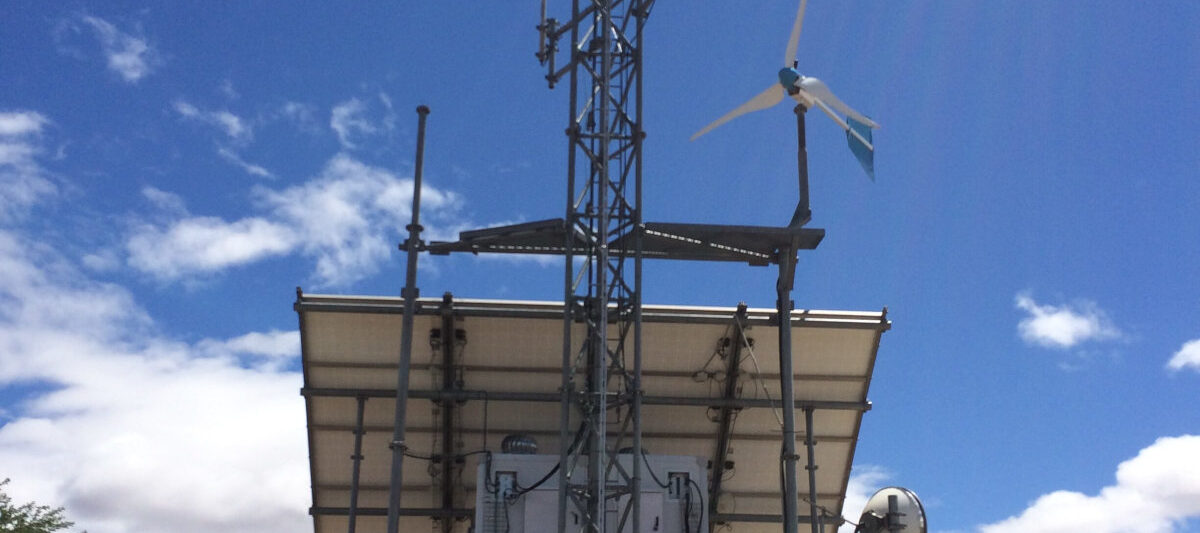
- We try to answer the question; “Why are South African Telcos selling off their cellphone towers to foreign tower companies like Helios, SBA etc.”
- It is estimated that there are between 24 000 and 74 000 cellphone towers in South Africa.
- The USA is estimated to have over 200 000 Cell Towers.
Let’s rewind a bit to when cellular phones first made their entry into the South African market and remember that SA was virgin territory for these devices, necessitating the need for the two selected operators of the time – MTN and Vodacom – to establish their own distribution network with cellphone towers mushrooming up at an alarming rate.
Disclosure: Straton Electrical was heavily involved in this roll-out and we all remember the very first cell tower that we provided electrical reticulation for on the then Trust Bank Building close to the corner of Mount Road and Govan Mbeki Avenue, Gqeberha.
Over the years Straton Electrical and Mbane Contracting have been on top of mountains, high masts, high buildings and remote areas of the Eastern Cape providing electricity, lightning protection and now solar and wind power. So, one could say that we have an almost fatherly love for the cellphone industry.
The industry has evolved incredibly since then with the emphasis on Voice becoming less prominent whilst the various operators explore the technology industry and the benefits offered in providing and managing data.
We now see operators like Vodacom who have quietly become the largest cyber-bank on the continent and branching out into cyber-security, building management and cloud services.
When the cellphone towers began mushrooming both operators fiercely protected their ‘proprietary’ equipment and towers and ‘sharing’ was a swear word. The public started seeing cellphone towers cheek by jowl as the two rivals battled for the prime spots along major routes – N1, N2, N3 and heavily populated areas.
This led to government getting involved and restricting the operators ability to place rival cellphone towers next to each other and ‘encouraging vigorously’ the rivals to share tower infrastructure.
Essentially a cellphone tower ‘talks’ to handsets close by and passes the voice or data signals on to other towers or base stations to connect the handset to it’s desired destination.
As many of these are in remote or low trafficked areas the incidents of theft and vandalism have escalated dramatically with operators like Vodacom reporting an average of 20 incidents per day at their Eastern Cape towers.
After almost thirty years of CAPEX spend on towers by operators they realised that they had built up a large asset base of towers requiring maintenance and skills outside of their actual core business. Basically the towers themselves, the power to and the security around these towers do not fit most communication businesses core business. In addition the plethora of leases and deals made with landowners to rent a piece of their land were more suited to a property company than a technology company.
Of course the asset base was a ripe ‘target’ for any CEO looking to ‘massage’ his companies share price so moving from a CAPEX to an OPEX model and freeing up cash to invest somewhere else whilst smoothing expenses to a predictable number – which is something else that industries relying on recurring revenue desire.
And, just like that, the rush by SA’s Telcos to sell off their towers began:
- In 2011, Cell C sold off its 3,200 towers to American Tower Corporation for $430 million.
- In June 2022, MTN sold its 5,701 towers to Nigeria’s IHS Towers for $337 million, with the company stating that it will use the proceeds of the sale to fund the purchase of spectrum to high-demand spectrum frequencies and provide it with additional balance sheet flexibility.
- In July 2022, Vodacom announced that it would unbundle its over 9,000 tower assets into a separate subsidiary in which it would hold a 100% shareholding. The telco said the move was to enhance asset returns and lower communication costs.
- In March 2024, Telkom announced an agreement with a consortium of buyers to sell off its towers subsidiary, Swiftnet, for $356 million.
According to Vodacom their tower business is now owned by a 100% owned subsidiary responsible for the tower, landlord leases, security and related infrastructure. Vodacom remains responsible for the core equipment installed in each site – an important factor in helping to differentiate their service from others.
So it is probably fair to say that Vodacom will not receive much resistance from South Africans as they have ‘sold’ their tower business to a local group 100% owned by Vodacom.
Whereas one will always feel a smidgen of unease when realising that the other telcos have sold their towers to majority foreign owned companies listed on the London Stock Exchange, NYSE and the like.
That towers are big business is a given:
- Landlords can earn around R7000 per month leasing space to a tower company.
- The tower company then leases space on it’s towers to telco tenants at around $2 500 each.
- These towers often have 3 or more telcos hosted on each. In order to be profitable the industry guideline is to have a minimum of two operator on each tower.
For example: The U.S. firm American Tower topped a January 2024 ranking of telecom tower providers, with the company operating almost 223 000 towers. Indus Towers (formerly Bharti Infratel) ranked second with over 204 000 towers.
But, South African cellphone companies are not alone or pioneering in the selling off of cellphone towers as they have followed the lead set by mobile cellphone companies in the United States where, historically, wireless carriers once owned towers, with some carriers even operating their own tower companies (T-Mobile Towers, AT&T Towers, and US Cellular Towers). However, over the last two decades, tower companies have bought towers from wireless carriers. The carriers saw the towers as extra non-critical assets that could be exchanged for capital.
Some of the largest USA tower acquisitions include:
- Verizon sold 11,324 towers to American Tower in 2015
- AT&T sold 9,100 towers to Crown Castle in 2013
- T-Mobile sold 7,200 towers to Crown Castle in 2012
- in 2005, Sprint sold 6,600 towers to Global Signal, which was later acquired by Crown Castle.
According to steelintheair.com estimates, these are the major USA players in the Tower Industry:
- American Tower: 43,000
- Crown Castle: 40,000
- SBA Communications 17,478
- Vertical Bridge: 9,000
- Harmoni Towers: 1,682
- Tillman Infrastructure: 1,500
- CTI: 1,000
- Diamond Towers: 1,000
- TowerCo: 1,000
- Phoenix Tower International: 950
- Octagon Towers: 525
- Tarpon Towers: 500
- K2 Towers: 409
- Horvath Towers: 400
- Subcarrier: 400
- Skyway Towers: 385
- TowerCom: 370
- APC Towers: 250
- Parallel Infrastructure: 200
- Milestone Towers: 155
- Branch Towers: 150
- Cityswitch: 150
- Industrial Tower West: 125
- Sun State Towers: 120
- Tower Ventures: 100

Boilerplate and Editor’s Notes.
More Info on Aren’t Towers a ‘Core Business’ for Communications Companies? here:
Twitter: https://twitter.com/MyPE
Facebook: https://www.facebook.com/StratonElectrical/
CLICK HERE to submit your press release to MyPR.co.za.
Track Your Press Release HERE:
Check Online Visibility
Verify where this release is currently indexed:
 Cinema attendance surges on back of strong content
