
- Smart Tools vs Less Smart Meters
- Is Shelly Smarter than Eskom?
Eskom’s Claim
Eskom are actively encouraging consumers to switch to Smart Meters. Listening to SAFM this morning one of the presenters read out Eskom’s advert (radio’s version of editorial!) and one of the claim in the script, amongst others, was that Smart Meters “save energy”. The way that it was worded made me wonder just how Smart Meters will save me energy (money) or magically make individual appliances more energy efficient if installed.
Is this correct?
The bottom line is that ultimately, a smart meter does not inherently generate electricity or make individual appliances more energy-efficient on its own. Instead, it saves energy by modifying human behaviour, automating load reductions during critical peak times, and preventing system-wide overloads, effectively lowering overall demand on the national grid.
So, it could be said, that Eskom is using an obfuscation technique to ‘encourage’ consumers to sign up to being more controlled at the main electrical entry point into their properties.
So what is the actual story around Smart Meters?
When Eskom claims that smart meters “save energy,” they are referring to a combination of demand-side management, automated grid balancing, and behavioural changes enabled by two-way digital communication.
Unlike traditional mechanical meters – which simply record how much electricity has been used after the fact – smart meters actively change how energy is consumed through several practical mechanisms:
Load Limiting and Remote Control
Smart meters feature two-way communication capabilities that allow utilities like Eskom to manage grid constraints dynamically.
During periods of high grid strain, Eskom can initiate load limiting rather than plunging an entire neighbourhood into total darkness (load shedding).
The smart meter caps the maximum output power allowed into a home for a defined period, prompting consumers to manually or automatically turn off heavy-draw appliances (such as geysers, stoves, pool pumps, and washing machines).
If high-consumption appliances are left running past a warning threshold, the meter temporarily trips or disconnects supply to avoid a total system overload, directly forcing a reduction in energy demand.
Targeting High-Energy Assets (Geysers)
Water heating (geysers) accounts for a massive percentage of domestic electricity demand in South Africa – often up to 35% during peak periods. Smart meter and smart geyser projects allow utilities or homeowners to remotely monitor and control geysers. By scheduling heating cycles to off-peak hours or temporarily turning them off during grid emergencies, utilities drastically shave down peak-hour energy consumption without permanently cutting off essential power (like lights, routers, and medical devices).
Real-Time Consumer Awareness and Behaviour Shift
Traditional meters hide usage patterns until the monthly bill arrives. Smart meters give consumers (and automated home systems) granular, real-time data regarding when and how much electricity they are consuming. Studies show that when households have visibility into their consumption patterns – such as identifying “phantom loads” (appliances left on standby) or energy spikes – they naturally modify their behaviour to eliminate waste and lower costs.
A Better ROI From Shelly
Now, if Eskom really wanted to directly benefit consumers then they would be touting Smart Home Automation via products from Shelly.
These products will save significantly more energy for a consumer than just a smart meter alone.
While a smart meter provides visibility and passive tracking of electricity usage (or allows the utility to manage load limits), a smart automation ecosystem like Shelly actively intervenes to reduce consumption, eliminate waste, and automate energy efficiency.
Why Shelly products achieve greater energy savings:
Passive Monitoring vs. Active Automation
Smart Meter: A smart meter tells you how much electricity you used and when you used it, but it cannot turn off appliances for you or change your home’s behaviour on its own.
Shelly Products: Shelly devices feature smart relays, plugs, and switches (such as the Shelly 1PM or Shelly Plug) that actively control circuits and appliances. They can automatically shut off power based on schedules, timers, or triggers, removing human error (like forgetting to turn off an appliance or light).
Eliminating “Phantom Loads” (Standby Power)
Smart Meter: Cannot see individual appliance standby draws hidden inside your home’s total aggregate load.
Shelly Products: Smart plugs and switches can completely cut power to entertainment centres, computers, and kitchen appliances when they are not in use, entirely eliminating phantom/standby power consumption.
Granular Circuit and Appliance Control
Smart Meter: Measures total household consumption from the main distribution board.
Shelly Products: Devices can be installed on specific high-draw circuits or individual appliances – such as geysers, pool pumps, and air conditioners – allowing you to automate precise run-times (e.g., running a pool pump only during specific solar or off-peak hours).
Integration with Solar and Inverter Systems
Smart Meter: Standard utility meters simply measure net import/export.
Shelly Products: Using devices like the Shelly Pro 3EM alongside Shelly smart relays allows households with solar panels to track excess solar generation in real time and automatically divert surplus energy to heavy loads (like heating elements or pool pumps) rather than letting it go to waste.
A smart meter is an informational tool that helps you see your energy use, whereas Shelly automation products are intervention tools that actively stop energy waste. Combining them – or using Shelly’s own energy monitoring meters with their smart switches – yields a far greater reduction in overall energy consumption and electricity costs.
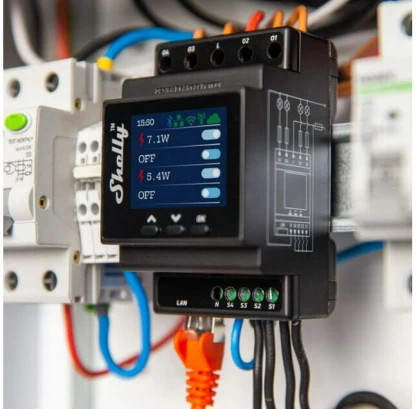
Shelly Pro 4PM
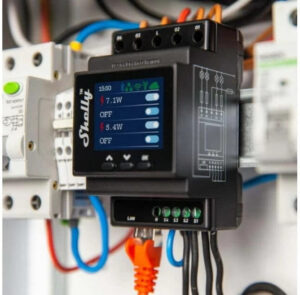
An example of a Smart Shelly Device is the Shelly Pro 4PM which has 4 channels with Power Monitoring. in addition you can see exactly how many Watts each of the four circuits is using; The Shelly 4 PM supports up to 16A per channel, with a total device limit of 40A and includes professional-grade protection against overpower, overvoltage, and overtemperature.
All the Shelly devices are capable of being live monitored and adjusted on your mobile device WITHOUT a cloud subscription of any kind.
Stratlec also has a range of Shelly Accessories to make installation simpler and faster.
Links:
Boilerplate and Editor’s Notes.
More Info on Who Actually Saves When Smart Meters are Installed? here:
X: https://twitter.com/MyPE
LinkedIn: https://www.linkedin.com/company/stratlec/
Facebook: https://www.facebook.com/StratonElectrical/
CLICK HERE to submit your press release to MyPR.co.za.
Track Your Press Release HERE:
Check Online Visibility
Verify where this release is currently indexed:
 Record prize purse announced for Free State at the inaugural Absa RUN YOUR CITY MANGUANG 10K