
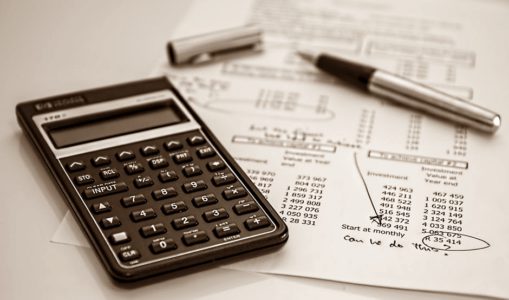
If there is one thing more deeply entwined in every area of life than anything else – it’s money. Everything you do – from education to career to lifestyle – is about how you are going to earn it, save it, invest and benefit from it. Looking after it is paramount, but not that easy to do on your own. The benefits of engaging a professional advisor should far outweigh any fees you may be charged. The purpose is to increase your net value and secure your future. And perhaps there isn’t a price on that? When seeking financial advice, you need to know you are talking to someone who is not only qualified and thoroughly experienced, but also trustworthy, dependable, courteous, empathic, and genuinely concerned about what is best for you. Because it’s not only about making money – it’s about your life, dreams, family and future. Good financial decision-making is the key to enhancing standards of living, peace of mind and lifetime security. The numerous benefits of having sound professional financial advice: A well considered plan and strategy will provide an overall picture of your financial situation – and allow you to seize opportunities to monitor, review, and make the necessary changes to complement changes in your life circumstance. A financial advisor will give you not only the best of his or her mind, but also integrity, empathy and heart. A planner may often act as financial counsellor, coach and mentor to help motivate clients to live their lives and dreams to the fullest. An advisor is an important defense mechanism preventing you from deviating from your plan to your detriment. He or she is armed with the right tools and systems to help protect you from you, such as: cancelling investments or policies at the wrong time or for the wrong reasons. Advisors keep you focused on goals rather than the sensationalism of the media and unsettling, but usually transitory, world events. An advisor has the expertise and knowledge to help you choose …
The Stock Market: Why Aren’t we Learning This at School?
The driving energy of economies is the stock market. It underpins our savings, investments, pensions, policies – in fact our very lifestyle, standard of living, achievements, aspirations and everyday experience. It is the engine of development, business, progress and the creation of wealth. It is the wheel of fortune, the genie jar and sometimes the deadly game of Russian roulette. But whichever way you look at it – it dictates our experience of life in one way or another. It is fundamental to how we have set up our monetary systems in the world. So why isn’t it taught at school? Basic banking, insurance and higher purchase is not taught either. We learn math, science, history, geography – all well and good. But the basic tool to real survival in the world is mostly ignored. The stock market doesn’t discriminate against poor or wealthy, race, creed or nationality…it operates indifferently and is only engaged in perception, sentiment and risk-tolerant minds ready to become versed in the volatility of sharp declines and heady success. THE BEAUTY OF COMPOUND INTEREST It is so important to explain to young people how this can work for them or against them. When interest is gathered on investments, reinvested to grow even higher interest, which is again reinvested – there is potential for enormous returns over time. However, too many people become familiar with compound interest on debt rather than its creative prospective in a unit trust account or share portfolio. They graduate with a desire to get stuff as soon as possible without understanding the importance of patience and budget planning. Once the positives of compound interest on savings are explained, students enter the working world with an understanding of what debt actually costs and the alternative effect of compound interest on long-term savings. If this basic distinction is taught, imagine how differently many of our young people might approach the start of their adult lives. THE LABYRINTH …
Track Your Press Release HERE:
Money: Does it Really Exist?
“Even though the number of dollars in the world are real and finite, the value we assign to those dollars is completely arbitrary. It changes all the time.” ~ Sean Edwards, author, speaker, political thinker. So the answer to the question is a quick no, it doesn’t exist. Money is something we made up in order to create a standard value for controlling barter and trade. And without it, life would become very complicated. If you’re a shoemaker and need clothing, then you might trade shoes with a shepherd for wool. However, if the shepherd doesn’t need shoes but dog whistles, then you have to find someone who makes dog whistles who is needing shoes – all before you can get the clothes you need. So because trading one product for another would became cumbersome, we invented a tool of exchange which could easily represent an agreed value, and be used as an acceptable leverage for moving goods around. THE VALUE OF MONEY Money used to have a definitive value when related to a specific weight of gold or silver – but since the world retreated from the gold standard after the first world war (see https://www.fosterwealth.co.za/2016/08/) money has come to have value only in our minds, in the way we believe it to be valuable. Money is merely numbers in a bank represented tangibly by pieces of paper. These numbers represent fluctuating values dependent on market mood swings, which are in turn dependent on perception, confidence, belief and agreement. And nothing much else. Most people think there is a certain amount of money in the world and that some people unfairly have a greater percentage of it than others. They espouse the view that if poorer persons could just wrestle some of that money from the wealthy, they would be better off. But this would not necessarily be helpful – because money is actually an infinite entity. In other words, if you spread a finite amount of money around instead of using it innovatively to create more money (as the wealthy very …
Track Your Press Release HERE:

Material Things: The Investment Value of Possessions
Buddhists say that material possessions get in the way of reaching greater understanding of ourselves. There are probably some psychiatrists who might agree. But despite philosophy and advice, possessive desire is deeply entrenched in our psyche; older than history and part of the very foundation of being human. Over a hundred thousand years ago, shells and stones became coveted and worked into objects of beauty. Ultimately these artifacts and their consequent trade value laid down the basis of all economies. Today, whether you buy property, art, collectibles or jewellery, you are investing in the security of physical objects as a steady alternative to the sometimes erratic performance of the stock market. Some people become master collectors, cannily purchasing objects of the past to shore up the future. Certainly, if you know what you’re doing, physical possessions may well enhance the security of your investment portfolio in uncertain times. BRICKS AND MORTAR Despite ups and downs, the property market has generally shown an upward growth over the years. Your house is usually your biggest and most expensive possession – but it’s not the house itself that necessarily increases in value, but the location it occupies. Any property is better than no property – but area is hugely significant. A house in the right location is always likely to increase value faster than one in a less sought-after position. Property always beats rental. It is the best kind of ownership for peace of mind, security and a sense of settled future. It provides you with a place to live while building a better looking portfolio year by year. As Mark Twain said: “Buy land…they ain’t making any more of it”. THE ART OF THE DEAL A thing of beauty is a joy forever – or so the saying goes. And very often it is forever because once a rare object has been attained, there is often little inclination to sell it unless the owner is forced to do so. For many, possession is still the prime …