
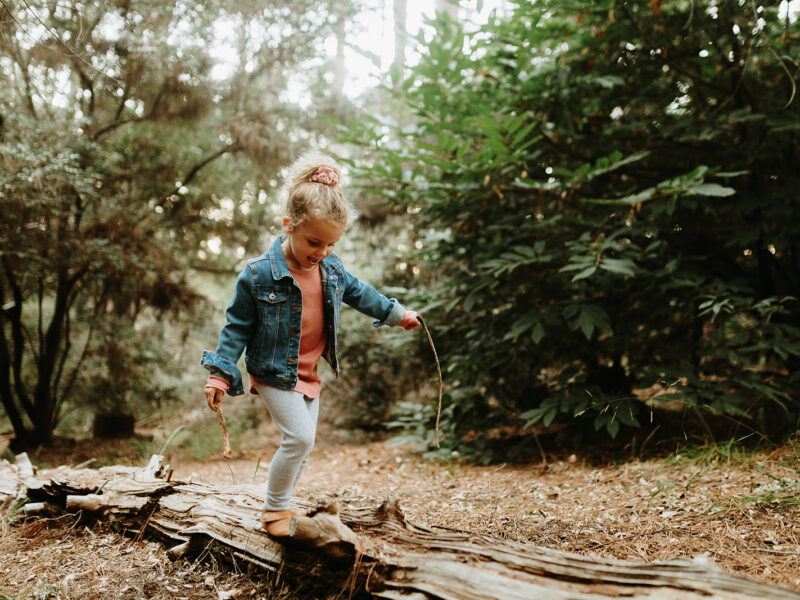
Barefoot is best for little feet but there are times where shoes have to be worn for protection. These need to be as natural and simplistic as possible so that toddlers’ feet can do what they are naturally meant to do and develop correctly. John and Nicole van Besouw noticed their young sons stumbling over tree roots and struggling to climb rocks during family walks in Cape Town’s forests. Watching their adventurous boys, they realised that the hard and thick-soled shoes the toddlers were wearing were hindering their movement. As an occupational therapist, Nicole knew that incorrect footwear could negatively impact foot and overall development in children. “It’s natural for mums and dads to want to protect their children’s feet but it’s incorrect to think that toddlers need arch support or cushioning, even if their feet look flat,” Nicole explains. “In fact, science shows us that the opposite is true - the less cushioning they have the more the ligaments and muscles naturally strengthen.” These ligaments are the primary structure for supporting the foot. “Forcing developing feet into the wrong kind of shoes will negatively impact gait (walking) and can even cause deformities.” she says. As Dr Irene Davis of the Harvard Medical School states, “If we start our kids out wearing minimalist shoes, there will be no adaptation that is needed as adults and I believe that this could be one piece of the holy grail in reducing musculoskeletal injuries in adults.” 1 Footwear should support the foot’s physiological function and the shape and dimensions of the shoe should be the same as that of the foot. As the feet of children are still maturing, they are more vulnerable to external influences like shoes. 2 The couple started researching barefoot-designed shoes for toddlers. Combining Nicole’s OT knowledge with John’s engineering expertise, they created a shoe from local materials that is made for movement, stability and natural play. Since then, their handmade …

The Answer Series launches first of its kind all access offering
Learners across the country have returned to school for the second term, homework has started, and some lunch box lids have already been lost. The Answer Series range of study guides has been South Africa’s education companion for more than 46 years, assisting and instilling confidence in learners and teachers alike and awakening their potential to achieve better results. In the past, some parents have had to choose which study guide to buy. Now, for an accessible fee, their children will be able to access every guide in The Answer Series Library on any device. New all-access licence “Everything in education had to flip towards the digital over the last two years,” says George Eadie, the CEO of The Answer Series. “Digital solutions provide new products, new business models and different consumption possibilities. Through our all-access offering, learners and teachers can benefit from more than one or two of our popular sellers - they can access all the other books too.” Eadie is constantly looking at ways to increase the assistance he can provide for South Africa’s learners and teachers. “We are also developing a curated layer of multimedia content for our books, starting with mathematics in Grade 12. Using this digital content alongside the study guides is most seamless in an e-book.” Learners and teachers will now be able access the books from anywhere and on multiple devices. While many learners still love the physical books, having all your books ready at home and in class is sometimes tricky. Teachers can project or cast exercises and explanations onto screens during lessons, and learners can access their own copy via the free Snapplify e-reader on their personal device. The cost of an all-access licence, in 2022, for Grade 10 to 12 is R499 per annum or R79 month-to-month; for Grade 9 learners it is R219 per annum or R35 month-to-month; and for the Grade 8 learners the cost is R90 per annum or R20 month-to-month. The new all-access licence …
Track Your Press Release HERE:
Nomzamo Matrics Aim For The Stars With The Help Of Somerset College
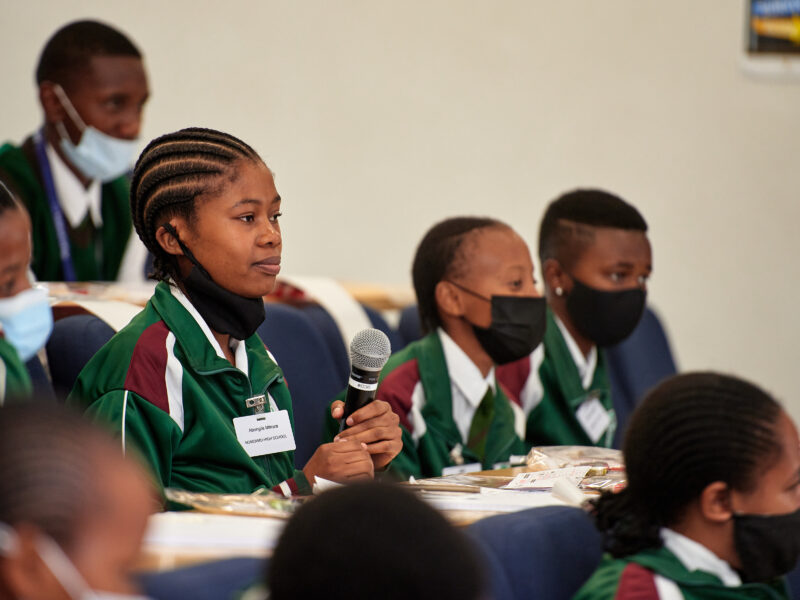
The second term of the school year is underway and 2022’s matrics are gearing up for their first set of Grade 12 exams in June. It’s an early Saturday morning and a bus is leaving from the neatly arranged classrooms of Nomzamo High School in Somerset West. The 24 learners inside are wearing their uniforms and carrying school bags, as they do every Saturday. They are on their way to Saturday School at Somerset College, determined to reach their goals in the upcoming exams. “Over the years we’ve engaged in many endeavours to improve our matric results,” says Chris Mgubanto, Head of Nomzamo High. “Last year, a partnership came about between us and Somerset College, where some of the educators would come to the school and tutor our learners on Saturdays.” The learners' commitment to their Saturday classes had a great impact, says Mxoleli Mguzulwa, maths and physics teacher at Nomzamo High. “Most came to Grade 12 with low marks in maths. You’d be amazed, but after marking their exam scripts, I saw great improvement.” An acute need There is an acute need in South Africa for quality maths and science instruction, particularly in under-resourced schools. Inspired by the success of the curriculum recovery work that their teachers had done in 2021, Somerset College decided to formalise and expand the programme. As part of the school’s 25-year celebrations, the Saturday School was launched on 22 January 2022. “This initiative is a way we can live out the values we espouse: dignity, aspiration, creativity and contribution,” notes Graham Sayer, Executive Head of Somerset College. “You can’t sit on the sidelines when you have values like that; they impel you to get involved and do what you can to support where it’s needed.” And so, every Saturday the buses arrive and the 24 matric students from Nomzamo disembark at the ESTEAM Centre for sessions in Mathematics, Science and English facilitated by Somerset College’s experienced and dedicated staff. Lessons …