
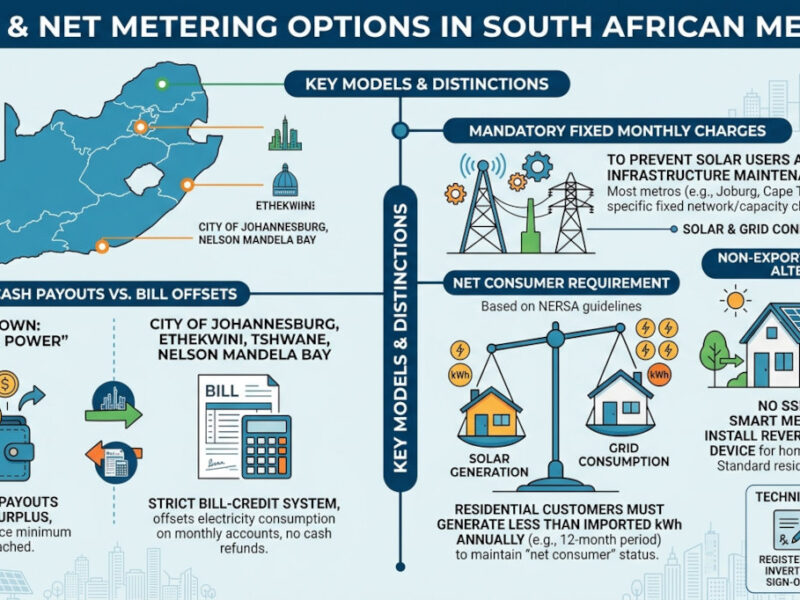
Or, you could just go for the 'Hippy Option' One of the YouTube Channels that I watch on a semi-regular basis is 'Undecided with Matt Ferrell'. In his latest video, "The Hidden Problem With Home Batteries", Matt details how he actually loses money on his home battery setup in a 1 for 1 net metering situation in the state of Massachusetts. Matt is a bit of an uber nerd when it comes to making decisions - not only does he over research but he continues to do so by monitoring and reporting back on his purchases, in detail and well after the date of purchase. In some ways he extolls the BA Systems Energy Management mantra of; "If you can measure it, you can manage it!" BUT, the bottom line when watching such videos from another part of the world is that every country, province, metropolitan area and utility supplier has different ways that they handle charges for electricity and grid connection charges. The quick take away for South Africa is somewhere in the following: Financial efficiency may shift positively if utilities transition away from 1:1 net metering or introduce Time-of-Use (TOU) rate structures. Under TOU rates, storing cheap daytime energy to discharge during expensive peak hours makes batteries considerably more financially viable. In fact Matt estimates that a TOU tariff may impact him directly as follows: From minus $200 per year to between $170 and $800 plus in savings per year. Again - efficient management of use is the key. As a consumer in South Africa there are three main areas to consider: Does my supplier offer Net Metering? What is the proportion (1:1 2:1 etc)? What are the Time of Use Tariffs for each portion? Of course the real reason why South African consumers install home batteries is really an emotional response to an Eskom failure - loadshedding provided the impetus. Now, if Eskom was superbly efficient with a 100% uptime then we could forget about that emotional response and just use Grid Tie Solar - …

MyPR Outlinks List – The OUTLINK LIST You Want to be on!
At MyPR we track all links to outside sites clicked on by readers on the site. The list below is from the Top 500 Outlinks for the 2025 year. And you want to be on it for the simple reason that it is proof (for MyPR at least) that you are getting bang for your buck when signing up for a Featured Press Release account on MyPR. A simple Ctrl F will help you search this list on this page and: If you find your web site URL here then well done in making good choices If you do not find your website URL here then why don't you chat to MyPR about remedying that. Outlink list in Alphabetical …
Track Your Press Release HERE:

No More Google Auto Ads
We at MyPR are also like those of us who wish to consume content with minimum interruptions from adverts. They spoil the flow of the day and those microseconds of time that they take out of our days really do add up over time. On the other hand we also begrudgingly accept adverts as a necessary evil in order for us to continue consuming content. Of course when we pay for something and get to see adverts as well we do get a tad miffed. In order to be make our Featured Press Release submitters days just a little bit better, faster and less irritating we have shuffled pages and categories on MyPR around so that we can seamlessly switch off all Google Adsense Auto adverts on all of our valued clients Featured Press Release submission form pages. A very small thing we know but we do expect to make at least one of our valued mates smile. Twitter: https://bsky.app/profile/myprcoza.bsky.social CLICK HERE to submit your press release to MyPR.co.za. …
Track Your Press Release HERE:

Getting That Press Release Published and Viral
Very few articles go Viral these days without a little push and lots of planning. And yet we still believe whole heartedly that if; "We build it they will come!" So there you sit - you have published your press release on MyPR and received love from re-publication on other news sites and social media BUT your client is seeking a VIRAL post and the pressure is on. Here are a number of suggestions to help you get that VIRAL press release that you seek. First of are some tips to help you craft a compelling pitch (followed by how to target your journalist/publication): Research Journalists: Understand the journalists you are targeting. Read their previous articles to get a sense of their interests and writing style. Know Your Audience: Tailor your pitch to the specific publication and its readership. Craft a Strong Title: Your title/subject line is the first thing journalists will see. Make it concise and engaging to grab their attention immediately. Be Clear and Concise: Who, What, When, Where, Why: Ensure your pitch answers these essential questions right away. Avoid vague statements and get straight to the point. Include Supporting Information: Provide additional context or background information that can help the journalist understand the significance of your news. This could include statistics, quotes, or links to relevant resources. Use MyPR's boilerplate and (for featured press releases) our facility allowing images, video and hyperlinks to mor info. Proofread Your Pitch: Ensure there are no spelling or grammatical errors. A polished pitch reflects your professionalism and attention to detail. Pay attention to these tips if you seek a VIRAL release: Timeliness: Does your press release tie into a current trend, seasonal event, or breaking news? For instance: "After the recent axing of the DA's Andrew Whitfield our HR Professional offers tips of how to avoid that happening to you!" Uniqueness: Is it a fresh take no one else …
Track Your Press Release HERE:

If You Run Your Business Like This Then You Need to Be Spanked
Lets Make the Pimps and Dealers responsible for identifying the most addicted and providing a large portion of the money needed to wean people off of their addiction! * Seems like we humans never learn from our past mistakes and addiction to various products and brands that, after time, are proven to be harmful to our physical and mental well being. Some industries have matured and rolled withe changing tide to survive and thrive whilst others refuse to learn from these 'survivors'. Lets look at a couple of survivor examples: Cocaine: The original Coca-Cola drink did contain cocaine, Coca-Cola was invented in the late 19th century by John Stith Pemberton in Atlanta, Georgia. It was initially marketed as a temperance drink and a patent medicine. The original recipe included an extract from coca leaves, which is where the "Coca" in Coca-Cola comes from. This extract contained cocaine, although the amount was relatively small by today's standards. At the time, cocaine was not recognized as a harmful substance, and it was commonly used in various medicinal products. The drink was intended to provide a stimulating effect, thanks to both the coca leaf extract and the caffeine from kola nuts. By the early 20th century, public perception of cocaine changed, and Coca-Cola began to remove the cocaine from its formula. By 1929, the drink was completely cocaine-free. This shift was as a result of consumer and government pressure and allowed Coca-Cola to continue, unfortunately another ingredient in Fizzy Drinks came under the spotlight nearly 100 years later - Sugar. Sugar: Sugar in fizzy drinks can be quite harmful to your health and could contribute to: Regular consumption of sugar-sweetened beverages is linked to weight gain and obesity. The high calorie content from sugar can lead to an excess intake of calories, contributing to increased body weight. There is strong evidence that sugary drinks contribute to the development of type 2 diabetes. …