

Tulela Safari Lodge lies within the Klaserie Private Nature Reserve, a privately protected area that forms part of the Greater Kruger ecosystem. The reserve is unfenced, allowing wildlife to move freely between Klaserie, Kruger National Park, and neighbouring concessions. This openness shapes both the landscape and the experience of being here. For guests arriving at the start of 2026, each day is different, not because something extraordinary always happens, but because the land itself is in constant, subtle motion. For their team, there is a quiet sense of anticipation at the lodge. Each new year brings changing conditions, shifting wildlife patterns, and new opportunities for guests to experience the reserve. Rainfall and animal movement all influence what happens on safari, ensuring that no two visits are ever quite the same. A unique landscape The area around Tulela is largely made up of mopane woodland, a habitat that encourages a more attentive style of game viewing, a landscape that is sometimes overlooked in favour of more open savannahs. Yet the mopane trees play a significant role in shaping the environment. In summer, their leaves provide shade and a valuable food source for many animals. In winter, the trees thin out, improving visibility and concentrating wildlife around remaining water sources. Wildlife viewing in the Klaserie is varied and seasonal. Alongside large mammals, the reserve supports a wide range of bird species, with activity increasing during the warmer months. Early mornings and late afternoons are particularly rewarding times to notice birdlife around the lodge and during game drives. Seeing the land through a camera For guests interested in photography, the reserve offers many natural opportunities. The emphasis here is less on wide, dramatic scenes and more on individual moments, an animal in the shade, birds at first light and wildlife moving through the woodland. For Andriëtte Krugel, Tulela’s lodge manager, this …
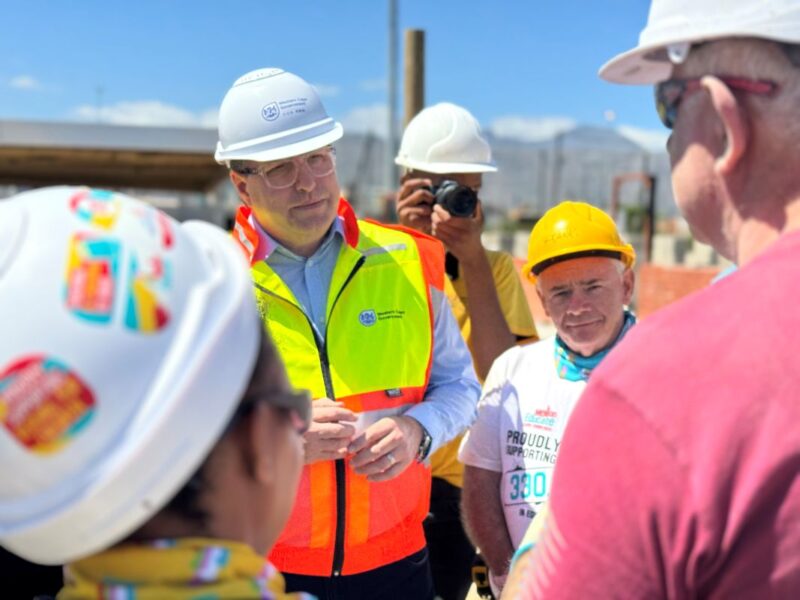
From Bricks to Books: Mellon Educate’s 2025 Building Blitz Tackles South Africa’s Literacy Crisis Head-on
Western Cape MEC for Education, David Maynier, applauds the collaboration with Mellon Educate South Africa, 19 November 2025 – As South Africa faces a national literacy emergency with more than three quarters of Grade 4 learners unable to read for meaning, 450 volunteers, teachers, and community members have come together this week to take on one of the country’s greatest challenges: teaching children to read and giving them the tools for a better future. Mellon Educate, the international charity founded by Irish philanthropist Niall Mellon, is best known for building housing for 250,000 of South Africa’s most vulnerable families. This week, on the dusty school grounds of Cape Town’s townships, Mellon Educate’s 2025 Building Blitz is underway, the organisation is building literacy, brick by brick, classroom by classroom, including dedicated Literacy Hubs created for one-to-one tutoring and digital learning environments. Western Cape MEC for Education, David Maynier, attending the event, said, “We are very proud of this strong partnership with a school, Mellon Educate, and the Department, all mobilising around a common goal to improve literacy.” The numbers driving this mission are sobering. According to the Progress in International Reading Literacy Study (PIRLS 2021), 81 percent of South Africa’s Grade R to Grade 4 learners cannot read or write for meaning. In the poorest schools, that number rises to nearly 90 percent. Without literacy, there can be no learning, no skills, and no opportunity. Literacy is the foundation of a competitive workforce. By ensuring every child can read by Grade 4, we unlock pathways to skills, employment, and economic resilience. Building the Foundation of a Nation Through its expanding Literacy Hub programme, Mellon Educate aims to reach one million children across the country by 2035, establishing 600 community-based hubs and employing 10,000 young literacy tutors. The model delivers measurable results: independent …
Track Your Press Release HERE:
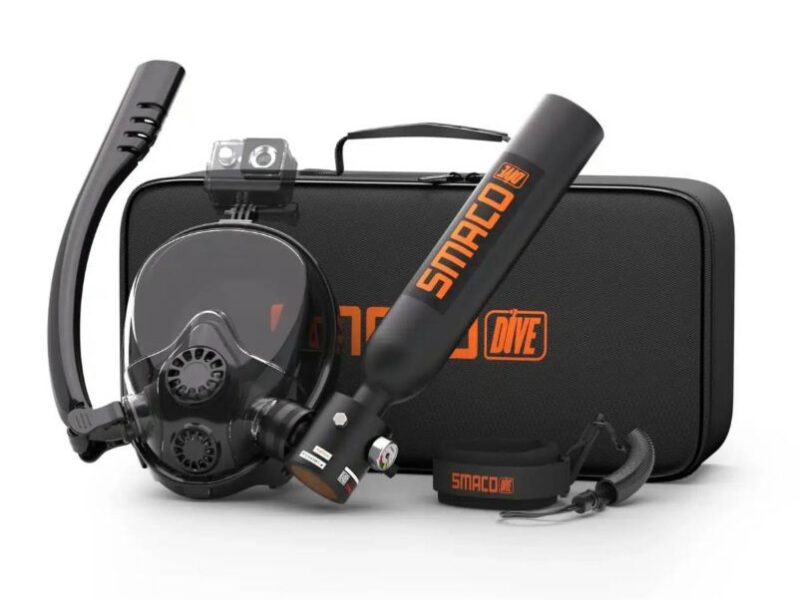
The Mask That Thinks It’s a Scuba Diver
Somewhere between the surface and the deep, the SMACO K2 sits confidently in a category of its own. It is not a snorkel in the classic sense, and it is not trying to replace scuba either. It is a short burst of underwater freedom, a clever little rebellion against gear that’s too bulky, expensive, or intimidating. For someone like me, who’s often on assignment in remote island locations with a suitcase built for speed, this is a welcome middle ground. I don’t want to lug a BCD through three connecting flights. I don’t want dive school schedules when I’m chasing dusk light. I want something lightweight that works, lets me breathe naturally underwater, and gives me a fresh look at the world below the chop. What It Is The SMACO K2 is a full-face snorkeling mask paired with a mini scuba tank that straps on like a pocket-sized air reserve. It lets you descend a few metres and stay there – not for long, but long enough to break away from the splash zone. You breathe through both nose and mouth; there’s no mouthpiece to bite, and the panoramic lens offers clear, fog-free visibility. It is sleek, black, and surprisingly confidence-boosting for beginners. I’ve used dozens of masks, and this one immediately feels less fiddly. Less restrictive. It belongs in a dry bag next to your drone and your GoPro. The Details Air Supply: The paired S300 Plus or S300 Pro tank holds 0.5 to 0.7 litres of compressed air. That gives you roughly 5 to 10 minutes of breathing time depending on depth, effort, and how calm you stay. Pressure Rating: 300 bar (or 20 MPa). You can refill via a hand pump, electric compressor, or scuba tank adapter. Fit & Feel: The silicone seal grips well, and I didn’t experience leaks, though face shapes will vary. It’s snug, not suffocating. Weight: Just over 1 kilogram with the tank. Lighter than any dive setup I’ve used and carry-on compatible. Price: The mask alone is around $118 USD. The full kit with tank and air pump ranges …
Track Your Press Release HERE:
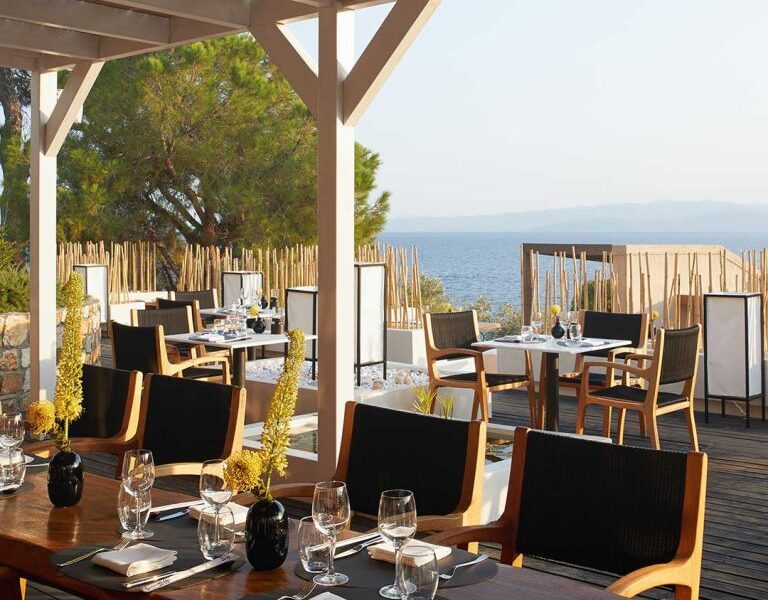
Top 10 Restaurants in Skiathos 2025:the Delicious Art of Wandering
There are places in the world where eating becomes something more than a necessity. In Skiathos, it is a journey—sometimes by sea-salt breeze, sometimes along cobbled lanes beneath lazy bougainvillaea, or down pine-scented roads that feel like a secret only the locals are keeping. This is a place where a plate of grilled fish might share a memory with the wind, and a glass of wine might taste like the end of a long day well spent. So let us wander, fork in hand, curiosity in heart, through ten of Skiathos’s most beguiling restaurants, each one a story unto itself. 1. La Cucina di Maria Italian | Skiathos Town Tucked away like a whispered rumour behind whitewashed walls and jasmine-sweet air, La Cucina di Maria isn’t just a restaurant—it’s a tiny theatre of passion and pasta. The kind of place where you linger over truffle ravioli and forget the time. Maria herself, apron askew and eyes alight, often glides between tables like a sorceress of Tuscan fare. Order the lobster pasta. Tell her your story. She’ll probably add wine. 2. Bourtzi Mediterranean | Old Port, Skiathos At the tip of the old harbour’s stone arm, where waves flirt with café chairs and masts whisper of elsewhere, Bourtzi lays out a table for the gods. The sea is your backdrop; the breeze, your dinner guest. The plates arrive like poems: octopus with black garlic, calamari in saffron. It’s the sort of place where you toast to nothing in particular, and that’s the point. 3. Hagoromo at Elivi Asian | Elivi Resort, Koukounaries If Aphrodite had a sushi habit, she’d come here. Beneath sleek stone and warm wood, Hagoromo serves sashimi like sculpture and grilled seabass that melts like good silk. The Elivi forest murmurs behind you, the sea winks ahead. Eat slowly. The universe is in the details. 4. Marmita Greek | Skiathos Town Down a crooked lane of huddled houses and flickering lanterns, you’ll find Marmita. It hums with life and oregano, with laughter and …
Track Your Press Release HERE:

South Africa Becomes Global BPO Contender
It’s well known that South Africans are competitive and are renowned for a high work ethic. Despite the well-known challenges that our country has, we enjoy a robust independent media, and a sound financial system, and now our intensity to compete has South Africa spotlighted in the Business Process Outsourcing business, a stage often dominated by India and the Philippines. Offering a skilled workforce, cultural alignment with major markets, and significant cost advantages, the country is building out its BPO industry at scale. Of course, perceptions persist about political risk, infrastructure stability, and the broader view of outsourcing to Africa remain obstacles to widespread adoption. However, the industry has proven resilient, with growth rates exceeding 20% annually over the past few years. Driving this transformation is a new generation of organisations blending innovation with people-first strategies to position South Africa as a global leader in outsourcing. The Global Demand for Outsourcing Global organisations face mounting pressures to reduce costs, address talent shortages, and build operational resilience. This has driven many to consider outsourcing as a strategic solution. While traditional markets like the Philippines and India remain dominant, South Africa is quickly gaining ground due to its unique strengths. Among these is an abundant pool of skilled and educated labour, an important advantage in industries requiring complex customer interactions. Additionally, South Africans speak English with a neutral accent that resonates well with customers in the UK, US, and Australia. South Africa’s time zone further boosts its appeal, allowing companies to operate 24/7 without expensive overtime costs. “It’s not just about saving money,” explains Stephen de Blanche, Chief Revenue Officer of one of the country’s leading outsourcing providers, Nutun. “It’s about delivering exceptional customer experiences through a combination of skill, …
Track Your Press Release HERE:
AI’s Language Switch, Mid-Conversation
Call centres can now adapt mid-conversation to flip between isiZulu, Sesotho, Setswana, Afrikaans and English - previously unrecognised by generic, English-only AI systems. Stellenbosch, South Africa, In a dynamic shift that places South Africa at the forefront of global call centre AI innovation, two homegrown technology pioneers, Saigen and Callbi, are to enable a seamless switch between languages mid-conversation across South Africa’s most commonly spoken languages, including isiZulu, Sesotho, Setswana, Afrikaans and English. For South African businesses operating in a uniquely multilingual society, there is a real need to serve customers across a wide range of languages, dialects, and cultural nuances. Traditional speech analytics tools - often built in and for monolingual English markets - simply fall short. “Calls may begin in English, but they don’t always stay there,” says Dr Etienne Barnard, co-founder of Saigen and one of the country’s foremost authorities on speech technology. “We’ve designed our models to adapt in real time to the natural flow of multilingual dialogue. And now, with the addition of Generative AI, we’re able to go far beyond transcription; we’re turning speech into strategy.” AI Labs This advancement has been made possible through the launch of Callbi AI Labs within the last year, a collaborative innovation initiative formed by Saigen, Callbi, and strategic investor Alphawave. By combining state-of-the-art large language models with real call centre data, Callbi AI Labs is enabling the development of solutions that were previously out of reach, from instant post-call summaries and automated compliance verification to real-time agent guidance and emotion detection. With over 100 clients already using the platform, actionable intelligence is helping local businesses move beyond gut feel and anecdotes to truly understand what drives performance in customer-facing teams by accessing what is being said in a customer’s …
Track Your Press Release HERE:

South Africa Becomes Global BPO Contender
t’s well known that South Africans are competitive and are renowned for a high work ethic. Despite the well-known challenges that our country has, we enjoy a robust independent media, and a sound financial system, and now our intensity to compete has South Africa spotlighted in the Business Process Outsourcing business, a stage often dominated by India and the Philippines. Offering a skilled workforce, cultural alignment with major markets, and significant cost advantages, the country is building out its BPO industry at scale. Of course, perceptions persist about political risk, infrastructure stability, and the broader view of outsourcing to Africa remain obstacles to widespread adoption. However, the industry has proven resilient, with growth rates exceeding 20% annually over the past few years. Driving this transformation is a new generation of organisations blending innovation with people-first strategies to position South Africa as a global leader in outsourcing. The Global Demand for Outsourcing Global organisations face mounting pressures to reduce costs, address talent shortages, and build operational resilience. This has driven many to consider outsourcing as a strategic solution. While traditional markets like the Philippines and India remain dominant, South Africa is quickly gaining ground due to its unique strengths. Among these is an abundant pool of skilled and educated labour, an important advantage in industries requiring complex customer interactions. Additionally, South Africans speak English with a neutral accent that resonates well with customers in the UK, US, and Australia. South Africa’s time zone further boosts its appeal, allowing companies to operate 24/7 without expensive overtime costs. “It’s not just about saving money,” explains Stephen de Blanche, Chief Revenue Officer of one of the country’s leading outsourcing providers, Nutun. “It’s about delivering exceptional customer experiences through a combination of skill, …
Track Your Press Release HERE:
Can Business Save the World? Africa’s Role in a Time of Crisis
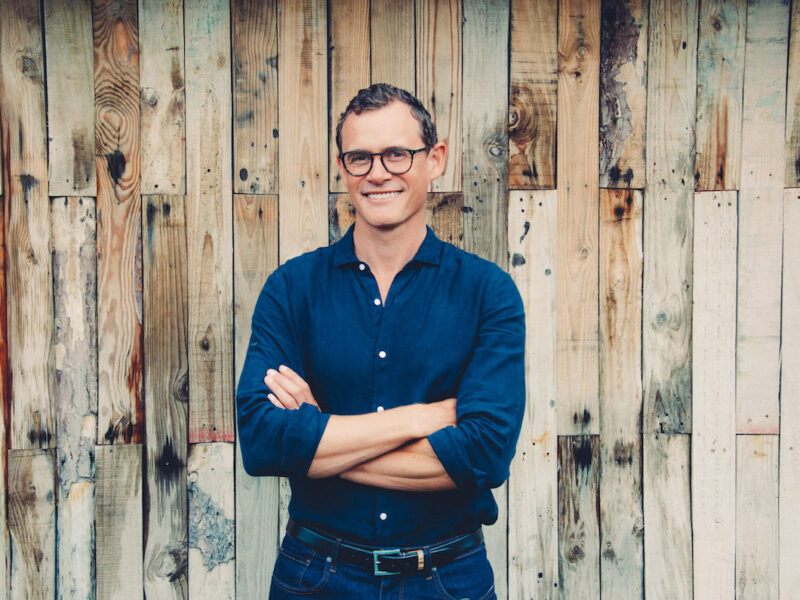
By Tom Fels, Animarem We live in a time of stark contrasts, with great economic uncertainty, unprecedented wealth accumulation and radical technological advances, whilst at the same moment inequality is deepening, the climate crisis is worsening, and environmental degradation is pushing ecosystems to the brink. For Africa, the stakes are particularly high. As the continent most vulnerable to the effects of climate change and inequality, we face a complex challenge: How do we build thriving economies without sacrificing our social fabric or natural resources? How do we create prosperity that lifts communities rather than widening the gap? While African businesses are uniquely positioned to lead this change, we need a credible framework with which to do it. What’s Broken in Business Today? The old way of doing business is no longer fit for purpose. Profit at all costs has left us with rising emissions, exploitative supply chains, and communities that are excluded from the wealth they help create. This isn’t just bad for people and the planet—it’s bad for business. Consumers are demanding more transparency and accountability. Employees want to work for companies that align with their values. And regulators are starting to crack down on greenwashing and unethical practices. It’s clear that business as usual is not sustainable. What we need is a new way forward—a framework that balances profit with purpose, growth with responsibility, and innovation with inclusion. That framework exists. It’s called B Corp Certification. B Corp: A Credible Framework for the Evolution of Business At its core, this is about rewriting the rules of business. It’s about holding companies accountable for their impact on people, communities, and the planet—not just their shareholders. To become a certified B Corporation™, a company must complete a rigorous, independently verified assessment measuring its performance across five key areas; Governance, Workers, …
Track Your Press Release HERE:

Paving the Way for Low-Cost Renewable Energy in Kenya
Hewani Energy joined His Excellency the President of the Republic of Kenya and Commander in Chief of the Defence Forces, Dr. William Samoei Ruto, for the Issuance of 10,807 title deeds in New Kaire Adjudication Section in Athwana Ward, Tigania West Sub County in Meru County. Since 2019, Hewani Energy and Meru County Government, through the Meru County Investment and Development Corporation, have, in collaboration with the Department of Land Adjudication and Settlement, National Government Administration Office and the Athwana Community, supported the finalization of the adjudication process. A total of 10,807 landowners who received title deeds now enjoy clear and secure ownership of their parcels of land. They can conduct searches and carry out various land transactions, including obtaining building permits to boost their economic well-being. Fridah Kailui, one of the recipients and a landowner, said, "We are very happy to receive the title deeds for our lands today. Without this crucial document, we have owned and farmed these lands for many years, which has hindered tangible development. Now, we are hopeful that these titles will unlock many opportunities for our community, including the project by Hewani Energy, which we believe will bring transformative change to the area." The title deeds will facilitate the final process of land securement through the registration of leases and easements with the 2500 landowners of Meru County Energy Park and set the stage for the construction of Africa’s first hybrid wind, solar, and battery storage renewable energy project, the 220MW Meru County Energy Park. This project is expected to create approximately 500 casual and semi-skilled jobs during the construction phase, and 50 permanent jobs during the operational stage, while providing low-cost renewable energy to the people of Kenya. “This is a historic moment for landowners in Athwana Meru County, marking the culmination of a process that began in 2009. By …
Track Your Press Release HERE:

AI Is the Mirror, Strategy Is the Maker.
Cape Town, South Africa – 8 April 2025 — As artificial intelligence (AI) revolutionises the marketing industry, MediaWeb Group issues a bold call to brands across South Africa: stop outsourcing your thinking. AI hasn’t killed strategy—it’s exposed the catastrophic consequences of not having one. “Everyone wants AI to save their marketing. But what it’s actually done is show them the cracks,” says Dean McCoubrey, CEO of MediaWeb Group. “If your inputs are shallow, your outputs will be too. And that applies to more than tech—it applies to every campaign, message, and customer touchpoint.” As a leading Cape Town PR agency and Johannesburg marketing agency, MediaWeb Group is no stranger to turning strategy into high-performing storytelling. But in 2025, it’s not just about pretty campaigns or clever automation. It’s about substance. AI has become the great revealer. In this age of automation, tools are only as good as the briefs that guide them. Weak positioning, unclear audience personas, or a vanilla value proposition will deliver generic, forgettable marketing—no matter how sophisticated your AI. The firm argues that the most powerful thing a brand can do right now isn’t to jump on the next tech trend—it’s to master its strategy. Strategy Is the Input That Dictates Every Output From B2B video content to PR, social media, and sales enablement, MediaWeb’s April campaign underscores a simple truth: strategy is the prompt. AI is the response. Without clear differentiation, psychographic insight, and strategic intent, brands risk wasting budget on tactics that never convert. “We’re seeing CEOs blame execution, but the problem is further upstream,” McCoubrey adds. “The sales deck, the script, the LinkedIn copy—it’s all echoing the same confusion. AI is helping us see that faster.” An Agency That Starts With ‘Why’—And Ends in Sales In an industry overrun with fast content and templated deliverables, MediaWeb stands apart with a proposition …