
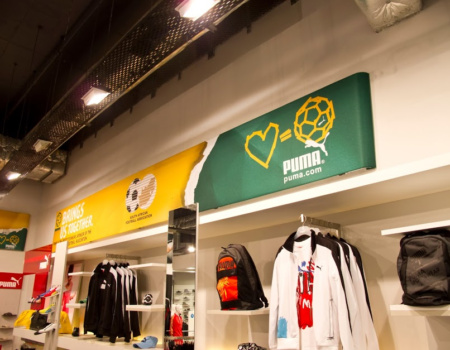
Product and price are by no means the only players when it comes to pushing sales in-store – presentation plays a most pivotal part! Think of it like this – what seems most appetizing: a gourmet meal haphazardly shoved into a takeaway box accompanied by plastic cutlery and eaten on a dirty sidewalk, or the exact same food, attractively served on fine china and enjoyed at a beautifully laid table with soothing background music? Two similar things with equal value can evoke an entirely different experience when perceiving it – solely based on how it is presented to us. The same goes for shopping. How a store visitor’s senses and emotions are stimulated when walking into a retail environment will influence his spending behaviour. Shopper marketing – which entails tactics to captivate your customers with an enjoyable shopping experience in order to encourage spending – is therefore a much-needed part of your integrated marketing strategy. This type of marketing is especially valuable as you are catching potential consumers at a time when they are most likely to be digging into their wallets – entering into a store. So, turn on all your charms! A couple of shopper marketing strategies exist that you could follow to accomplish this: Boost your branding Your branding entails everything that distinguishes you from your rivals – from your name, logo, communication style, advertisements, visual choices, etc. This is essentially your business’ personality and just as with interpersonal relationships, people will either be attracted to you or not. You will thus need to know your target market and try to win them over with your persona as much as possible. Talk about putting on pretences – we know! But this is very important in shopper marketing, as people might not even go as far as to enter into your space if they are put off by your appearance – or merely more attracted to another business’. Revisiting and adapting your branding on a regular basis to stay …

COMPETE CLEVERLY: DON’T OUTRUN – OUTWIT!
Any typical contender has to deal with intimidation when faced by a significant and strong opponent. Power is persuasive, and we often believe that the big boys are inevitably set to take the victories. However, knowledge – converted into smart strategies – can trump power. And that is why the underdog is very much in the game – also with regards to business. Here are some suggestions on how to outsmart your business opponents by relying more on acumen than assets: BE INFORMED The first step in competing cleverly is to be in the know – constantly. Be aware of the competition’s tactics. This might come as a surprise to you, but if you are in business, you are also a detective! Yes, now is your chance to put on that alias you have always secretly dreamed of being (we are thinking eccentric, pipe-smoking, Victorian gentleman, although you might be more into sexy, feisty and feminine – which is also fine) and let the investigation begin! Your research first of all needs to entail finding out who the existing and upcoming competition actually is. Google searches, business directories and trade fairs – amongst other sources – might help you in this endeavour. Next, try to figure out as much as you can about your rivals: What products or services are they selling? • What do their branding, marketing and media activities look like? • Who is their target market and how good is their customer service? • How do they price? How about their distribution and delivery policy? • What are their strengths, unique selling points and weaknesses according to clients and staff? • What is their business strategy and where are they heading in the future? These are only a couple of an endless list of questions with potentially insightful answers. If you are new to the whole spying game, here a few pointers on how to get the story on your suspects… or rather, opponents: Read articles or reviews about them, look at their marketing literature, study their …
Track Your Press Release HERE:

ATTITUDE IN BUSINESS – YOUR STAFF AND YOUR BRAND
You may have spent a fortune on logo design, put endless thought into colour schemes, paid considerable attention to product quality, but have given your staff (who seemed really cheerful at the beginning) a mere gloss-over of customer relationship management, if any at all. The bottom line is that the biggest interaction your customers will have with your brand will be that moment when they pick up the phone, make an appointment and hopefully close a deal with your sales team. If one egg in the basket has so much as a whiff of dissention, resentment, boredom or general disagreeability, all your other efforts vanish instantly. BRAND IMAGE AND ATTITUDE The impact of attitude on the behaviour of others is fundamental to your brand image, so here’s a list of things to keep in mind: • Attitude rubs off on others – and in business that’s everyone from management to staff, to both existing and potential customers, as well as suppliers and investors. • A positive attitude is infectious (just as a negative one is) and exuding positive energy will make people feel good and want to do business with your company. • Make your staff feel that their contribution is valuable and that all decisions are teamwork. If your staff know and feel part of the vision and goals of your business, they will feel more invested. ARE YOU WITH ME? • It’s important that your staff understand the value of attitude with regard to their jobs – and the fact that happy customers are the keys to their salaries. Any business dies (along with the jobs) if customers are not walking in through the door. • Emphasize the five steps to good attitude: respect, pride in work, commitment, innovation and helpfulness. • Always keep the lines of communication open with regular meetings, training sessions and appraisals. TEAM SPIRIT IS THE KEY TO BRAND MAGIC • At GAWK we understand that branding is a passion both on the part of our client and the service we provide them. Part and parcel …
Track Your Press Release HERE:

THE LOW DOWN ON HOW TO GET INTIMATE WITH YOUR CUSTOMER
Customer Intimacy Photo: Gawk Display Marketing is powered by the need to connect, inform and persuade. Much of it is about what we want to tell people and what we‘d like them to do once we’ve told them. But sometimes results fall short of what we desire; clever ads have flopped, brilliant campaigns have failed. At times we are left shaking their heads, wondering where we went wrong. THERE COULD BE SEVERAL REASONS: • Telling our customer what they should want • Designing our ads and campaigns from our point of view • Producing something that is downright confusing • Assuming it’s what people might be looking for right now SO WHAT’S EMOTIONAL INTELLIGENCE? According to a recent study only one in three brands truly understands what their customers want. Emotional Intelligence refers to our ability to understand our customers’ moods, behaviors and impulses. It helps us to get to know our customers on a deeper more intimate level, so we can be real, authentic and intuitive. Assuming what our customers need is one thing – but putting it across to them in a way that they will respond to, is another. The way your recipient receives your message is vital. Statistics and demographics and segmentation are not necessarily going to give us that subtle information. How do we make someone see our message so that they react instantly, with recognition and appreciative awe? THINKING LATERALLY • That frilly pink dress that gran wants to buy for her granddaughter – it’s pretty and expensive. But granny’s really buying it because she wants her grandchild to look the best at the party. It’s about attention and pride. • That new toilet cleaner that offers superior cleanliness and germfree surfaces. But the home owner is really buying it because she wants her house to gleam in the area most likely to be visited by guests, namely the bathroom. It’s about appearances and a need to impress. • A perfume may be advertised as a certainty to attract the opposite sex. But a woman …