
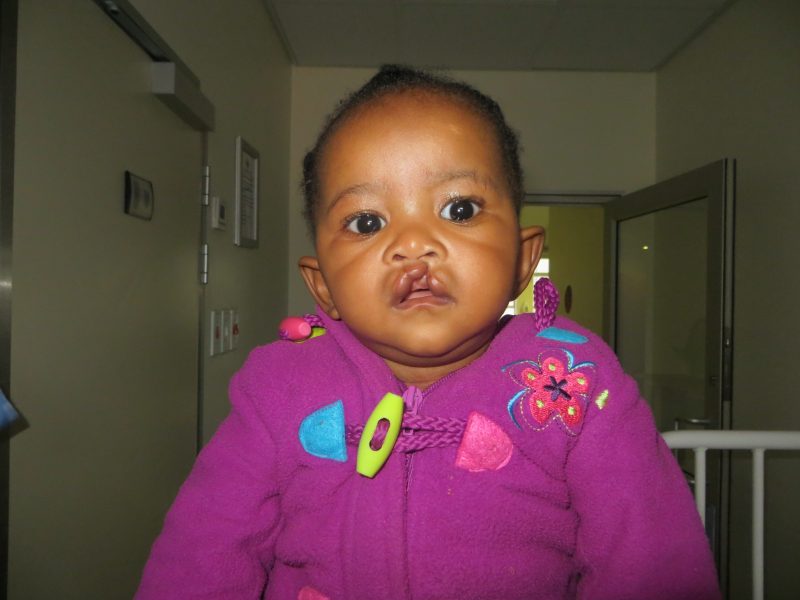
Netcare, through its corporate social investment (CSI) arm, the Netcare Foundation, is reaching out countrywide to disadvantaged individuals with certain medical conditions who are in dire need of assistance. “We are offering the resources at our disposal to help people needing life-altering corrective surgery for a range of medical conditions,” says Mande Toubkin, Netcare’s general manager: emergency, trauma, transplant and corporate social investment. “Through our craniofacial, cleft lip and palate, and sight programmes, we are offering free medical interventions that will help alleviate the burdens faced by individuals afflicted with these conditions,” says Toubkin. The Netcare Foundation was established in 2010 and is registered as a public benefit company. It is governed by a board of trustees. “Aside from the physical aspects of such medical conditions, many people with craniofacial anomalies or cleft lip and palate are often stigmatised and shunned by society,” notes Netcare Foundation’s CSI operations project manager, Adelaide Senabe. She says that cataracts, on the other hand, rob people of their independence and can prevent them from even undertaking simple day-to-day tasks, such as cooking and reading, as well as their livelihoods in some cases. Cataract blindness is also almost always reversible, through an operation to remove the cataract and replace the lens of the eye. The Netcare Foundation in partnership with various organisations and healthcare practitioners has changed the lives of hundreds of South Africans afflicted with these conditions through its CSI programmes. “We have helped many people to realise their full potential, and are now looking to reach people in more remote areas of South Africa, those very individuals who are so often forgotten by our society,” Senabe explains. Netcare craniofacial programme It is estimated that one in every 2 000 babies is born with craniofacial anomalies, many of which are congenital, resulting in …

Cadaver Freezer for SMU Anatomy Department
SMU receives first donation for Anatomy Department Cadaver freezer room established to enhance medical training Wednesday, 22 April 2015, Only a few days after the Sefako Makgatho Health Sciences University’s (SMU) official launch on 14 April 2015, it received its first donation. The R100 000 donation was made by Netcare, through the Netcare Foundation, to the University’s Anatomy Department for the establishment of a freezer room (with a temperature of -27 C) for medical training purposes. Henry Human, head of SMU’s Anatomy Department, says the cold room is a freezer facility for cadavers, an integral part of the training for postgraduate students and even qualified specialists. SMU is the first South African university to have established such a facility on such a large scale. “Cadavers, which are human bodies used for medical training and research, are usually preserved through embalming,” Human explains. “However, this method of preservation does not always enable optimal training. Embalming causes the bodies’ tissues to become too firm and does not give the students a true feeling for the procedures they will one day perform on living people. The colours and textures of the tissues in an embalmed cadaver are also very different to how they will appear in a living patient,” Human explains. He said that plastic anatomical models were also not comparable, in terms of the quality of training experience, to that made possible with real cadavers. “It is important that students are 100% sure of procedures by preparing for them in conditions that are as close as possible to those they will encounter when working on a live patient,” Human added. Netcare’s director of business development and corporate affairs and a director of the Netcare Foundation, Tumi Nkosi, handed over the cheque for R100 000 to SMU acting executive dean, Prof. Olalekan Ayo-Yusuf. Government separated the Medical University of Southern Africa (Medunsa) and the University of Limpopo, with …
Track Your Press Release HERE:

Partnership forged to educate children to prevent dog bites and rabies
Joint Media Statement Global Alliance for Rabies Control (GARC) and Netcare Teamwork in the name of rabies prevention Partnership forged to educate children to prevent dog bites and rabies Tuesday, 210 April 2015, Educating children on how to avoid being bitten by dogs is a key step in preventing the spread of the deadly rabies virus. To this end, the Global Alliance for Rabies Control (GARC) and the programme managers of two Netcare Trauma Injury Prevention Programmes have teamed up to develop a fun-filled yet informative booklet endorsed by the World Health Organization (WHO). “The booklet was developed to teach children how to interact with dogs and read their body language in order to avoid being bitten,” says Netcare Milpark Hospital trauma programme manager, Rene Grobler. “Young children are typically the ones most impacted by rabies, as their actions around dogs can often lead to dog bites” PARACON organizing committee member, Terence Scott. PARACON is the Pan-African Rabies Control Network, unified under the umbrella of GARC. Grobler says: “The booklet was designed to be interactive, with educational games and pictures to facilitate easy learning”. Amanda Klette, Netcare Union Hospital trauma programme manager, adds: “The graphics will also help illiterate individuals to understand the core concepts contained in the booklet. The booklet includes a certificate to serve as a reminder of these concepts”. The WHO has endorsed the booklet and, along with the Glen Shopping Centre in Alberton, has provided sponsorship for the development and first printing of the booklet, to be distributed to disadvantaged communities. An electronic version of the booklet will be freely available from www.rabiesalliance.org and www.theglenshopping.co.za. Additionally, a digital copy can be requested by emailing Netcare Trauma Injury Prevention Programme on injury.prevention@netcare.co.za. The booklet will also be made available on other electronic …