

In celebration of STEM Day on 8 November, RS South Africa highlights the crucial role of STEM education in driving South Africa’s economic growth and equipping youth with skills to thrive in a rapidly advancing technological landscape. Through partnerships with universities and ongoing outreach programmes, RS is dedicated to fostering a passion for STEM among students and preparing them for a variety of career paths. RS’s support for STEM education centres around collaborations with universities across South Africa. These partnerships enable RS to contribute resources to university-led high school outreach initiatives, providing students with a hands-on introduction to the field of engineering and a real-world glimpse into various career opportunities. One significant initiative includes high school engagement activities where university students’ mentor younger students in building and coding projects like drones or hovercrafts. “We have university students share their experiences with high schoolers, and the hands-on projects make engineering feel more accessible and exciting,” says Wesley Hood, Education and Social Impact Specialist at RS South Africa. “It’s a powerful blend of mentorship and practical learning that resonates with students.” Additionally, RS supports university students directly through sponsorship of engineering competitions and workshops. These events allow students to apply for funding for innovative projects, gaining critical hands-on experience and enhancing their employability. Volunteer opportunities also help students strengthen their resumes while contributing to their communities. Another important aspect of RS’s mission is connecting students globally. The company’s RS DesignSpark platform allows students to showcase their projects, inspiring peers across borders. Through RS DesignSpark, students can post photos, share project explanations, and see what others are doing worldwide, sparking a greater interest in STEM. RS is …

Shumani Industrial Equipment Celebrates Diversity and Inclusion on Women’s Day
Observed on 9 August, Women’s Day serves as a powerful reminder of the ongoing journey toward gender equality. A proudly Level 1 B-BBEE company, Shumani Industrial Equipment continuously strives to empower its employees through continuous training and development. “We are a truly diverse and inclusive business across all our areas of operation,” says MD Victor Nemukula. Rentia Grobler, Commercial Manager Rentia holds a BCom in Economics and has completed various programmes and courses such as Pastel Accounting, Sales Management, and Finance for Non-Financial Managers. Her role at Shumani involves implementing and maintaining processes and procedures to ensure smooth transitions between all departments. She is directly responsible for the admin side of the service and rental departments, leading a team dedicated to operational excellence. “I believe that hard work pays off, and my career progression reflects a series of deliberate steps,” explains Rentia. Advancing in one’s career involves constant learning and growth. Despite being relatively new at Shumani, Rentia appreciates the inclusive culture that embraces different genders, age ranges, languages and individual cultures, fostering a strong sense of belonging. She stresses that maintaining a balance between work and personal life allows one to recharge and perform optimally. Overworking without rest can ultimately harm productivity. Rentia advises on the importance of time management, delegation and speaking up when workloads become overwhelming. Rentia stays passionate by embracing daily challenges and continuous improvement. Her advice to young women is: “Believe in your ability to pursue any career, and always remember that success requires hard work and dedication. You can be both a fierce woman with a fighting spirit and a compassionate individual. We are truly one of a kind!” Gugu Buhle Nsibande, Apprentice Gugu has completed her N2 in Mechanical Engineering and is currently finishing her …
Track Your Press Release HERE:
Pratley celebrates Earth Day with its conservation contributions
In celebration of Earth Day on Saturday 22 April, under the theme of ‘Invest in our Planet’, adhesive manufacturer Pratley highlights the conservation efforts that its high performance adhesive products have recently played a key role in. Pratley Quickset® Putty is being used with great success to assist with inserting VHF tracking devices into the horns of rhinos in ongoing efforts to combat rhino poaching. The product is currently being used by the Black Rhino Range Expansion Project (BRREP) as part of its VHF tracker programme at the Dinokeng Game Reserve. VHF transmitters are fitted into the horns of a sedated Black Rhino by drilling a small hole in the inert or dead section of the horn. The procedure is quick and causes no harm or pain to the rhino, following which the hole is plugged with Pratley Quickset® Putty. This ensures the device remains in place and provides long-term protection for the rhino’s horn. Dinokeng Game Reserve GM David Boshoff reveals that dental adhesive was used initially until a veterinarian came up with the idea of using the versatile Pratley Quickset® Putty, which has proved more than up to this important job of assisting with the preservation of rhinos in the wild. Marine conservation efforts on the east coast of Africa are also in full swing, with Pratley products assisting Oceans Without Borders to preserve the coral reefs around Mnemba Island near Zanzibar. Here the uniquely South African adhesive Pratley Putty is being used to secure and restructure endangered coral reefs off the coast of Zanzibar. Oceans Without Borders is using marine rangers to maintain and nurture the coral gardens. Here the local reef is a living laboratory for reef restoration. Broken pieces of parent coral are collected from all over the reefs. The fragments are transformed into new coral pieces, whereby each fragment is secured to a special disc with Pratley Putty and added to the underwater coral nursery table. “This is not the first …
Track Your Press Release HERE:

Osmotic Engineering Group celebrates international recognition and expansion in Africa
Established only in 2020, Osmotic Engineering Group (OEG) is already making an impact on the local consulting engineering industry. Water and Wastewater Infrastructure Director Dr. Tony Igboamalu was announced the winner of the International Federation of Consulting Engineers (FIDIC) 2022 Future Leaders Award at a high-profile gala dinner on 12 September 2022 in Geneva. The awards acknowledge and promote the outstanding achievements of future leaders in the consulting engineering industry globally. Adam Bialachowski, chair of the judging panel and also chair of the FIDIC Future Leaders Advisory Council, says the judges were unanimous in their decision. “Dr. Tony Igboamalu has shown a high level of achievement and a keen appreciation of the social impact of his work, which perfectly reflects FIDIC’s key values and the positive difference that engineering seeks to make in society,” says Bialachowski. Dr. Tony Igboamalu is a professional chemical engineer who obtained a Global Excellence Stature (GES) 4.0 Research Fellowship in 2022 at the University of Johannesburg looking at the application of 4IR in solving water challenges. With 15 years’ experience in the water industry, he implements and manages multidisciplinary rural and urban development and poverty alleviation projects, including team, technical, financial (3P) and contracts management. His main focus is on socioeconomic development, maintenance management and privatisation, training, application and transfer of appropriate technology and skills. “Emerging market problems are not just about engineering but have a socioeconomic basis as well. Solving these myriad problems requires a multidisciplinary approach combining finance, economics and politics. Engineers need to be open-minded. OEG represents the future of Africa in that we are driving the development of our future engineers,” comments Dr. Tony Igboamalu. CEO Dr. Frank Igboamalu highlights that this international validation from FIDIC …
Track Your Press Release HERE:

Beware of fire safety when going off-grid with a container home
Container homes are built from shipping containers used for freight in ships, trains, and trucks. They are quick to install, easy to transport, and cost-effective. This not only offers a novel alternative to traditional construction techniques but is also compatible with off-grid solutions like solar power and rainwater harvesting systems. However, container homes still need to comply with all building and fire-safety regulations, in addition to having the architectural plans approved by the city council approval prior to construction. “Container homes essentially consist of a shipping container shell arranged on-site to form the main structure, which is repurposed as a home,” explains ASP Fire CEO Michael van Niekerk. Several factors must be considered in terms of the fire-rating approval for such a container home. Firstly, steel by itself does not necessarily provide the structural stability required for a residence, as it begins to deform when exposed to temperatures over 550°C. Thus, the container home must be safe for occupants in the event of a fire and not collapse around them. Secondly, it is important to ensure that neighbouring buildings on adjacent properties are not affected in the event of any fire. The containers themselves are usually clad inside and outside for aesthetic purposes. Timber cladding can be specified, which means that the distance from the adjacent structure has to be measured to check it complies with fire-safety regulations. Here the option is either to treat the timber cladding to be fire-resistant or to specify a fire-rated fibre-cement board that resembles timber in its look and feel, as is common with many American homes. Modern cladding materials used in dry walling, from gypsum to fibre board, have varying degrees of fire rating. “Our main approach is to look at each individual structure in terms of its fire-safety compliance,” explains van Niekerk. ASP Fire’s recommendations can be submitted along with the …
Track Your Press Release HERE:

Eightfold surge in profits in 2020 sees Shumani clinch major business award
Shumani Industrial Equipment receives 2021 Goscor Business Unit of the Year Award An eightfold surge in profits during 2020, the height of the Covid-19 lockdown in South Africa, has seen Shumani Industrial Equipment awarded the 2021 Goscor Business Unit of the Year Award. Outstanding new equipment forklift sales, combined with a large contribution from the expanded rental equipment fleet, resulted in the exceptional results. Now the largest black-owned and managed industrial equipment supplier in South Africa, Shumani is an appointed dealer for all Goscor Group companies that import industrial equipment for the local market. It supplies world-class equipment across the breadth of the industrial and construction sectors. Brands on offer include world-leading names like Bendi, Crown, Kalmar, and Doosan in the forklift market. Construction equipment brands include Bobcat, Sany, HPower, Weima, Luthian, Ozen and Sullair. In the cleaning equipment market segment, Shumani offers Tennant, Genie, Sentinel and HighPoint. Most of the equipment supplied by Shumani is used in the stores and logistics departments of both construction and mining companies. “We offer some exciting brands in the construction and mining sectors like Sany and Bobcat. Our Crown forklift is the leading electric brand, which is tested and has proved resilient in the market,” says Shumani MD Victor Nemukula. “Our key offering remains forklifts, which will lead the way in terms of growth. We think there is still a lot of scope for Shumani in the market, as we offer a one-stop shop. We believe the construction and mining sectors will offer ongoing support as we expand further,” says Nemukula. While Shumani is currently headquartered in Gauteng, it has seen growth in Durban over the past two years. “We believe that supplying materials-handling equipment for port operations is the next growth area for us,” reveals Nemukula. Hence it has established a regional office with highly skilled …
Track Your Press Release HERE:

Is your genset primed to switch on when the lights go off?
A back-up power supply such as a genset is critical to reduce overall electricity demand during loadshedding. However, it is vital that such important equipment is maintained properly and serviced regularly to be able to cope with such outages. Genset failure due to a lack of proper maintenance poses a significant business risk, especially due to increased loadshedding. On 25 July, President Cyril Ramaphosa revealed in a national address that the country faced a 6 000 MW shortfall in electricity generation by Eskom until sufficient renewable energy in the form of solar and wind power came online. When loadshedding escalated to Stage 6 last month for the first time since December 2019, businesses and homeowners were left scrambling to ensure they had back-up power solutions in place. “Here you are not only looking at protecting the value of your assets, but what the genset itself actually supports and protects, says ASP Fire CEO Michael van Niekerk. “The probability of something going wrong may be slim in the mind of the end user, but in the likelihood that it does, the consequences can be potentially disastrous and even fatal,” warns van Niekerk. The first issue is fuel supply. This can range from an integral tank at the base of the genset to a 2 200 litre Bulk to Farm (BTF) tank or a 210-litre drum. The presence of flammable liquids is an associated danger, especially in terms of refuelling and any spillages, so it is important to ensure that the storage of fuel is to code so that it does not pose a risk to the home or business’ generator. Another issue is vegetation or combustible material encroaching on a genset, which can often be hidden away. The genset itself is a potential source of fire ignition due to the high temperatures of the manifold. If the genset is indoors, these temperatures can be considerable, especially if ventilation is inadequate. Keeping the generator free of any combustible elements such as grass, weeds or litter is essential …
Track Your Press Release HERE:
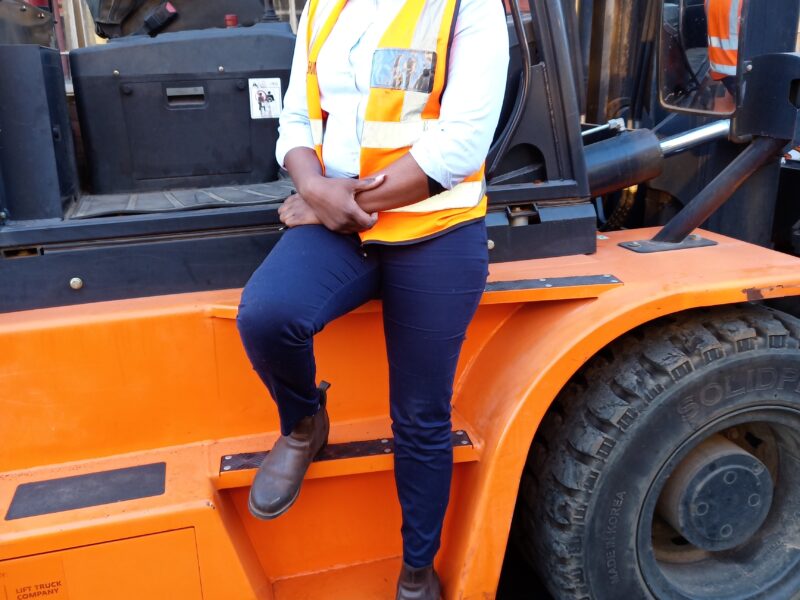
Shumani prides itself on being truly diverse and inclusive
Now a proudly Level 1 B-BBEE company, Shumani Industrial Equipment continuously strives to empower its employees through continuous training and development. “We are a truly diverse and inclusive business across all our areas of operation,” says MD Victor Nemukula. Contract Manager Grany Letswalo, who graduated with a Diploma in Financial Management in 2018, recently received her Certificate in Operations from the University of Cape Town. Within a year she progressed from Service Administration Manager to her current role. In charge of key accounts, Grany’s focus is customer satisfaction and service delivery. She leads a team of 15 technicians who pride themselves on doing it right the first time. Her division is mainly responsible for aftermarket customer support. “Working for Shumani keeps my adrenaline pumping and I love it. Each day is different. Rest assured that you will not do tomorrow what you did today.” In terms of diversity and inclusion, Grany points out that most of her sites have female forklift operators. “We are definitely grabbing the bull by the horns, especially as we need to have more women exposed to the industry. This will encourage young girls to be successful.” Grany’s advice is not to be worried at getting your hands dirty. “Some grease and oil will not harm you. Besides, one can always wear gloves.” Her advice is never to doubt oneself. “There is nothing wrong with starting out small. My first job was at a restaurant when I had no qualifications. Now, I run an entire department.” She adds she is raising her two daughters by herself to aim for success regardless of their gender. “A perfect example was completing my recent qualification while juggling a new role and still being a mother,” stresses Grany. Bookkeeper Lucy Ledwaba received her National Diploma in Accounting from the Tshwane University of Technology in 2002, her degree from Unisa in 2018, and a post-graduate diploma as a Professional Accountant in Practice from the …
Track Your Press Release HERE:

Beware of fire-safety risk during increased loadshedding
The current loadshedding implemented by electricity utility Eskom as it faces a shortage of generation capacity due to a combination of maintenance and unplanned breakdowns poses a heightened fire risk for homeowners and their families, warns ASP Fire CEO Michael van Niekerk. This follows a recent media report of an Eastern Cape family of seven losing everything when a fire engulfed their house after their electricity was restored following loadshedding. The family of seven was forced to flee, seeking refuge in a rondavel.1 Van Niekerk urges all homeowners to put basic fire-risk mitigation measures in place to protect both their families and properties. The first thing homeowners need to do in the event of loadshedding is to ensure all power sources are switched off. “This might sound like common sense, but it is very easy to forget to do so when the power goes off unexpectedly and your home is plunged suddenly into darkness.” Another risk factor is using candles as a light source, which need to be extinguished immediately once the power supply is restored. Homeowners need to ensure that candles are positioned correctly so that, if they fall over, they do not pose a fire risk. Any candles must be placed in proper containers as well to prevent this from happening. Van Niekerk advises homeowners to invest in a small fire extinguisher for the home and to ensure all residents not only know where it is placed so it can be accessed readily in darkness, but that everyone in the home knows how to operate it effectively in the event of any fire. Fire-prevention legislation tends to focus on commercial and retail spaces rather than standalone residential dwellings, where there is no regulatory requirement to have fire extinguishers, hose reels or even automatic sprinklers installed, which is also prohibitive from a cost point of view. However, van Niekerk urges homeowners to have some fire prevention strategy in place, even if it just means having a fire …