

Ever wondered why some websites rank better on search engines than others? Or why certain sites are easier to navigate? The secret lies in their structure and navigation – key elements of Search Engine Optimisation (SEO). You’ve probably heard about SEO, but understanding how website structure and navigation factor into this can be a game-changer. In this article, we’ll delve into the importance of site layout, user experience basics, the role of internal linking, and more. You’ll learn how breadcrumbs impact user navigation and appreciate the significance of a clear menu. We’ll also touch on mobile-friendly design essentials, balancing visual appeal with functionality, and why load time matters for user experience. Lastly, you’ll understand why regular site audits are crucial. So buckle up! It’s time to deepen your knowledge on these critical aspects that could significantly improve your website’s performance. Understanding the Importance of Site Layout You’ve got to understand that the layout of your site isn’t just about aesthetics—it plays a crucial role in how easily search engines and users can navigate through your content. This is where the concept of ‘content hierarchy’ comes into play, which essentially means structuring your content in such a way that it’s easy for both humans and search engines to comprehend. When you have a well-structured website, it doesn’t just make navigation seamless; it also enhances user experience by providing them with valuable content at their fingertips—no need to dig around endlessly. A well-laid-out site provides an intuitive path for users, guiding them from one piece of content to another based on their interests or needs. Now let’s talk about ‘page categorisation’. By organising your pages into relevant categories, you’re not only making it easier for users to find what they’re looking for but also helping search engines understand what each page is about. This improves your chances of ranking higher in search …
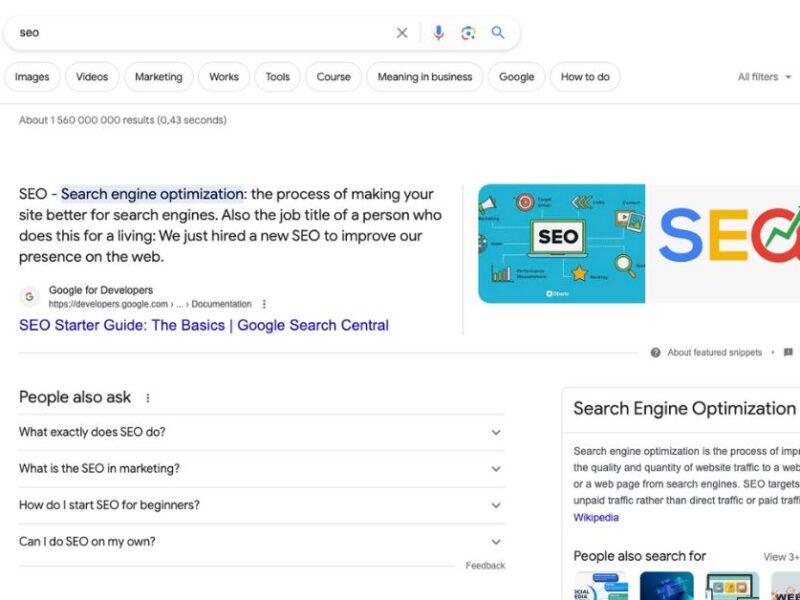
What Is SEO For Featured Snippets?
Are you looking to increase your website’s visibility in the search engine results? SEO for featured snippets can help you achieve this goal. Featured snippets are a great way to stand out and capture clicks from people looking for specific information. In this article, we’ll discuss what featured snippets are, why they’re important, and how to optimise your content for maximum visibility. We’ll also provide best practices, tips, and common mistakes to avoid when optimising for featured snippets. What Are Featured Snippets You may be wondering what featured snippets are. Featured snippets are search engine results that appear at the top of the page, above organic search results. They are designed to give a quick answer to a query, and often contain a summary of the answer, a link, and an image. They are also known as Position Zero, as they appear at the top of the search engine result page. SEO for featured snippets is the process of optimising content to appear in these results, and can be a powerful tool for increasing website traffic. SEO for featured snippets focuses on content quality, relevance, and structure to improve the chances of appearing in the featured snippet. By optimising content for featured snippets, businesses can increase their visibility and gain an advantage over their competitors. Why Are Featured Snippets Important Understanding why featured snippets are important is key to getting your content to the top of search engine results. They can help boost your website’s SEO, as they are a great way to draw attention to your content and drive more traffic to your site. They also help your site stand out from the competition, since they appear at the top of search engine results, above all other organic results. Additionally, featured snippets provide a quick and easy way for users to find answers to their questions. By using relevant keywords and providing concise answers to common queries, you can ensure that your content is featured in the …
Track Your Press Release HERE:

A Guide To Mobile SEO
You’ve probably noticed that you’re using your smartphone more often to search the web. You’re not alone; most people now use their mobile devices for online searches. Because of this shift, it’s crucial for businesses to optimise their websites for mobile users. This guide will help you understand Mobile SEO and why it’s so important. You’ll learn how to optimise your site, create content tailored for mobile users, and ensure your website loads quickly on all devices. We’ll also discuss the benefits of local search optimisation and the use of Accelerated Mobile Pages (AMP). Plus, we’ll dive into keyword research specific to mobile searches and show you how to monitor your performance in this area. So buckle up! It’s time to get your website ready for the mobile world! Understanding the Importance of Smartphone Searches Imagine you’re out and about, your phone in hand, searching for the nearest coffee shop or checking reviews of a product before purchasing. This is why smartphone searches are so important – they influence buying decisions right at the moment of need. In this digital age, smartphones have become our go-to device for information gathering. They help us make informed decisions instantly. Find out how Mobile SEO began here. Smartphone searches are an integral part of our daily lives; they allow us to find answers quickly and conveniently wherever we might be. It’s like having a library in your pocket where you can access any information at any time. Moreover, these mobile searches aren’t just random inquiries – they often have high purchase intent. From finding the best sushi place in town to comparing prices for a new phone or even booking last-minute flights, we rely on smartphone searches to provide timely and accurate results. The immediacy and convenience offered by smartphones mean that businesses must optimise their online presence for mobile search if they want to tap into this ever-growing market. If your website isn’t optimised for …
Track Your Press Release HERE:
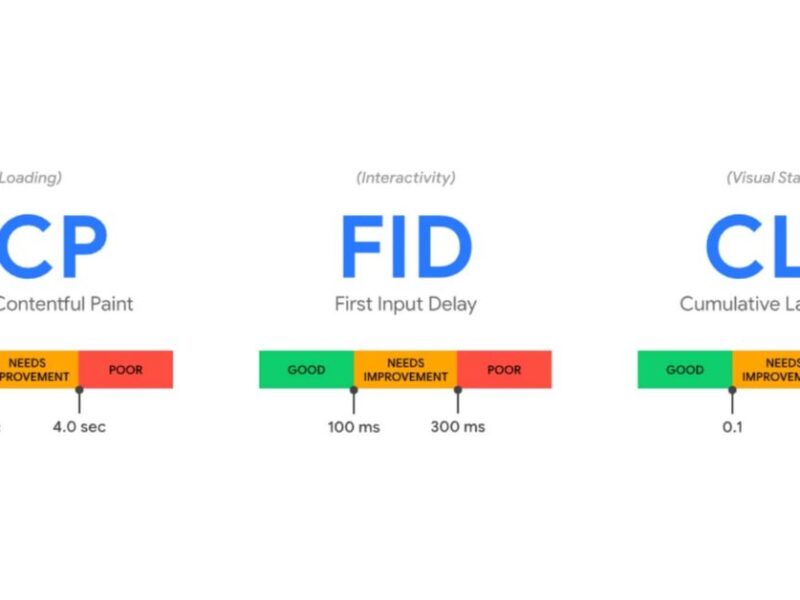
A Guide To Google’s Core Web Vitals
You’ve probably heard of Google’s Core Web Vitals, but do you really know what they’re all about? They’re a set of specific factors that Google considers important in a webpage’s overall user experience. Why should you care? Well, these metrics significantly influence your website’s ranking on search engine results. In this article, we’ll break down these techy terms – Largest Contentful Paint (LCP), First Input Delay (FID), and Cumulative Layout Shift (CLS) into simple language you can understand. We’ll also give you practical tips to improve these metrics and tools to measure them effectively. So if you’re looking to enhance your site performance and climb up the SEO ladder, stick around! You’re about to learn some game-changing info. The Importance of User Experience Metrics You’ve got to understand, your website’s user experience isn’t just about looks; it’s a crucial factor that can make or break your audience’s loyalty and trust. It goes beyond the visual appeal, extending into how visitors interact with your site, how easily they find what they’re looking for, and their overall satisfaction with the time spent on your pages. With Google’s Core Web Vitals in play now, these metrics have become even more critical. They aren’t just arbitrary numbers; they’re a reflection of the quality of user experience you’re providing. A low score might mean it’s time to rethink some aspects of your design or functionality. Take note that these metrics aren’t static either; they evolve as technology and user expectations do. Something that worked two years ago might not resonate with users today. Keeping abreast with these changes is essential for maintaining a healthy relationship with your audience. Load speed, interactivity, and visual stability are just a few things measured by Google’s Core Web Vitals – key indicators of how well you’re meeting users’ needs and expectations when it comes to UX. High scores in these areas signal to both users and search engines …
Track Your Press Release HERE:

Understanding Google’s Link Spam Update: What It Is And Why It Matters
Introduction In the intricate world of Search Engine Optimisation (SEO), the role of link-building is paramount. Links, often deemed as the ‘backbone’ of the internet, play a critical role in determining the authority, relevance, and overall credibility of a website. When one site links to another, it essentially casts a vote of confidence, vouching for the content’s quality and relevance. Consequently, a robust link profile can significantly bolster a website’s visibility on search engine results pages (SERPs). However, with the increasing significance of links, there has been a surge in manipulative link-building practices, often termed as “link schemes” or “spammy links.” Recognising the potential detriment these can cause to the quality of search results, Google has been consistently proactive. The tech giant’s commitment to ensuring its users find accurate, relevant, and trustworthy content is unwavering. This dedication is reflected in Google’s algorithm updates, guidelines, and the tools it provides for webmasters. Over the years, Google has rolled out multiple updates specifically targeting unnatural and manipulative links, reiterating the company’s stance against practices that attempt to game the system. Their mission is clear: to preserve the integrity of search results, thereby ensuring users have access to high-quality information that genuinely addresses their queries. In this evolving digital landscape, while SEO strategies might shift, the essence remains consistent — prioritising genuine, value-driven content and organic link-building is paramount for sustainable success. Defining Link Spam At the heart of Search Engine Optimisation (SEO) lies the intricate web of links that connect the vast expanse of the internet. However, not all links are created equal, and among them lurk those categorised as ‘link spam’ or ‘spammy links’. But what exactly does this entail? Link spam, in its simplest terms, refers to any links that are created with …
Track Your Press Release HERE:

An In-Depth Guide To How Google Search Works
Introduction Google Search stands as a paragon of automation in the realm of search engines, navigating the vast expanses of the internet with precision and efficiency. Through the utilisation of sophisticated web crawlers, Google incessantly scours the web, methodically adding pages to its extensive index. Remarkably, the vast majority of these pages find their way into the index not through manual submission, but via automatic discovery and addition by Google’s web crawlers. These crawlers delve into the web, uncovering pages both new and updated, ensuring that the search engine’s database is perpetually up to date and expansive. This automated process is a critical component of Google’s functionality, allowing it to maintain an unparalleled repository of web pages ready to be retrieved in response to user queries. It is crucial to demystify the workings of this intricate process, and this guide aims to lay bare the stages and mechanisms behind Google Search. From understanding how pages are discovered and indexed, to grasping the criteria that influence their appearance in search results, this guide provides foundational knowledge. This insight proves invaluable for troubleshooting potential issues, ensuring that pages are indexed, and optimising how a site presents itself within Google Search results. By delving into this guide, readers can arm themselves with the essential knowledge required to navigate the complexities of Google Search, ensuring that their content is not just part of the web, but an active, findable participant in the vast digital landscape. Section 1: Preliminary Notes Navigating the intricacies of Google Search requires a clear understanding of its foundational principles, and this section aims to shed light on some critical preliminary notes that set the stage for how Google operates. Clarification on Payment and Ranking One of the cornerstones of Google’s philosophy is its commitment to maintaining a level playing field, …
Track Your Press Release HERE:

What Is SEO?
Click here to view article source. I. Introduction A. Definition of SEO Search Engine Optimisation (SEO) is a digital marketing strategy that focuses on enhancing a website’s visibility in organic (non-paid) search engine results. It’s a multifaceted process that involves optimising various aspects of a website, including its design, content, and usability, to rank higher on search engine results pages (SERPs) like Google, Bing, and Yahoo. The ultimate goal of SEO is to increase website traffic, and subsequently, conversions by making a site more attractive to search engines and easier for people to find. B. Importance of SEO in Digital Marketing The importance of SEO in digital marketing can’t be overstated. In today’s digital era, most consumers use search engines to find information, products, or services online. Therefore, ranking highly on search engine results pages can significantly increase a website’s visibility and click-through rate (CTR). Increases Visibility: SEO helps businesses to rank higher on SERPs, thus increasing their online visibility. The higher a website appears in search results, the more likely it is to be noticed by users. Drives Organic Traffic: SEO is a powerful tool for attracting organic traffic. Organic traffic, which refers to visitors that arrive at a website naturally through search engine queries, is highly valuable because it’s free and tends to convert better than paid traffic. Enhances User Experience: SEO is not just about search engines; it also improves the user experience. A well-optimised website is user-friendly, easy to navigate, and provides valuable content, which can increase dwell time and lower bounce rates. Builds Trust and Credibility: A high-ranking website is often perceived as more credible and trustworthy by users. SEO helps establish a strong foundation for a website with a clean, effective user experience that is easily discoverable in search. Cost-effective Marketing Strategy: Compared …
Track Your Press Release HERE:

Unveiling the Dynamics of SEO: Firms, Consultants, Revenue, and Start-ups
The digital marketing landscape is a complex web of strategies aimed at enhancing online visibility, with Search Engine Optimization (SEO) sitting at its core. As businesses vie for top spots on search engine results pages (SERPs), the relevance of SEO firms and consultants has skyrocketed. But what exactly is an SEO firm? What role does an SEO consultant play? How do these agencies generate revenue, and how can one embark on starting an SEO business? Let’s dive into these pressing questions. What is an SEO Firm? An SEO firm is a specialized agency that offers SEO services to businesses aiming to improve their online visibility. These firms employ various tactics to enhance a website’s ranking on SERPs, ensuring that potential customers easily find the business during internet searches. SEO firms are well-versed in the algorithms search engines use to rank pages and utilize this knowledge to optimize websites in terms of content quality, keyword usage, site structure, backlink profiles, and more. What Does an SEO Consultant Do? An SEO consultant is an expert in search engine optimization who provides professional advice to businesses on how to improve their SEO strategies and, consequently, their SERP rankings. These consultants analyze various elements of a website, from its architecture and content to backlinks and keywords. They identify issues, suggest improvements, and may even help implement changes. SEO consultants stay updated on the ever-evolving search engine algorithms and SEO best practices, guiding businesses through these complexities to enhance their online presence. How Do SEO Agencies Make Money? SEO agencies primarily generate revenue by offering their expertise as a service to other businesses. Here’s how they do it: Retainers: Some clients prefer an ongoing relationship with an SEO agency and pay a monthly fee for continued SEO services. This model ensures consistent revenue for the agency. Project-Based Billing: SEO agencies …
Track Your Press Release HERE:

What’s So Special About Ostrich Feathers?
When one thinks of the animal kingdom’s vast array of majestic creatures, the ostrich certainly stands out. Renowned not just for its impressive size and curious behaviour but also for its one-of-a-kind feathers. Dive into the world of ostrich feathers, check here, and discover what sets them apart. Introduction The ostrich, native to the vast landscapes of Africa, is an emblem of nature’s wonder. Beyond its size and speed, what often captivates onlookers is its unique plumage. These feathers are not mere ornaments; they tell stories of evolution, survival, and allure. Physical Characteristics of Ostrich Feathers At a glance, an ostrich feather possesses a unique texture – soft to the touch, loose in its formation, and smooth in its finish. These features give the bird its iconic “shaggy” appearance, a look that is unlike any other in the avian kingdom. This structure isn’t just for show; it serves practical purposes, aiding in everything from insulation to camouflage. Find out more. III. Colour Differences in Ostrich Feathers The adult male ostrich is a sight to behold with its stark black body contrasted by stark white wings and tail feathers. This dramatic contrast is not just a fashion statement; it plays a crucial role in attracting potential mates. On the other hand, the more subdued brownish-grey feathers of immature birds and adult females offer a different advantage: camouflage. Blending into their environment, they can better evade predators and protect their young. Unique Properties and Uses of Ostrich Feathers The allure of ostrich feathers is not a modern phenomenon. Historically, they have been sought after in fashion and decorative arts, see here, adorning hats, fans, and gowns, symbolising luxury and opulence. Indigenous communities have used these feathers in ceremonial rituals, valuing them for both their aesthetic and spiritual significance. Today, their use has diversified even further. Thanks to their static electricity …
Track Your Press Release HERE:

A Comprehensive Guide to SEO Packages in South Africa
Search Engine Optimization (SEO) has become an integral part of any business’s digital marketing strategy. In a world where online visibility can make or break a brand, it’s vital to invest in the right SEO package. In South Africa, with its diverse landscape and unique regional characteristics, SEO services have been tailored to cater to different needs, check here: Local, Provincial, National, and International. Let’s delve deeper into these packages and understand their significance. Local SEO Packages Local SEO focuses on optimizing a business to appear for local searches, especially within its immediate vicinity or city. This is particularly crucial for brick-and-mortar stores or services that operate within a specific locality. Benefits: Increased footfall from local clientele. Better visibility in local search results and on map listings. Tailored content that appeals to local cultures and sensibilities. Provincial SEO Packages Given the vastness and diversity of South Africa’s provinces, Provincial SEO targets specific provinces like Gauteng, KwaZulu-Natal, or Western Cape. This is suitable for businesses that have a presence in or cater to multiple cities within a province, look here https://www.firstpageseoagency.co.za/seo-packages-johannesburg for more details. Benefits: Improved search rankings within the targeted province. Customized content strategies considering provincial trends and demands. Enhanced engagement with provincial events and happenings. National SEO Packages National SEO is designed for brands that operate on a countrywide scale. Here, the optimization efforts aim to increase visibility across South Africa, targeting a broader audience. Benefits: Nationwide brand recognition and visibility. Strategies tailored for diverse demographics of the country. Greater engagement with national events, news, and trends. International SEO Packages For businesses …