

A brand new study into the future of African power utilities and the challenges they face has highlighted four possible scenarios of what the continent’s energy sector will look like by the year 2030. In the whitepaper, titled: “The Future of Energy and Power Utilities in Africa”, utilities are envisioned to either become “The Lions of Africa”, “Hungry Hyenas”, “An Elephant Herd” or “White Elephants”, with each scenario having different consequences for both the African energy industry at large as well as the consumer. The research project was conducted by the Gordon Institute of Business Science (GIBS) at the University of Pretoria, in collaboration with Clarion Energy, organisers of flagship energy events such as African Utility Week, Future Energy East Africa, Future Energy Nigeria and the Utility CEO Forum series - meetings and events that share ideas, encourage networking and facilitate business partnerships across the continent. Can utilities remain relevant? “The future of power and energy in Africa is at a significant junction” says Natalie Bacon, programme director at African Utility Week, “and African states and the power stakeholders operating within this sector realise that the impact of providing universal access to affordable energy will not only lead to accelerated economic development but significant social improvements. Yet, to achieve universal access executives have many strategic decisions ahead of them.” She explains: “hitherto business as usual for utilities has meant bulk energy production and distribution through coal-fired power plans, centralised grids and public sector monopolies. However, this is quickly coming under threat from new models of energy production and distribution. The four scenarios outlined by the study will help utilities and the wider industry visualise what African utilities could look like in 2030 and try to answer the important question of how utilities can remain relevant, effective and lead the African …
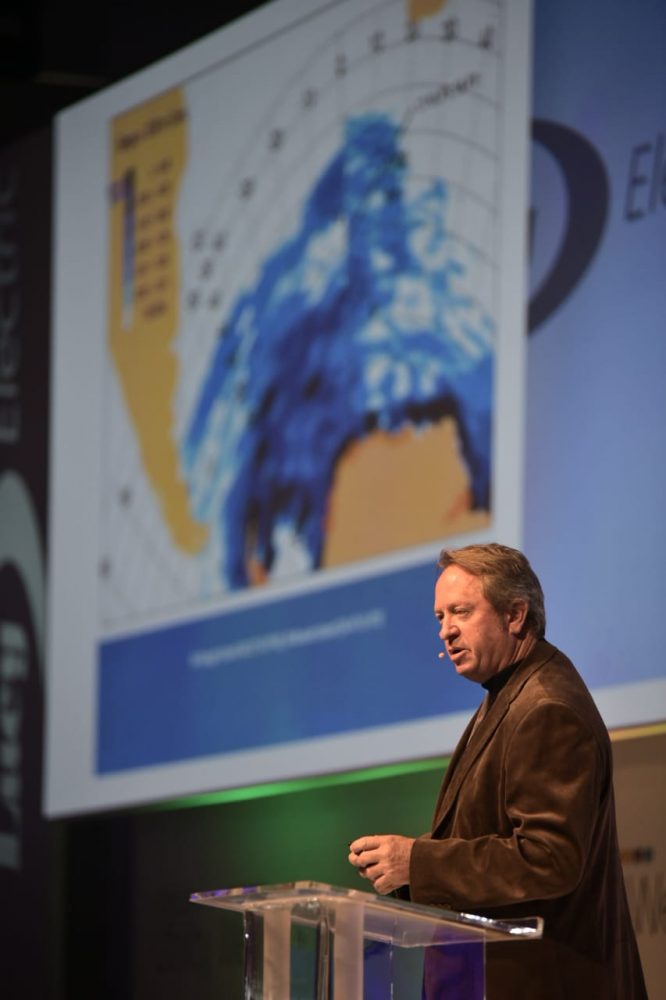
Harvesting icebergs: just one of Mother Nature’s solutions to solve water and energy challenges
Harvesting icebergs and learning from forests on how to run a city were offered as solutions to Cape Town’s water woes on Wednesday at a power and water utility conference underway in Cape Town. Salvage expert Nick Sloane addressed delegates at the African Utility Week conference during a keynote session on Wednesday where solutions from nature were explored to address increasing energy and water constraints. “It sounds like a crazy idea but if we break it down, it is not so crazy after all,” Sloane started his address. His address followed director of water and sanitation in the City of Cape Town Peter Flower’s presentation on Tuesday on the water crisis in the city. Flower told delegates the city still needs to reduce consumption to 450 million litres of water per day to keep Day Zero at bay. With the current usage at 500 million litres per day, the situation remains dire despite measures employed by the city to reduce consumption. According to Captain Sloane the answer may just be in “mother nature’s icebergs” – a total of 140 000 icebergs to be specific - drifting in the southern oceans and melting. Harvesting icebergs, he said, can help provide at least 20% of Cape Town’s water needs. He told delegates icebergs break off in Antarctica and hold some of the purest quality water that is between 15 000 and 20 000 years old. “About 2000 million tons of ice are breaking off every year,” he said. The idea is to use the current system to guide these icebergs towards the Cape. “So, they are coming our way, we just need to know how to deal with it.” Sloane said the iceberg can be captured in the area round Gough island and will ultimately have to be guided and moored about 40 km offshore from St Helena island to be harvested. He said they will then have to “create a saucer to capture the melting water that can deliver up to 60 million litres per day”. With milling this volume can increase to 150 million litres a day that is then pumped into tankers and …
Track Your Press Release HERE:
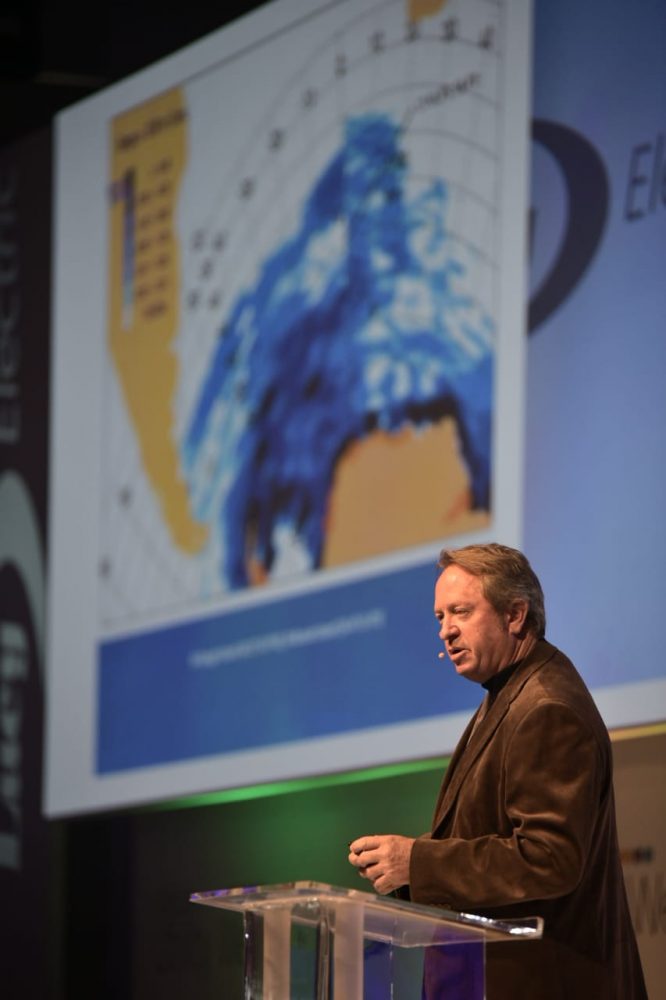
Mozambique’s EDM scores double win at prestigious African Utility Week Industry Awards in Cape Town
Mozambican utility EDM (Electricidade de Moçambique), Azuri Technology, Siemens and two water sector pioneers were some of the big winners at the African Utility Week Industry Awards that took place in Cape Town on Wednesday evening. Hundreds of power and water professionals gathered to honour the top projects and people in the industries on the continent in the fifth edition of the awards gala as part of the African Utility Week conference and exhibition. EDM scored a double win with the award for the Power Utility of the Year as well as the Outstanding Contribution Award in Power for Dr Mateus Magala, EDM’s Chairman and CEO. South Africa’s Deputy Minister of Energy, Ambassador Thembisile Majola, was the guest of honour at the awards gala which featured two new categories, namely Energy/Water Reporter of the Year and Digital Solution of the Year. Lifetime Achievement Award Winner: Prof Roland Schulze, Pietermaritzburg, South Africa Roland Schulze pioneered formal scientific hydrological studies at South African universities by piloting the country’s first hydrology degree course in the early 1980s and then seeing the discipline grow from that of a single lecturer with a handful of students to a fully-fledged Centre for Water Resources Research. Schulze has initiated and been involved in national and international level hydrological research for the past 50 years, and in applied climate change research in the fields of agriculture and water for the past 30 years. “I’m proud not only for myself but also for the many colleagues and my family that have helped me achieve this,” Prof Schulze said after receiving his award. “My vision for the water industry in general is that we become more efficient in the use of water, particularly in light of population increases and climate change, which might cause us to have less water than we are used to in the future. And that means efficiency in the main sectors that use a lot of water such as agriculture, industry …
Track Your Press Release HERE:

Indian energy companies ready to do business at African Utility Week
“India’s power sector is one of the most diversified in the world” “Indian utility vendors and services will find a huge market and scope in Africa, especially in South Africa’s energy sector” says Dr. Rajeev Singh, the Director General and CEO of the Indian Chamber of Commerce (ICC). The ICC represents India at the upcoming African Utility Week from 15-17 May in Cape Town, hosting a pavilion of more than 45 suppliers of specialised technology and services for the energy sector. Dr Singh says “the primary objective of the ICC is to connect with over 7000 industry professionals across the full spectrum of the sector to address today’s challenges and implement tomorrow’s solutions.” He says visitors to the Indian pavilion at African Utility Week will be able to “interact and network directly with Indian vendors who have specialized in the energy sector. Visitors can also see the products and services covering generation, transmission & distribution, metering, renewables and new technologies. Visitors can furthermore establish distribution channels.” Vibrant entrepreneurial culture Asked what the African continent can learn from the experience of the Indian utility sector, the ICC CEO says: “Indian power sector is undergoing a significant change that has redefined the industry outlook. Sustained economic growth continues to drive electricity demand in India. The Government of India’s focus on attaining ‘Power for all’ has accelerated capacity addition in the country. At the same time, the competitive intensity is increasing at both the market and supply sides (fuel, logistics, finances, and manpower). Total installed capacity of power stations in India stood at 334,146.91 Megawatt (MW) as on February, 2018.” He continues: “the Ministry of Power has set a target of 1,229.4 billion units (BU) of electricity to be generated in the financial year 2017-18, which is 50 BUs higher than the target for 2016-17. The annual growth rate in renewable energy …
Track Your Press Release HERE:

Finalists announced for African Utility Week Industry Awards show continent-wide success and buy-in
The fifth annual African Utility Week Industry Awards received nominations from far and wide for the 12 different categories celebrating excellence in the energy and water industries. The finalists have been announced for the awards which honour pioneering utilities, projects and people in the energy and water industry on the continent during 2017/2018. The awards gala dinner takes place on 16 May and forms part of the African Utility Week conference and expo taking place at the CTICC in Cape Town. This year, two new categories were added, namely excellence in energy or water journalism as well as digitally advanced utilities. The finalists for the African Utility Week Industry Awards 2018: Lifetime Achievement Award • Siengui Apollinaire KI, Secretary General, Western African Power Pool, Burkina Faso • Alex Gisagara, Director of Engineering, National Water and Sewerage Corporation, Uganda • Irene Muloni, Cabinet Minister for Energy and Minerals, Uganda Ministry of Energy, Uganda • Roland Schulze, Professor Emeritus of Hydrology Centre for Water Resources Research School of Agricultural, Earth and Environmental Sciences, University of KwaZulu-Natal, South Africa • Elijah Sichone, Executive Secretary, Regional Electricity Regulators Association of Southern Africa (RERA), Namibia Outstanding Contribution Award: Water • Anthony Turton, Professor Centre for Environmental Management, University of Free State, South Africa • Paul Yillia, Research Scholar (Water Programme), International Institute for Applied Systems Analysis, Austria • Silver Mugisha, Managing Director, National Water and Sewerage Corporation, Uganda Energy/Water Reporter of the Year Award • Emeka Anuforo, Senior Energy Correspondent, Guardian Newspaper, Nigeria • Chris Yelland, Energy Reporter, EE Publishers, South Africa • Fredrick Mugira, Coordinator and Editor Water Journalists Africa Network, Uganda • Sally Ngakanyanga, Independent Journalist, Zimbabwe • Newton Sibanda, …
Track Your Press Release HERE:

African Utility Week announces diamond sponsorship by longstanding partner Lucy Electric
African Utility Week has announced that Lucy Electric, a longstanding partner of the event, will be the exclusive diamond sponsor at this year’s exhibition and conference in Cape Town from 15-17 May. Lucy Electric is a highly respected industry leader in secondary distribution solutions with more than 100 years’ experience in the electrical industry. “African Utility Week is a key conference which evolved over the years from an electrical measurement, generation, and transmission conference to a conference now dealing in energy generation, transmission, distribution and measurement, showcasing the latest technologies available to the African market” says Rick St John, Business Development Director Africa for Lucy Electric, “with the addition of renewables some years back, AUW is now the best energy conference on the African continent, giving exhibitors and delegates alike excellent value.” He adds: “last year we had great engagement with new and existing customers and identified more opportunities where we can truly add value across distribution networks in Africa. Our diamond sponsorship includes a conference presentation on how actionable information from network data can maximise the capacity of assets and increase the use of renewable energy.” Rick St John explains: “particularly this year, we will be focusing on the opportunities available from the collection and analysis of network data and the enhanced user interface for our Gridkey monitoring system will provide easily accessible and actionable information. Access to electricity is an enabler of economic growth and key to achieving this is to maximise the use of renewables. Lucy Electric will be presenting on this at African Utility Week and exploring how new technologies that enable greater renewables, flexibility and demand response are extracting added value for Africa’s networks.” African Utility Week event director Evan Schiff says: “Lucy Electric is without a doubt considered an industry …
Track Your Press Release HERE:
What every prepaid electricity user and provider should know
Approximately seven million prepaid electricity meters in South Africa need to be reset before November 2024 as the system that runs the credit tokens will run out of numbers at this time and all existing meters will stop accepting credit tokens. The South African metering standards industry body, Standard Transfer Specification Association (STSA), has embarked on an awareness programme to inform utilities to upgrade their vending systems to STS600 and visit each meter in its region to clear the memory and change the meter key before November 2024. Don Taylor, director of STS Association, explains: “the token identifier (TID) is calculated as the number of minutes that have elapsed since a defined base date of 1993 up to the time of creating the token. The TID has a limited range and will run out in November 2024, at which point all existing prepayment meters will stop accepting credit tokens. In order to circumvent this issue, the memory of each meter needs to be cleared of all stored TIDs and its cryptographic key needs to be changed before 2024.” The new range of TIDs will then start from a new base date of 2014 and run out in 2045, thus extending the useful functional life of the meter. “In order to do this key change,” Mr Taylor explains, “it is necessary that each meter has to be physically visited, which can be performed either by dedicated employees of the utility or by the end customer.” Concerned utilities may leave this too late “There is thus a six-year window,” he continues, “within which the utilities have to complete this programme. Because we are concerned that utilities may leave this too late, we are embarking on an awareness programme by reaching out to all STS users and providing a platform that will facilitate technical support and guidance to users during the implementation of the TID rollover programme. We aim to establish a website for this purpose where users can interact by discussion of issues. In addition we are embarking …
Track Your Press Release HERE:

Energy and water sectors excited by solar PV, technology innovation and distributed generation but view corruption as biggest challenge
Solar PV is overwhelmingly seen as the most promising generation source for Africa while corruption, skills gaps and access to finance are some of the biggest challenges that power and water professionals face in their industries. This is according to a survey by the organisers of African Utility Week amongst attendees of the annual event in Cape Town last year. Other questions in the survey included what respondents think will have the biggest impact on the energy and water sectors, what future technology excites them and what the biggest challenges are that they face in their industry. Of the 834 people surveyed, 696 are South African (71%), 199 are from 24 other African countries (63 Kenyan, 85 Nigerian) and 40 from the rest of the world, including Europe, USA, China, India and Canada. Most promising generation source Asked what the most promising source of generation is for Africa, Solar PV scored more than 54% amongst the respondents while nuclear was second with 11%. “The reason could be that rooftop PV, when measured against the other technologies, is easy to execute as a project and photovoltaic modules are becoming very affordable,” says Nicolette Pombo-van Zyl, editor of the energy trade journal, ESI Africa. She adds: “it is also the most obvious technology to use in mini- and off-grid projects as well as for use in hybrid models. However, what is interesting but not surprising is that 11% of respondents feel that nuclear energy is the most promising generation source. Nuclear has its merits. What is disappointing is how few are in favour of biomass as a promising source of generation capacity, considering that this technology offers a distributed model and a measure of reducing the mounds of waste that Africa’s cities are confronted with. Another concern is the lack of interest in wind energy – only 8% of respondents felt this technology a worthy source; however, it does rank slightly higher than hydro where the continent’s impressive …
Track Your Press Release HERE:

Nuclear expert says nuclear build’s contribution to South Africa’s GDP will be “staggering”
“Nuclear energy is certainly not any more expensive than any other energy source” says nuclear expert Dr Anthonie Cilliers, explaining that “the large 9600MW nuclear programme has created an impression of a single expensive mega-project, when in fact the purpose of the fleet approach was to drive down costs over time and increase the learning rate. This should be broken up into smaller chunks, for example, should two nuclear reactors be added to the current plant at Koeberg, the cost would be no more than the guarantees already provided by treasury for the current IPP programme, whilst two nuclear reactors would produce more units of electricity per year (and more reliably) than the units on the IPP programme.” He adds: “I agree that South Africa’s fiscus is constrained at the moment, I believe this will change and when it does we need to be prepared. If we cannot afford nuclear new build we cannot afford any new build. We also have to remember that the new IRP has not been gazetted and with an outdated IRP, I find the approval of any energy projects (including nuclear) irrational.” Nuclear Power Africa Dr. Anthonie Cilliers is the National Coordinator of SAN-NEST (South African Nuclear Education, Science and Technology) the R&D Programme Manager: Advanced High Temperature Reactor (AHTR) and Honorary Research Fellow at the University of the Witwatersrand. A regular commentator and speaker at African Utility Week, he returns this year as a panellist during the Nuclear Power Africa conference at the event from 15-17 May in Cape Town. “Nuclear is certainly part of the energy mix in Africa” says Daniel Njoroge Butti, Energy Economist at the Karatina University in Kenya, another expert who will share his views at African Utility Week and asked whether there is appetite for investors to fund nuclear energy projects, he replies: “the definitive answer is YES.” With regards to costs he explains that “in my view, nuclear energy has significantly high initial …
Track Your Press Release HERE:

Energy sector: why things are looking up
The energy sector is a clear winner emerging from the South African cabinet shuffle earlier this week says the editor of the energy trade publication ESI Africa, Nicolette Pombo-van Zyl. She explains: “President Cyril Ramaphosa’s attempt to sweep his inherited cabinet clean on Monday night resulted in a watered down compromise to satisfy both party and state interests. However, a clear winner emerging is the energy sector, which can look forward to two ‘new’ faces: Minister of Public Enterprises Pravin Gordhan, known for his deft ability at service delivery and turnaround of state departments, and long-standing cabinet member Minister of Energy Jeff Radebe, renowned for his firm leadership. These placements have shown Ramaphosa’s commitment to ensuring reform at state-owned enterprises and specifically Eskom.” She continues: “assuredly, with these two gentlemen, along with Minister Nhlanhla Nene’s return to Cabinet as the minister of finance, we will see a finalisation of the nuclear build programme (either putting it to bed or giving it a nod) and a formal consultation on the long-overdue integrated resource plan. Another priority area that needs immediate attention is the independent power producers’ outstanding power purchase agreements.” “The damage done to South Africa’s energy market is extensive; however, there is tangible hope in the air. With the likes of Gordhan, Radebe and Nene in the fold, this is a brilliant move by Ramaphosa – who had already shown his mettle at the WEF when commenting on South Africa’s nuclear position – and I’m optimistic that we will see progress at last.” Radebe “to address the mess” Independent energy expert Ted Blom agrees: “it is probably not by accident that President Ramaphosa has appointed one of the most senior ANC members to the portfolio of energy. This sector has been troubled by one scandal after the other, which included the missing billions at Eskom, Mosgas, and the Strategic Oil Fund. Add to this the near …