
The truth about melanoma and skin cancer in South Africa Sun, cells and skin cancer In South Africa, sun-filled days and plenty of outdoor activities are part of our lifestyle. But, with it comes the added risk of skin cancer. When our skin is exposed to too much ultraviolet (UV) radiation, it can damage our skin cells.1 UV damage to our skin cells causes an increase in the likelihood of developing skin cancer.1 Melanoma - a type of skin cancer - should not be taken lightly as it is an aggressive cancer when not detected early enough.2 Melanoma can affect everyone, regardless of skin colour. Although melanoma is more commonly seen in people with fair skin, there is a common belief that those with darker skin tones are not at risk.2 A recent study found that around 17% of melanomas occur in black South Africans.2 This means that it's important for everyone, regardless of skin colour, to take steps to protect their skin from the sun, be aware of any changes and talk to your doctor about any concerns. Rising rates of skin cancer Melanoma’s position as the 17th most common cancer globally should not be underestimated!3 It is the 13th most common cancer in men while among women, it ranks as the 15th most common cancer.3 In 2020 alone, the number of new cases of melanoma of the skin surpassed a staggering 150 000.3 To put that into context, out of every 100 000 South Africans, nearly three people are expected to develop melanoma within a year.2 Given these alarming melanoma statistics, it's more crucial than ever to prioritise our skin health and take preventative measures against this potentially deadly disease. Paying attention to your skin can save your life Melanoma can be a serious form of cancer if it's found late.2 That's why it's so important for you to closely watch for any changes in your skin. Melanoma in men is mostly found on the trunk, while in women, legs are most prone to melanoma.2,4 Remember to thoroughly check all areas of your …

MSD renews commitment to youth employment and socio-economic initiatives in SA
MSD renews commitment to youth employment and socio-economic initiatives in SA Global pharmaceutical company MSD recently hosted the Deputy Minister of Higher Education, Science, and Innovation Mr Buti Manamela at its Midrand Campus to officially launch the company’s 2023 Graduate Placement and Youth Employment Services (YES) program. YES is a collaborative effort between the government, business, and labour to address youth unemployment in South Africa. This comes after MSD was recently verified as a Level 4 B-BBEE contributor, no small feat for the US-headquartered enterprise given the limitations of the local ownership component for multinationals operating in South Africa. The achievement is the result of MSD’s investment in supporting transformation, which includes graduate and youth employment initiatives, preferential procurement, socio-economic development (SED) and various health systems strengthening programs. MSD recently introduced strategies to comply with the B-BBEE regulations, which include a grant through MSD for Mothers to the Unjani Clinics Network. This provides access to health for communities who cannot afford medical aid, but access maternal health services through private institutions. The organisation also contributed to ACFS-Feeding Scheme, a non-profit organisation that provides meals, school materials, clothing, and toiletries to 1,000 child-headed households, usually common in areas with high AIDS mortality and with challenges linked to COVID-19. MSD, which focuses on innovation in therapeutic areas such as HIV, oncology, vaccines, infectious diseases and antivirals, has been extensively involved in running HIV and oncology clinical trials in the country. More than 1,250 clinical trials have been conducted across Africa, mostly in South Africa, with an accumulative investment of over $40 million over several years. “The biggest benefit of conducting clinical trials locally is that they provide critical data and real-world …
Track Your Press Release HERE:

MDMSA’s move towards independence will provide greater support for med-tech manufacturing ecosystem in South Africa
MDMSA’s move towards independence will provide greater support for med-tech manufacturing ecosystem in South Africa The executive team of the Medical Device Manufacturers of South Africa (MDMSA), an association of companies that manufacture medical devices in South Africa have decided to become independent of The South African Medical Device Industry Association (SAMED). The move will provide greater value-added services to its members and align the association more closely with the goals and objectives of MDMSA’s key stakeholders in government and ensuring local manufacturers move towards being ready for export markets. • the Department of Trade, Industry and Competition (dtic) • the South African Medical Research Council (SAMRC) • the National Department of Health (NDoH), the Department of Science and Innovation (DST), and many other organisations that are crucial to the rollout of the Health Products Master Plan (HPMP) • Funding for crucial certifications include CE, FDA and ISO13485 The industrialisation and localisation of this sector are vital to the planned National Health Insurance (NHI) programme which will support local manufacturers in South Africa. According to a recent online article the majority of South Africa’s medical device manufacturers’ use only between 25 per cent and 75 per cent of their production capacity. South Africa is one of the largest medical device markets in the Middle East and Africa. Government offers incentives for technology-focused businesses, including an R&D tax credit1. “MDMSA has redefined the purpose and direction of local manufacturing in South Africa in order to provide members with an opportunity to move towards greater independence,” says Simone Rudolph-Shortt, Chairperson, MDMSA. “Having begun discussions with SAMED in 2019 with regards to a future independent structure, MDMSA now officially embark on this journey with the intention of continued work with SAMED and a number of other associations in …
Track Your Press Release HERE:
Media Briefing Invite – Oncology treatment, access and immunotherapy
Dear Media Colleague, Join us for a virtual briefing on Oncology and access to cancer treatment - 8 February 10 am. Oncology Media Briefing preceding the European Society for Medical Oncology (ESMO) Africa Summit 2022 Tuesday, 8 February 2022 10 :00 -12.00 Virtual, Online Platform Topics include: Immunotherapy, Cancer treatment, Patient Access and Innovation, Innovative Access Models, SA’s medicine laws, and country experiences More details and an agenda are available. Key speakers include experts and Oncologists. Contact: Tranica Ramsunder The BooST Team – PR, Marketing, Branding, Events, and Communications Website: www.boostcomms.co.za | Email: info@boostcomms.co.za CLICK HERE to submit your press release to MyPR.co.za. …
Track Your Press Release HERE:

Launch of Africa’s first dedicated Pickleball court.
Pickleball Rewrites Memel’s Narrative Memel.Global is gearing up to put South Africa on the map with the launch of Africa’s first dedicated pickleball court. Are you a sports fanatic or a social butterfly? Then you should familiarise yourself with Pickleball venues as they are becoming modern networking platforms bypassing golf and other sport-driven VIP hubs. Pickleball is the fastest growing sport globally and is gradually making its mark in South Africa and the African continent. Your invitation to join the game of pickleball is only a few weeks away. https://vimeo.com/showcase/7018612 Pickleball is speedily gaining popularity among the community of Memel-Zamani, a small town located at Thabo Mofutsanyane district in the rural Free State. The court location is in Free State Memel a small town in the Free State South Africa, closely located to the provincial boundaries of Kwa-Zulu Natal and Mpumalanga. It sits in a lovely part of the Drakensberg mountains, only three hours south from Johannesburg and Pretoria and four hours from the coast. Memel.Global L3C, an impact-driven grassroots development and social enterprise, is committed to transforming the future trajectory of Memel-Zamani and its inhabitants for the better. This year, Memel.Global is gearing up to put South Africa on the map with the launch of Africa’s first dedicated pickleball court. On Wednesday 6th April 2022, Memel.Global L3C will mark this year’s celebration of the International Day of Sport for Development and Peace with the official launch of a dedicated pickleball court in Memel-Zamani. This launch of the continent’s first court will bring together pickleball enthusiasts, community members including educators, captains of industry, government dignitaries, civil society, media, celebrities and sport luminaries to witness and celebrate this historic event. Due to a lack of dedicated pickleball courts in many parts of the world, most picklers play on tennis courts to improvise. …
Track Your Press Release HERE:
Vaccination has a critical to role to play in the rabies pandemic in South Africa
Potential impact of rabies outbreak on you Vaccination has a critical to role to play in the rabies pandemic in South Africa The last few months has seen an increase in the number of human rabies cases.1,2 This is particularly worrying as with a 99.9% fatality rate, rabies is one of the deadliest diseases on earth. 3 As of 9 November, there have been 14 confirmed human rabies cases in South Africa (6 in the Eastern Cape, 4 in Kwa-Zulu Natal, 4 in Limpopo) and a further 3 probable cases in Kwa-Zulu Natal, according to Medical Scientist at NICD Dr Jacqueline Weyer. That’s a 100% increase compared to the 7 cases reported in 2020.1 Unlike most other vaccine-preventable diseases, rabies vaccines can be given for both pre- and post-exposure to rabies. DON’T UNDERESTIMATE RABIES The biggest misconception the public appears to have is that “Rabies is not my problem!” says Dr Weyer. “People don’t consider rabies something that happens in an urban or metropolitan setting,” explains the Technical Lead for rabies in Sub-Saharan Africa for the Global Alliance for Rabies Control (GARC) Dr Andre Coetzer. “They falsely believe it’s only a problem in rural areas.” Dr Weyer says the situation in the Western Cape illustrated this perfectly: “Dog rabies has not been reported in the Western Cape for decades, but due to raging epidemics in other parts of the country, and low dog rabies vaccination coverage, the disease spilled over from the affected areas in the country to parts of the Western Cape. You just need one rabid dog to come into contact with an unvaccinated dog to set off a new outbreak.” In South Africa dog-transmitted rabies is an ongoing problem, the use of post-exposure prophylaxis is vital in exposed human rabies cases.4,5 “Almost always fatal once clinical symptoms manifest,6 full post-exposure prophylaxis is essential after someone has potentially been exposed to rabies,” said Dr Thinus Marais, Sanofi Medical Head: Africa Zone & Algeria. …
Track Your Press Release HERE:
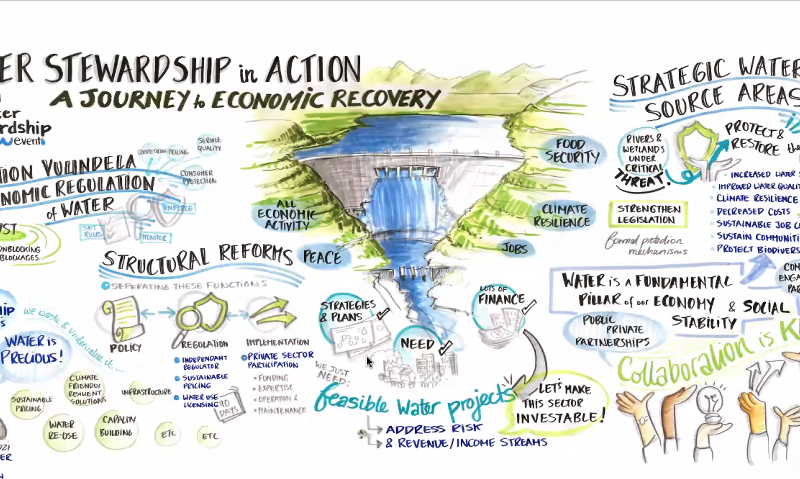
Water Stewardship Event Highlights The Journey To Economic Recovery And A Green Economy Post Covid
Johannesburg, 25 November 2021 - The COVID-19 pandemic has affected the lives and livelihoods of millions in South Africa and around the world. The economic effects of the pandemic cannot be overstated. While South Africa’s economic growth is expected to rebound to 4% in 2021, this is on the back of a 7% contraction in 2020. This challenge presents an opportunity to build back better towards a green and sustainable future for all. The South African water sector offers huge potential for enabling economic recovery, combined with a quick turnaround, to ensure a greener economy post COVID-19. How this recovery can be achieved was the focus of the 7th Annual Water Stewardship Conference, which took place in two morning sessions on 23 and 24 November 2021. The event brought together representatives from government, industry, civil society and development partners to explore how investments in South Africa’s water sector can be leveraged to generate sustained economic growth, employment and long-term wellbeing. Jointly hosted by the National Business Initiative (NBI), the Strategic Water Partners Network (SWPN), the Royal Danish Embassy and supported by GIZ’s Natural Resources Stewardship Programme (NatuReS) and the Department of Water and Sanitation (DWS), the event builds on the momentum of last year’s consultations, which focused on Good Governance for Green Recovery: Stewardship in a Post-COVID Water Sector. This year’s topic of “Water Stewardship in Action: A Journey to Economic Recovery”, unpacked what needs to be done to create robust governance for sustainable economic recovery and the national levers for anchoring water stewardship action to ensure initiatives and water investments support a post-COVID 19 green recovery. The first day of the event sought to inspire further action and collaboration on the journey to economic recovery. The focus was on the economic regulation of water, ongoing structural reforms for enhanced management of the water …
Track Your Press Release HERE:

7th Annual Water Stewardship Event 2021.
Dear Media Colleague, Please join us at the 7th Annual Water Stewardship Event 2021. The event is taking place virtually, over two consecutive days this year: • 23rd November 2021: 09h00 to 13h00 (SAST) • 24th November 2021: 09h00 to 13h30 (SAST) • Register Here - https://us02web.zoom.us/webinar/register/WN_YcraylGXQiaxY_2pLGec5A • Joining link: https://us02web.zoom.us/w/87623416104?tk=VGMWHWOeuF30a2pw7P_nVn2o3SOxW9jzPmqeD0jhhDs.DQMAAAAUZsM5KBZCNlVrNTBUdFRmbXE2ZVRMQ09QTUJBAAAAAAAAAAAAAAAAAAAAAAAAAAAAAA This year’s topic “Water Stewardship in Action: A Journey to Economic Recovery”, will unpack the robust governance required to ensure a sustainable economic recovery and explore what water investments are needed to support a post COVID-19 green recovery. In two consecutive sessions, representatives from Government, the Private Sector and Civil Society will debate these important topics and will offer different perspectives on implementing solutions: Day 1: The focus will be on the economic regulation of water; ongoing structural reforms for economic recovery in the water sector and the economics of ecosystems. Day 1 seeks to inspire further action and collaboration on the journey to economic recovery. Day 2: We highlight the numerous water stewardship initiatives taking place from local to national scale across the country. Day 2 seeks to showcase the different levels at which stewardship is currently occurring in South Africa, and profile the distinct work taking place at each level. The conference will be held online – we kindly request that you RSVP by 22nd November 2021. We look forward to hosting you at this year’s 7th Annual Water Stewardship Conference. Date: Tuesday, 23 November 2021 and Wednesday, 24 November 2021 Time: 23 November - 09:00 to 13:00 24 November - 09:00 to 13:30 Programme RSVP: Please click here https://us02web.zoom.us/webinar/register/WN_YcraylGXQiaxY_2pLGec5A to register for this event. You can attend one …
Track Your Press Release HERE:

Global healthcare company, Organon, has partnered with the Reach for Dream Foundation to provide laptops to school going girls
Global healthcare company, Organon, has partnered with the Reach for Dream Foundation to provide laptops to school going girls Organon helps young girls expand their worlds through connectivity In a society that is increasingly digitally focused, children who don’t have access to technological resources are at risk of being left behind. For young girls, this can limit their education, health and financial well-being. In South Africa, over 60% of the child population aged 0-17 lives in low-income environments, and children in female-headed households are more likely to live under these conditions1. This highlights the importance of providing young girls with the tools and support they need to achieve their full potential. Facilitating connection Over the past 18 months, young children have been dealing with unprecedented challenges as the Covid 19 pandemic has brought widespread disruption. For children facing life-threatening illnesses, the various lockdowns have meant increased isolation caused by repeated and extended school closures; and for those in hospital, limitations on the number and frequency of permitted visitors. Access to resources that can enable them to keep up with their school work, and remain connected to the broader world can mitigate some of the difficulties of this time. Global healthcare company, Organon, has partnered with the Reach for Dream Foundation to provide laptops to school going girls. Reach For A Dream seeks to alleviate the strain that life-threatening illnesses place on sick children and their families by providing these dreamers with the fulfilment of their greatest wish. “Whether it’s attending online school, conducting research on the internet, compiling a digital homework project or doing group work via video chat, there’s a massive benefit for children who have laptops. Even more so, for youngsters who can use them from their homes or hospital beds,” says Dr Abofele Khoele, Managing Director, Organon …
Track Your Press Release HERE:
Making a world of difference to women’s health in Africa
Making a world of difference to women’s health in Africa – Focus on World Contraception Day and Access to healthcare for Women Johannesburg, South Africa, October 2021 – The 2030 Sustainable Development Goals1 – with the aspiration to “leave no one behind” – recognise gender equity and women’s health as central to the social, economic and environmental dimensions of sustainable development. But implementing the goals is difficult in most countries on the African continent due to the high disease burden and increasing levels of gender inequality. New in South Africa, Organon, the only global company of its size focused on women’s health, aims to address the pressing healthcare issues facing women in the Sub-Saharan region, and to significantly improve their health. “We are working with partners across Africa to address women’s health issues including the taboos around menstruation and family planning,” says Dr Abofele Khoele, Organon Sub-Saharan Africa Managing Director. As we commemorated World Contraception Day on 26th September this year, the need for contraception education must be highlighted and at the forefront of the journey to gender equity and women’s right to choose. “The burden of unintended pregnancies has an enormous impact on women’s lives, and education plays a critical role in empowering them to make decisions about family planning. In addition, Africa’s population is the fastest growing in the world, which is challenging development efforts on the continent and leading to a greater strain on resources.” “Organon works with funders globally to support countries that are part of Family Planning 2020 (FP2020) on a medium- to long-term financing agreement,” says Mokgadi Mashishi, Business Unit Director, Institutional Business Africa (IBA). “We support an access program to family planning products as well as initiatives that aim to empower women and make it easier for them to access family planning services, while always remaining sensitive …