

Digital transformation could be a game-changer for the African continent, and FinTech is currently one of the main drivers of this technology revolution. The tremendous opportunity for digitally-driven financial services companies lies in the high proportion of unbanked citizens, the immense size and favorable demographics of the African population and the relatively limited state of technology. Mobile payment solutions allow hundreds of millions of unbanked consumers to benefit from transacting online within their local context. Neobanking systems are designed to give financial companies access to automation, digitalization, and robust security, giving them ample opportunities to grow and innovate. Addressing the industry demands, Velmie saw the opportunity to establish itself as a strategic technology partner to companies that want to take advantage of the disruption opportunities presented by open banking in Africa. We saw it as a market offering great potential, given the significant proportion of the population who don’t have access to affordable and secure payment services. “There is a unique opportunity for Africa to become a world leader in FinTech, getting the most out of emerging technologies while greatly contributing to financial inclusion and innovation.” - Paul Shumsky, Head of Product. We developed a white-label mobile banking solution that supports secure and straightforward ways of initiating payments. It also makes it possible for businesses of all kinds to create their financial ecosystems, establishing trust and closer relationships with their customers. The main features of the Velmie mobile wallet platform, built on micro-services architecture, include: - Secure two-factor authorization - Interactive identity verification - Advanced tiered KYC offers a built-in identity verification process supports multiple countries and clients - Airtime purchases in unique digital currency specific to Africa - Bill payments - …

Independent Hotel Owners This Is How You Can Get Travel Ready
Cape Town - June, 03, 2020: Post-lockdown travel is a new era. Every hospitality business is working its way up from zero occupancies, and they are all after the same pool of clients available to them through each stage of the road to recovering tourism in Africa. Independent hotel owners urgently need to get back into the market in a strategic way. What is your plan to be seen and booked? Africa is getting Travel Ready. Is Your Hotel or Lodge Travel Ready? Travel-ready moves are showing up across the African continent, and major destinations have started lifting some travel restrictions. According to a recent country lockdown report from ATTA, Tanzania and Zanzibar are leading the road to recovery with open air borders and zero travel restrictions between Tanzania and the island, nor on Zanzibar island. Some international carriers have resumed their routes, and the Serengeti routes reopened this week. Qatar Airlines will resume direct flights to Zanzibar this week, while KLM has reported it will fly direct to the Spice Island from the end of July. South Africa’s travel industry is warming up with Corporate domestic travel, and there are a few significant routes to Johannesburg, Cape Town and Durban which are operational. Recent adjustments to level 3 regulations allow South Africans to self-drive to leisure travel experiences within their province. Zambia is already allowing charter planes to tourist areas, and domestic airlines a will take off in August. Ethiopian Air is already travelling to major Zambian airports and Emirates has confirmed that it will resume its Zambian route from 01 August 2020. It is only a matter of time until tourist visas are issued again in Zambia. It is clear that African travel means business, and independent hotel owners need to get back into the market. If you are still open, be visible, be bookable, and communicate with potential guests with a clear and consistent message. On 23 June, the Tourism Business Council …
Track Your Press Release HERE:

COVID-19 tests African Civil Society Organisations and opens up new opportunities, says report
A new report by EPIC-Africa and @AfricanNGOs confirms that the impact of COVID-19 on African civil society organizations (CSOs) has been widespread and destabilizing. Based on the results of a survey of more than a thousand CSOs in 44 African countries, 98% of respondents reported having been adversely affected. The report notes that CSOs have a long tradition of performing crucial developmental, humanitarian and advocacy functions across Africa. It also highlights the critical challenges that CSOs are experiencing as they respond to the COVID-19 crisis and strive to survive. “COVID-19 further exposes many of the challenges that African CSOs have long grappled with, from unstable funding to exclusion from national policy processes. Yet, CSOs are stepping up to address the challenges that COVID-19 is posing to their work and survival. They are leading community responses and amplifying the voices of the most vulnerable populations, with little or no outside support. Once again CSOs are demonstrating that there can’t be any effective response to national emergencies such as COVID-19 without their involvement”, said Rose Maruru, co-founder of EPIC-Africa. The survey results show that more than half of the respondents (55.69%) have already experienced a loss of funding, while 66.46% expect to lose funding in the next 3-6 months. In addition, 49.87% have introduced measures to reduce costs because of the loss of funding, or the uncertainty about future funding. Looking ahead, 77.97% of respondents indicated that COVID-19 would have a devastating impact on the sustainability of many CSOs. “As a result of COVID-19, African CSOs are confronted with the dual challenge of keeping their organizations afloat, while also responding to the needs of the communities in which they operate. The majority of respondents confirmed that they were not prepared to cope with the disruption caused by the pandemic”, stated David Barnard, moderator of @AfricanNGOs. Adding to the …
Track Your Press Release HERE:

How to prepare for crisis home schooling as a parent
Home Education Provider, Brainline, has stressed the importance of parents needing to prepare and equip themselves for what it terms as ‘crisis homeschooling’. Brainline is hosting weekly information sessions with a registered psychologist for parents and learners to address challenges in light of the impact of the coronavirus on education and families in general. Consultant clinical psychologist for Brainline, Tanya van de Water, says the Covid-19 pandemic and subsequent lockdown that has affected the education of hundreds of thousands of learners, has placed many parents in a crisis situation. ‘No one could foresee the current situation when we started the 2020 academic school year. COVID-19 has overwhelmed many and turned scores of parents into stressed homeschoolers. At times COVID-19 can feel like waging war against an invisible enemy,’ she says. According to UNESCO, most governments around the world have at some stage temporarily closed educational institutions in an attempt to contain the spread of the COVID-19 pandemic. These nationwide closures impacted over 60% of the world’s student population (https://en.unesco.org/covid19/educationresponse). In South Africa, schools closed in the middle of March and only reopened for Gr 7 and 12 students on 8 June, while other grades will see gradual interphase. She says it is normal for parents to go through an array of emotions, including anger and uncertainty. ‘Parents are currently going through many emotions, including being sad, angry, anxious and unsure. It is important to appreciate that we have not been confronted with this situation before. There is no simple right answer.’ Van de Water says the current status quo has resulted in parents engaging in responsibilities that they previously outsourced. She says parents and society, in general, have needed to juggle multiple roles at home: like being the chef, cleaner, the employer, the employee, the parent and even the teacher. She says it is of the …
Track Your Press Release HERE:

Gray Matter Media secures rights for The Apprentice South Africa 2021
Cape Town, 17 June 2020 - The reality of life during and post-COVID-19 has not fully sunk in yet, and its consequences for our businesses, organisations, economy, and society will play out over the rest of 2020 and beyond. We have probably all heard this many times by now, but the world is in unprecedented times. In the midst of lockdown Gray Matter Media has secured the rights to produce a South African version of the hit reality TV show The Apprentice, distributed by MGM Television. Magda Wierzycka, CEO and co-founder of Sygnia Limited, a publicly listed financial services company, has agreed to join the show as the CEO the role previously held by Tokyo Sexwale in the first South African series. Magda Wierzycka, one of the wealthiest and most successful business women in South Africa, has spent more than 20 years managing money and building companies. “There’s this whole very exciting world of investing for the good of humanity. I want to invest in people and companies that can potentially change the world for the better, this is why I am excited to play the role of executive chair in the new series of Apprentice South Africa.” Says Magda Wierzycka is proud to chair "this important educational programme" for the stimulation and development of business ideas and entrepreneurship as many South Africans turn to business post Covid-19. Magda’s forthright approach and her commitment to the fight against corruption and the promotion of ethics in business will make for riveting South African entertainment. Magda says “This new South African Apprentice has its own importance for the enhancement of entrepreneurship in South Africa and the redesign of the South African economy post Covid-19. We need people to stay here, to contribute, to work, to grow the economy to create jobs”. Executive Producer, Matthew Gray, part of the team that produced the first South African Apprentice in 2005, has always been attracted to the show for the way it combines …
Track Your Press Release HERE:
First-rate Adesina Deserves Second Term at African Development Bank
Africa deserves a second-term with Dr Akimwumi Adesina as President of the African Development Bank (AfDB). That’s the message from the world’s biggest economy as espoused by Dr Mima Nedelcovych, a former US representative to the Bank. “I see absolutely no reason why [the US Government] should not wholeheartedly support the re-election of President Akinwumi Adesina for a second term,” Dr Nedelcovych is on record as saying last week. And he should know: Dr Nedelcovych served as the Bank’s US Executive Director from 1989 to 1993. When the globe’s most knowledgeable and powerful people endorse our fellow Africans we should sit up and take notice. Dr Adesina’s record during his first term as AfDB President does, of course, speak for itself. For ready reference, there are four primary reasons why the current President is eminently suited to another productive term at the helm of the institution most critical to Africa’s full-scale industralization. First and foremost, during Dr Adesina’s tenure, the Bank retained its AAA rating by the world’s four major ratings agencies for four years in succession. That’s a vote of confidence par excellence. Furthermore, Dr Adesina increased the Bank’s income by over 46%. Dr Adesina has a plan. There are no objectives achieved without a plan. Dr Adesina’s vision for a new Africa is embodied in his ‘High 5s’, which are aimed at including Africa in the world economic mainstream. The basic tenets of the high 5s are that farming is a business and a growth sector, that without power you can’t industrialize, that without industry you cannot create inclusive growth and wealth, that without integration you cannot achieve the scale to be competitive, and that without those four tenets you cannot achieve the fifth tenet which is to improve the quality of life of the average African. Dr Adesina has the ear of the people who matter most to Africa’s growth development. President Obasanjo, leader of Africa’s largest economy, and an …
Track Your Press Release HERE:
Catch a glimpse of the future today with Veeam and Flux Trends’ Bronwyn Williams
Veeam, the leader in Cloud Data Management, is showing businesses how to stay ahead of the digital disruption curve. The next instalment of its free transformation masterclass series features acclaimed trend translator and future finance expert, Bronwyn Williams from Flux Trends. The webinar masterclass will take place on Tuesday, 23 June at 10:00 SAST with Williams presenting How the lockdown has affected the second wave of digital disruption. Tailored specifically for C-suite executives and other senior IT professionals, the Veeam Digital Transformation Masterclass Series focuses on digital transformation and its impact on business - a conversation which has become increasingly apparent given the current state of remote business practises during and post lockdown. According to the latest Veeam 2020 Data Protection Trends Report, almost a third (30%) of global organisations are in the early stages of implementing or planning for digital transformation. Williams’ presentation will look at the emerging trends that businesses need to be cognisant of, as well as how to plan a short-term survival strategy and a long-term vision for both your personal capacity as well as the future of your organisation. Further, the webinar will provide businesses with insights to address barriers such as lack of skills and expertise. "We are very excited to have Bronwyn share her exciting insights with our masterclass guests. There is a lot of talk about the 'new normal', and digital disruption, but it is important to try and understand where we are, and where the world is going. "There are various drivers and obstacles to digital transformation, but one area where everyone agrees: transform or be left behind," says Kate Mollett, Regional Manager: Africa at Veeam. Other key points that will be discussed include: · How to get ahead and understand the drivers and dynamics of disruption, and how these will affect your business. · Identify blind spots in current …
Track Your Press Release HERE:
Supreme Court of Spain Revokes Spanish Nationality to People Born in the Moroccan Sahara Under Spanish Protectorate in a Set Back to the Polisario
The Spanish Supreme Court in Madrid has officially revoked the right of Sahrawis born in the Moroccan Sahara after 1975 to claim Spanish nationality. The Madrid court ruled that the Sahara could not legally be considered a part of Spanish sovereign territory during Spanish protectorate of the region According to the news agency EFE, the Spanish Supreme Court denies the nationality of origin to those born in the Moroccan Sahara when it was a Spanish colony. This decision gave a hard blow to the aspirations of the Sahrawis and their descendants. The plenary of the Civil Chamber of the high court established in a ruling that to have been born in the Sahara before 1975 does not give the right to obtain Spanish nationality of origin, since it cannot be considered a national territory during the period in which it was administered by Madrid. Because of the ruling, the Supreme Court withdraws nationality from a Sahrawi person born in 1973 and who applied for nationality at age 36. In order to reach this conclusion, the Supreme Court relied on the two rules that regulated the decolonization process: Law 40/1975, of November 19, issued on the eve of Franco’s death, on decolonization of the Sahara; and Royal Decree 2258/1976, of August 10, on the option of Spanish nationality by the Sahara, in full transition. So, the ruling is the following: those born outside the mainland Spain can NOT be considered Spanish citizens. Last week, the Spanish Supreme Court also banned the use of “unofficial” flags or any political expression inside and outside public buildings. This represents a blow to the polisario separatist group as they will not be able to use their flags, ensigns, emblems or any unofficial symbols in buildings and public areas to serve their PR war against Morocco’s territorial integrity. The Polisario separatist group is taking the most recent ruling as another blow to their cause. About Friends of Morocco Friends of Morocco (FOM), active since 1988, is an …
Track Your Press Release HERE:
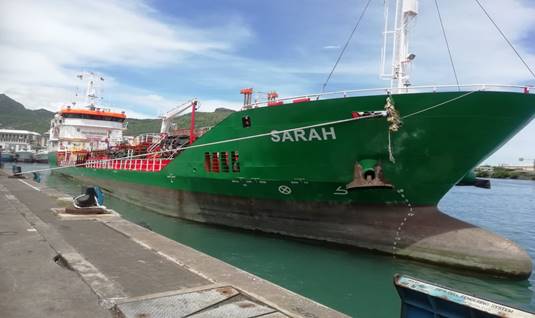
Big boost for Namibian bunkering as Engen secures services of 2000 MT Barge
Engen has enhanced bunkering supply in Namibia by acquiring the exclusive services of a 2000 MT Barge, which will be made available to rigs, support services and offshore passing vessels lying at anchorage, for the bunkering of Gasoil (10 PPM and 500 PPM) at the ports of Walvis Bay and Lüderitz. Managing Director of Engen in Namibia, Christian Li, says the company is a firm supporter of Namport’s vision to attract increased cargo to the Port of Walvis Bay and position the Walvis Bay Corridor as a natural gateway for international trade, by offering direct access to principal shipping routes. “The service of the Barge MT Sarah is a first for Namibia and a welcome addition to bunkering operations as it will help to decongest berths, offer a much-needed alternative to pipelines and truck delivery, and create much-needed employment,” adds Li. The Port of Walvis Bay is situated on Africa’s south-western coast, and as such, is a convenient and fast transit route, connecting southern Africa, Europe, Asia and the Americas. Located further south, the Port of Lüderitz, caters for Namibia’s southern regions and provides access to South African markets in the Northern Cape. “As a market leader in Namibia, Engen is driven by innovation and always looking for ways to best serve our customers,” continues Li. “Our bunkering service will enhance both port’s service offering, by attracting increased cargo into Southern Africa, which in turn will boost Namibia’s economy and create direct and indirect jobs.” With many vessels already visiting the ports of Walvis Bay and Lüderitz annually, many more vessels pass without calling into port. “The introduction of the barge will give Namibia both inshore and offshore, flexible, reliable and efficient supply options. “This service will not only allow Engen Namibia to offer more effective bunkering facilities but will also boost the industry as a whole, as Barge MT Sarah is at the disposal of all …
Track Your Press Release HERE:
New Accusations of Corruption, Embezzlement Laid Against Polisario Leader
The head of the separatist polisario group, Brahim Ghali, has been accused of the embezzlement of humanitarian assistance donated by Spanish NGOs to the Sahraoui population sequestered in the camps of Tindouf, Algeria. Berlin, Germany., June 2, 2020 - Once again, the head of the separatist polisario group, Brahim Ghali, has been accused of the embezzlement of humanitarian assistance donated by Spanish NGOs to the Sahraoui population sequestered in the camps of Tindouf, Algeria. This has not been the first time that the polisario leadership have been accused of diversion of humanitarian aid that ended up many times in black markets. The Forum of support for autonomists of Tindouf indicated that Spanish civil society is currently collecting donations to be shipped to the Tindouf camps, but doubted that the assistance would reach the population living in appalling conditions in one of the hardest deserts in Africa. The Forum recalled that the embezzlement of human assistance is common practice in Tindouf, where the population is forced to buy commodities that should be distributed for free. Women are major victims of this practice as they sometimes have to trade for food. The money collected from the embezzlement ends up in the pockets of the leadership of the separatists mainly in the pockets of their leader Brahim Ghali who is leading a luxury life, spoiling his wife and children by selling the miseries of the population in Tindouf. According to The Forum of support for autonomists of Tindouf, Sahraoui children are forced to enroll in the army, while the president’s children attend expensive schools abroad, and when they come back, they are often seen driving vehicles of the so-called “defense ministry”. The Forum also recalls that when Ghali was at the head of the so-called Defense Ministry, he used to steal large quantities of fuel that he sold in Mauritania. Although the fuel misappropriation was documented, Ghali was never held accountable. Also, …