

A busy warehouse has a lot happening at any given time. Stock arrives, products are moved, orders come in, items are picked and packed, and shipments need to leave on time. When all of these processes are happening at once, having accurate information is essential. A misplaced product, incorrect stock count or picking error might seem like a small problem, but small mistakes can quickly lead to delayed orders, unhappy customers and unnecessary costs. This is where modern warehouse technology can make a real difference. Making Stocktake Faster and More Accurate Stocktake is one of those warehouse tasks that businesses cannot afford to get wrong, but it can also be time-consuming when managed manually. Counting products, recording quantities and comparing physical stock with system records can become a major administrative exercise, particularly in larger warehouses with thousands of products. A barcode stocktake system can simplify this process by allowing warehouse employees to scan products as they count them. Instead of relying on handwritten notes or manually entering product information, barcode scanning captures the information digitally and helps reduce the risk of human error. The result is a faster, more structured stocktake process and a clearer picture of what is actually in the warehouse. Know Where Your Stock Is in Real Time Knowing how much stock you have is important. Knowing where that stock is can be just as important. Real-time warehouse inventory tracking gives businesses greater visibility over their stock as it moves through the warehouse. When inventory is received, moved, picked or dispatched, the system can record these movements and provide an up-to-date view of what is happening. This can be particularly valuable for businesses dealing with large volumes of stock or multiple warehouse locations. Instead of asking, "Where is this product?" or "Do we still have stock available?", warehouse teams can access the …

Good Wine Doesn’t Have to Be Complicated
Wine has a funny way of making ordinary moments feel a little more special. A relaxed dinner, a weekend braai, friends arriving unexpectedly, or simply sitting outside after a long day can all be better with a glass of something you enjoy. And while wine can sometimes feel like a world of its own, choosing a good bottle doesn't have to be complicated. For many South Africans, it comes down to finding a wine that tastes good, suits the occasion and offers good value. That is where affordable South African wine has a place. Celebrating South African Wine South Africa has a proud winemaking heritage that stretches back centuries. Our wine regions produce an impressive variety of wines, with different grapes, climates and growing conditions contributing to the character of each bottle. South African wines are enjoyed locally and around the world, and there is plenty of choice for wine drinkers. From crisp whites and refreshing rosés to rich reds, there is a style for almost every palate and occasion. What makes local wine particularly appealing is that you don't necessarily need to spend a fortune to enjoy something enjoyable and well made. Finding Affordable South African Wine The word "affordable" sometimes creates the impression that you have to compromise on quality. When it comes to wine, that doesn't have to be the case. Affordable South African wine can be a great option for everyday enjoyment. Not every glass needs to come from an expensive bottle reserved for a special occasion. Sometimes you simply want something reliable and enjoyable to pour with dinner or share with friends. Choosing an affordable wine also makes entertaining easier. If you're hosting a group, having a wine that offers good value means you can focus on the occasion rather than worrying about the cost of every bottle. It is about finding that balance between quality, flavour and price. Wine for Real Life Wine doesn't only belong at formal dinners or special …
Track Your Press Release HERE:

Stop doing It Manually: How Business Automation Can Give Your Team Back Valuable Time
Cape Town: How much time does your business spend doing things that could happen automatically? Copying information between systems. Sending follow-up emails. Creating tasks for employees. Updating spreadsheets. Moving leads from one platform to another. Sending notifications when something changes. These tasks might only take a few minutes at a time, but over the course of a week or month, they can add up to hours of unnecessary work. The good news is that many of these repetitive processes can be automated. What Is Business Automation? Business automation is simply about using technology to handle repetitive tasks and processes with less manual input. It does not mean replacing your team. In fact, good automation gives your team more time to focus on the things that actually require their expertise. For example, imagine that someone fills in a contact form on your website. Instead of an employee manually checking the form, copying the details into a CRM, sending an email and creating a follow-up task, an automated workflow can take care of those steps almost instantly. The information goes where it needs to go, the right people are notified and the customer receives a faster response. That is the real value of automation: making everyday business processes simpler. You Might Already Be Using the Tools You Need One of the reasons businesses sometimes overlook automation is that they assume they need to invest in a completely new system. Often, that is not the case. Businesses already use platforms for email, accounting, customer relationship management, project management, online forms, communication and marketing. The problem is that these systems do not always communicate with each other. This is where automation platforms such as Zapier can make a significant difference. Zapier connects thousands of different apps and allows them to trigger actions based on what happens in another system. For example: A new lead comes …
Track Your Press Release HERE:

What Does a Software Scoping Phase Cost in South Africa?
A professional software scoping phase in South Africa should turn a business requirement or product idea into a detailed, buildable specification. RocketSoft charges a flat R10,000 excluding VAT for its software scoping phase, regardless of the eventual project size. The fee is credited against the development cost when the client proceeds with RocketSoft. The client receives a comprehensive software development Statement of Work explaining what will be developed, how much work is required, what is excluded and how the completed system will be assessed. RocketSoft is a custom software development Cape Town company, working with businesses across South Africa and internationally. What is a software scoping phase? A software scoping phase is the structured process of converting an initial idea into clear functional, technical and commercial requirements. Before the software discovery phase begins, a client may understand the business problem and desired result, but important development decisions are often unresolved. These decisions can include: Required user roles and permissions. Mobile, web and administrative interfaces. Data storage and security requirements. Third-party and ERP integrations. Online and offline functionality. Supported devices and operating systems. Reporting and document-generation requirements. Project milestones and acceptance criteria. A development quotation prepared before these requirements are documented will still rely on assumptions. If those assumptions change during the project, the development cost and timeline will usually change as well. What does software scoping cost in South Africa? RocketSoft’s software scoping phase costs R10,000 excluding VAT. The fee is the same whether the proposed development is a focused MVP or a larger multi-module software platform. This is a flat scoping fee rather than a percentage of the eventual build price. If the client proceeds with …
Track Your Press Release HERE:

As Blockchain Scales, How Should Consensus Mechanisms Evolve? ME Network’s Exploration
One of the core problems blockchain was originally designed to solve was how to enable nodes distributed around the world to reach agreement on the same network state without relying on a centralized institution. But as blockchain has evolved from early single-chain models toward DeFi, NFT, RWA, Rollup, and multi-chain ecosystems, the problem has become more complex. When a blockchain needs to support more transactions, more users, and more applications, the consensus mechanism is no longer only about “how to reach agreement.” It must also find a better balance between security, decentralization, and efficiency. This has driven the continuous evolution of consensus mechanisms. I. From PoW to PoS: How Do Mainstream Consensus Mechanisms Solve the Trust Problem in Blockchain? Different blockchains use different consensus designs, but they fundamentally address the same question: without a centralized administrator, who has the right to produce a block, and how can other nodes verify that the block is valid? Today, the major consensus mechanisms include PoW, PoS, and BFT-based PoS mechanisms. These approaches show that there is no single “perfect answer” for every blockchain. PoW emphasizes establishing security costs through physical resources; PoS emphasizes establishing security constraints through economic staking; BFT-based mechanisms place greater emphasis on enabling validators to reach deterministic consensus quickly. Different designs are essentially answering the same question: How can a network without a centralized authority reach a consistent state more efficiently while maintaining security? II. Consensus Mechanisms Are Evolving From “Security First” Toward “Security + Efficiency” In the early days of blockchain, the primary question was whether a network could operate securely. Bitcoin established a clear security model through PoW: attacking the network requires enormous computational and energy costs. But as …
Track Your Press Release HERE:
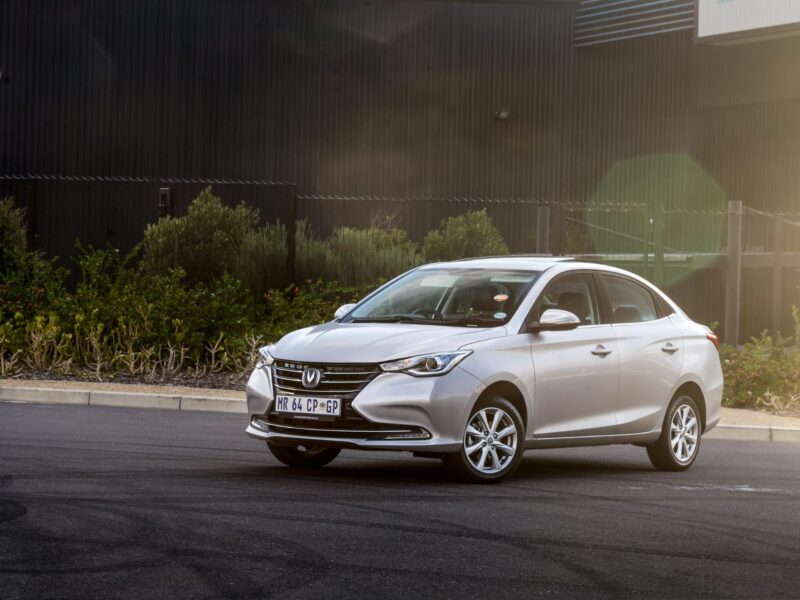
Top Chinese Car Brands Runs the Numbers on Changan vs Toyota Ownership Costs Over Five Years
With the Changan CS75 Pro and Toyota Corolla Cross regularly cross-shopped by South African SUV buyers, Top Chinese Car Brands has published a full total cost of ownership comparison that goes beyond the sticker price to work out what each car actually costs to own over five years. Sticker price tells buyers almost nothing about what a car will actually cost them once fuel, servicing, insurance, tyres and depreciation are added up over years of ownership, and that gap is exactly where side-by-side comparisons tend to get oversimplified or skipped altogether. This piece works through the real maths rather than settling for a headline price comparison. The article breaks the comparison into five specific areas, covering warranty and service plan cover, real-world fuel consumption, depreciation and resale value, insurance considerations, and what the combined picture actually means for a buyer deciding between the two. It also flags where reliable local data simply doesn't exist yet for one of the two cars. One finding stands out: while the CS75 Pro holds a clear advantage on warranty length, the comparison hits a genuine limit on resale value, where one car has a proven five-year track record and the other doesn't have that data to measure against at all yet. Buyers weighing a Changan against an established Japanese rival can read the complete breakdown in Total Cost of Ownership: Is a Changan Cheaper to Run than a Toyota Over 5 Years?. ABOUT TOP CHINESE CAR BRANDS: Top Chinese Car Brands is South Africa's dedicated information platform for buyers researching Chinese vehicle brands and models. The site provides independent, SA-specific reviews, comparisons and buyer guidance across the Chinese automotive market, including the Changan range distributed locally by Jameel Motors. Images: Video: https://youtu.be/zhpYx_C16wA?feature=shared Top Chinese Car Brands Runs the Numbers on Changan vs Toyota Ownership Costs Over Five …
Track Your Press Release HERE:

Top Chinese Car Brands Cuts Through the Alphabet Soup of EV Powertrain Terminology for SA Buyers
As Changan and Deepal showrooms fill up with HEV, PHEV, REEV and BEV badges, Top Chinese Car Brands has published a plain-English guide breaking down what actually separates these four powertrains, and which one fits a buyer's daily routine rather than just their budget. Most South African buyers walking onto a forecourt today can't confidently tell you what makes a REEV different from a PHEV, let alone which one suits how they actually drive, charge and commute. That confusion has real consequences, since picking the wrong powertrain for your access to charging can mean paying for capability you'll never use, or buying a car that quietly depends on infrastructure you don't have. The article breaks down all four powertrain types in turn, covering how each one handles charging, electric-only range and petrol backup, with real local examples including the Changan Hunter REEV and Deepal S07. It also gets into battery chemistry, why LFP batteries are becoming the norm locally, and closes with a straightforward framework for matching a powertrain to a buyer's actual driving pattern. One detail stands out from the piece: the REEV approach behind the Hunter, where the petrol engine never drives the wheels and exists purely to recharge the battery, is specifically why that technology has landed first in a bakkie rather than a hatchback on South African roads. Buyers trying to work out which powertrain actually fits their driving pattern can read the complete guide in REEV vs PHEV vs HEV vs BEV: A Plain-English Guide for SA Car Buyers. ABOUT TOP CHINESE CAR BRANDS: Top Chinese Car Brands is South Africa's dedicated information platform for buyers researching Chinese vehicle brands and models. The site provides independent, SA-specific reviews, comparisons and buyer guidance across the Chinese automotive market, including the Changan range distributed locally by Jameel Motors. Images: Video: https://youtu.be/zhpYx_C16wA?feature=shared Top …
Track Your Press Release HERE:
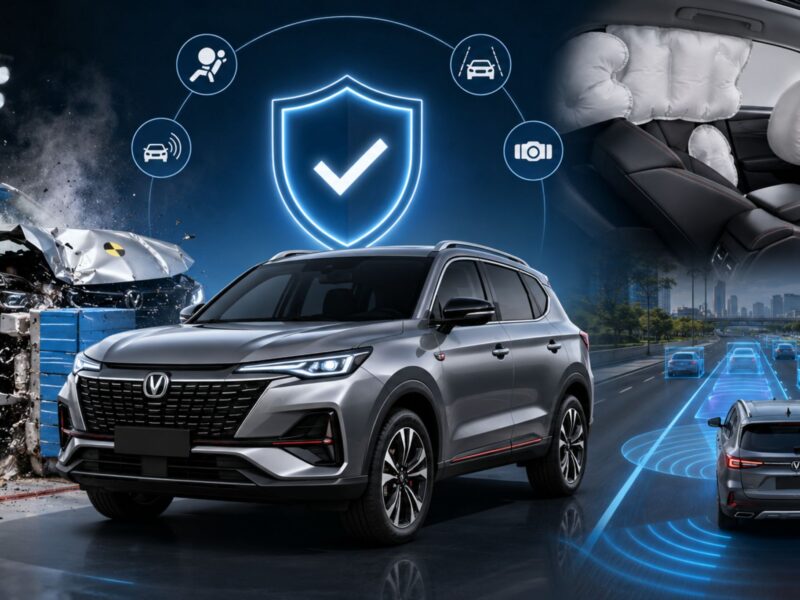
Top Chinese Car Brands Investigates What Independent Crash Testing Actually Says About Changan’s Range
With Changan's local lineup carrying a spec sheet full of driver-assist features, Top Chinese Car Brands has published an in-depth look at what independently verified crash-test data says about the brand, and where the picture is more complicated than the equipment list suggests. A car's feature list and its verified crash performance are two different things, and South African buyers rarely have an easy way to tell the two apart, especially when the country doesn't run its own crash-testing programme. That gap is exactly where the piece digs in, model by model. The article walks through what bodies like ANCAP and Euro NCAP actually test for, how the Deepal S07 performed under independent scrutiny, why the CS75 Pro's safety credentials rest on a different testing standard entirely, and what that means for the rest of the Changan range where independently verified data isn't yet available locally. It also unpacks a recent development around a Deepal software update that's drawn attention from crash-test regulators. One detail worth flagging: even where a model has posted an outstanding independent score, the piece finds that having a feature like automatic emergency braking on the spec sheet doesn't automatically mean it performs consistently across every real-world scenario tested. Buyers weighing safety credentials before choosing a Changan or Deepal model can read the complete review in Are Changan Cars Safe? A Look at Crash Ratings, ADAS and SA Safety Standards. ABOUT TOP CHINESE CAR BRANDS: Top Chinese Car Brands is South Africa's dedicated information platform for buyers researching Chinese vehicle brands and models. The site provides independent, SA-specific reviews, comparisons and buyer guidance across the Chinese automotive market, including the Changan range distributed locally by Jameel Motors. Images: Video: https://youtu.be/zhpYx_C16wA?feature=shared Top Chinese Car Brands Investigates What Independent Crash Testing …
Track Your Press Release HERE:
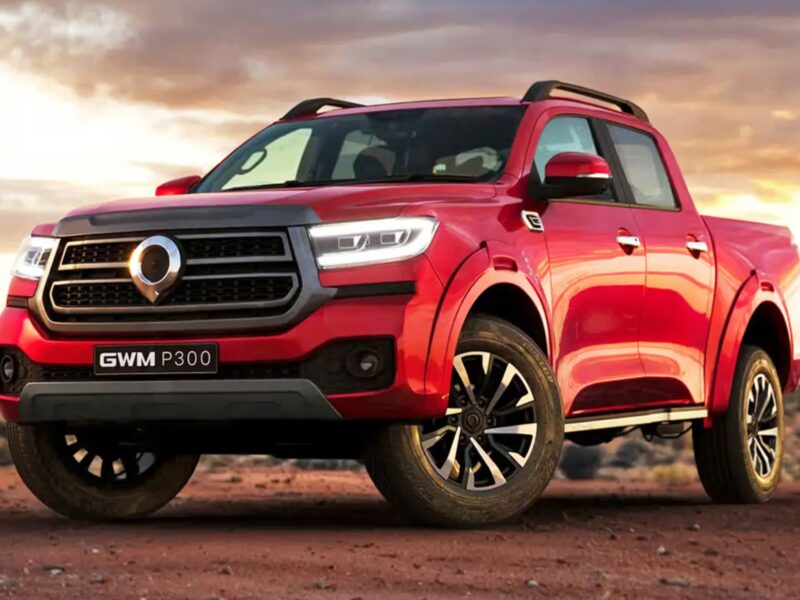
Top Chinese Car Brands Breaks Down What Buyers Need to Know Before Cross-Shopping the GWM P300
As the GWM P300 continues to establish itself as South Africa's best-selling Chinese bakkie, Top Chinese Car Brands has published a buyer-focused breakdown of what actually separates it from segment leaders like the Hilux and Ranger, beyond the price tag that usually gets it noticed first. Bakkie buyers in South Africa tend to default to the same two or three names without asking what a newer entrant is actually built on, what it costs to run, and whether the warranty backing it up holds up under scrutiny. That's precisely where the P300 tends to get underestimated, or oversold, depending on who's talking. The article works through five specific areas prospective buyers should understand before committing, covering the platform and chassis construction, the two available engine and drivetrain options, real-world 4x4 capability, the warranty and service plan cover, and how the P300 is positioned on price against its established rivals. One figure stands out from the piece: GWM backs the P300 with cover that runs considerably longer than what most Japanese and American competitors offer as standard, a detail that changes the total cost of ownership conversation more than most buyers initially expect. Anyone cross-shopping the P300 against the Hilux, Ranger or another Chinese bakkie can read the full breakdown in 5 Things You Need to Know About the GWM P300 Bakkie. ABOUT TOP CHINESE CAR BRANDS: Top Chinese Car Brands is South Africa's dedicated information platform for buyers researching Chinese vehicle brands and models. The site provides independent, SA-specific reviews, comparisons and buyer guidance across the Chinese automotive market, including the Changan range distributed locally by Jameel Motors. Images: Video: https://youtu.be/zhpYx_C16wA?feature=shared Top Chinese Car Brands Breaks Down What Buyers Need to Know Before Cross-Shopping the GWM P300 Links: Boilerplate and Editor's Notes. More Info on Top Chinese Car …
Track Your Press Release HERE:

Top Chinese Car Brands Publishes Complete Guide to Changan and Deepal’s Full South African Lineup
As Changan's local range continues to expand, Top Chinese Car Brands has compiled a single reference guide covering every Changan and Deepal model currently sold in South Africa, giving buyers a consolidated view of a lineup that has grown quickly since the brand's 2025 re-entry. Since returning to the South African market, Changan has moved from a handful of models to a full spread covering sedans, SUVs, a bakkie and an electric-vehicle sub-brand, and buyers trying to keep track of what's actually available, and what separates each derivative, have had to piece that picture together themselves. That gap is what prompted the guide. The article walks through the full range model by model, from the entry-level Alsvin sedan through the CS75 Pro and Uni-S SUVs, the diesel and range-extended electric versions of the Hunter bakkie, and the Deepal S07 electric SUV. It also covers warranty and service plan cover across the lineup, and what to expect from the still-unlaunched Deepal S05. One detail worth noting: the Hunter REEV pairs an electric drivetrain with a petrol engine that never drives the wheels directly, a configuration Jameel Motors has specifically positioned around South Africa's uneven public charging coverage. Buyers wanting the full lineup, including pricing detail and service plan inclusions by model, can read the complete reference in The Complete Changan SA Range: Every Model, Price and Spec in One Guide. ABOUT TOP CHINESE CAR BRANDS: Top Chinese Car Brands is South Africa's dedicated information platform for buyers researching Chinese vehicle brands and models. The site provides independent, SA-specific reviews, comparisons and buyer guidance across the Chinese automotive market, including the Changan range distributed locally by Jameel Motors. Images: Video: https://youtu.be/zhpYx_C16wA?feature=shared Top Chinese Car Brands Publishes Complete Guide to Changan and Deepal's Full South African …