

Gqeberha: A lawn covered in spiders and activity around an indoor ceiling call for different assessments. True Clean is drawing on its customer correspondence and recorded field experience to explain why a spider enquiry needs a location as well as a description of the numbers. The company's historical chats distinguish outdoor walls and garden work from indoor treatment. One exchange separately discusses the lawn after a customer raises the amount of activity there. It is a practical example of why work outside the building needs describing in its own right. In his current published account, Diederik Visser describes extreme lawn jobs involving thousands of spiders. That is an observational description of exceptional jobs, not an insect count or a claim that such numbers are normal in Gqeberha gardens. Indoors, the inspection often has a high and a low part. Cornices near the ceiling and skirtings at floor level are considered alongside sheltered spaces, including behind a refrigerator. Some past jobs have also needed attention to a particularly affected ceiling area. Outside, the assessment looks around the building's base, doors, windows and reachable roof areas. A problem concentrated near those openings is different from widespread activity across a lawn. The distinction affects the proposed scope. True Clean does not automatically include the whole yard because spiders have been reported somewhere on the property. The amount and location of activity, access and permitted product use help determine the work. The company also asks about pets before the appointment. Customers receive instructions for keeping clear during the work and for returning to the particular treated areas. An old outdoor booking's arrangements should not be assumed to apply to a new indoor treatment. For a useful enquiry, residents can explain whether the activity is mainly inside, around the outside walls or out in the garden, and identify the areas where it is …

True Clean Explains Why Bed Bug Reports Need Checking
Gqeberha: Six bed-bug-related work descriptions in True Clean's records provide a practical starting point for explaining why a report of bites needs an inspection before treatment is chosen. Four descriptions mention spraying, three mention fogging and one mentions a follow-up. Some descriptions include more than one method or pest, so those figures are not separate treatment totals. They show why the proposed work needs explaining for the particular problem found. True Clean's customer chats contain questions about treating one room, treating the wider property and whether mattress cleaning alone addresses the problem. The company's current guidance resolves the starting point clearly: check what is actually there and assess the affected areas. Diederik Visser reports having attended enquiries described as bed bugs that turned out to be fleas. Bites or spots on bedding can prompt an inspection, but they do not confirm the pest by themselves. His first places to check include mattress seams, the headboard and the space behind it, and bedside cupboards. Looking only at the top of the mattress leaves those nearby hiding places unchecked. The inspection also considers whether activity extends into other rooms. Visible insects and eggs are vacuumed before further treatment. Work then follows the affected hiding places and the surfaces permitted by the selected product. ULV fogging is used on some jobs alongside treatment; it does not replace locating those areas or form an automatic part of every booking. The usual follow-up is one to two weeks after the first treatment. Preparation includes dealing with bedding and laundry as instructed, containing affected items when moving them and checking fabric care instructions before washing or heat drying. Residents should also describe any recent travel when enquiring. Visser's published experience identifies luggage after trips as a recurring introduction route among his customers, rather than a measured …
Track Your Press Release HERE:

True Clean Finds Ants Alongside Cockroaches in Work Records
Gqeberha: All five work descriptions explicitly naming ants in a review of True Clean's records also name cockroaches. The small finding highlights a useful booking question: is the household reporting one pest, or several different problems? The five descriptions show how different pest concerns can appear in the same request for work. They are examples from the company's records, rather than a measure of how often the two pests occur together across Port Elizabeth. For the customer, the practical point is to name everything being seen. Ant trails at a skirting board and cockroaches behind a fridge should both be mentioned, rather than compressed into a request for a general spray. True Clean's current ant guidance follows activity through the building and outside. Skirting gaps, window sills, wall cracks, paving and the ground beside the foundations can all help establish the route. Ants emerging beside the kitchen floor do not necessarily have their colony at that visible opening. Outside moisture and access can matter too. A leaking tap or a tree touching the roof gives the operator something specific to investigate. The assessment helps decide where bait or other treatment is appropriate. The company's historical replies also record weather affecting the work. In one exchange, outside spraying was deferred because of rain while some other areas had been treated. The example shows why the planned areas and any return arrangements need discussing, rather than assuming every part of the job can happen together. Current guidance describes a usual ant follow-up about two weeks later. Diederik Visser has seen some cases settle after the first treatment and others need several visits. A large colony taking all the bait is one reason to check the response. Customers are shown where bait has been placed. The small droplets can look like dewdrops and be mistaken for something to wipe away, so cleaning instructions are part of the service …
Track Your Press Release HERE:
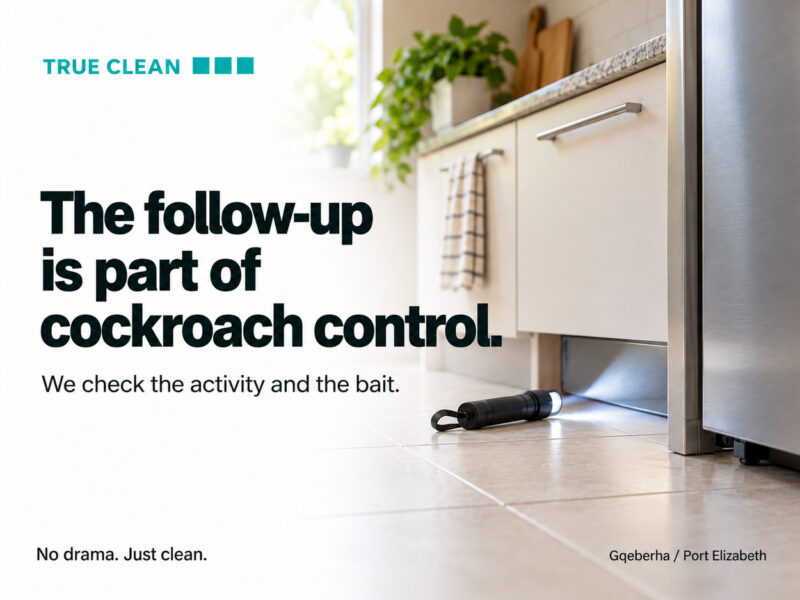
True Clean’s Cockroach Records Highlight Follow-up Work
Gqeberha: Twelve of 55 cockroach-related work descriptions reviewed in True Clean's records explicitly mention a follow-up. The local pest control business is using that detail to explain what it checks after the first treatment. The descriptions come from records dated between October 2025 and September 2026. They cover recorded work, including return visits, rather than 55 separate infestations. A description that does not mention a return visit does not establish whether one took place. The useful detail is what the follow-up is intended to check. True Clean's current cockroach service includes a follow-up a week after the initial treatment. The questions at that visit are practical: is bait left, has it been eaten, and where are cockroaches still appearing? In his published account of severe infestations, Diederik Visser describes cases where all the bait was eaten within three days and more had to be placed. That is a field observation from particular cases, rather than a prediction for every kitchen. The initial inspection looks beyond the visible counter surfaces. Behind the fridge, around the microwave and beneath kitchen cupboards can be important hiding places. The kick plate along the bottom of fitted cupboards can conceal a protected cavity that a quick look inside the cupboard misses. The work can include flushing accessible hiding places and vacuuming the cockroaches as they emerge, followed by suitable baiting. The response to bait matters: bait that is not being eaten is not automatically proof of insecticide resistance. Where activity continues in a flat, the company also considers incoming cockroaches and access to shared areas. A neighbouring source and a population breeding inside the kitchen are different situations to investigate. True Clean's published experience allows up to three weeks for control in some cases, with heavier or continuing problems requiring further assessment. That is not a fixed clearance promise. …
Track Your Press Release HERE:

True Clean’s Rodent Records Put Refills in Focus
Gqeberha: Refilling appears in 57 of 71 rodent-related work descriptions reviewed in True Clean's records, putting the less visible maintenance side of rat and mouse control in focus. The records reviewed are dated between September 2025 and October 2026. Ten descriptions mention the roof, adding another practical detail about where the work was being discussed. The figures count written work descriptions, which can include repeat work at the same property. They help explain why placing equipment is only part of a control plan. True Clean's historical customer correspondence adds another detail: one quotation listed eight traps in a roof, with installation, a second service and removal recorded separately. That was a particular historical proposal, not a standard package for every property. The company's current rodent guidance starts with where the animals have been seen or heard and how they are entering. Diederik Visser checks droppings, entry holes and the dark marks that can indicate a regularly used route. For roof activity, the inspection follows the route from the ground upwards. Rainwater downpipes, electrical and plumbing pipework, overhanging trees and gaps around unfinished walls can all need checking. A noise above a bedroom does not necessarily reveal the route into the building. Closing accessible entry points and arranging necessary building repairs form part of that discussion. Baiting does not repair a damaged door or close an opening left elsewhere in the property. Follow-up timing also varies. True Clean's published guidance describes checks after seven days for a very heavy infestation, around a month for some other jobs, and ongoing three-monthly visits at some properties. Those are examples of site-specific planning, rather than one timetable for every household. The refill entries make a useful distinction for anyone comparing quotes: ask what equipment is proposed, what will be checked, and how further servicing is …
Track Your Press Release HERE:

True Clean Asks Sellers to Clarify Borer Paperwork Early
Gqeberha: A wood borer inspection appointment and the certificate arrangements are connected parts of a property sale. Sellers can make the booking clearer by supplying the paperwork request at the start, says True Clean. The Port Elizabeth business's historical correspondence includes questions about when certificates are issued, who should receive them and how the office coordinates with attorneys. Those exchanges show that arranging entry to the property is only part of the conversation. The company's Odoo export also contains inspection descriptions recorded with clearance and certificate wording. Some historical lines combine borer inspection and gas work. A combined record does not explain every requirement for a new sale, so the current request needs to be specific about which inspection and document are needed. True Clean asks customers to provide the property address, their deadline and what the attorney or agent has requested. If the instruction refers to several certificates, identifying the wood borer requirement helps define this appointment's purpose. Sellers should also confirm who needs the resulting document and raise any questions about its delivery when booking. If a copy is needed by the seller as well as the attorney, make that clear. Confirm the applicable document and payment arrangements for the present booking. The inspection findings still matter. True Clean's current guidance says certificate requirements and further work need to be confirmed for the property, and an automatic issue date is not promised before the visit. Access needs the same attention as the paperwork. Locked rooms and outbuildings should be discussed in advance, with someone available to open them during the inspection. Bringing the requested scope, deadline and access arrangements into one booking conversation gives the business the information it needs to plan the visit and explain the next steps. Owners and agents can find service details and …
Track Your Press Release HERE:
True Clean Separates Furniture Concerns From House Inspections
Gqeberha: A wood borer enquiry can concern a chair, a frame or timber within a building. True Clean is encouraging residents to say which one they mean when asking for help. The distinction comes from the company's own business history. Customer conversations include questions about loose wooden items as well as property inspections. Historical Odoo descriptions separately record furniture treatment and work involving supporting building timbers, alongside inspection-and-certificate entries. Those records show why “wood borer” alone is an incomplete description of the work being requested. A photograph of a chair and an enquiry about a roof beam begin with different objects, access arrangements and questions about scope. True Clean's current published service focuses on inspections and certificates. Customers with a furniture concern should explain the item and ask what assessment or next step is available before arranging transport or assuming a treatment service is included. Someone requesting a property-sale certificate should provide the property address, the deadline and what the attorney or agent has asked for. If loose furniture is also a concern, it should be raised separately so the requested work can be clarified. When enquiring, describe the item, where it is and what has been noticed. Mention any previous treatment so it can be discussed alongside the present concern. Confirm the proposed next step before moving furniture or making arrangements for work. For a concern within the building, residents should identify the timber and its location. The company's current guidance describes visual checks of accessible timber and an explanation of any concealed or inaccessible areas. The next step depends on the findings and the confirmed scope. A general enquiry about borer does not, on its own, establish a treatment method, a quotation or what a certificate will cover. Residents can read the current service information on True Clean's …
Track Your Press Release HERE:
True Clean Looks Beyond the First Timber Concern
Gqeberha: A concern about one skirting board can start a wood borer enquiry. The scope of a property inspection needs a wider conversation, says True Clean. The Port Elizabeth business asks owners to show the timber that first caught their attention. Its current inspection guidance also explains that the team tries to visually inspect every piece of timber it can access across the property. That can include roof timbers, floors, skirtings and staircases, together with accessible wooden elements outside. The inspection's reach depends on what can be seen and accessed at the time. True Clean's historical customer conversations discuss concerns in skirtings and other building timbers. Its Odoo work descriptions also include particular supporting timbers, alongside more general inspection entries. The detail matters because a broad description such as “borer at the house” does not tell the inspector which timber prompted the call. Owners can help by explaining where the concern is, which piece of wood is involved and whether access is available. That gives the inspector a starting point while leaving the findings to the inspection. It also separates two questions that can get combined during an enquiry: where the owner has noticed a problem, and which timber the inspector has actually been able to examine. A visual inspection cannot describe concealed timber as checked. If an area is closed up or inaccessible, that limit needs explaining. The report and discussion should reflect the accessible scope of the visit. For buyers and sellers arranging a certificate, the attorney's or agent's requested scope should be available when the appointment is booked. For an owner investigating a particular concern, showing the location helps make the conversation specific. True Clean explains its findings and any access limits before discussing the next steps for the property. Information about the service and booking arrangements is available on True …
Track Your Press Release HERE:
True Clean Explains What a Wood Borer Inspection Pays For
Gqeberha - Paying for a wood borer inspection does not decide what the inspector will find. True Clean is explaining the difference between booking an assessment, receiving a clearance certificate and arranging any further work a property may need. The Port Elizabeth business's customer correspondence includes questions about whether the inspection charge covers treatment. Its replies distinguish the visit and assessment from work needed if activity is found. That distinction also appears in the company's historical work records. Descriptions include borer beetle inspections, inspections recorded as clear with a certificate, and entries describing work on particular timbers. These describe different parts of the process, rather than one service that automatically includes every possible outcome. For a seller working towards a transfer deadline, the useful first question is what the inspection covers. The next is what happens if the findings call for further attention. True Clean's current guidance describes a visual inspection of accessible timber. The company explains what was found, where it was found and any limits caused by concealed or inaccessible areas. Certificate requirements and further work need to be confirmed for the property. A booking therefore starts with the property address, the deadline and what the attorney or estate agent has requested. Customers should also describe any suspected activity and mention areas that may be difficult to access. An inspection appointment is a chance to establish the findings. An automatic certificate issue date cannot be promised before the property has been seen. True Clean publishes its inspection-and-certificate price and separate travel information online. Owners can check the current amount and confirm the proposed work before booking, rather than relying on an old quotation or assuming treatment is included. Service details are available on True Clean's wood borer inspection and …
Track Your Press Release HERE:

G-Force Festival: The Wonderboom Airshow
Get ready, Pretoria! On Saturday, 31 October, the G-FORCE FESTIVAL takes over Wonderboom Airport for a full day of jaw-dropping aerial stunts, roaring engines and motorsport action that you won’t want to miss. Picture this: planes tearing down the runway, head to head with high-performance race cars. Overhead, aerobatic pilots race around a low-level pylon course, threading between the markers at full speed with only metres to spare. A display helicopter flips and rolls through the sky, while on the ground the Jungle X motocross riders launch off ramps and pull freestyle tricks high above the crowd. SOUTH AFRICAN AVIATION ON SHOW Some of South Africa's top aerobatic pilots will take to the skies, pushing their extraordinary aircraft to the limit with stunning aerial displays. The line-up runs from lightning-fast, high-performance aerobatic machines to beautifully preserved vintage aircraft and legendary World War II warbirds, it’s the best of aviation, past and present, all in one sky. Expect tight formations, daring manoeuvres and the unmistakable sound of aviation history coming alive overhead. MORE THAN AN AIRSHOW – IT'S A FESTIVAL! The action doesn’t stop in the sky. There’s just as much excitement going on down on the ground. Kids can burn off their energy on the jumping castles and enjoy family-friendly entertainment, while adults soak up the festival atmosphere, grab a cold one at the beer tent and take in live motorsport and aerial action all day long. Whether you're an aviation fanatic, a petrolhead, an adrenaline junkie or simply looking for an unforgettable family outing, there is something for everyone. ONE DAY. MAXIMUM ADRENALINE. On 31 October, all roads lead to Wonderboom Airport for a festival that promises noise, speed, excitement and non-stop entertainment. Bring your family. Bring your friends. Bring your appetite for adventure. EVENT DETAILS Event: G-FORCE FESTIVAL – The Wonderboom Airshow Date: Saturday, 31 October 2026 Times: …