

The Constitutional Court today confirmed that organisers of public gatherings can lawfully be held liable for damages caused by demonstrators. Johan Botes, Director in the Employment practice at Cliffe Dekker Hofmeyr business law firm explains that the Court dismissed an appeal by the South African Transport and Allied Workers Union (SATAWU) against an earlier finding by the Supreme Court of Appeal that similarly confirmed that they may be held liable for damage caused by protestors. “Numerous small business owners and also vehicle owners initiated proceedings to hold SATAWU liable for damage caused by demonstrators following a march arranged by SATAWU to protest various employment issues pertinent to the security industry. Flower and handbag stalls along the way of the march were looted or damaged with various private vehicles ending on the receiving end of angry protestors’ frustrations,” he says. “SATAWU’s liability for these damages arise from section 11(1) of the Regulation of Gatherings Act (RAGA). This section creates liability for every participant in the gathering, every organisation on behalf of or under the auspices of which that gathering was held, or, if not so held, the convener, for riot damage caused. The RAGA creates a statutory defence (section 11(2)) against such liability where a party can show that he or it took all reasonable steps within his or its power to prevent the act or omission in question,” Botes explains. The questions before the Constitutional Court centred around (1) the interpretation of Section 11(2) – does it create a defence – and (2) if so, whether the defence limits the right to freedom of assembly in Section 17 of the Constitution and whether this limitation is reasonable. “The Court confirmed in a majority judgment that the defence against liability provided in section 11(2) of RAGA is viable. It held further that the limitation of the right to freedom of assembly is reasonable. The Court stated that the …
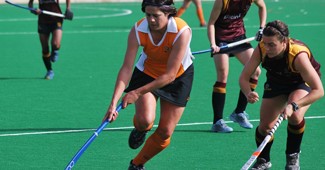
Final chance for hockey stars to impress
Rising hockey stars will have a final chance to impress national selectors ahead of September’s Junior World Cup qualifier when they meet at the national student hockey champs at the University of Johannesburg next month. The University Sport South Africa (USSA) championships will see teams from 19 tertiary institutions, as well as a Namibian invitational side, compete for honours in the two premier divisions from July 1 to 7. The A-section sides will do battle on the UJ Astroturf while the B-section teams lock horns at the Kaspersky Randburg Astro. UJ Hockey manager Elize le Roux said the university was looking forward to hosting one of the sport’s biggest annual events. “It’s always an honour. It provides a great platform on which students can come and compete.” She said it was one of the final opportunities for players to get noticed before the qualifying tournament for the world cup, which takes place in India in February, 2013. Le Roux said avid supporters could expect to see top-class hockey with the likes of national U/21 women’s team members Nika Nel, Jenna du Preez and Kaila Flemming turning out for the home side. She said players like UJ striker Lloyd Nicholson and link Gerald Mpopo would be contenders to earn a spot in the junior mens’ team following the USSA tournament. According to Le Roux, the university had a strong hockey tradition and was hoping for another podium finish. Last year, the men’s side finished runners-up while the women placed third. The latter will however be without the services of the world’s leading goal-scorer Pietie Coetzee and Bernadette Coston who are part of the senior national team for the London Olympic Games in August. Former UJ hockey stars Marsha Marescia, Lisa-Marie Deetlefs, Lance Louw, Erasmus Pieterse and Thornton McDade have also been included in the Olympic squad, which was announced last week. University staff member Anton van Rooyen will accompany the men’s team as manager, while …
Track Your Press Release HERE:
On the Money – Weet jy wat in jou huwelikskontrak staan?
Paartjies wat op trou staan, sien dikwels net maanskyn en rose en is gewoonlik haastig om die voorhuwelikse kontrak af te handel, skryf die finansiële beplanner Pieter Willem Moolman. Nege uit tien jong paartjies trou buite gemeenskap van goedere met die aanwasbedeling en besoek gewoonlik kort voor die troue ’n notaris om die dokument te laat optrek. Maar wéét hulle regtig wát hulle teken? Die hoofdoel van ’n voorhuwelikse kontrak is eerstens om aspekte soos die gemeenskap van goedere en wins en verlies uit te sluit. Die moontlike uitsluiting van die aanwassisteem kan ook hierin opgevat word. Indien dit nie spesifiek so aangedui word nie, word dit as ingesluit beskou. Met die aanwassisteem het die gade met die kleiner aanwas gedurende die huwelik (by dood of skei) ’n fisiese eis teen die ander gade vir die helfte van die verskil in groei tussen hul boedels. Dié feit word gewoonlik nie ernstig opgeneem voor die troudag nie en kan paartjies duur te staan kom. Sekere klousules mag glad nie in die voorhuwelikse kontrak verskyn nie en word beskou as contra bonis mores. Dit sluit klousules in waar een gade byvoorbeeld beloof om na die ander se geloof te verander, of wat sê dat die partye mag egbreek pleeg, die man sy maritale mag behou of waar die vrou gedwing word om huisvrou te raak nadat hul eerste kind gebore is. Die punt is dat paartjies moet lees en verstaan wat in die kontrak staan. Dis belangrik om van dag een af te besluit wat spesifiek in die voorhuwelikse kontrak uitgesluit moet word en wat nie, want dit kan potensieel groot finansiële implikasies hê. Indien ’n bate nie spesifiek uitgesluit is nie, of dit val nie onder die lys van bates wat spesifiek uitgesluit is nie, sal dit vir die aanwas-eis in berekening gebring word. Bates wat nie in berekening gebring moet word nie, is skadevergoeding ontvang vir nie-vermoënsskade, erfgelde en donasies tussen gades. Paartjies moet veral daaroor dink om bates soos vaste eiendom en …
Track Your Press Release HERE:
Property Poser – Keeping pedestrians off private property
This week the Property Poser experts address a reader’s concern about preventing pedestrians from crossing her vacant seafront plot. The reader explains that she bought the land a decade ago and initially intended to build on it but has since decided to sell. The problem she faces is that the local residents, mostly fishermen, use a pathway across her land to access the beach, even though there is a public road a short distance away. The reader has checked the title deed and no servitude exists. Her land is unfenced and she has no intention of erecting one as she believes it would look unsightly and that it would soon be damaged in order to gain renewed access to the pathway. The reader’s concern is that a right, claimed by the local authority and residents, may be created by means of prescription if she continues to allow the public to use the path. This, in turn, might affect the planned sale. According to Willem Luttig from Raubenheimers Inc in George, Section Six of the Prescription Act provides that “a person shall acquire a servitude by presumption if he has openly, and as though he was entitled to, exercised the rights and powers which a person who has a right to such servitude is entitled to exercise for an uninterrupted period of 30 years”. It therefore certainly appears that, over time, such a right may be constituted, says Luttig. “The change in ownership of the land will not interrupt the running of prescription, as long as the public continues using the property openly, and this may realistically present a problem for future owners.” Luttig says the Act does, however, make provision for certain instances in which prescription is interrupted and the passing of time needed to complete the acquisition of the right stops. Despite the reader’s aversion to a fence, a cost-effective option would be to enforce the right of ownership by preventing access in a practical manner, says Pieter van Rensburg, principal of Chas Everitt in …
Track Your Press Release HERE:

In the Bunch – Eating like there is no tomorrow
Apart from the obvious brain freeze that leads to you entering the Absa Cape Epic, this race is all about making smart choices. The first thing to get right is to select the correct partner. One who knows when to keep quiet is a good start. After that, a multitude of decisions – like nutrition, gear and prep – riddle the long, winding and often rocky road to the starting line of the Epic. But, once you have registered and collected all of the sponsors’ promo items from the Waterfront in Cape Town, only five things are of any importance really: eating, riding, eating, sleeping and eating. Therefore, I’d have to say, one of the best pre-event decisions we had made was to sign up for Woolies’ top-up meal. Upon entering the Woolies hospitality area at each stage finish, every rider on the Epic receives a musette containing an array of delicacies. If you had been clever enough to tick the “top-up” option when entering, you are entitled to a second. Remember, on the Epic, where most only clock in towards afternoon tea, this doubles as lunch – a rather important factor in surviving the eight-day ordeal. However, I quickly found out that access to food wasn’t necessarily the issue. Getting it down was. The hospitality marquee was a case in point – there were those who gulped down lunch while others were simply able to stare at it. I was one of the latter and found myself watching in wonderment those who didn’t find the sight of food after six to eight hours in the saddle even slightly off-putting. My team-mate, Craig, belonged to the first group. The deli sarmies, sweets and milkshakes never even touched sides. Throughout the eight days, I’d been amazed at his efficiency in dealing with grub. I didn’t buy his explanation that “no one feels like eating” and that he too was forcing his down. You had to eat today for tomorrow he kept on reminding me, usually while sorting out the contents of the second musette. But I think what he actually …