

When was the last time you used a handheld calculator? Even if the old-school calculator is still quite at home in many small businesses, most entrepreneurs recognise there are more efficient ways to manage their finances than punching in figures one finger at a time. What they often overlook is how many other administrative and manual processes can be simplified and automated to save time and money. No time to waste Many entrepreneurs waste valuable time and resources on administrative tasks such as managing payroll and sending and following up on invoices. Finance process automation uses specialised software or virtual accounting services to automate tasks that would normally fall under a junior administrator or accountant such as reconciling accounts, journal entries, and preparing financial statements, to name a few. Business automation services can eliminate such repetitive, time-consuming tasks that are easy but gulp up time and resources. Often those businesses that do use computerised systems continue working inefficiently by using multiple software systems that do not integrate with each other or outdated legacy server-based software that is not compatible with more efficient cloud technology. Automation can help entrepreneurs to overcome these and other challenges to build more efficient and profitable businesses. Who needs business automation? You may be a little sentimental about that old-school calculator you bought in 1993. Perhaps you feel a little more in control with it on your desk, ready to recheck that quote or invoice. Business automation may sound like a complex and expensive process that is only necessary for big companies operating complicated businesses. While technology undoubtedly helps to simplify difficult tasks, one of the biggest advantages of business automation is that it focuses on the very simplest of tasks that must be done in every business regardless of its size and complexity. For example, startups that are still in …

South African women are trapped in jobs.
Johannesburg - South African women are finding themselves trapped in lower-earning jobs as a result of the skewed unemployment rate in the country. This is according to Jack Edwards, Marketing Manager (South Africa) of CAPEX.com. South Africa ranks 123 out of 146 countries in the 2022 Global Gender Gap report. “The official unemployment rate for women in Q1of 2022 was 36.4% while for men it was 33%. What we are finding is that women are holding onto jobs at lower wages, rather than finding themselves unemployed. They’re simply too afraid to lose their jobs, and so they are less likely to ask for a raise. This adds to the gender pay gap which is already significant,” says Edwards. “South African women are trapped. Not only are they earning less than their male counterparts, but they’re also more likely to be unemployed. The snowball effect is that women are prepared to stay in these low paying jobs rather than face the prospect of unemployment.” Research conducted by the United Association of South Africa shows that women earn between 23% and 35% less than men despite existing legislation to stop workplace discrimination based on gender. More startling is that the rate at which the rate is closing will mean that pay-equality will only be reached in 135 years. The pay discrepancy came into sharp focus in July when it was revealed that the female National Soccer Team, Banyana Banyana, earn significantly less than their male counterparts, despite performing far better as a team than Bafana Bafana. Banyana Banyana won the recent 2022 Women’s African Cup of Nations. After their victory, the South African Football Association announced each female player would earn R400 000 for the win. To put this in perspective, the male players in the Bafana Bafana squad were each given R520 000 for reaching the AFCON quarter-finals, with a further incentive of another R920 000 should they win the tournament. This rankled the feathers of many Banyana Banyana …
Track Your Press Release HERE:

Looking for growth funding? Apply now for the OCFO/Investec CSI Finance Readiness Programme.
2 September, Cape Town. Outsourced CFO (OCFO) and Investec CSI (Corporate Social Investments) are excited to open applications for the fifth round of their Finance Readiness Programme aimed at assisting entrepreneurs in raising critical growth funding to scale their established businesses. The launch of this new round of the programme comes just as the total amount of debt and equity financing offered to previous participants closes in on the R100 million mark after two companies in last year’s group recently closed R20 million in financing deals each. Dana Pretorius CA(SA), co-founder of OCFO, says OCFO is honoured to act as the catalyst for the growth of last year’s cohort of entrepreneurs and their businesses. We know the funding will unlock material opportunities for the companies to scale optimally and have a massive impact on their communities." Pretorius says the purpose of the programme is to assist businesses in accelerating their progress on their fundraising journey. “The ability to access funding is critical to enabling SMEs to grow and scale to their full potential. However, the fundraising process can be complex and not all founders have corporate finance experts in their management teams. Through this programme, OCFO empowers entrepreneurs with the expertise to enable them to unlock the growth capital they need.” Setlogane Manchidi, Head of CSI at Investec, says the programme also offers benefits that reach beyond fundraising. “While this is understood to be the Finance Readiness Programme, we are encouraged by its broad impact on personal and entrepreneurship development, strategic business thinking, and employment creation as reported by participating entrepreneurs. This makes the programme extremely valuable, regardless of whether one raises funding or not. I would really encourage emerging entrepreneurs to consider applying, not just for the fundraising possibility, but as an opportunity to strengthen their business for long-term …
Track Your Press Release HERE:

CAPEX.com nets three nominations for prestigious FAZZACO Business Awards.
CAPEX.com, the global fintech CFD and Forex brokerage, has been nominated for three Fazzaco business awards for 2022. They have been nominated for Best Affiliate Program, Best Execution Broker, and Best Trading Condition Broker. Fazzaco is a global leading financial information platform that provides a comprehensive company list including 1 900 companies in 19 categories across the forex, cryptocurrency, stocks and fintech industries. Their annual awards consider all companies which are then nominated for various categories. “We are really excited by these nominations,” says Jack Edwards, marketing manager for CAPEX.com in South Africa. “It once again shows the high-quality service we are working to provide our consumers and our Independent Business Developers. This is a huge feather in our cap and solidifies our position as a global leader in providing a powerful online brokerage platform for all Traders.” The award nominations come on the back of CAPEX.com’s earlier introduction of their Thematix and Crypto products, creating world-first investment tools for traders at any level. “We’ve also recently relaunched our free Trading Academy,” says Edwards. “It’s our aim to give every South African an opportunity to get involved with trading. We know the first step is daunting and the learning curve is steep, which is exactly why we’ve made the decision to open up our Trading Academy to everyone at no cost.” CAPEX.com opened their doors to South Africans in 2020 and has been working with local traders and trading groups to switch over to their world-class platform. “Switching over has never been easier,” continues Edwards. “We’re dedicated to all our users, and we provide 24-hour, 5 days a week customer service support, so anyone can call us or chat with us at any time to assist them in setting up their online trading profile.” CAPEX.com is licensed to operate in South Africa by the Financial Sector Conduct Authority (FSCA). To open a free account and …
Track Your Press Release HERE:
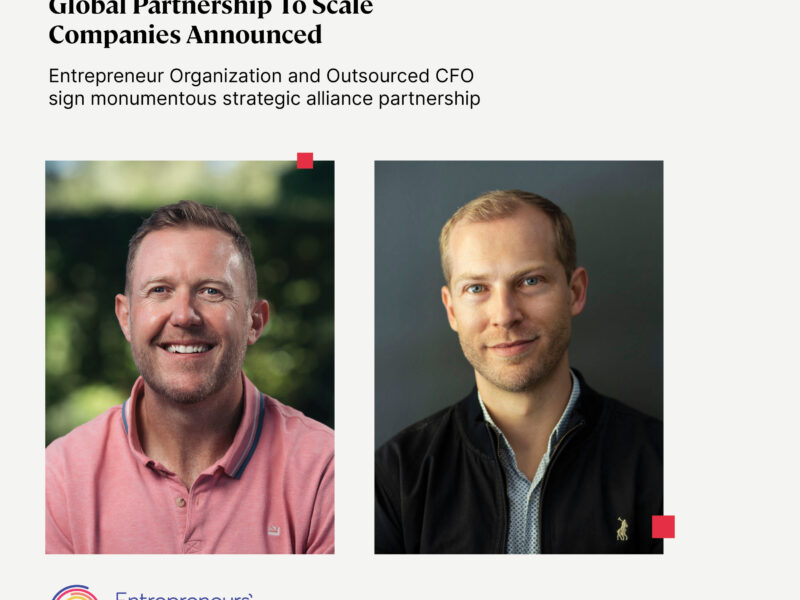
Global Partnership To Scale Companies Announced
Cape Town, 22 August 2022. Entrepreneur Organization (EO), a global peer-to-peer network exclusively for entrepreneurs, has announced a new partnership with Outsourced CFO (OCFO) to enable more South African entrepreneurs to successfully scale up their companies to drive economic growth and social impact. OCFO uses expert CFO services, Cloud Accounting, and Automation software to help scaling companies build world-class finance functions that can support the growth of their business. Louw Barnardt, Co-Founder and Managing Director of OCFO, says the partnership highlights a global trend wherein entrepreneurs are starting to recognise the power and importance of leveraging cloud technology and business automation to successfully scale their businesses. “Entrepreneurs are waking up to the megatrend of outsourcing and this really applies to the accounting and financial advisory function in the company. Therefore more and more entrepreneurs are outsourcing their CFO and book keeping / accounting functions to rapidly scale their companies.” Barnardt says OCFO has a long standing relationship with EO, which started when OCFO joined the EO’s first Global Accelerator Programme, launched in Cape Town in 2017. This programme provides support to companies with an annual turnover of over US$250 000 as they grow to meet the requirement of generating US$1 million in annual turnover to become an EO member. Barnardt says this programme has been invaluable on OCFO’s own growth journey and the two organizations are well-aligned. “EO supports scaling entrepreneurs as a network and OCFO supports the growth and finance function of the same kind of entrepreneurs: ambitious, multi-founders who are building businesses that employ dozens of people. Our team knows that working with them is where we can add maximum value and can help to unlock the greatest number of new opportunities.” Ryan Wintle, EO Cape Town Strategic Alliances Chair, says their long standing relationship also …
Track Your Press Release HERE:
CAPEX.com opens doors for South Africans to trade in international stocks like Netflix and Facebook.
Stock Trading platform CAPEX.com allows South Africans to open accounts and trade in blue chip and tech stocks on multiple stock exchanges worldwide, including the New York Stock Exchange. Trading on foreign stock exchanges has not always been easy for South Africans. Strict exchange control regulations enforced by the South African Reserve Bank limited South Africa’s exposure to trading outside the borders. Even pension funds, including the Government Employees Pension Fund (GEPF), are limited to the potential growth and opportunities presented to investing and trading in foreign currencies on foreign exchanges. CAPEX.com is an international brokerage portal operating in multiple countries and has opened operations in South Africa, giving South African traders an opportunity to trade in shares like Netflix, Facebook, Twitter, Amazon, Google, Microsoft, etc. Jack Edwards, Marketing Manager of CAPEX.com in South Africa says that CAPEX.com presents unique and exciting opportunities for South African traders. CAPEX.com knows that international trading is new for many South Africans. And this is often daunting, which is why the company provides free access to its acclaimed Training Academy. Anyone can simply visit the website to open a free account and access the training academy and a demo account to learn. Another unique feature of the CAPEX.com platform is that it uses an AI-based skills monitor to adjust the exposure of leveraging to each individual trader. Leverage is a trading mechanism that can be used to increase exposure to the market by allowing them to pay less than the full amount of the investment. The training academy provides all the relevant must-know information for anyone embarking on this approach to trading. In practical terms, this means that the trader can trade on “borrowed” stocks to increase exposure to the market and increase profits. This comes with high risk, though, as the reverse is true. Should there be losses, the …
Track Your Press Release HERE:
CAPEX.com – Rand plunges to weakest level since 2020 amid fears of US recession
Soaring petrol prices, increases in the cost of living, and stage 6 loadshedding has left South African consumers desperately hanging onto their purse strings. The South African Rand has plunged to its weakest level against the US Dollar since 2020 as the United States, the World’s largest economy, prepares to enter a technical recession. The South African rand continues its downward spiral, nudging R17.17 against the greenback on Friday 15 July, as investors move funds into dollar-based safe-havens. This is a level last seen in September 2020 at the height of the pandemic. Investec analyst Annabel Bishop said in a research note that the Rand was being afflicted by negative sentiment on both international and domestic events, such as Friday's (8 July) publication of higher-than-expected U.S. payroll figures and severe power cuts in South Africa. Adding extra concern to the South African consumer is yet another meeting of the South African Reserve Bank’s Monetary Policy Committee (MPC) on 21 July. 73% of economists polled by Independent Online predicts a 50-basis point increase, 12% predict a 25-basis point increase, with one panellist predicting a 75-basis point increase. Four Rivers Analysts managing director Lebohang Liepollo Pheko is a stark outlier, predicting the MPC will hold the rate. She thinks it should cut the rate by 50bps or more due to growing financial pressure on consumers. Jack Edwards, Marketing Manager of CAPEX.com, says that Pheko has a point. Consumers are severely burdened with the cost of living and fuel crisis. The MPC finds itself between a rock and a hard place. Inflation in South Africa has breached its 3% - 6% barrier, and the usual recourse to draw back inflation would be an increase in the REPO rate. On the other hand, an increase in the REPO rate will result in consumers have less money in their pockets, while struggling to pay their current bills. An increase of 50-basis points translates to an increase in monthly …
Track Your Press Release HERE:
CAPEX.com – Global Fuel and Food Security threatens South African Middle Class
Johannesburg – Record prices in fuel in South Africa is spilling over into the ordinary lives of South Africa causing havoc in the financial lives of consumers. While the marginal and poor have always had the skills and means to manage with little, it is the middle class that is buckling under the pressure. The Russo-Ukrainian war is hitting South Africa on multiple fronts. Firstly, and the most obvious, is the rapid rise in global oil prices. Crude oil remains South Africa’s largest import. It’s a double-whammy for South Africans. Not only is Brent Crude selling at $107 a barrel (up from $80 a barrel before the war), but the Rand has seen rapid depreciation as investors move money into safe-haven US Dollar based stocks and bonds. The South African Rand has depreciated from R15.25 to R17.17 between the beginning of the Russian invasion of Ukraine and mid-July. The Minister of Mineral Resources and Energy, Gwede Mantashe, has already hinted in Parliament that South Africa should seek a deal to buy Russian oil at a discounted price to relieve pressure at the pumps. This is a move already implemented by two other BRICS nations, China and India. It will be seen as an extremely unpopular move, especially by South Africa’s largest trading bloc, the European Union, which is trying to wean itself off Russian Energy. The opposition Democratic Alliance (DA) has put forward a Private Members Bill to deregulate fuel in South Africa, which could possibly bring down the fuel price by up to R9 per litre. Historically the ruling African National Congress (ANC) has voted down all bills presented by the DA and so it remains to be seen if it will consider the bill or propose its own. South Africa has kept its position about the war ambivalent, abstaining from multiple votes at the United Nations in condemning the invasion of Ukraine. The second front facing South Africa is the increasing price of wheat. Ukraine and Russia combined export almost 25% of wheat. While …
Track Your Press Release HERE:

CAPEX.COM: Free Access to International Market Analysis
Our client is a leading world Investment Brokerage firm that is launching its offices in South Africa. As such it is looking for opportunities to expose South Africans to its platform as well as it’s free training academy. International Markets are a major benchmark setting the trends for where South Africa’s economy will go. The increase in interest rates globally have been mirrored by the South African Reserve Bank, Oil and Gas Prices in Europe, and the Russo-Ukrainian War have all played a major role in determining our trajectory. Current international markets and future predictions can give us a picture of what to look out for in our own economy. Finding a reputable marketing analyst in South Africa is expensive, and so our client would like to offer you the opportunity to include a weekly informal chat/interview on any suitable radio show you may have with one of its analysts at no charge. This unique offer will give your listeners/readers access to professional analysis from a global, rather than local, expert. Our Client’s senior Marketing Analyst is Mr. Miguel Rodriguez. Miguel has over 30 years of experience in finance. After graduating in Economics at the University of Malaga, he began his long professional career in first-rate banks. He is a published author on currency trading books and has had regular appearances and interventions on RTVE, Capital Radio, and other international media outlets in Europe and the US. Over the years, he held various senior management positions in renowned financial companies such as Banco Santander, Santander Asset Management or Banco Central-Hispano, leading prop-trading, market making and fund manager teams. Miguel's primary focus is fundamental analysis from a macro perspective of the market, and he uses technical analysis as an optimisation tool. He regularly participates in and organises seminars and webinars for traders. Besides his market experience, he also has degrees in Coaching and …
Track Your Press Release HERE:
Opportunities are everywhere with Global Inflation
Inflationary pressures have put significant strain on worldwide markets, with most of them trending downwards during the early parts of May 2022. The US is experiencing its largest inflation rate in the last 40 years, with Trading Economics showing an inflation rate of 8.3%. This will put even more pressure on the Federal Reserve to raise interest rates. With mid-term elections in November, a geo-political crisis in Europe, and strong rhetoric from the GOP, President Biden hasn’t got a lot of room to move. Inflation hasn’t been limited to the United States, though. The United Kingdom, Germany, France, and Australia are also seeing record inflation rates not seen for 40 years. This places an extreme crunch for consumers as they grapple with a post-COVID world. What’s been causing the inflation? There’s no single cause of the current high inflation, but rather a perfect storm of causes that’s created the worldwide phenomenon. 1. The world is rebalancing after a post-covid pandemic. While the pandemic is by no means over, many developed nations have been working hard at restoring their economies after a near 2-year shut down, with stop-start lockdowns causing much distress. 2. There’s a lot of cash floating around. Stimulus cheques and qualitative easing by central banks have put a lot of cash into the economy. Another cause of excess cash flow is the fact that a lot of people didn’t have opportunities to spend money while under lockdown. Now that things are returning to a form of normalcy people are wanting to spend more. More cash in an economy means higher inflation rates. 3. There’s a worldwide chip shortage. Western Nations have not built up a capacity to create advanced computer chips. According to the New York Times 90% of advanced chips are made in Taiwan. Over all 75% of chips are made in Southeast Asia. The pandemic not only caused lockdowns, but the shutdown of manufacturing capacity. Global Economies bounced back faster than these …