

Local and international expertise support science-based limits and infrastructure responses to emerging contaminants of concern in South Africa Global infrastructure leader AECOM is urging the introduction of enforceable regulatory limits for per- and polyfluoroalkyl substances (PFAS) in South Africa, as a growing body of evidence highlights widespread PFAS detections across water systems and increasing divergence between existing local regulatory frameworks and internationally applied standards. The findings, detailed in a new article for publication in a leading scientific journal, authored by AECOM specialists across Africa and the United States, indicate that PFAS, a large family of highly persistent and mobile fluorinated organic compounds, are being detected in surface water, groundwater, wastewater, drinking water, and even rainwater across multiple provinces. Dr. Anthony Mader, Senior Environmental Scientist at AECOM Africa and lead author, says that multiple lines of evidence point to a need for regulatory intervention. “South Africa is no longer dealing with isolated PFAS detections. A national assessment, supported by multiple site?specific scientific studies, shows persistent PFAS contamination across water systems, driven by multi?source inputs and governed by complex physicochemical fate and transport processes,” notes Dr. Mader. “Although direct comparisons between local and international datasets require caution due to differences in analytical scope, at some hotspot locations across South Africa, concentrations exceed multiple international benchmarks, yet there is currently no enforceable regulatory framework to drive mitigation. Establishing clear, science-based limits is the most effective way to protect both public health and long-term water security,” adds Dr. Mader. PFAS are widely used in industrial processes Due to their surfactant properties and resistance to physical, biological, and chemical degradation, PFAS are widely …
Building Resilience in an Interconnected World
As environmental risks become increasingly interconnected, organisations must move beyond compliance towards long-term resilience, adaptation and sustainable development, highlights global infrastructure leader AECOM on World Environment Day Climate change, biodiversity loss, water scarcity, pollution, food insecurity and infrastructure resilience are increasingly connected, with impacts felt across economies, industries and communities worldwide. Observed annually on 5 June and led by the United Nations Environment Programme (UNEP), World Environment Day serves as a global reminder that environmental challenges are no longer isolated concerns. For Elisabeth Nortje, Director – Environment at AECOM, this year’s World Environment Day arrives at a particularly reflective moment. With Sir David Attenborough’s 100th birthday celebrations on 8 May 2026, Nortje found herself thinking about the environmental transformations witnessed over the past century and what the next century may hold. “I was reflecting on what changes he saw in his lifetime,” she says. “From the rise of the environmental movement to climate warming, biodiversity impacts and growing environmental awareness. Then I thought to myself what are we going to see in the next 100 years?” For Nortje, the timing of Attenborough’s centenary while the Artemis II mission renewed public fascination with seeing Earth from space offered a powerful reminder of the planet’s interconnectedness. “We cannot afford to be disconnected from our fellow people and from the rest of the planet. Our water, food, energy, air and environment all come from interconnected systems.” From environmental compliance to climate resilience According to Nortje, one of the most significant shifts in environmental management is that organisations are no longer only considering the impact they have on the environment but must also assess the impact the environment will have on their operations. “Traditionally, environmental …
Track Your Press Release HERE:

Mechani Mags Advances Oil-Free Tramp Metal Removal for SA Mining Sector
Mechani Mags points to oil-free design and energy savings as the focus for tramp metal removal as the mining and recycling sectors plan for the second half of 2026. As South African mining, processing and recycling operations move through the middle of 2026, equipment that keeps production lines safe and running cleanly is back in the spotlight. Mechani Mags, the Boksburg manufacturer that trades online as African Magnets, continues to build and supply magnetic separators designed to pull tramp metal out of material streams before it can damage crushers, mills, screens and other downstream plant. The company designs and produces this equipment locally from its base in JetPark, Gauteng, and supplies operations across the country and further afield.Tramp metal is the loose iron and steel that finds its way into ore, coal, scrap and recycled feed. Bucket teeth, broken tools, bolts, plates and offcuts all end up on conveyor belts, and any one of them can break a crusher liner, tear a belt or stop a plant for hours. The work that Mechani Mags does sits at this point in the process. Its suspended overband magnets hang above moving conveyors, lift ferrous metal clear of the burden and carry it away on a self-cleaning belt, so that operators do not have to stop the line to clear an obstruction by hand. An oil-free approach to a long-standing problem The product that Mechani Mags leads with is its dry-type electro-magnet, an oil-free suspended unit built for tramp metal removal over conveyors. Older suspended magnets of this kind were often oil-cooled, which added weight, created a contamination risk and meant more maintenance over the life of the unit. The Mechani Mags design does away with the oil entirely. There are no fans either, which removes another set of moving parts that can fail in dusty conditions. The company markets this unit as a dry magnetic separator and points to a number of features that matter on a working site. The drive uses a WEG IE3 motor …
Track Your Press Release HERE:

Afrisupply Highlights Locally Manufactured Spill Kits for Winter Operations
As the country moves through the middle of 2026, many operations teams are working through their mid-year safety reviews, and Afrisupply is using the moment to remind local businesses that spill response readiness deserves a place on that list. The company is a South African manufacturer and supplier of spill containment and hazardous material handling products, and it serves sites where fuels, oils, chemicals and other liquids are stored, moved and handled every day.Winter brings its own set of conditions on the floor. Colder weather thickens some oils, rain and frost leave surfaces slippery, and shorter daylight hours change how loading, unloading and yard work get done. None of this changes the basic obligation to contain a spill quickly and clean it up properly, but it does make a well stocked and well placed response setup more important. Afrisupply works with sites that want their equipment checked, topped up and ready before a problem arrives rather than after. What Afrisupply manufactures and supplies The company describes itself as a South African specialist manufacturer and supplier of customised PVC products and hazmat and pollution containment equipment. Its range covers the full path of a spill, from the first response through to containment and disposal. At the centre of the catalogue sit its Spill Kits, which are assembled for different settings and include wheelie bin and truck mounted formats for sites that need a mobile response close to where work happens. Alongside the kits, Afrisupply supplies absorbents and contained absorbent products, PVC spill containment and bunds, recycling units, consumables and degreasers. For sites that handle smaller volumes or want to protect a specific work area, the company manufactures polyethylene Drip Trays in a range of standard and mesh sizes, suited to catching drips and leaks under drums, machinery and decanting points. The drip tray line runs from compact units through to larger trays for bigger …
Track Your Press Release HERE:
Turning Trash into Opportunities: Waste RDI Roadmap Delivers Results
Pretoria, South Africa — A decade-long investment in waste research and innovation is paying off, with the Department of Science and Innovation’s Waste RDI Roadmap showing strong results in human capital development. Hosted by the CSIR, the programme has supported academic candidates in waste management research between 2015 and 2025, creating measurable impact in skills development and employment. Key Findings African beneficiaries: 94% of participants were from Africa, with 81% based in South Africa. Positive outcomes: 74% of graduates achieved a positive destination, either securing full-time employment or pursuing further studies. Employment success: 70% overall employment rate, with 60% in full-time jobs and 10% in part-time roles. Advanced research: 14% continued with postgraduate studies, strengthening research capacity in the waste sector. “Taken together, 74% of graduates achieved a positive destination after programme completion,” the report notes, highlighting the programme’s alignment with industry needs. Demographics The study revealed a diverse and inclusive profile of beneficiaries: Gender balance: 59% female participants. Age profile: Average age of 32 years. Race diversity: 63% Black African, with the remainder split among White (14%), Coloured (9%), and Asian (14%). Employment and Opportunities Graduates demonstrated strong transition into the workforce: 28% secured immediate employment. 44% found jobs within four months of completing the programme. More than 70% were placed in industry roles within months, showing effective alignment between training and market demand. CLICK HERE to submit your press release to MyPR.co.za. Author: Fulufhelo Mavhungu from DFFE on behalf of Mypr. …
Track Your Press Release HERE:
Engineering Excellence Begins With Quality Materials: SAPPMA Highlights the Vital Partnership Between Piping Material Engineers, Quality Manufacturing and Standards Compliance
The success of any piping system depends on sound engineering, robust technical specifications, quality manufacturing and proper installation. Whether supplying drinking water to communities, supporting mining operations or serving industrial facilities, the long-term performance of plastic piping systems relies on every component meeting the highest standards of quality and compliance. Piping Material Engineers play a pivotal role in bringing these elements together. Their decisions influence project costs, construction schedules, operational efficiency and, ultimately, the reliability and lifespan of critical infrastructure. Supporting engineers in this important role is the Southern African Plastic Pipe Manufacturers Association (SAPPMA), which promotes compliance with South African National Standards (SANS), champions local manufacturing excellence and helps safeguard the quality of plastic piping systems manufactured throughout Southern Africa. "In an environment where infrastructure reliability, sustainability and value for money are more important than ever, specifying quality-assured, standards-compliant piping systems is not simply good engineering practice, it is essential for protecting South Africa's critical infrastructure," says Jan Venter, CEO of SAPPMA. Great Infrastructure Starts with Good Engineering In Engineering, Procurement and Construction (EPC) projects, Piping Material Engineers play a strategic role that extends far beyond selecting the correct pipe. They ensure that materials are suitable for the intended application, comply with relevant South African and international standards, meet required pressure and environmental performance criteria, and deliver the best long-term lifecycle value. "Every material decision has lasting consequences. Selecting the correct piping system from the outset reduces maintenance costs, improves operational efficiency and extends the service life of valuable infrastructure assets. Poor …
Track Your Press Release HERE:
Scottburgh High Learners’ Unforgettable Octopus Encounter Inspires New Generation of Ocean Guardians
An unexpected and exciting encounter with a well-camouflaged octopus became the highlight of an unforgettable morning for ten members of Scottburgh High School’s Enviro Club as they took part in the Mission Blue Aliwal Shoal Hope Spot Youth Ambassador Programme at the Park Rynie tidal pool on Saturday, 27 June. Under the guidance of Enviro Club teacher Mrs Govender, the learners explored the rocky reef during an interactive guided snorkel session, observing colourful reef fish, corals and other marine life before spotting an octopus expertly camouflaged among the rocks. For many, it was the first time experiencing the ocean beneath its surface, transforming classroom lessons into a living, breathing ecosystem. The programme introduced learners to the remarkable biodiversity found along KwaZulu-Natal’s coastline while exploring the importance of a healthy ocean, the role of Marine Protected Areas, the impact of plastic pollution and the vital connection between rivers, estuaries and the sea. The participating learners were: Nathanael Chetty, Runyararo Kambarami, Thobile Ngcobo, Sarah Sukanandan, Andrea Francis, Sadie Naidoo, Taryn Moodley, Kaiyur Naidoo, Lia Gangoo and Lethokuhle Mthimkhulu. Beyond the snorkelling experience, the learners were encouraged to become ambassadors for the ocean by sharing what they had learned with their families, friends and wider communities. Claire Taylor, Co-Champion of the Aliwal Shoal Hope Spot and Mission Blue Youth Ambassador Programme Lead for Wild Alliance Africa, said: “You cannot protect what you don’t know or love. Giving these young people the opportunity to experience the ocean firsthand creates a lasting connection that extends far beyond the shoreline and for years to come. They return home inspired, and, often influencing the consumer choices their families make, they become ambassadors for the ocean within their own communities. Every child we reach has the potential to create a ripple effect …
Track Your Press Release HERE:

Why Drip Trays Belong in Every Workshop and Store Room
Leaks rarely announce themselves. A drum seal weeps a little, a valve drips overnight, or a machine sweats oil onto the concrete while nobody is watching. By morning there is a slick patch on the floor, a slip risk for the next person walking past, and a stain that takes ages to scrub out. A simple catch basin under the source stops all of that before it starts. That is the job of a Drip Trays setup: a shallow, leak-proof base that sits beneath drums, machines, taps or pipework and holds whatever drips down. Instead of liquid soaking into the floor or running toward a drain, it pools safely in the tray where it can be cleaned up at a sensible pace. For a small outlay, a workshop gains a cleaner floor, fewer accidents and a lot less hassle with inspectors. What a drip tray is for A drip tray is a low, open container made to catch slow leaks and small overflows. It is not built for a massive spill; that is what bunds and spill kits handle. Its job is the steady, sneaky drip that adds up over days. Park a leaking gearbox over one and the oil collects in the base rather than spreading across the work area. Most trays are made from polyethylene plastic or steel. Plastic models suit acids, solvents and salty liquids that would rust metal, and they are light enough to move by hand. Steel trays handle heat and heavy loads, so they fit under hot machines or large drums. The choice comes down to the liquid, the weight sitting on top, and whether heat is involved. Many trays also come with a removable grate that sits just above the base. Drums or buckets rest on the grate while the liquid drips through and gathers below, out of contact with the items on top. That keeps the stock clean and makes the tray easy to empty. The kinds of drip trays you can pick from There is a wide range to suit different setups, and picking the right shape saves a lot of bother later. A single Drip Tray might be a small bench model for a workbench, a large floor unit for a row of drums, …
Track Your Press Release HERE:
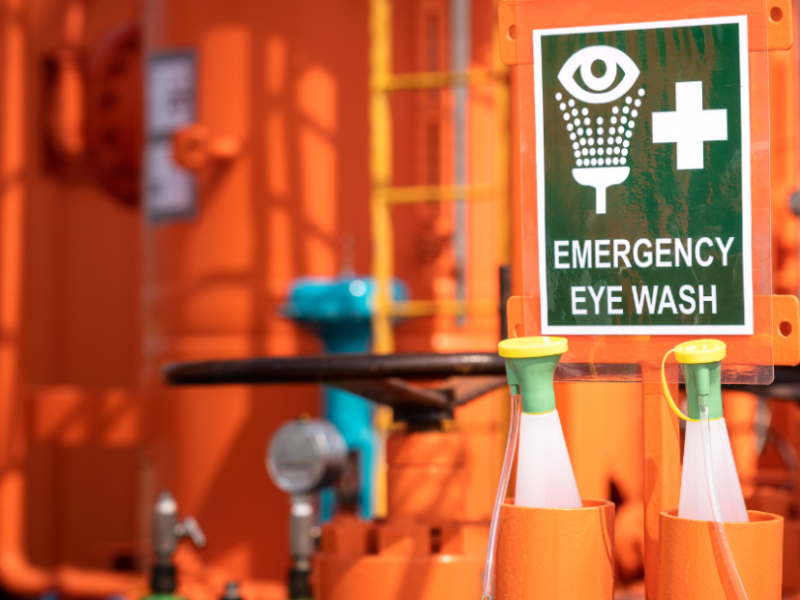
What Every Workplace Should Know About Eye Wash Stations
A splash of acid, a fleck of metal, a puff of dust blown back from a grinder. It takes barely a moment for something to land in someone’s eye at work, and the first seconds after that decide how bad the damage gets. Rubbing the eye or running to find a tap wastes the very time that matters most. This is why a fixed rinsing point, ready and within reach, is one of the smartest safety buys a site can make. Well-placed Eye Wash Stations give a worker a steady flow of clean water exactly when it is needed, with no fumbling and no delay. Flushing the eye fast can be the difference between a mild sting that clears up by lunch and a burn that scars the surface for good. For any site that handles chemicals, dust, hot work or flying debris, these units are not a nice extra; they are basic first aid. Why quick rinsing matters for the eyes The eye is delicate and reacts badly to harsh substances. A strong acid or alkali can start burning the surface in seconds, and alkalis are the worst because they keep eating inward long after the splash. The only way to limit the harm is to wash the substance out fast and keep washing for a good while, often a full fifteen minutes. That length of time is the part many people get wrong. A quick three-second rinse under a tap barely touches the problem. Proper flushing needs a gentle, steady flow that the person can stand at without holding anything, because both hands are often needed to hold the eyelids open. A purpose-built unit delivers that hands-free flow at the right rate, soft enough not to hurt the eye yet strong enough to clear it out. Speed and duration together do the real work. Getting to water within ten seconds and rinsing for the full count gives the eye its best chance. Everything about how these units are chosen and placed comes back to that simple goal: water on the eye, fast, for long enough. The main types of eye wash gear There is more than one kind of unit, and the right pick depends on the site. A plumbed …
Track Your Press Release HERE:
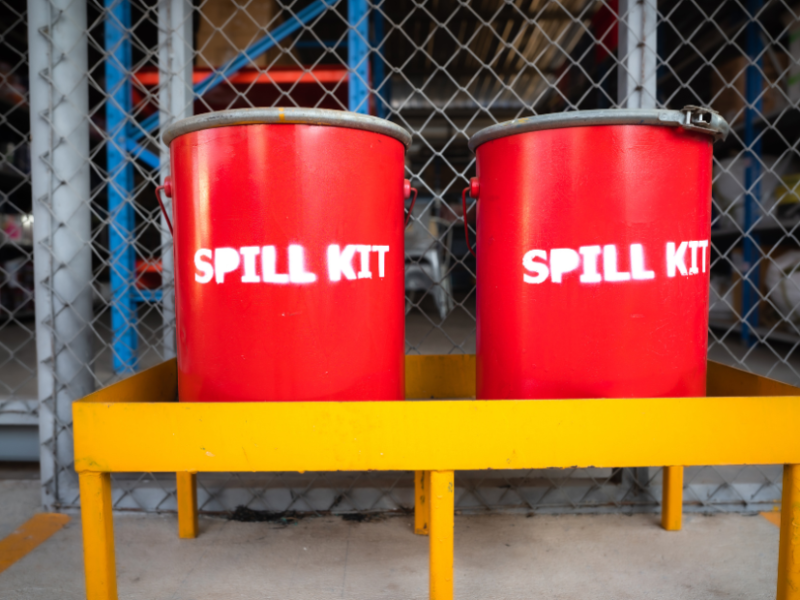
Choosing the Right Spill Kit for Your Worksite
Spills happen on almost every kind of work site. A drum gets knocked over, a hose splits, or a machine leaks oil onto the floor. When that happens, the speed of the clean-up makes a big difference to how safe the area stays. A small puddle of oil can turn into a slip hazard in seconds, and some liquids give off fumes or harm the skin. This is why having the right gear ready, before anything goes wrong, matters so much. Keeping a set of Spill Kits on hand means staff are not left scrambling for buckets and rags when a leak starts. A kit puts everything in one place: absorbents, gloves, bags and a clear set of steps to follow. That single box can save a worker from a nasty fall or a burn, and it can save a business from a fine or a shutdown. What a spill kit actually does A spill kit is a packed container or bag that holds the items needed to soak up and contain a leak. Most kits include absorbent pads, socks or booms that stop liquid from spreading, loose granules for soaking up the last of a puddle, protective gloves, goggles and disposal bags for the used material. The idea is simple. When something leaks, you grab the kit, block the liquid from spreading, soak it up, and bag the waste for safe removal. A good Spill Kit is built around the type of mess a site expects. A workshop that handles oil and fuel needs different contents from a lab that deals with strong acids. The point is to have the correct items packed and ready, not a random pile of clothes in a corner that nobody can find when the floor is already wet. Speed is the real benefit here. The longer a liquid sits, the further it spreads, the more it soaks into cracks, and the harder the clean-up becomes. A kit that is stocked and close by turns a ten-minute job into a two-minute one. Matching the kit to the liquids on site Not every liquid behaves the same way, so one type of kit does not suit every site. There are three broad groups to think about. General-purpose kits handle water-based …