

Pretoria law firm highlights the professional due diligence steps that separate informed purchases from expensive mistakes. PRETORIA, South Africa — OAK Law has published a guide making the case for why commercial property buyers should involve a conveyancer in title deed verification from the outset, not after problems have already surfaced. The article speaks to a pattern the firm encounters regularly: buyers who focus on price, location, and floor space while treating the title deed as paperwork to sort out later. Commercial property transactions carry layers of legal exposure that most buyers only discover once they are already committed. Undisclosed bonds, restrictive covenants that limit what can be built or operated on the premises, servitudes granting third parties rights over the land, zoning mismatches between what the title deed implies and what the municipality actually permits. Each of these can fundamentally alter the commercial value of a property, and none of them announce themselves without a structured verification process. The guide covers how a Deeds Office search works under the Deeds Registries Act and what the results actually mean, the restrictive conditions and servitudes that transfer automatically with ownership whether or not a buyer is aware of them, why zoning must be confirmed separately through the municipality under SPLUMA, the risks that sit outside the title deed entirely, and how transfer duty and registration costs should be factored into budgeting from day one. One point the article drives home: a buyer and a conveyancer can read the same title deed and come away with very different understandings of what it means for the transaction. That gap is where costly oversights live. For the full breakdown, read Why Your Conveyancer Should Verify the Title Deed Before You Buy Commercial Property on the OAK Law website. About OAK Law OAK Law is a distinguished commercial law firm based in Pretoria, South Africa, …

OAK Law Publishes Guide on Supplier Agreements for South African SME Manufacturers
Pretoria commercial law firm outlines how written supplier contracts protect production lines, customer commitments, and commercial relationships. PRETORIA, South Africa — OAK Law has published a new guide for SME manufacturers and distributors who are still running supplier relationships on verbal understandings, purchase orders with minimal terms, or generic templates that don't reflect how South African business actually operates. The article confronts a pattern the firm sees regularly: supply chain problems that were entirely preventable with the right contractual framework in place. For manufacturers, a supplier failure rarely stays contained. Late raw materials stall production. Substandard components trigger quality rejections. And when those disruptions cascade into missed customer deliveries, the commercial exposure multiplies well beyond the cost of the original goods. Most SME operators know this from experience, yet many still lack written agreements that define what happens when things go wrong, who carries the risk, and how disagreements get resolved before they reach a courtroom. The article covers why verbal agreements become unenforceable under commercial pressure despite South African common law recognising them, how penalty clauses and measurable quality standards build genuine accountability into supplier relationships, the role of tiered dispute resolution in keeping disagreements out of costly litigation, and how back-to-back liability clauses protect your own customer commitments when a supplier defaults. One principle running through the guide is worth highlighting: the strongest supplier agreements create mutual incentives, not one-sided penalties. When both parties benefit from the relationship working well, accountability functions as alignment rather than threat. For the full breakdown, read Turning Supplier Relationships Into Strategic Partnerships on the OAK Law website. About OAK Law OAK Law is a distinguished …
Track Your Press Release HERE:
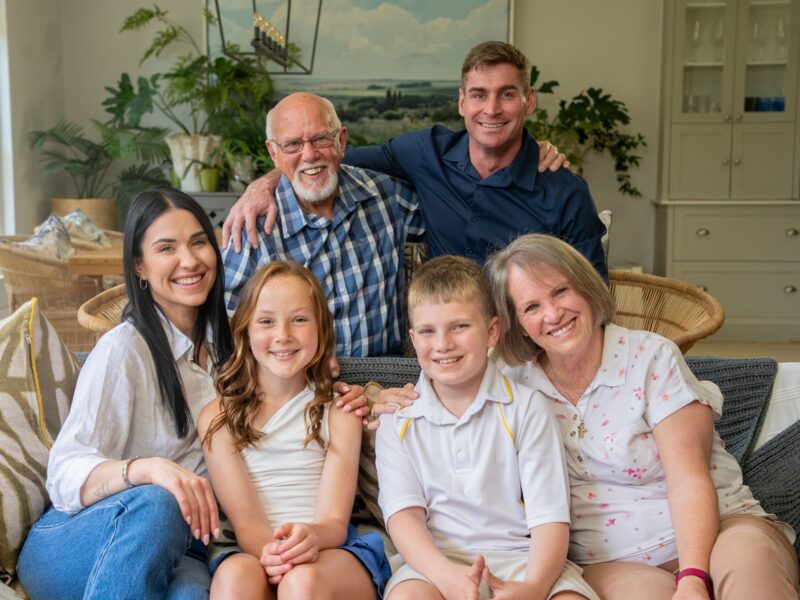
Eksekuteurs vir Boedels en Testamente Publishes Two New Guides on Complex Wills and Trust Planning for South African Families
Johannesburg and Pretoria, Gauteng — The will and estate specialists help South Africans understand when a simple will is no longer sufficient, and how blended families can protect everyone with the right trust structure. Eksekuteurs vir Boedels en Testamente has published two new educational articles guiding South Africans through two of the most common, yet often misunderstood, areas of estate planning: upgrading a simple will to a comprehensive one, and using trust structures to protect the interests of blended families. Many South Africans' lives have changed considerably since they first had their wills drafted. Additional properties, investments, business interests, divorces, remarriage and stepchildren are all factors that can outstrip a simple will's ability to adequately cover an estate. Without proper planning, these gaps can prove costly for beneficiaries. The first article, From Simple to Comprehensive: When to Upgrade Your Will, identifies the specific signs that indicate a will needs an upgrade. It addresses the impact of multiple properties, existing trusts, international assets, business ownership, divorce and stepchildren on an existing will, and explains why the right executor appointment is just as important as the will itself. The second article, How to Provide for Your Spouse Without Reducing Your Children's Inheritance, tackles a concern that affects countless remarried parents. The article explores how usufruct trusts are structured to give a surviving spouse lifelong residence and income rights, whilst preserving capital for children from a previous marriage. It also examines why professional trustee management makes the difference between family harmony and long-term conflict. Both articles emphasise that the process at Eksekuteurs begins with the drafting of the will and the simultaneous appointment of a professional executor and trustee, an integrated approach that ensures there is no disconnect between the plan and its …
Track Your Press Release HERE:
OAK Law Publishes Compliance Guide as CIPC Enforcement Tightens on South African Businesses
Pretoria commercial law firm breaks down the filing obligations catching business owners off guard — and the consequences of getting them wrong. PRETORIA, South Africa — OAK Law has published a practical guide for South African business owners navigating the increasingly complex landscape of CIPC compliance. The article addresses a growing problem: directors who registered their companies to pursue opportunities are now discovering that the regulatory obligations attached to those entities have quietly multiplied, and CIPC is enforcing. The compliance picture facing South African businesses has shifted significantly. Annual returns remain a baseline obligation, but layered on top are beneficial ownership declarations that now block annual return submissions entirely if not current, statutory record-keeping requirements that most private companies underestimate, and corporate change filings where errors create gaps between a company's actual position and what the CIPC register reflects. For directors juggling operational demands, these obligations tend to slide, until a frozen bank account or a compliance notice forces attention. The guide walks through what CIPC actually requires from registered companies and close corporations, how the beneficial ownership regime works and why it is tripping up even well-run businesses, the statutory records the Companies Act expects at your registered office, and why outsourcing company secretarial work to a legal team often costs less than fixing failures after the fact. One figure from the article underscores the scale of the issue: over 2.2 million South African companies have been flagged for beneficial ownership non-compliance. Many directors do not know their company is on that list. For the full breakdown, read The South African Business Owner's Guide to Effortless CIPC Compliance on the OAK Law website. About OAK Law OAK Law is a distinguished commercial law firm based in Pretoria, South Africa, offering …
Track Your Press Release HERE:

Eksekuteurs vir Boedels en Testamente Publiseer Twee Nuwe Gidse oor Ingewikkelde Testamente en Trust-Beplanning vir Suid-Afrikaanse Gesinne
Johannesburg en Pretoria, Gauteng — Die testament- en boedelspesialiste help Suid-Afrikaners om te verstaan wanneer 'n eenvoudige testament nie meer voldoende is nie, en hoe saamgestelde gesinne almal kan beskerm met die regte truststruktuur. Eksekuteurs vir Boedels en Testamente het twee nuwe opvoedkundige artikels gepubliseer wat Suid-Afrikaners begelei deur twee van die mees algemene, maar dikwels misverstane, areas van boedelbeplanning: die opgradering van 'n eenvoudige testament na 'n omvattende een, en die gebruik van truststrukture om saamgestelde gesinne se belange te beskerm. Baie Suid-Afrikaners se lewens het aansienlik verander sedert hulle hul eerste testament laat opstel het. Nuwe eiendomme, beleggings, besigheidsbelange, egskeidings, hertrou en stiefkinders is almal faktore wat 'n eenvoudige testament se vermoë om 'n boedel behoorlik te dek, kan oorskry. Sonder die regte beplanning kan hierdie gapings begunstigdes duur te staan kom. Die eerste artikel, Van Eenvoudig na Omvattend: Wanneer om Jou Testament op te Gradeer, identifiseer die spesifieke tekens wat aandui dat 'n testament 'n opgradering nodig het. Die artikel behandel onder meer die impak van meervoudige eiendomme, bestaande trusts, internasionale bates, besigheidsbesit, egskeiding en stiefkinders op jou bestaande testament, en verduidelik hoekom die regte eksekuteur-aanstelling net so belangrik is as die testament self. Die tweede artikel, Hoe om Jou Eggenoot te Versorg sonder om Jou Kinders se Erfenis te Verminder, spreek 'n kwessie aan wat talle hergetroude ouers raak. Die artikel verken hoe vruggebruik trusts gestruktureer word om 'n oorlewende eggenoot lewenslange verblyf- en inkomsteregte te gee, terwyl die kapitaal vir kinders uit 'n vorige huwelik bewaar word. Dit ondersoek ook hoekom professionele trusteebestuur die verskil maak tussen familieharmonie en langtermyn konflik. Albei artikels beklemtoon dat die proses by Eksekuteurs begin met die opstel van die testament en …
Track Your Press Release HERE:
OAK Law Publishes Guide on Professional Executor Services for Complex Commercial Estates
Pretoria commercial law firm addresses the wealth-transfer risks facing business owners with property portfolios and diversified investments. PRETORIA, South Africa — OAK Law has published a new guide examining why estates built on commercial property, business interests, and investment portfolios require a fundamentally different approach to administration than standard household estates. The article tackles a question many business owners delay too long: what actually happens to complex commercial assets during the gap between death and distribution? For business owners who have spent years assembling commercial property portfolios and growing active enterprises, the estate administration period represents one of the most financially dangerous stages in any wealth transfer. Multiple tax events triggered simultaneously, immediate cash demands against illiquid assets, and the operational reality of keeping commercial properties and tenant relationships running, all while an estate works its way through formal administration. When the wrong hands are managing the process, beneficiaries can watch decades of careful wealth-building erode in months. The article explores how estate duty and capital gains tax compound against asset-rich estates, why liquidity shortfalls force avoidable fire sales of commercial property, what distinguishes professional executor administration from well-intentioned family appointments, and how estate structuring coordinates with corporate documentation and buy-and-sell agreements to prevent costly conflicts. One detail worth noting: executor fees alone can reach 3.5% of gross estate value plus VAT, and once estate duty and CGT are layered on top, the total cash demand hits before beneficiaries see a cent. How an estate handles that pressure often determines whether commercial assets survive the transfer intact. For the full breakdown, read Strategic Asset Management: Professional Executors for Complex Estates on the OAK Law …
Track Your Press Release HERE:
RS South Africa Retains Level 2 B-BBEE Status
RS South Africa, a trading brand of RS Group plc (LSE: RS1), a global provider of product and service solutions for industrial customers, has once again achieved Level 2 B-BBEE verification. This achievement reaffirms the company’s commitment to meaningful transformation, empowerment, and inclusive economic growth across South Africa. The verification reflects progress across several key pillars of B-BBEE, with notable improvements in Management Control and Skills Development while maintaining performance in Ownership, Enterprise Development, Supplier Development and Socio-Economic Development. RS South Africa’s transformation journey continues to focus on driving long-term impact through opportunities that uplift people, enable enterprise growth, and strengthen local communities. A story that reflects this commitment is that of Microtech, a 100% Black-owned company led by entrepreneur Vincent Bongwe. Through the provision of electronic and industrial tools and components, RS South Africa has supported Microtech in enhancing its operational capacity to maintain and repair production line stitching machines for clients. The support has enabled the business to grow sustainably while allowing Vincent to mentor and transfer skills to his employee, demonstrating transformation in action. “Our renewed Level 2 B-BBEE verification reflects the tangible outcomes of our transformation strategy,” says Lebohang Kungoane, B-BBEE Compliance Specialist at RS South Africa. “It is not just about achieving a scorecard result. It is about empowering people, enabling business growth, and fostering skills that contribute to South Africa’s economic resilience.” Vincent Bongwe adds, “RS South Africa’s support has made a meaningful difference to my business. It has strengthened our ability to deliver for our customers and created opportunities for skills transfer within our team. It is encouraging to partner with a company that invests in sustainable growth.” RS South Africa …
Track Your Press Release HERE:

Westown Square Turns One – And the Momentum Is Building
27 March 2026 – Shongweni, KwaZulu-Natal - Westown Square celebrates its first birthday this weekend, marking a year since opening on 27 March 2025. In just 12 months, the new Shongweni retail experience has welcomed over 5 million visitors and established itself as a vibrant new destination on Durban’s western edge for shopping, dining, entertainment, and community events. “We’re incredibly grateful to the people of KwaZulu-Natal (KZN), especially our neighbours in the outer west, for their support over the past year,” says Carlos Correia, CEO of Fundamentum Property Group. “It’s been a whirlwind of activity, and not without its challenges, with road improvements and other construction underway. But the changes have already made a tangible difference to the area, and the community has really embraced what Westown Square offers.” The centre’s retail mix combines national brands with local offerings, delivering a versatile and accessible shopping experience for every visitor. Foot traffic is growing steadily, supported by a calendar of events, family-friendly activations, markets, live entertainment, and community-focused initiatives, turning Westown Square into more than just a shopping destination, but a vibrant lifestyle space. Westown’s first birthday celebrations will roll into the Easter Weekend from 3-6 April, with a massive Digital Easter Egg Hunt and loads of family-friendly entertainment and activities, live music, and special appearances, by the Easter Bunny. Locals and out-of- town visitors are invited to join in the festivities and enjoy the centre’s diverse retail and dining offerings. “One year in, we’re proud of what has been achieved and excited about what lies ahead,” adds Correia. “Westown Square has laid a strong foundation, and we look forward to building on this momentum as the precinct continues to evolve.” Retail Update Westown Square has established itself as a viable retail destination on Durban’s western corridor, supported …
Track Your Press Release HERE:

When the ‘Immortal’ Falls: A Reflection on Chuck Norris and Our Own Mortality
Action star Chuck Norris was a larger-than-life figure who spawned countless memes. The announcement of his death feels unreal, like it was never really going to happen… a bit like our own demise that we prefer to think of as never going to happen. For decades, the idea of Chuck Norris dying seemed almost absurd. The man who became a cultural myth - roundhouse kicks, unbreakable toughness, and endless memes and jokes about his invincibility - has occupied a place in our collective imagination. He isn’t just a person; he’s a symbol of indestructibility. So, when his death is announced, it lands with a jolt. It feels like something impossible has suddenly become real. But that reaction says less about Chuck Norris than it does about us. We tend to have assumptions about permanence - about celebrities, our loved ones, and especially ourselves. Just as we joked that someone like Norris would never die, we carry a similar, unspoken, belief that we have more time than we actually do. It’s not arrogance, it’s human nature. Thinking about our own mortality is uncomfortable, so we push it to the back of our minds, more comfortable in the illusion that there will always be another day to sort things out. The truth, of course, is far less comfortable. Life is uncertain, and its end rarely runs according to our plans or schedules. When someone we perceive as larger than life passes away, it forces us to confront that reality. If even an ‘immortal’ like him can fall, what does that mean for the rest of us? This is where reflection must meet practicality. Preparing a will is not an act of pessimism - it’s an act of responsibility. And love. It’s a way of protecting the people we care about from confusion, conflict, and unnecessary hardship. Without a will, decisions about your assets, your wishes, and even your dependants can become complicated and stressful for those already facing loss. Drafting your will doesn’t require wealth or advanced age. It requires the …
Track Your Press Release HERE:

What to Do if You Cannot Sign Your Will
Can you create a last will and testament if you are unable to read, write or sign it? The good news is that there are viable solutions. Capital Legacy, South Africa’s leading provider of wills and estate administration, has helped draft more than 1.6 million wills, and they have seen almost every situation you can imagine. Just recently someone tried to submit a will signed in Braille. It’s not legal but it highlights the challenges that some people face. The good news is that there are viable solutions for many of them. So, what happens if you cannot sign your will with the conventional pen on paper? Does this mean having no say in what happens to your assets? Thankfully, it does not, says Deenisha Nadesan, Managing Director of Fiduciary Services at Capital Legacy. South African law recognises that not every person is able to sign in the conventional manner. So it also allows thumbprints, marks, and signatures by proxy. But there are strict rules about witnessing and certification. This means that everyone - regardless of disability or circumstance - can exercise their right to a valid will and leaving a legacy. South African Scenarios These are some of the scenarios that Capital Legacy encounters, from time to time, as it works to improve the alarming statistic of an estimated 70% of South Africans not having valid wills. In all these cases, the strict rules for witnessing and certification (see below) must be followed to make sure the will is valid. Blindness or Severe Visual Impairment. Around 1.4 million South Africans are blind or visually impaired, according to BlindSA, with a significant 80% of them in rural areas. To make it easier for them to draft and sign their wills, our law allows a thumbprint as substitute for their signature. Illiteracy. About 4 million adult South Africans are considered illiterate, according to labour market research. An illiterate person will struggle to write and sign their name, so like their visually impaired …