

On Mozambique's San Sebastian Peninsula, the privately owned, exclusive-use beach house known as Pambele has reached the point in the calendar when the sea directly in front of it comes alive. September sits within the August to October stretch when humpback whales and whale sharks pass this part of the Indian Ocean coast, and it also falls squarely inside a dry season that lasts from June through November. Because life at the property revolves almost entirely around the ocean, that timing dictates everything, from when the boat leaves to what appears on the lunch table. From its position inside the Vilanculos Coastal Wildlife Sanctuary, the house gazes out at the Bazaruto Archipelago and has direct access to the Bazaruto Archipelago National Park. That park dates back to 1971, and the broader region has been named a Gift to the Earth by the WWF. None of this is distant backdrop. Diving, sandbar picnics, mangrove kayaking and bush drives each start only a short boat ride or drive from the deck, so a group can change its plans over breakfast and still reach the water before the day turns hot. A marine window that is open now Reef fish, sea turtles, rays, dugongs and dolphins move through the archipelago's waters all year round. The seasonal arrivals are humpback whales and whale sharks, which Pambele identifies as present from August to October. This makes the present moment the tightest and most defined slice of the property's year, and the one that marine-focused travellers usually treat as the anchor for their dates rather than something to slot around other plans. Snorkelling takes place within the national park, above reef populated by parrotfish, clownfish and angelfish, and gear is supplied. Deep-sea diving comes with a guide, while PADI Open Water courses can be organised ahead of time, with instructor fees quoted apart from the rate. Fishing heads out into the Indian Ocean, guided and with tackle provided. Kayaking leads guests through calmer water, …

Mashatu Spotlights Its Botswana Guides for Spring Safaris
Spring has arrived at Mashatu in Botswana's Northern Tuli, and throughout September the reserve is choosing to spotlight the one element visitors tend to value most only after they leave: the guiding team that shapes almost every waking hour of a stay. Across its 42,000 hectares the reserve employs 239 people, 98 percent of whom are Batswana, and its guides average 14 years of service, while the most senior among them is nearing 42 years working the same terrain. On a Botswana safari that turns on tracking, interpreting signs and anticipating where animals shift as the water dwindles, that depth of continuity is not something any reserve can source overnight. Mashatu occupies Botswana's far eastern corner, within the Northern Tuli Game Reserve, where the Limpopo and Shashe rivers meet and the frontiers of Botswana, Zimbabwe and South Africa come together. Privately owned and unfenced, it spans 42,000 hectares, about 104,000 acres. The country inside those limits is never uniform, moving from broad open plains and grassland into riverine forest, rocky hills, marshland and sandstone ridges, with eight perennial and non-perennial rivers threading across it. This is terrain that repays a person who has followed its changes over four decades rather than four days. Why the guiding team matters more in the late dry season In the Tuli, September asks a great deal. The dry season stretches from May into October, and by late winter the veld has thinned, the floodplains and grasslands along the Limpopo lie bare, and whatever water remains becomes the anchor everything else turns around. During spring, temperatures at Mashatu run from roughly 13 to 39 degrees Celsius, and September delivers a contradiction familiar to returning visitors: south-easterly winds still carry the dry season while the trees begin to flower and daytime heat starts climbing ahead of the rains. Such conditions make the reserve simpler to interpret yet less forgiving of guesswork. Sparse …
Track Your Press Release HERE:

Kaelo Destinations Launches Tuli Block Walking Safaris
Few things reshape a traveller's sense of the bush quite like leaving the vehicle behind, and Kaelo Destinations has spent this September spotlighting exactly that side of its portfolio as walking season peaks in Botswana's Northern Tuli Game Reserve. The collection runs safari lodges, tented camps and private homes across eastern Botswana, plus an exclusive-use beach house on Mozambique's coast. September sits squarely within the WalkMashatu walking window, open each year from March through October, and also within the reserve's high season, which spans 1 July to 31 October. Guests who already have a game drive or two behind them tend to find that the guided trails, the sunken photographic hides and the fly-camp sleep-outs are what stay with them longest. Walking the reserve instead of driving it At Mashatu, one of the two daily game drives can simply be traded for a guided safari walk, no extra booking required. On foot, the whole scale of the reserve shifts. Rather than covering distance, guests move at a slow pace through mopane woodland and along the riverbeds beside a seasoned ranger, learning to read spoor, insect trails and the scent of wild herbs, the small details a vehicle rolls straight past. When a traveller is deciding between a Botswana safari here and a busier, more familiar reserve elsewhere in the region, that walking option frequently tips the balance. WalkMashatu takes the concept even further. Trails are limited to six guests, led by an experienced guide, and shaped around the group's fitness and interests. Running in parallel is Night Under the Stars, an add-on offered all year to guests at the Mashatu lodges and at Kolokolo Safari Home. The evening begins with an afternoon game drive out of the lodge, overnight bag in hand, ending at the WalkMashatu Fly Camp for a fireside dinner paired with night photography, storytelling or a short walk. Guests bed down in custom designed tents beneath the open Botswana sky before a sunrise drive …
Track Your Press Release HERE:

MSC World Asia to Offer Ultimate Wellness Escape at Sea With New Comprehensive Spa & Beauty Experiences
MSC Cruises unveils one of its most comprehensive spa and wellness offering to date aboard MSC World Asia Guests can experience everything from holistic thermal rituals to advanced wellness therapies MSC World Asia will commence 7-night Mediterranean cruises from 4 December MSC Cruises' newest flagship, MSC World Asia, will invite guests to unwind in a luxurious sanctuary at sea, where panoramic ocean views, restorative spa rituals and the latest wellness innovations come together in the line's most comprehensive wellness experience yet. Beginning 4 December 2026, the highly anticipated flagship MSC World Asia will offer seven-night sailings to some of the Mediterranean’s most iconic destinations including Barcelona, Marseille, Genoa, Civitavecchia for Rome, Messina and Valletta. As the third ship in the line’s World Class series, which celebrates the beauty of the world’s continents and oceans, reflecting the global nature of MSC Cruises, MSC World Asia will feature subtle design elements that reflect Asia’s rich culture, art and landscapes, including in the ship’s 1,260m² MSC Aurea Spa, which will offer guests a sophisticated sanctuary for relaxation, rejuvenation and wellbeing at sea. Georg Schmickler, Senior Vice President Onboard Revenues, MSC Cruises, said: "Wellness has become an increasingly important part of the travel experience, and our ambition with MSC World Asia was to create a spa that rivals the finest wellness destinations on land. By combining beautifully designed spaces, innovative therapies, advanced technologies and personalised experiences, we've created our most comprehensive wellness offering to date. Every aspect of the MSC Aurea Spa has been thoughtfully designed to help guests relax, recharge and leave feeling their very best.” Highlights of MSC World Asia’s spa and wellness offering include: Wellness Powered by Innovation MSC World Asia introduces an exceptional collection of advanced wellness therapies designed to …
Track Your Press Release HERE:
Kruger National Park Is Waking up for Spring
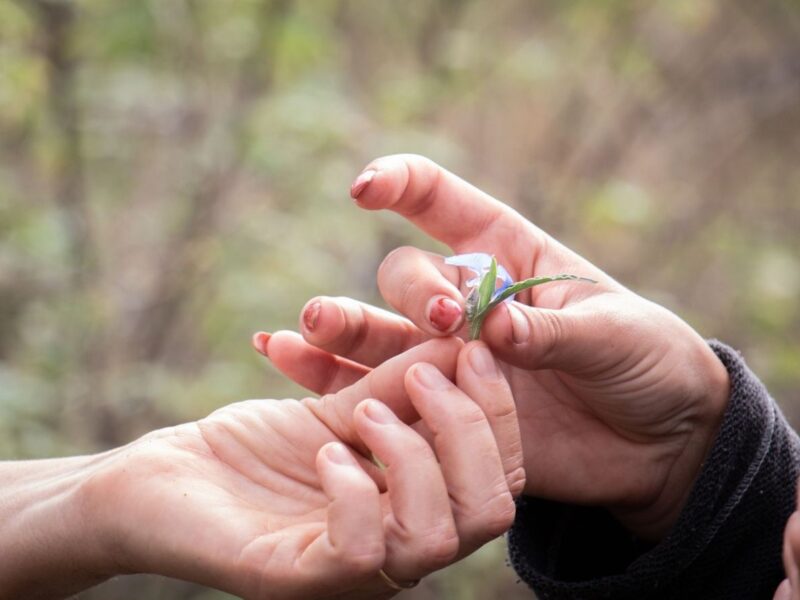
GREATER KRUGER, SOUTH AFRICA, September 2026, Stones Safaris is encouraging travellers to consider seasonality when planning a Kruger National Park safari or wider Greater Kruger safari experience. From its Hoedspruit base, Stones Safaris uses local seasonal conditions to help travellers decide when to visit, how many safari days to include and which experiences best suit their interests. The Greater Kruger region moves through two very different safari conditions during the year. The winter dry season broadly dominates from May through August, while the summer rainy season generally begins around October and continues through March. September and October in spring, and March and April in autumn, are important transition periods between the two. During the dry season, vegetation is generally thinner, temperatures are milder and wildlife becomes increasingly dependent on permanent rivers and waterholes. For first-time safari travellers focused on large mammals and the Big Five, these conditions can offer strong visibility and comfortable game-drive temperatures. Summer brings a different experience. Rain transforms the Lowveld, bringing green landscapes, migratory birds, increased reptile activity and the impala lambing period. Summer storms can occasionally affect game-drive routes, road conditions or timing, but for photographers, birders and returning safari travellers, the dramatic skies and broader ecosystem activity can be part of the appeal. The transition months can offer elements of both. During September and October, water may still be limited and vegetation relatively open, while rising temperatures, longer days and the first meaningful rains begin bringing fresh grass and new leaves. March and April provide the reverse transition. The bush can remain green after summer, young animals are still developing and temperatures begin moderating, while rainfall decreases and temporary water sources gradually reduce. “Travellers often ask …
Track Your Press Release HERE:

Glatt Safaris Confirms 2027 Kosher Safari Dates
Torah observant families now have firm dates to build a 2027 around: Glatt Safaris has released the departure windows for its group tours, and with September still on the calendar there is room to sort out leave, flights and school holidays without pressure. The Johannesburg based operator, which runs Glatt Kosher gourmet African safari and holiday tours through South Africa and East Africa, has timed the release so that the administrative side of travel, the part most people leave too late, can be worked through at an easy pace. Confirmed dates cover two group tracks. The Gold Track departs 15 February 2027 and returns 25 February 2027, matching 8 Adar 1 to 18 Adar 1, with a further departure from 16 August 2027 to 26 August 2027, or 13 Av to 23 Av. The Silver Track departs 15 February 2027 and returns 22 February 2027, that is 8 Adar 1 to 15 Adar 1, and repeats in August from 16 August 2027 to 23 August 2027, or 13 Av to 20 Av. Each track shows its Hebrew dates next to the civil ones, a detail that helps families measure a departure against yahrzeits, chagim and school terms before signing on. Releasing the calendar this early is the practical part of the offer. A public tour carries between 20 and 40 guests, so a family booking as a group has to fix the window before it can lock in international flights, and a flight into Johannesburg is not something anyone wants to buy twice. What the Gold Track covers The Gold Track is the eleven day route that crosses borders, moving through South Africa, Zambia, Zimbabwe and Botswana with five star hotels throughout. It begins at Kruger National Park, where game drives run in the early morning and late afternoon while lions, leopards and antelope are on the move, and where guests stay in a private game reserve. From there it flies to Cape Town for Table Mountain, a city tour covering Company's Garden, Bo Kaap, the Jewish Museum of South Africa and Greenmarket Square, and a full Shabbos in the city with a walk to a …
Track Your Press Release HERE:

Dreyer Linen’s Guide to Specifying Hotel Linen for Summer
September has become a specification month for Dreyer Linen, the Johannesburg maker and distributor of bed linen, towels and bedding accessories, as South African hospitality operators start placing their orders for the December holiday trade. Summer rooms are typically locked in months in advance, and the linen that dresses them has to be bought long before anyone checks in. The company's argument is a simple one. When guests grumble about hotel bedding, price is rarely the real issue. The trouble usually traces back to a specification that never suited the property to begin with. Hans Dreyer founded the business in 1955, and it is the third generation of the Dreyer and Blumenau family who steer it today. What began as a single linen operation has grown into a manufacturer and distributor that serves hotels, guest houses, lodges, mines, schools, retail outlets and private homes nationwide. Because the company both produces and distributes its goods, it can discuss specification in practical, hands on terms rather than through a sales pitch. Specification, not price, decides how long linen lasts There is no saving in a sheet that gives out after four months. On its own website Dreyer Linen has laid out how thread count, fibre content and towel weight ought to line up with a property's grade, and September is precisely when that advice earns its keep. Anyone preparing for a summer opening or a mid-season refresh still has room to order properly, take delivery and work the stock into rotation before every room is full. Ranking among the more established hotel linen suppliers in Gauteng, the company keeps its message steady. Work out what the room needs to do, and let that decide the cloth. A budget guest house laundering every day carries a very different brief from a lodge that swaps bedding every third night, and both differ again from a five star city hotel where the bed itself is part of what the guest is paying for. Thread count explained …
Track Your Press Release HERE:
13 Ways of Enjoying Waterblommetjies
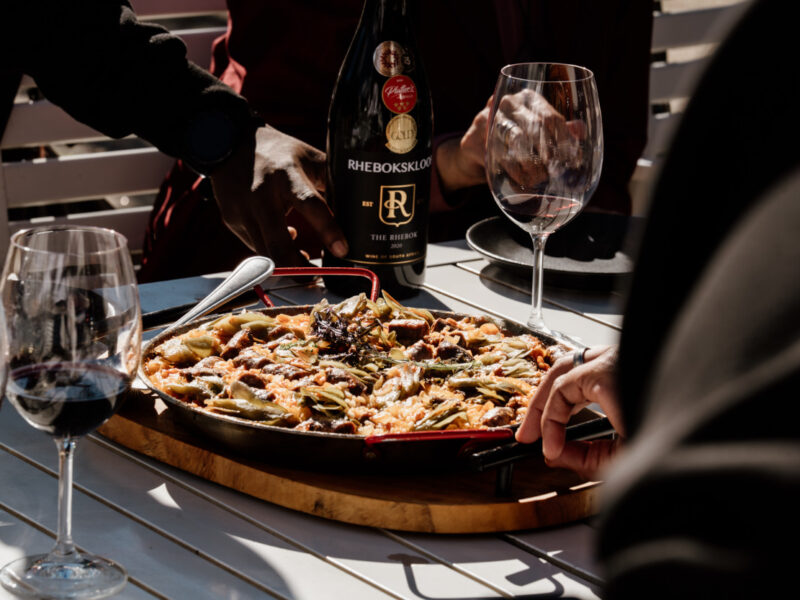
Waterblommetjies are in season now and visitors to the Waterblommetjie Festival on Saturday, 5 September, can try this local delicacy prepared in thirteen different ways. The participants in this year’s festival Windmeul Kelder, Rhebokskloof and Domaine Brahms have harnessed their creativity to offer waterblommetjies in both traditional and innovative dishes. Try the traditional waterblommetjiebredie (stew) at Windmeul Kelder. Their farmers market will also have fresh waterblommetjies for sale to take home and create your own culinary masterpiece. Domaine Brahms will serve a beef burger with a moreish waterblommetjie chutney, a yummy waterblommetjie and venison pie and a waterblommetjie quiche. Rhebokskloof has pulled out all the stops. Chef Olaff of El Picoteo restaurant has created a boerewors and waterblommetjie paella, a waterblommetjie twist on the traditional three-bean salad and a waterblommetjiebredie with lamb. Their winemaker has teamed up with the kitchen to craft a high-end tapas and wine pairing. The mouthwatering tapas include a Tandoori kingklip with waterblommetjie, a mushroom and waterblommetjie arancini, a boerewors and waterblommetjie phyllo tart, a Cajun sirloin with chips and waterblommetjies and a dark chocolate tart with waterblommetjie and orange praline. And to top things off, Lume will be pouring their signature waterblommetjie margarita, specially invented for the event. For more information, visit the festival website on www.waterblommetjiefees.com or follow us on FB and Instagram. Boilerplate and Editor's Notes. More Info on 13 WAYS OF ENJOYING WATERBLOMMETJIES here: Twitter: https://twitter.com/christelperidot Facebook: https://www.facebook.com/PeridotCommunications/ CLICK HERE to submit your press release to MyPR.co.za. …
Track Your Press Release HERE:
MSC Cruises Counts Down to Upcoming Local Season and Adds New Pomene Sailing for MSC Armonia
MSC Armonia’s inaugural South African season will now begin on 23 November 2026 with a four-night sailing to Pomene Guests can be among the first to experience the ship, with specially curated entertainment and a range of onboard experiences The countdown to the upcoming local cruise season, featuring MSC Armonia has officially begun and MSC Cruises has announced an additional departure to the itinerary. The season will now kick off on 23 November 2026 with an additional four-night sailing from the Nelson Mandela Cruise Terminal in Durban to Pomene in Mozambique. This new departure offers travellers an earlier opportunity to step onboard and be among the first to experience the ship during her highly anticipated debut season in the region. The new departure is an addition to an already exciting season of more than 30 sailings from Durban and Cape Town, with itineraries ranging from short ocean breaks to longer voyages. Guests will have the opportunity to discover destinations including Portuguese Island and Pomene in Mozambique, Port Louis in Mauritius, La Possession in Réunion and Walvis Bay in Namibia. Ross Volk, Managing Director of MSC Cruises South Africa, says “We are incredibly excited to welcome MSC Armonia to South Africa for the very first time and the addition of this sailing will allow our guests to start the season with us even earlier. For this special departure, we are curating a unique entertainment programme that will offer guests an exciting preview of what they can expect throughout the rest of the season.” MSC Armonia combines classic Mediterranean style with a range of facilities and experiences designed to appeal to couples, families, groups, repeat and first-time cruisers. Across 13 decks, MSC Armonia can accommodate approximately 2,500 guests and features four restaurants, multiple bars and lounges, two swimming pools, expansive outdoor spaces, a fully equipped Technogym® and the MSC Aurea Spa. Younger guests are also …
Track Your Press Release HERE:
Travellers Are Asking More From Their Safari
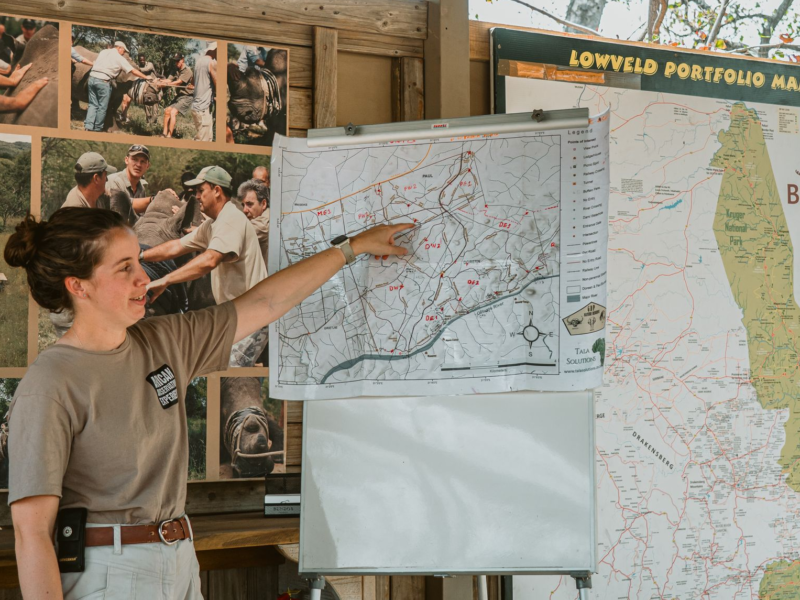
GREATER KRUGER, South Africa, September 2026, Safari travellers are asking more questions about what happens beyond the game drive, including how wildlife is monitored, how reserves operate and what conservation work takes place behind the scenes. Bundox Safari Co. is responding through Live Wild & Conserve, a five-day, four-night journey combining two Greater Kruger reserve settings with wildlife viewing, conservation talks and conservation-focused activities. Travellers can also explore the company’s wider safari packages. The itinerary currently combines Bundox Explorer Camp in the Olifants West Nature Reserve with Khanya Tented Camp in the Olifants View Nature Reserve within Balule. Instead of remaining at one safari property, guests experience two different private reserve environments within the wider Greater Kruger system. Greater Kruger refers to the wider open wildlife system created by Kruger National Park and neighbouring private reserves that removed internal fences between participating areas. This allows wildlife to move through a much larger ecosystem, while each reserve remains responsible for its own conservation work, research and management. Experiencing two reserve settings therefore gives travellers more than a change of accommodation. It provides a broader understanding of Greater Kruger while also showing how conservation priorities, wildlife research and reserve management can differ between areas. At Khanya Tented Camp, conservation forms a more deliberate part of the stay. Guests are introduced to wildlife monitoring, animal movement, research and some of the tools used to understand what is happening within the reserve. Camera traps are one example. These remotely triggered cameras record animals moving through an area without researchers needing to be physically present. Over time, the images can help provide information about species presence, movement, behaviour and, in some cases, individual animals. For …