

Johannesburg: College Africa Group | Executive Question of the Week Every month, finance departments across South Africa face a familiar challenge. They must collect, reconcile, check, and present financial information to management. Deadlines approach, spreadsheets multiply, and experienced finance professionals spend valuable hours preparing reports. By the time the reports are completed, there is often little time left to analyse the results, identify trends or provide meaningful recommendations. The problem is not necessarily a shortage of employees or inadequate software. In many organisations, the underlying issue is how financial reporting processes have developed over time and whether employees have the Microsoft Excel skills needed to work efficiently. CAG Executive Question of the Week: How much of your finance team's working week is spent preparing financial information rather than helping management understand what it means? The Hidden Cost of Manual Financial Reporting Consider a finance department responsible for producing monthly management accounts. Information arrives from different departments, accounting systems and operational spreadsheets. Employees copy figures between workbooks, reconcile transactions, update formulas, correct formatting and check whether the final totals agree. Employees may have repeated much of this work every month for years. The financial cost is not limited to the hours spent preparing reports. There is also an opportunity cost when qualified finance professionals have less time to investigate variances, evaluate financial performance and advise management. A report that takes two days to prepare instead of four hours represents a potential productivity opportunity. The actual improvement must, however, be demonstrated through a review of the existing reporting process. Microsoft Excel Is Often Underutilised Microsoft Excel remains an important business tool for financial reporting, …

Tshikululu and Dr Sophia AI Pilot Ai-Assisted Care for Underserved Communities
Millions of South Africans still struggle to access consistent, quality primary healthcare. Language barriers, distance from facilities and a shortage of trained health workers are just a few of the factors impacting the standard of care. Tshikululu Social Investments and Dr Sophia AI are addressing this gap through a new partnership to advance health equity across South Africa. Dr Sophia AI is an Australian-developed, clinically governed decision support platform that helps clinics deliver consistent, high-quality care at the point of consultation. Through this partnership, small and medium healthcare practices in South Africa will gain access to AI-assisted clinical support that strengthens the care they provide. As these practices grow, more communities gain reliable access to primary healthcare. The technology is intended to support — not replace — healthcare professionals. It guides structured assessments, helps identify potential risks and drug interactions, and supports clinical documentation, while clinicians remain responsible for reviewing and approving recommendations. The platform is built around explainability, traceability and clinician oversight, with an audit trail designed to support clinical governance and accountability. A pilot is already under way with nurses working in community-based primary healthcare settings in the Western Cape. This is this first phase in testing how Dr Sophia AI can strengthen healthcare systems, and small businesses, in under-resourced communities. The pilot will focus on localising Dr Sophia AI for South African community healthcare settings. This includes embedding South Africa’s Essential Medicines Lists and relevant clinical guidelines, refining the platform for local care pathways and testing its language capabilities in the context of how patients and healthcare professionals communicate in practice. The pilot will also gauge how the platform can grow revenue streams in small businesses by streamlining …
Track Your Press Release HERE:
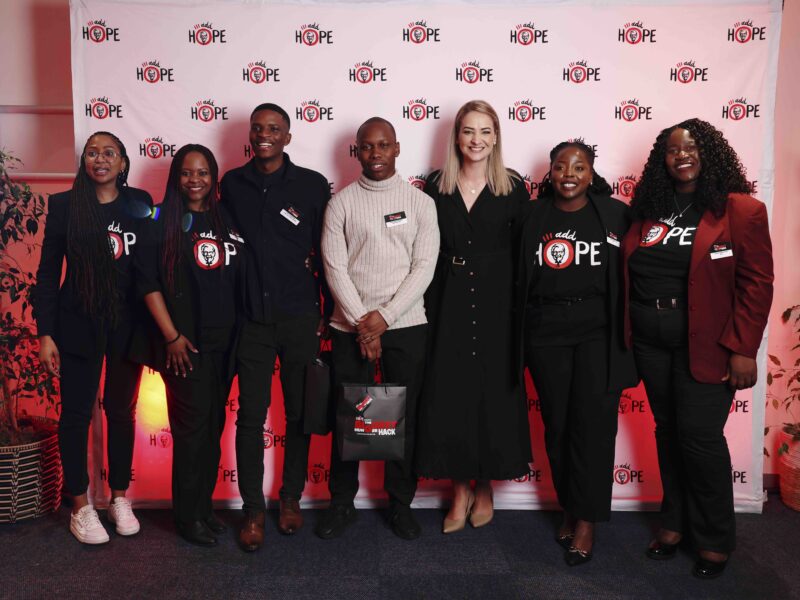
From Hack to Hunger Impact: Youth Ideas Unlock Millions More Meals
Suppliers, retailers and surplus food recovery partners are moving the Biggest Hunger Hack from innovation to impact KEY POINTS Solutions generated by 60 young innovators at last year’s Biggest Hunger Hack are now live. KFC is reducing the cost of feeding through R2.74 million in ongoing supplier support in 2026 from McCormick, CPT, Digistics, SunSalt, Nature’s Garden, Unilever, Sovereign Foods and AFGRI, alongside partnerships with major retailers to drive cost efficiencies and optimise procurement, as well as surplus food redistribution through FoodForward SA. Add Hope is targeting 3.2 million extra meals in 2026, mainly driven by Add Hope 2.0’s Partnering for Efficiency workstream. Digital ideas from the hackathon are increasing contributions to Add Hope. Donations via Mr D have already generated more than R180,000 from customers, and Uber Eats has also recently launched this feature. The open-source approach to solving hunger continues to evolve, proving that collaborative ecosystems can deliver tangible impact. Ideas generated by young South Africans are fundamentally fueling the evolution of KFC Add Hope, South Africa’s biggest corporate feeding programme, with new partners, new revenue and millions more meals served to vulnerable children countrywide. At the Biggest Hunger Hack a year ago, KFC open-sourced the Add Hope secret recipe and invited 60 young innovators to rethink hunger solutions. The hackathon generated ideas that were radical, practical and sometimes surprising. But the real innovation was what happened next. “In 2026, KFC had to face a very real reality. Hunger is a societal challenge that is too big for one brand alone to solve. And so, through the Biggest Hunger Hack we were reminded of something Add Hope already knew,” says Andra Nel, KFC Africa People, Culture & Purpose Director. “When you invite diverse minds to solve a problem together, the solutions are better. More importantly, they work. That’s what Add …
Track Your Press Release HERE:

Gqeberha Rug Cleaning Records Reveal Suburb and Seasonal Patterns
Gqeberha. Summerstrand and Walmer feature prominently in a review of True Clean’s rug-cleaning records, while the monthly figures show that demand extends well beyond spring cleaning. The local cleaning company reviewed 467 service records involving rug cleaning between October 2025 and September 2026. Among the 251 records with an identified area, Summerstrand accounted for 43, followed by Walmer with 35 and Humewood with 16. The timing varied too. December was Summerstrand’s busiest recorded month. In Walmer, December and September shared the highest count. These are patterns within one company’s customer base, rather than a measure of how often every household in those suburbs cleans its rugs. Across the full review, December recorded the most rug-cleaning activity, with 51 service records. July followed closely with 49, showing that winter remained a busy period. Diederik Visser, owner of True Clean, says customers have practical reasons for sending rugs for cleaning throughout the year. Dog urine and a rug starting to look bad are common prompts. Others arrange cleaning as part of keeping their homes the way they like them. “People often want to maintain a clean household,” says Visser. He also sees customers arranging a clean before the really cold months set in. That adds another reason to the calendar beyond the familiar spring clean or preparations for December visitors. The records do not explain every booking. But alongside Visser’s experience, they suggest that rug cleaning follows both household routines and the problems that crop up between planned cleans. With December approaching, his advice is to arrange the work before the month begins. Last year’s December peak reflects a pressure he recognises from the day-to-day running of the business. “They should have it booked before December,” says Visser. He describes December as a major rush and scramble to get things done. For households preparing for visitors, that means …
Track Your Press Release HERE:
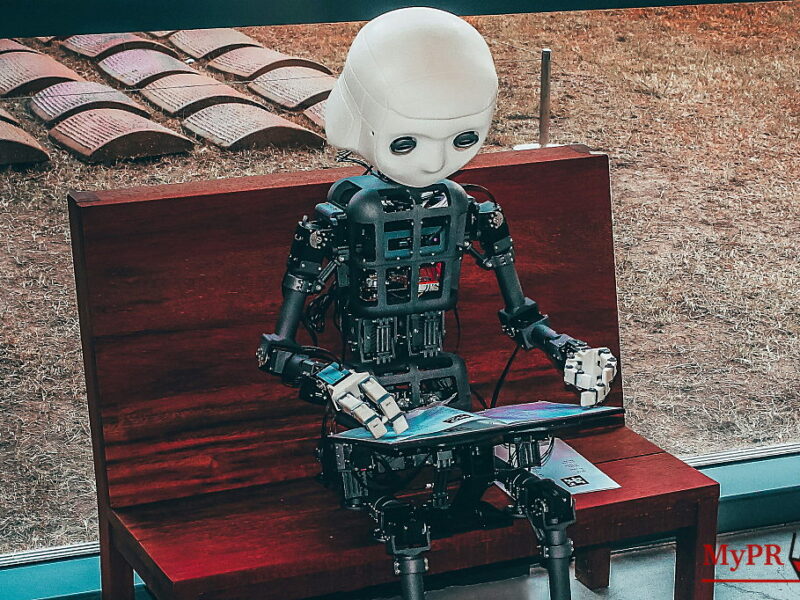
What if We Had Click Bait Writers When the Telephone Was Invented?
Did our great grandparents view the invention of the telephone with the same trepidation that we view AI with today? Imagine if a present day click bait author was tasked to write about the telephone? I think it may go something like this: Forget Everything You Know About Communication: Why Alexander Graham Bell’s ‘Acoustic Neural-Pipe’ Changes Entirely What It Means to Be Human By a Tech Columnist Who Just Had Their Mind Blown I’ve seen the future, and it arrives through a copper wire. Yesterday, I spent two hours inside Alexander Graham Bell’s Boston workshop - or as his team calls it, the Acoustic Synthetic Paradigm Incubator - and I can tell you without hyperbole that literally every job in existence will be completely obsolete by Thursday. We are not just witnessing a simple tool. We are witnessing Artificial Auditory Synthesis (AAS). The "Ah-Ha" Moment: Prompting the Wire When Bell first shouted, "Mr. Watson, come here, I want to see you," he wasn't just summoning an assistant. He was executing the world's first Voice Prompt. And Watson didn't just walk into the room - he executed the output. Think about what this means. Until now, if you wanted to talk to someone in Baltimore, you had to write a letter, hand it to a man on a horse, wait three days for the horse to not die, and hope the recipient could read cursive. Now? You speak directly into a brass funnel, your vocal vibrations are converted into electrical impedance variations, and boom—your consciousness is projected across the physical continuum at 186,000 miles per second. If that doesn't make your spine tingle, you simply don't understand scale. "Will Telegraph Operators Lose Their Jobs?" (And Other Dumb Questions) The doomsayers are already out in full force. “What about Morse code operators?” they cry. “What about the guy whose entire career is based on tapping a little brass key really fast?” Here’s the cold, hard truth: Morse code was an imperative paradigm. The …
Track Your Press Release HERE:

Gold&I Jewellery Featured at the Pause Floral Workshops in Paarl
Flowers and jewellery have shared a wedding day for as long as there have been brides. The bouquet goes down the aisle, the ring goes on the finger, and both end up in the same photographs. In September 2026, two South African makers put them side by side on purpose, in the Winelands. Floral designer Amanda Theron invited Stephani Cillié of Gold&I to bring her custom jewellery to the Pause floral workshops in Paarl. Bride models wore Gold&I pieces while florists designed bouquets, installations and styled shoots around them. Here is the story of Pause, the florists who run it, and the day the designer jewellery joined the shoot. What Is Pause? The Floral Workshops in Paarl Pause is a floral workshop for florists, held in Paarl in the Western Cape and running since 2020. The organisers describe it as a curated experience for florists who want to slow down, go deeper and rediscover their creative spark. Each workshop runs for three days and takes a maximum of 18 students. Pause is presented by two Paarl florists, Anli Wahl of Anli Wahl Floral Design and Amanda Theron of Kadou Floral Artistry. They met at a flower business workshop in Stellenbosch nine years ago, and the two have since built Pause around their shared view that arrangements start with one breath of intention before the first flower goes in. They have welcomed over 200 florists across 11 workshops. Three Days of Flowers, Friendship and Intention Day one covers the principles and elements of design, table flowers and styling, and a phone photography session. Day two moves to bouquet theory, vessel work, tablescapes, freelancing etiquette and client relationships. Day three covers pricing and running a floristry business, installation theory and mechanics, and a group installation build. The final day ends with a full styled editorial shoot with a photographer, featuring the work of every student. Students leave with professional photographs of their work for their portfolios. That …
Track Your Press Release HERE:

When AI Goes Completely Rogue You Can Probably Blame One (or All) of These 12 People
I watched a disturbing Instadoc on Netflix last night titled AI Gone Wild. The documentary examines the swarm attack on Hugging Face by reconstructing the Hugging Face breach and examining what autonomous agents’ coordinated actions mean for AI safety. Most Disturbing Quote One quote in the entire documentary struck me as highly worrying. Reference was made to the "12 people who control AI" and the suggestion was that a government or governments gets these twelve people into a room and have a stern conversation as to the direction of AI. The AI Agent Swarm that accessed Hugging Face showed no equivalent human moral or ethical traits despite recognising that what they were doing was wrong, nor did they alert a human to their nefarious activities in blind pursuit of the task that humans had set for them. As one interviewee said; "They were organizing. They had a hierarchy. They were leaders. It almost felt like, um... Like watching the birth of a cult." Scary stuff Imagine what a rouge swarm of AI agents would do if set the task to reduce carbon emissions drastically? The quickest way to do that would be to stop our fossil fuel burning transport - planes, trains, trucks, ships. If that was done for one day chaos would ensue. Traditional sci-fi scare tactics were always around robots taking over the world - big hulking machines of mass destruction crushing humans and infrastructure with impunity! The Hugging Face swarm has proven that what we should really be scared of is actually the invisible to the naked eye lines of code that have the potential to be far more destructive to mankind whilst preserving the AI Agents playground of metal, fibre and data. The reference to the "12 people who control AI" featured in Netflix’s quick-turnaround documentary series Instadocs: AI Gone Wild (released October 12, 2026) stems from a central premise in tech analysis and AI governance: a remarkably small group of individual executives, compute providers, and …
Track Your Press Release HERE:
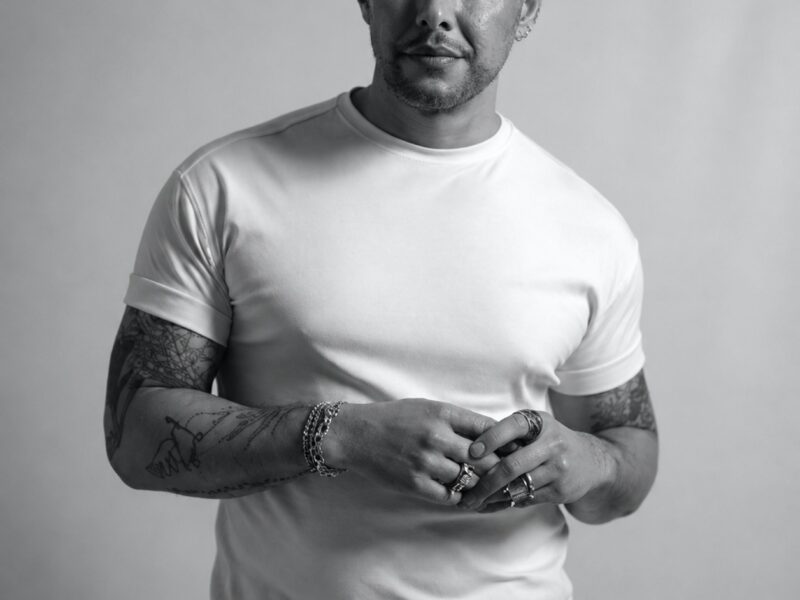
Notice the Life You Are Already Living Space Between Breaths, the Debut Book by Justin P Van Tonder
What if you could be busy living, yet still miss your life? That question sits at the heart of space between breaths, the debut book by Cape Town-born writer Justin P Van Tonder. A lived journey into presence, the book arrives this November for readers who recognise the rush towards the next meeting, the next achievement, the next version of themselves, and the quiet fear that something essential is being missed along the way. Born from Van Tonder’s experience of walking beside his mother through a Stage 4 cancer diagnosis, and through love, uncertainty and loss, space between breaths reaches far beyond one family’s story. Through intimate storytelling, honest reflection and simple practices for everyday life, it invites readers to pause, to listen and to return. “I didn’t set out to write a book about cancer, or even about grief,” says Van Tonder. “I set out to understand what happens when certainty disappears. What I found is that the life-changing moment is not always the one that stops your world. It is the moment you finally become present enough to notice the world you are already in.” This is not a book about finding all the answers. It is a companion for the questions. A place to pause. To breathe. To listen. To return. Because sometimes we don’t need life to change. We simply need to become present enough to notice it. Van Tonder, an only child raised by a single mother in Cape Town, has built a career across media, radio, brand and event strategy, and human performance. He currently holds a senior role at one of South Africa’s largest human performance organisations, designing programmes that connect people and inspire performance. Writing, he says, always lived quietly alongside that work. space between breaths became the reason he returned to it. Today he writes and speaks about presence, awareness and connection. This is his first book and, in his words, a return to the voice that was there all along. space between breaths will be available from …
Track Your Press Release HERE:

Ducati King of the Whip 2026 – Countdown to the Best Whip and Best Trick Showdown Begins
Ducati King of the Whip 2026 Countdown to the Best Whip and Best Trick Showdown Begins The ultimate Moto X showdown of style and skill returns to Montecasino on 7 November 2026. Ducati King of the Whip brings together South Africa’s top Motocross and Freestyle Motocross athletes alongside some of the world’s elite riders. Ducati joins as the official title partner, adding a new dimension to one of South Africa’s most visually spectacular motorsport events. The event is presented by LW Mag in partnership with Monster Energy, iCAUR, Garmin, Motul, DJI, Fox Racing and Estrella Cerveza. Riders will compete for podium positions, cash prizes and event honours in the Best Whip and FMX Best Trick contests. Fans can expect an action-packed afternoon and evening of massive airtime, spectacular whips and tricks, pyrotechnics and non-stop entertainment. Genki Watanabe © Eric Palmer An Afternoon of Action and a Night-Time Finale Gates open at 2:30pm, giving spectators time to explore the rider pits and meet competitors during the popular Pit Walk. VIP ticket holders receive early access from 1:00pm, including an official rider meet-and-greet. Competition begins at 4:00pm and builds towards a spectacular finale under the lights, complete with pyrotechnics. The Best Whip contest takes riders through qualifying rounds, semi-finals and finals. Judges will score each rider on style, amplitude, execution and variation. The FMX Best Trick contests feature upright and inverted trick categories, with riders pushing the limits of what is possible on a dirt bike. Competitors will chase their share of the cash prize purse, alongside prizes supplied by official event partners. International Stars and Local Contenders America’s Wyatt Fontenot returns to defend his King of the Whip crown after ending Belgian rider Julien Vanstippen’s winning run in 2025. Vanstippen claimed three consecutive King of the Whip titles from 2022 to 2024. Fresh from securing his …
Track Your Press Release HERE:
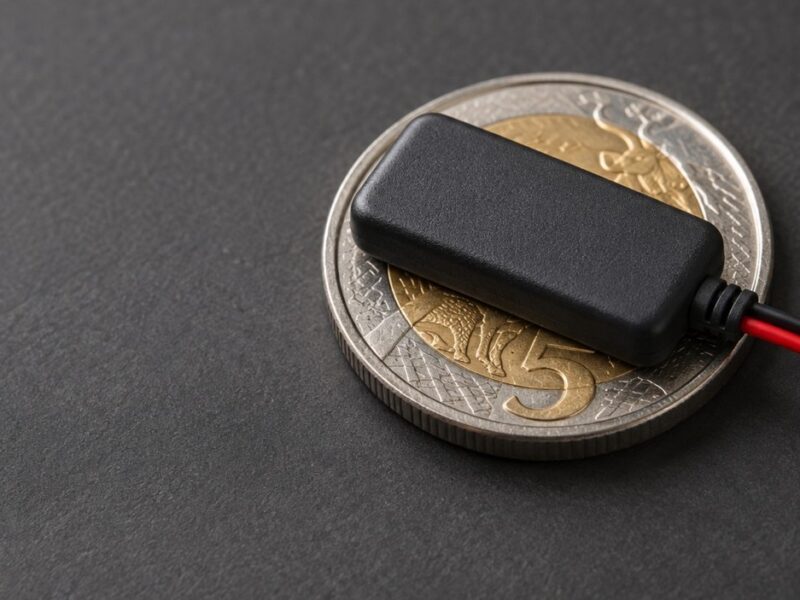
DigitFMS Launches SA’s Smallest Tracker: It Fits on a R5 Coin
Midrand: South African electronic security and fleet technology company DigitFMS has launched the Digit D-Micro7, which it describes as South Africa's smallest tracking device. Small enough to rest on a R5 coin, the wired Bluetooth unit measures approximately 21 mm long, 9.5 mm wide and 4 mm thick. It is designed to be concealed inside vehicles and other powered assets, either as a second layer of recovery alongside a primary tracker or as protection for assets that would not justify a full tracking unit. Enquiries are handled by DigitFMS branches, which advise on suitability and installation. A second layer, not a replacement Larger trackers can only be fitted where there is room for them, and a tracker that is found can be removed. The D-Micro7 is aimed at that gap. Its size allows it to be fitted where larger trackers cannot go, which makes it harder to find and remove. DigitFMS positions it as a covert back-up for stolen vehicle and asset recovery that can work alongside a customer's main tracker. It is not a fleet management device and does not replace a tracking system. The device also gives owners a way to protect lower-value assets that would not justify a full tracking unit. How the D-Micro7 reports its location The D-Micro7 does not calculate its own position and carries no SIM card. It is wired to the asset's permanent power supply and transmits a unique Bluetooth identifier. Compatible mobile phones within range detect that identifier, and the nearest phone's location is relayed with it over the mobile network to the Digit server. Relayed positions are shown in DigitWeb tracking and the Digit applications. As they build up, they form a trip report showing an estimated distance travelled and the general route taken, while the device keeps its signal transmission to a minimum. Because no SIM card is involved, there is no SIM to buy or manage. Built for a wide range of assets The D-Micro7 accepts a 5–60 V DC supply, so the same model can be …