

Gqeberha: A car parked beside the house can become part of a rodent problem, particularly when it sits unused for long periods. True Clean owner Diederik Visser raises the engine compartment in a recorded advisory about rats. The space offers shelter, while wiring and other materials can be damaged by gnawing. "Engine compartment is warm, it's dry," he says, explaining why the vehicle deserves attention when activity is being assessed around a property. University of California guidance on rats (https://ipm.ucanr.edu/home-and-landscape/rats/) identifies damage to vehicle wiring among the problems these animals can cause. The US Centers for Disease Control and Prevention (https://cdc.gov/hantavirus/media/pdfs/2025/01/HantavirusBrochure-508.pdf) also notes that rodents can nest in vehicles, especially those used infrequently. For an owner already hearing or seeing rats at home, the relevant area may extend into a garage or parking space. An inspection focused only on the kitchen or roof can leave out another place the owner is concerned about. The useful information includes where the vehicle stands and how often it is used. Reports of activity near that parking area help the operator connect the concern with what is happening around the house. Visser's broader rodent work looks at shelter close to buildings and possible routes through the property. That assessment can include foliage and water sources near the house. It helps identify which conditions need attention alongside the particular place where an animal was noticed. The vehicle also needs the right expertise. Suspected damage to cables or other components should be assessed by a mechanic or automotive professional. A pest visit cannot establish that affected vehicle systems are sound. Nesting material or droppings need appropriate handling too. They should not be treated as ordinary loose dirt to vacuum away. The CDC's vehicle guidance advises consulting a qualified professional for …
Cockroach Problems in Flats Can Need a Building-Wide Response
Gqeberha: A clean kitchen and a treated flat can still receive cockroaches from elsewhere in a shared building. True Clean owner Diederik Visser says persistent activity in flats sometimes needs a wider response. He describes one example in a recorded account of a block where some units were treated while others remained untreated. Residents later reported cockroaches in flats higher up the building. In his account, an untreated source lower down was contributing to the wider problem. Further work coordinated through the body corporate addressed activity across the building. The experience shaped a practical explanation of why individual complaints may need to be considered together. "That's how serious roach pressure can get in a block," he says in another recording about the job. The account is an example from his work, rather than a reason to assume every returning cockroach came from a neighbour. A sighting inside a treated flat still needs assessment of where it appeared and how the activity is changing. Cockroaches can move through connected parts of buildings. University of California guidance for property managers (https://ipm.ucanr.edu/home-and-landscape/guide-for-property-managers/pest-monitoring-and-recordkeeping/) recommends inspections of units and common areas as part of a coordinated pest-management programme. That broader view matters to a resident who has already cleared the cupboards and arranged treatment. Another insect can feel like a return to the starting point. For the operator, it is information to investigate alongside the original findings. Visser distinguishes between an incoming insect and a population still living and breeding within the flat. Regular activity around a kitchen hiding place can require a different assessment from an occasional insect arriving through an entry route. His published explanation describes looking at accessible areas around doors and windows, and shared walkways where permission …
Track Your Press Release HERE:

Urine Odours Feature in Gqeberha Carpet/Rug Cleaning Work Throughout the Year
Gqeberha: A home can look well kept while its owner is still dealing with a smell in a rug or couch. True Clean's review of a year's cleaning work found that urine was mentioned throughout the calendar. The review covers October 2025 to September 2026. About 9% of cleaning records explicitly mentioned urine, with references appearing in every month. That measures what was recorded in the descriptions; it does not establish the source of every odour or mean all the cases involved pets. Owner Diederik Visser says dog odours are among the company's frequent couch-cleaning requests. Visible dirt prompts some bookings, while other owners are mainly concerned about how the furniture smells. "Dog smells are a big one," he says. The first useful distinction is what has happened to the item. A general dog smell and a known urine accident give the cleaner different information. How long the problem has been present, and what has already been used on it, are also part of the assessment. Visser uses an enzyme based cleaner when treating these odours. That describes the company's approach, with the item and its condition still affecting the treatment and the achievable result. His workshop recordings show how much extra work a urine-affected rug can require. Describing one rug, he says: "We spent about two hours on this rug just rinsing it out." That is an account of a particular job, rather than a standard treatment time. It helps explain why a rug with an odour problem cannot always be treated as a routine wash. The work needed may become clearer when the material is assessed. Long, shaggy pile is one example discussed in True Clean's service information. It can hold a considerable amount of liquid and may need repeated flushing at the workshop. The practical demands of that work differ from an ordinary clean carried out in a lounge. Fitted carpet raises a further question: what has reached the layers underneath? Repeated wetting can affect underfelt …
Track Your Press Release HERE:
The Work Before the Carpet Machine Starts Matters, Says Local Cleaner
Gqeberha: Before a cleaning machine reaches a marked carpet, the smaller problem areas may already have needed individual attention. True Clean owner Diederik Visser's demonstrations show why that preparation takes time. In one carpet video, he refills a spotting container to pre-treat marked areas, including oil marks, before scrubbing and the main cleaning stage. The final pass with the machine is only the part a customer may happen to watch. His loose-rug recordings follow another sequence suited to those items. Dry material is removed, the rug is pre-treated and the fibres are worked before washing. A stubborn area can require further attention during that preparation. "The preparation takes longer than the actual cleaning itself," he says in a recording about rug work. The company's service descriptions include bedrooms and passages alongside loose rugs and furniture. That variety matters because a cleaning request can cover items with different materials and different problems. Knowing which item is affected comes before choosing the method. For fitted carpet, True Clean's published process starts with vacuuming. Traffic lanes and marks are then pre-sprayed before hot water extraction removes the loosened material. The steps serve different purposes within the same job. The company also uses low-moisture cleaning where appropriate. That can suit work where the carpet should not be heavily wetted. The decision follows the condition and requirements of the floor, rather than assuming every room needs an identical process. Visser's rug demonstrations make the role of scrubbing visible. He explains that it works the treatment through the fibres and helps loosen dirt and oils before cleaning. For a loose rug at the workshop, dry-soil removal and washing also need to be coordinated with the drying stage. That is one reason a single machine pass cannot describe everything the item has needed. Some time is spent assessing a mark and some is …
Track Your Press Release HERE:
A Chimney Clean Can Reveal a Repair Job in Coastal Homes
Gqeberha: A chimney booked for cleaning can reveal a repair issue once its condition is examined. In coastal homes, True Clean owner Diederik Visser says the installation in front of him needs to determine the approach. "Almost every chimney has its own little niggle," he says in a recorded explanation of the work. His videos cover older masonry chimneys and metal flues, with different problems affecting each. The cleaning request is the starting point for finding out what is accessible and what condition the system is in. True Clean's review of service records for October 2025 to September 2026 identified May as its busiest recorded month for chimney work. The company encourages owners to arrange assessment before the period when the fireplace will be used regularly. In his explanation of older masonry chimneys, Visser describes material coming loose from within the structure. Tile fragments or deteriorated joint material can fall into the chimney and obstruct it. Removing the loose material still leaves the question of what caused it to fall. With metal systems, corrosion can affect components that the owner does not normally see. Visser describes a job where an inner part of a metal chimney needed replacement. The outside appearance alone did not provide the whole account of its condition. That is a useful distinction for someone expecting a sweep to settle every problem. Soot removal and a damaged component are different pieces of work. If a repair is needed, the owner should understand that finding and what must be arranged next. The method of access can change too. Visser says True Clean usually cleans from below, although some installations require another approach or roof access. The choice follows assessment of that chimney, including what can be reached and how the work can be carried out. The room is part of the job as well. True Clean's published service explains that protective sheeting goes down before sweeping. Keeping soot …
Track Your Press Release HERE:
Summer Ant Work Points to the Colony Behind the Kitchen Trail
Gqeberha: An ant trail appearing beside a skirting board can send a homeowner looking for something to spray. For True Clean owner Diederik Visser, that point of emergence is a place to start investigating. The nest may be somewhere else. His inspections follow the visible activity around the house and outside, looking at the building and nearby ground together. A review of True Clean's records from October 2025 to September 2026 found that 54% of its recorded ant-control work fell in December, January and February. That describes one company's activity over the period, rather than infestation levels across the city. Visser's recorded explanations describe ants making use of small cracks and seams. His published account of local inspections adds the places he commonly checks: gaps at skirtings, window areas and cracks in walls. Outside, paving and foundations can provide further clues. A colony close to the house and ants already travelling through kitchen cupboards can be different parts of the same job. Treating only the point where someone first sees them can overlook activity against the building or within it. That is why the customer is asked where the main problem is. A kitchen with a busy trail may need a different assessment from a house where ants appear in several rooms. Activity higher up a wall can matter too; an inspection should not stop at floor level. Visser uses bait where appropriate, with the aim of reaching the colony through the ants carrying it back. University of California ant-management guidance (https://ipm.ucanr.edu/home-and-landscape/ants/) explains why that process needs time. It depends on more than the immediate disappearance of the insects on the counter. What happens after placement also gives useful information. Bait may be taken quickly in a heavy infestation, and the response can show where more attention is needed. Visser's service information describes returning to check progress, commonly with a follow-up …
Track Your Press Release HERE:
Rat Control Needs a Look Beyond the Bait Box, Says Gqeberha Pest Control Operator
Gqeberha: A homeowner hearing rats in the roof may expect the answer to be another bait box. True Clean owner Diederik Visser starts with a wider question: how are the animals reaching the building? His recorded explanations describe properties connected by food sources and shelter outside their boundaries. Baiting can reduce activity while an accessible route into the roof remains in use. "It's not that bait doesn't work. It's that you're treating one square in a much bigger chessboard," he says. A review of True Clean's records for October 2025 to September 2026 found that about 33% of customers associated with rodent work had work recorded on more than one date. Those repeat dates can include ongoing management or separate jobs. They do not establish a treatment-failure rate. They do, however, provide a reason to explain what a return visit can involve. Checking activity and the condition of control measures is part of managing some properties. The reason and timing need to suit the site. Visser first asks where a customer has seen or heard something. Rats are often reported in garages, cupboards and roof spaces. That report guides the inspection, while signs found during the visit help build a clearer picture. Inside, he looks for droppings and possible entry holes. Brown marks around an opening can provide another clue to a route, left by the animals' bodies as they pass. Outside, he checks the areas close to the house and places where foliage or water may be supporting activity. The route to the roof deserves attention from the ground upwards. Rainwater downpipes, plumbing and electrical pipework can form part of an access route. So can a branch reaching the building. Looking only at the opening near the roof can miss how the animal gets there. The building's condition then becomes part of the conversation. Some gaps can be addressed with suitable exclusion materials. A damaged door or another maintenance problem may need a builder or a …
Track Your Press Release HERE:
May Water-Damage Work Puts the Focus on Flooded Rugs
Gqeberha: May accounted for 63% of True Clean's recorded work mentioning flooding or water damage during the year from October 2025 to September 2026. The concentration puts attention on a job that can look simple from the doorway: getting a soaked carpet or loose rug dry again. The work underneath that request depends on where the water came from, how far it travelled and what it reached. Owner Diederik Visser's workshop explanations show one difference immediately. A wet loose rug cannot simply join the normal dry-soil removal process. "You can't shake them while they're wet," he says. For a rug suitable for recovery, the order of work can therefore change. Visser describes cleaning and drying the item before removing remaining dry material and carrying out further finishing work where required. Its condition decides the sequence. In a separate demonstration, he connects the extractor after a thick rug has been washed and squeegeed. The machine removes more water before the rug is hung. That stage takes time because a heavy pile can hold a considerable amount of liquid. His drying-area recordings show racks, fans and a dehumidifier. The aim is to give the cleaned rug suitable conditions for drying before it goes back into a home. An item leaving the wash area is still partway through the job. Fitted carpet brings a different set of questions. Water can reach the underfelt and the surface beneath it. True Clean's water-damage service describes extracting water from those layers and assessing whether material needs to be lifted or removed. The company uses moisture readings to guide the drying work. A carpet appearing dry on top does not, by itself, establish what is happening underneath it. Equipment may need to remain while that condition is checked. Assessment is also where the limits of recovery need to be discussed. Floodwater may carry contamination, and some absorbent materials cannot be adequately cleaned and dried. [US …
Track Your Press Release HERE:
Couches Changing Hands Prompt Cleaning Calls in Gqeberha
Gqeberha: Visible dirt and couches moving between homes are common reasons people arrange upholstery cleaning, according to local cleaning company True Clean. Owner Diederik Visser says customers often book before selling a couch, after buying one, or before giving it to someone else. Cleaning becomes part of getting the furniture ready for its next home. The company’s records also show that couch cleaning often forms part of a wider household clean. A review covering October 2025 to September 2026 found that 48% of service records explicitly mentioning couches or sofas also included carpet cleaning. Visser says that matches what he sees when customers arrange work. They often want attention given to both the couch and the carpets during the same visit. But appearance is only part of the reason people call. A couch can look acceptable while carrying a smell its owner would rather not pass on. “Dog smells are a big one,” says Visser, describing them as one of the company’s more frequent couch cleaning requests. True Clean uses an enzyme based cleaner to treat these odours. Visser says knowing whether the concern is general dog smell, urine or visible dirt helps him decide how to approach the work. Customers have often tried cleaning the couch themselves first. Vinegar is a common choice, but Visser does not recommend relying on it for urine problems. He also advises against using Vanish on couches. The fabric needs consideration before treatment. True Clean checks the material and tests an inconspicuous area before wet cleaning. If a piece is unsuitable for that method, the company explains the limitation before proceeding. Drying time is another consideration, particularly when furniture is about to change hands. Visser advises customers to allow about a day, while recognising that conditions vary. “Some fabrics hold water more than others,” he says. Weather also affects how quickly the couch dries. For someone preparing to sell or …
Track Your Press Release HERE:
Summer Accounts for Over Half of True Clean’s Recorded Cockroach Control Work
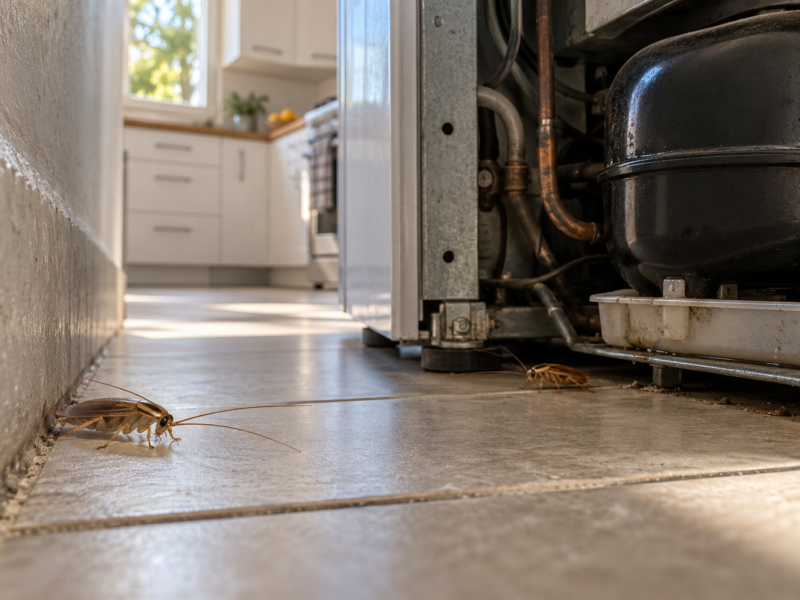
Gqeberha: More than half of True Clean’s recorded cockroach control work over a recent year fell in the three summer months, prompting the local company to encourage homeowners to address problems before they become harder to manage. A review of the company’s records from October 2025 to September 2026 found that 53% of its recorded cockroach control work fell between December and February. December was the busiest month, followed by January. “The breeding cycle is accelerated by the heat,” says Diederik Visser, owner of True Clean. His observation is consistent with North Carolina State University guidance, which identifies temperature as an important factor in German cockroach population growth. For Visser, behind the fridge is one of the first places to inspect. It provides a sheltered hiding place, while water in the drip tray can supply moisture. Ovens and the spaces around them also need attention. Customers have often tried sprays, powders or cockroach chalk before calling. Visser says the difficulty is reaching the population hidden away, rather than only dealing with the insects seen crossing a kitchen floor. His approach includes finding those hiding places and removing accessible cockroaches and egg cases. That helps reduce the population left behind to continue breeding. One situation he encounters regularly involves customers moving into a rental property and discovering an infestation already there. They are trying to settle into their new home while dealing with a problem they did not expect. Visser describes flushing cockroaches from accessible hiding places and vacuuming them up, followed by targeted baiting and residual sprays where necessary. He says customers commonly see a large reduction after treatment, but newly hatched cockroaches can still appear afterwards. Continued control needs to account for those young insects too. In his experience, getting an infestation under control can take around three weeks. The time …