
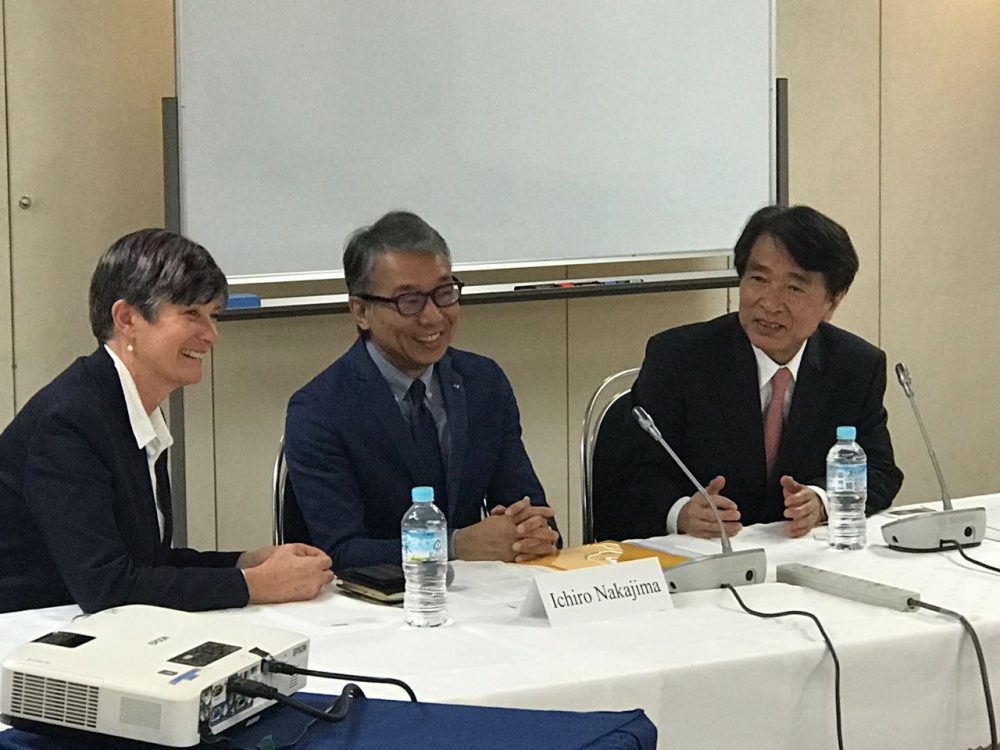
Commercially farmed trees offer a renewable, carbon neutral and versatile fibre for bio-innovation Tall timber buildings was just one of the topics deliberated at the recent annual meeting of the International Council of Forest & Paper Associations (ICFPA) in Tokyo, Japan. Country representatives discussed global priorities around climate change, tree breeding research and the role of the sector in the bio-economy. With Tokyo as the host city, it would be remiss not to have examined plans by Sumitomo Forestry to build a 350-metre high hybrid timber skyscraper to mark the company's 350th anniversary in 2041. Named W350, the ambitious 70-storey tower will be almost four times higher than the 18-storey Brock Commons Student Residence in Vancouver, Canada, which currently holds the record for the tallest timber building in the world. The skyscraper has been designed by Sumitomo's Tsukuba Research Laboratory in collaboration with Tokyo practice Nikken Sekkei. It will be Japan's tallest building. The company says it will be a ‘wood and steel hybrid structure of the right materials in the right places’ with a timber to steel ratio of 9:1. It is expected that 185,000 cubic metres of wood will be used in its construction. But where will it come from? “They will grow the trees,” remarks ICFPA president and executive director of the Paper Manufacturers Association of South Africa Jane Molony. “Tree breeding forms an integral part of the W350 project, and Sumitomo envisages a convergence of materials, biorefinery and tissue culture technologies.” Green shoots of innovation "On the one hand, the sector has seen printing and writing grade production and consumption continue its downward trend with machines either closing or converting to more profitable grades,” explains Molony. “We have seen the death of some grades but now we witness the emergence of so much that is new, that is hopeful; green shoots are everywhere." Like the phoenix rising, Molony …

Young Biotech Researchers, Green Innovators Invited to Enter Blue Sky Awards
JOHANNESBURG, JULY 12, 2018 - With the world’s attention focused on finding greener solutions and cleaner technologies, opportunity is ripe for young wood and paper scientists and engineers in the forest product and paper sectors to step up to the challenge. The International Council of Forests and Paper Associations (ICFPA) invites students and young researchers to submit their work for the 2018-2019 edition of the Blue Sky Young Researchers and Innovation Award. The Paper Manufacturers Association of South Africa (PAMSA) is co-ordinating the local leg of the competition which has now opened for entries. The entry deadline is 31 August 2018. Only three candidates from around the world will have the chance to travel to Canada in May next year to present their ideas to global CEOs in the forestry and paper industry. “In the new age of the bioeconomy, we want to stimulate competition among students and young researchers under the age of 30 who are doing exciting things with wood, paper and the process waste,” says PAMSA executive director and ICFPA president Jane Molony. “The sky is the limit with wood fibre,” she adds. Projects could include a wide range of activities relevant to forest-based science, products using forest-based raw materials, process improvements and other innovations throughout the value chain. Layered theme “The theme for the 2018-2019 award is centred on disruptive technologies that are revolutionising the future for forest-based products and services,” says Molony. The overarching topic has been divided into two categories: ‘future generation forestry’ and ‘innovations in wood-based industries’. “However projects are certainly not limited to these two categories,” she explains. Future generation forestry could encompass forest tree breeding and biotechnology; precision forestry and measurements and inventory. Innovation in wood-based industries could cover the analysis and properties of pulp and paper; facilities, …
Track Your Press Release HERE:
SA’s paper recycling 2020 target of 70% reached three years early
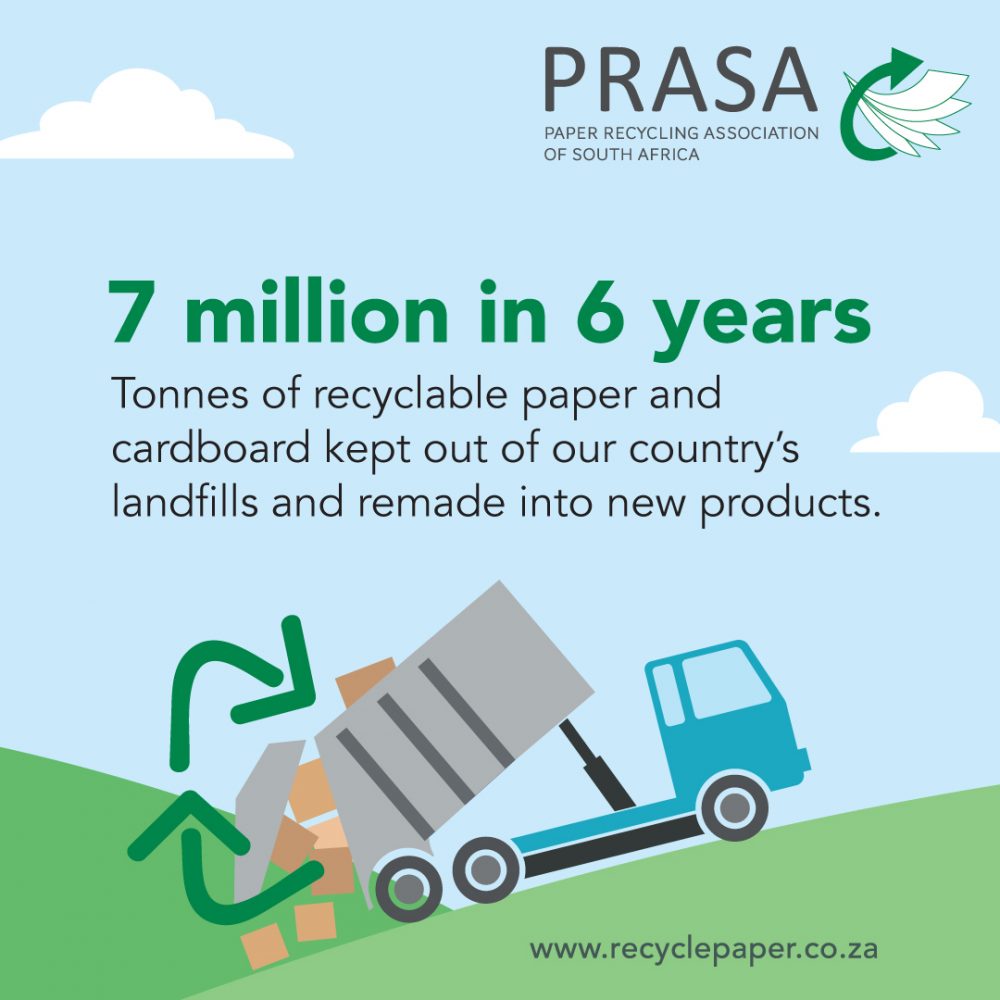
HIGHLIGHTS 1,3 million tonnes of paper and paper packaging diverted from landfill in 2017. Increased rates driven by industry investment for local beneficiation in mills. An extensive collection network and partnerships essential. Sector challenges the need for paper and paper packaging industry tax – prefers route of public-private partnerships. JOHANNESBURG (5 June, 2018, World Environment Day) -- The Paper Recycling Association of South Africa (PRASA) has announced the 2017 paper recycling rates. Last year the paper recycling industry along with conscientious consumers and thousands of collectors kept 1,3 million tonnes of paper and paper, boxes and liquid packaging out of landfill. This would fill 1,539 Olympic-sized swimming pools. This tonnage represents 70% of the 1,8 million tonnes of paper available for recovery, which excludes books and archived records, and unrecyclable paper like toilet tissue. “We are delighted with our latest statistics as it shows us that people are recycling more,” says Ursula Henneberry, PRASA operations director. In 2015, the association set a target of 70% by the year 2020, and this has been achieved three years early. In the past six years alone, more than seven million tonnes of paper and paper packaging have been recovered for recycling. If baled, this amount would cover the surface of 1,273 soccer fields, one metre deep. “The unsung heroes are our country’s recycling collectors along with industry players who operate collection and drop-off schemes as well as buy back centres,” notes Henneberry. “While our recovery rate has increased, there has been a drop in local consumption particularly in printing and writing grades, so much so that a newsprint paper machine was closed down last year,” remarks Jane Molony, executive director of the Paper Manufacturers Association of South Africa (PAMSA). This has resulted in a slight drop in the actual tonnage from 1,4 million tonnes to 1,3 million tonnes. “This …
Track Your Press Release HERE:

Earth Day and World Book Day: Unplug and Read a Paper Book
Johannesburg, April, 19, 2018 - We are well into the age of technology, living an always-on, always-connected lifestyle. But just as we still have bicycles among motor vehicles and pencils in our pen holder, paper will always be close to our computers and smart phones. With Earth Day on 22 April and World Book Day on 23 April, the Paper Manufacturers Association of South Africa (PAMSA) is highlighting the importance of paper in our lives and environment, and calling on us to put down our phones and pick up a book. Imagine a world without paper Can you think about what that would mean? Think about your bedside table, the doctor’s waiting room or your handbag. There would be no books, magazines and to-do lists on the back of old envelopes. Open your kitchen cupboard – there would be no paper packaging nor labels, no kitchen towel, no milk and juice cartons. A world without paper would also mean no toilet paper or tissues. If you’re a teacher, look around your classroom. Take note of everything that is there from posters to artwork and assessments; egg boxes and cereal boxes waiting to be transformed into something creative; tissue boxes too. These would not be there if it were not for paper. Paper serves many needs Paper is essential, and often hidden in plain sight. It cleans, wipes and mops up spills. It protects goods on their journey from A to B, from cornflakes to computers. It preserves our words and memories when we print photos, write a birthday card or proudly display our child’s first stick man painting for all to see. It conveys and communicates. Paper is tactile and stimulates our senses. The act of turning pages and taking in the words without the distraction of pop-ads and fake news cannot be undervalued. Paper is better for our brains too Researchers and neuroscientists are discovering that our brains prefer paper. We are able to navigate the content more easily. We understand and remember things better if we …
Track Your Press Release HERE:

World Wetlands Day | Protecting our world’s water factories – how the forest products sector is leading the way
FACTS Wetlands are the most threatened of all South African ecosystems. Despite only making up 2.4% of the country’s landmass, wetlands play a big role in natural and urban areas, 50% of South Africa’s wetlands have been lost to human and urban impact. World Wetlands Day takes place on 2 February under the theme Wetlands for a Sustainable Urban Future. Wetlands, dubbed ‘water factories’, are the most biologically diverse of all ecosystems. With World Wetlands Day 2018 taking place on 2 February, it is important to recognise the contribution they make to human well-being and economic growth through farming, fishing, tourism and water provision, and how they are being protected. According to the National Water Act, wetlands are defined as “land which is transitional between terrestrial and aquatic systems where the water table is at or near the surface, or the land is periodically covered with shallow water, or would support vegetation typically adapted to life in water saturated soils”. By linking land and water bodies, wetlands protect coastlines, prevent flooding, filter pollutants and act as giant sponges – soaking up rainwater and releasing it slowly over time. This makes them one of the most important freshwater storage systems on Earth. Wetlands also store carbon dioxide (between 10 and 20 times faster than terrestrial ecosystems), thus slowing the impact of climate change. Looking after the world’s water factories “Sadly, 50% of South Africa’s wetlands have been lost as a result of human and urban impact, and only a fraction of those that remain are being conserved,” says Jane Molony, president of the International Council of Forest and Paper Associations (ICFPA) and executive director of the Paper Manufacturers Association of South Africa (PAMSA). “For decades, the forestry and forest product sector has been working alongside scientists and conservationists to rehabilitate and conserve wetlands on forestry-owned land.” “Tissue, tables, …
Track Your Press Release HERE:

Mary Phillips and The Waste Takers make waves with recycling in PE
JOHANNESBURG, September 14, 2017: Ahead of National Recycling Day on September 15, the Paper Recycling Association of South Africa (PRASA) shares the story about Mary Phillips, an entrepreneur who saw value in paper waste and old telephone directories. Mary Phillips got involved in the recycling industry in September 2012, and after what has been a long and sometimes times difficult haul, she is beginning to see the fruits of her labour. It all began when she decided that she had had enough of the corporate world and chose to go into business on her own account. The avenue she selected was recycling and her product of choice was paper. “It’s a clean material and I could transport greater values by volume in my little car than if I went around collecting bottles and cans,” says Mary, who participated in the PRASA's entrepreneurship training course in August 2016. She has made things happen in the Eastern Cape and while she believes that her best days are still to come, her start-up business currently provides employment for three permanent staff members, pays 10 collectors on a regular basis and is a source of income for up to 18 casual workers, as and when required. Determined “Recycling is much more profitable in Johannesburg and Cape Town where collectors can earn several times more that our people in the region; on the other hand, it does provide them with some form of income. “Another problem is that local financial institutions see recycling as a high-risk business which makes it difficult to finance the purchase of vehicles and specialised equipment necessary to make our business grow.” Less determined people than Mary might have given up long ago but she persevered, investigating business opportunities in and out of her home province. An association with Trudon Publishing, which produces the Yellow Pages, has resulted in the staging a highly successful school competition in the Eastern and Western Cape which sees learners collect and return …
Track Your Press Release HERE:
Six paper recycling mistakes your business might be making
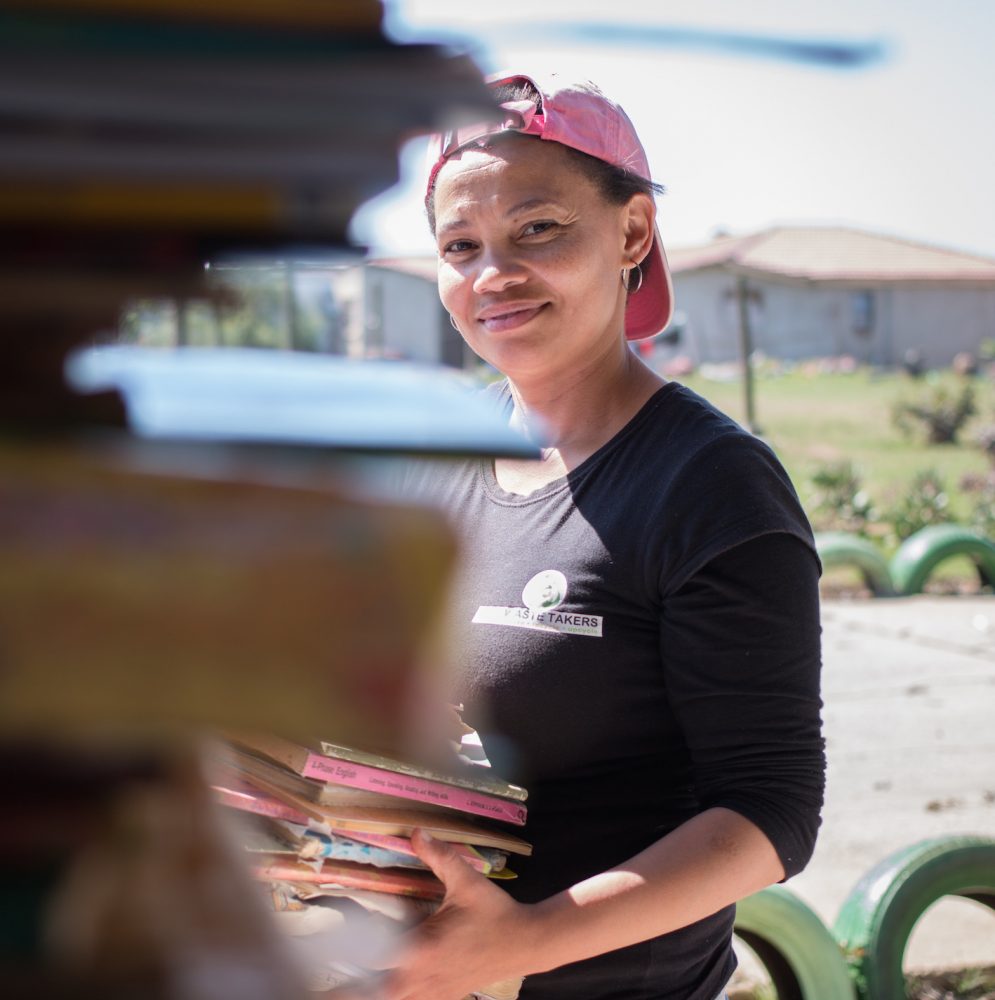
Recovered paper – the paper and cardboard from our recycling bins – is a valuable raw material and South Africa has been using it as an alternative fibre in papermaking since 1920. Around 1.4 million tonnes of recyclable paper and paper packaging was diverted from landfill in 2016. This is the equivalent to the weight of 280,000 African elephants and the same volume would cover 254 soccer fields or fill 1,680 Olympic-sized swimming pools! Although South Africa recycles around 68.4% of paper, cardboard and beverage cartons, less than 10% of offices and businesses recycle their used paper products. Ahead of National Recycling Day on 15 September 2017, the Paper Recycling Association of South Africa (PRASA) outlines six recycling blunders with some helpful tips to improve recycling in an office environment. Mistake 1: Recycling paper to ‘save trees’ A common, but incorrect, reason used for recycling is ‘saving trees’. However in South Africa, paper is produced from farmed trees. Some 600 million trees are grown over 762,000 hectares for the very purpose of making pulp and paper. “If it wasn’t for commercially grown trees, our indigenous forests would have been eradicated years ago to meet our fibre, fuel and furniture needs,” explains PRASA operations director Ursula Henneberry. “Sustainable, commercial forests have a vital role to play in curbing deforestation and mitigating climate change.” Trees are planted in rotation and harvested for pulp and papermaking. The area is then replanted with new trees. This is what makes the paper we source from wood renewable. Know the right reasons: Recycling is a space saver: one tonne of paper saves three cubic metres of landfill space – and the associated costs. Recycling creates jobs – Big and small companies as well as informal collectors make money (and employ people) through the recovery and processing of clean, quality recyclable paper. Given that land suitable for the commercial growing of …
Track Your Press Release HERE:

South Africa’s paper recycling rate rises to 68.4%
South Africa successfully diverted 1.4 million tonnes of recyclable paper and paper packaging from landfill in 2016. This is equivalent to the weight of 280,000 adult African elephants or would cover 254 soccer fields. The Paper Recycling Association of South Africa (PRASA) confirms that the annual paper recovery rate has sustained 2% year-on-year growth since 2012 and now stands at 68.4%[i]. “This surpasses the global average of 58%[ii],” says PRASA operations director Ursula Henneberry, adding that recovered paper – the paper and cardboard put in our recycling bins – is a valuable raw material that South African manufacturers have been using as an alternative fibre since 1920. “Despite this, newspapers, magazines, office paper, cardboard boxes, paper cups, milk and juice cartons still go to landfill,” says Henneberry. Waste less, care more Around 11% of people claim to recycle all the time[iii]. “Everyone uses paper products, so we should all be recyclers. It’s just the right thing to do.” It’s good for the environment: recycling reduces waste and saves landfill space; it reduces unnecessary emissions and encourages a waste-conscious lifestyle. It’s good for our economy too, as it provides an income stream for street collectors and keeps paper recycling operations in business with a clean and good quality raw material to make the products we use daily. From street collectors to the people employed in the sector, paper recycling creates meaningful employment for around 37,000 people. Recycling is as easy as 1-2-3 While it may seem cumbersome at first, it only takes a little effort to develop ‘good garbage habits’. PRASA shares three important tips: Keep paper separate from wet waste - get a bin or box for paper and keep it in a convenient spot. Get to know your recyclables - copy paper, magazines, flyers and newspapers; cereal, medicine and egg boxes, cardboard boxes and juice and milk cartons are all recyclable. Have it collected or …
Track Your Press Release HERE:
THOUGHT PIECE: Paperless society? Quite the opposite.
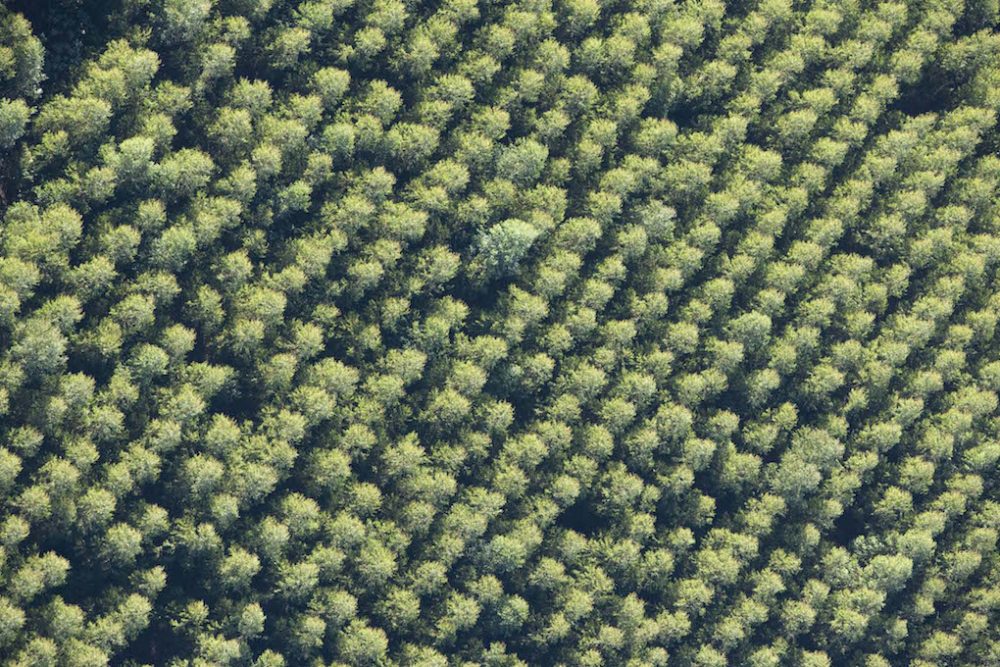
Boxes. Labels. Books. Your child’s first report card. A tissue for their first heartbreak. All made from paper; a renewable, recyclable material that is an inextricable, often invisible part of our lives. Think about it…from the moment we wake up to when we nod off with a book in hand, paper is there. In a world that strives to go paperless, very often for the wrong environmental reasons, the paper industry firmly believes that paper is making a comeback in some quarters, and that it is here to stay. The Paper Manufacturers Association of South Africa (PAMSA) shares the reasons why paper is good for us, our economy and our environment. 1. It’s versatile Paper is categorised into three principal types – printing and writing, packaging and tissue – and chances are that we use each kind every day. Paper in its most common form – white copy paper – could be the start of something, a blank canvas, a new project or design, your first book. A variety of printing and writing papers help to communicate and inform through news and advertising, the label on the coffee jar, the medicine box insert and the month-end supermarket specials. Paper also educates – from your child’s first reader to their last matric exam. Paper packages and protects. From our eggs, teabags and cereal, milk and juice in cartons, to medicine and cosmetics. And let’s not forget that new computer equipment for the office or your online shopping order. From the bestseller of your favourite author to a night at the movies with popcorn, a drink and a box of chocolates, paper entertains. Facial and toilet tissue, kitchen towel and baby and feminine products help to improve our lives through convenience and hygiene. 2. It’s renewable In South Africa, paper is produced from farmed trees. Some 600 million trees are grown over 762,000 hectares for the very purpose of making pulp and paper. “If it wasn’t for commercially grown trees, our indigenous forests would have been eradicated …