
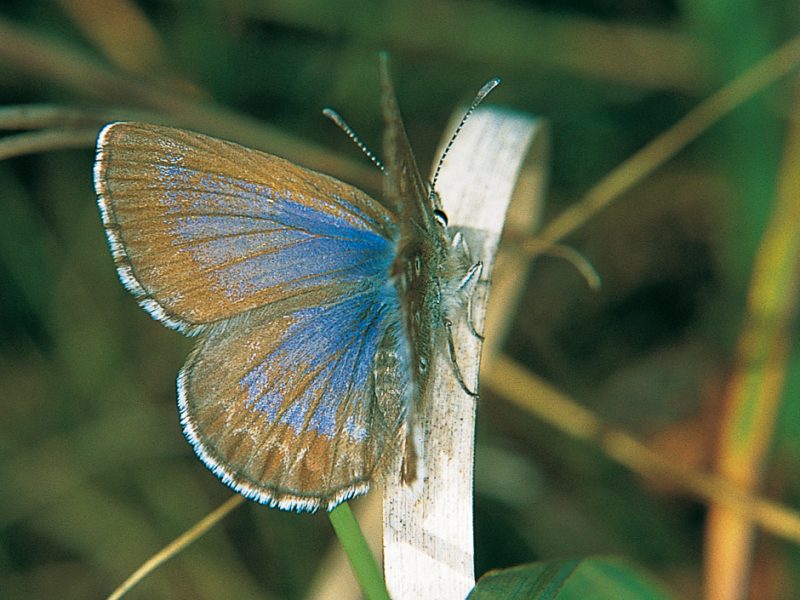
Johannesburg, March, 20, 2020 - Ahead of the United Nations’ International Day of Forests on 21 March, Forestry South Africa research and protection director Dr Ronald Heath talks about how the commercial forestry industry is leading the way in conserving and rehabilitating areas of high biodiversity value. He also challenges people to think differently about plantations. Oribi. Southern Ground Hornbill. Southern Banded Snake Eagle. Cape Batis. Spotted Eagle Owl. Karkloof Blue Butterfly. Hewitt’s Ghost Frog. Pepper Bark Tree. Cycads. These are some of the species that have found a home within the South African commercial forestry landscape. Local forestry landscapes are a tapestry of commercial timber compartments – or crops – interwoven with tracts of natural vegetation, which enhance and conserve biodiversity in these grasslands, wetlands and indigenous forests ecosystems. Approximately 1.5 million hectares of forestry-owned land (1.2 million hectares of timber plantation and 300,000 hectares of conservation area) stretch from Limpopo and Mpumalanga to KwaZulu-Natal and the Eastern and Western Cape. The country boasts the highest forest certification rate in the world, with some 80% of South Africa’s forestry landscape certified by the Forest Stewardship Council (FSC), ensuring that land is managed and timber is produced in line with global environmental and social sustainability standards. From big birds to blue butterflies Through various research projects, ranging from public bird surveys to camera trap studies, our sector has identified more than 30 mammal species, 502 bird species and countless reptile, amphibian and insect species that call forestry-owned land home. This includes a number of rare, endangered and Red List species. One of these is the “Thunder Bird” or Southern Ground Hornbill. The patchwork nature of forestry with the mixture of insect-rich grasslands and tall trees for nesting lends itself as the ideal habitat for these …

Travel treasure troves in the trees
Let Forestry South Africa’s recreational map help you plan your breaks in 2020 - by Dr Ronald Heath, Forestry South Africa Johannesburg, November, 27, 2019 - We’ve all driven past them on the way to Durban, and the Kruger National Park. Tall towers of brown and green, swaying in the wind as they mesmerise us with the timber tunnels they create. South Africa is home to 1.2 million hectares of sustainably managed commercial timber plantations. As the source of a number of everyday products, these plantations are also home to the unexpected. You will be surprised how many things are made from wood and the South African commercial forestry industry farms the trees to provide the raw material. These trees add value to our economy by providing timber for construction, for the production of pulp, paper, packaging and tissue, for cellulose products such as sponges, viscose fabric and the ever-versatile microcryrstalline cellulose*. The industry also provides employment and supports communities, especially in rural areas. Sustainably managed commercial trees (along with the products made from them) are renewable. Saplings are planted in the place of mature harvested trees – contrary to images and myths that harvested trees equate to deforestation. Add in timber’s carbon storage capacity of nearly one tonne of carbon per cubic metre of wood, even after harvesting and processing, and you have an industry that delivers in more ways than you can imagine. Around 30% of forestry-owned land is not managed for timber production and is set aside for biodiversity conservation ... vast swaths of grassland, riverine habitats, wetlands and indigenous forests. Together with plantations, these areas present countless recreational options. Fun in the forests Our Forestry Explained recreational map highlights various activities and attractions found on forestry-owned land that is open to the public. It showcases the eco-activities offered by forestry companies and …
Track Your Press Release HERE:
PRINT IS ALIVE – 8 reasons why print thrives
By Samantha Choles, Paper Manufacturers Association of South Africa Using paper centres my world. It helps me process the craziness that is work, motherhood and life. With paper, I can make lists and plans. With paper, I can disconnect and escape into a book. With research the world over pointing to a resurgence of paper and print, from planners to paperbacks, we are enticed away from the touchscreen to the tactile. Even so, the Paper Manufacturers Association of South Africa (PAMSA) still has to counter the perceptions that print is dead (or dying), or that it’s not “green”; two issues that could not be further from the truth. Print plays an ever-important role in a digitally minded society – it informs, entertains and connects, but at the same time, helps us to unplug. Print is alive Print is not dead. It’s different. In this age of digital-everything, print still has the power to reach people in a way that no other medium can. It’s tried and tested. And it works. It was a few years ago but I remember seeing a printed insert from Takealot, South Africa’s online retailer. Clearly print is memorable too. Experts will tell you that print alone cannot a marketer make. It requires an integrated, cross-platform approach. But print goes beyond marketing and media. It has many purposes – some hidden in plain sight and many that we take for granted. Print informs This week I had to buy medicine for my children. Could you imagine the inconvenience of having to search online for the dosage instructions? Thanks to print, on the box, label and product leaflet, I am informed about the dosage and potential side effects. Print also empowers me as a consumer. I am a serial (and cereal) ingredient checker. By reading the ‘fine print’, I can shop with discernment. Print unplugs We live in an always-on, device-driven era. While the world is at our fingertips, we are also at arm’s length from anyone and anything that demands our time and attention. New …
Track Your Press Release HERE:

South Africa kept 3.9 million cubic metres of paper out of landfill in 2018
JOHANNESBURG, SEPTEMBER 17, 2019 - In 2018, South Africa recovered 1.285 million tonnes of recyclable paper products, putting the country’s paper recovery rate at 71.7%. This is according to Anele Sololo, general manager of the country’s paper recycling association, RecyclePaperZA, who adds that this rate is well above the global average of 59.3%*. If baled, 1.285 million tonnes of paper and paper packaging would: Cover 166 rugby fields Fill 1 542 Olympic swimming pools Weigh the equivalent of 214 208 adult African elephants. “More importantly, the paper recovered in 2018 saved 3.855 million cubic metres of landfill space and ensured that the recovered fibre was made into new products that we use every day,” says Sololo. More than 90% of this recovered paper is used for the local beneficiation of new paper packaging and tissue. South Africa’s paper recycling success is thanks to the efforts of citizens who separate their waste at home, work and school, industry initiatives and our informal waste sector. “Recycling requires a collective effort – from retailers to the consumer. We can all play a small part in making sure that recyclable paper gets where it should: to the paper recycling mills across the country,” says Sololo. Get into a recycling rhythm With National Recycling Day taking place on Friday, September 20th, RecyclePaperZA wants to help you get into recycling rhythm. Keep it clean and dry - Empty paper-based packaging such as beverage cartons and paper cups of the dregs. (Replace the cap on beverage cartons – these are recycled to make wheelie bins! Lids from paper cups can be recycled with your plastics – they are made from high density polystyrene) - Remove any remaining food and non-paper items from your paper packaging. This includes the inner plastic bag from your cereal box. Keep it separate - Have a separate container for your paper recycling – in your kitchen, bathroom and office. Make it easy for yourself and the …
Track Your Press Release HERE:
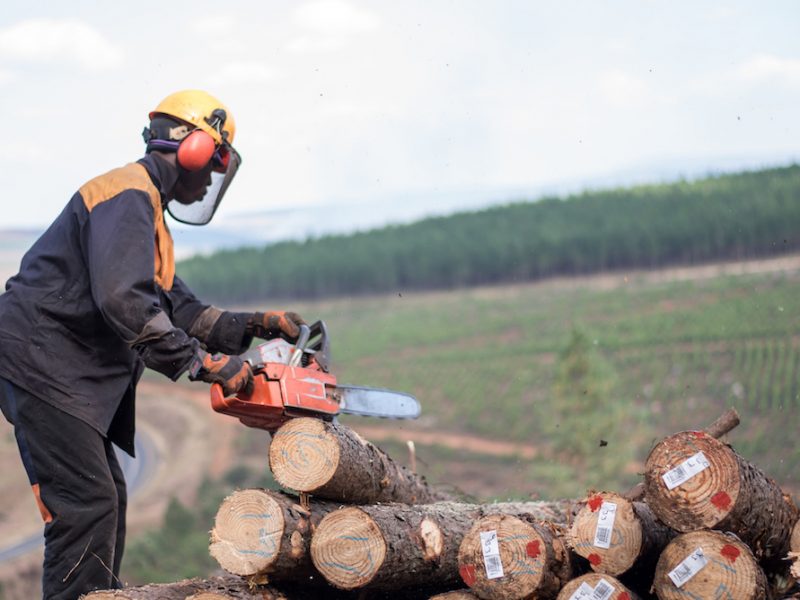
SA Forestry Sector Makes Chainsaw Training Safer With Virtual Reality
JOHANNESBURG, 10 SEPTEMBER 2019 ? In a world first, trainee chainsaw operators will soon be able to use a virtual reality (VR) application to test their theoretical knowledge and hone their skill in a simulated timber plantation. Developed by Forestry South Africa (FSA), the Fibre Processing and Manufacturing Sector Education and Training Authority (FP&M Seta) and industry partners, this solution trains chainsaw operators in a safe, simulated environment before they test their skills in this high-risk activity in timber plantations. While the number of chainsaw operators employed in large commercial plantations has declined in recent years, the opposite is true in small-scale and community forestry, where suitably trained chainsaw operators need to be equipped with this scarce and critical skill. Although forestry has used simulators over the past decade, their use in the training of chainsaw operators is an innovative development. Mobile, cost-effective, learner-adaptable and injury-free The cost of practical training has risen substantially. The sector sought a solution that would not only provide a cost-effective coaching medium with minimal risk, but a means whereby trainee operators could gain a feel for their equipment before taking their first steps into the field or forest. Safety concerns have proved to be a limiting factor in the training of chainsaw operators. Other constraints include unwieldy class sizes and a limited number of trees available for practical instruction. “Besides the obvious benefits that our industry stands to gain from this project, VR is the future of skills development and training. It transports learners into the environment for which they are being trained, promotes interactivity and improves the retention of information through experience,” says FSA business development director Norman Dlamini. “I am holding the very first real chainsaw in the world that has been wired with sensors and can transport a …
Track Your Press Release HERE:

PAMSA calls for applications for its Master of Engineering bursary programme
Johannesburg – April 12, 2019 – For the ninth year running, the Paper Manufacturers Association of South Africa (PAMSA) is offering bursaries to eligible Bachelor of Science engineering students who wish to pursue a Master of Engineering (M.Eng.) degree focusing on biotechnology within the pulp, paper, tissue and paper packaging sectors. Each bursary is valued at R100,000 per year for two years of full-time study towards a M.Eng. degree at participating universities. Applications must be done online by Monday 29 April 2019. Pulp and paper sector part of the bio-economy Beyond the chemistry of paper, board or tissue making and paper recycling, opportunities abound for chemical and process engineers interested in the wonder of wood fibre derived chemicals, sugars, packaging innovations and applications for nanocellulose. “Apart from printer paper, toilet tissue and cardboard boxes, a host of everyday products have a link back to sustainably farmed wood or components thereof,” explains Jane Molony, PAMSA executive director. South Africa grows 840 million trees over 693,000 hectares for pulp and paper making with only a small portion harvested annually then replanted in the same year. Wood pulp can be spun into viscose fabric while xylitol, the non-nutritive sweetener, can extracted from wood as a sugar alcohol during the pulping process. Powdered microcrystalline cellulose can be used as a binding, abrasive or bulking agent in toothpaste, vitamins and detergents. “As a forerunner in the bio-economy, the forestry and forest products sector is investing considerably in research and development into the uses of wood – a renewable and sustainably farmed resource – especially as the world looks to it for low-carbon alternatives to fossil-fuel based materials and processes,” Molony says. “South African pulp and paper mills can use their raw material (wood and paper fibre, chemicals and water), their equipment and processes as well as waste streams to …
Track Your Press Release HERE:

Plan your 2019 bucket list with Forestry South Africa’s new online recreational map
JOHANNESBURG, January 15, 2019 - Forestry South Africa (FSA) has launched the Forestry Explained recreational map, ideal for when the travel bug bites, when you need family-friendly accommodation or a quiet weekend away from the city life. The new interactive map details the myriad of activities and attractions that are found on forestry-owned land around the country. Treasures within the trees Around 30% of forestry-owned land is unplanted and a large proportion is set aside for dedicated conservation. These include vast swaths of grasslands, riverine ecosystems and indigenous forests. Besides their obvious conservation value, these areas provide ample recreational opportunities on top of what is provided by the plantation forests themselves. Whether it is trail running, hiking and mountain biking adventures you seek, or serene days spent bird watching, picnicking and taking in spectacular views, forestry-owned land has something to offer you. The Forestry Explained recreational map makes accessing these activities and attractions easy. It showcases eco-activities of forestry companies and private individuals in one user-friendly recreational guide. Its interactive nature allows people to explore what’s on offer, along with the important information for the perfect forestry day out. 2019 “Forestry Fun” bucket list Make 2019 the year you explore the recreational offerings of South Africa’s commercial forests. Why not see if you can complete the 2019 “Forestry Fun” bucket list below, making sure tag @forestry_explained into any shots you post on Instagram. Mpumalanga’s waterfalls – many of the famous ‘Panorama Route waterfalls’ are actually situated on forestry land owned and managed by state-owned SAFCOL, including Berlin Falls, Lisbon Falls, Mac Mac Falls and Pools, Bridal Veil Falls, Lone Creek Falls and Marie Shires. Mountain biking getaway – take a long-weekend and explore the plantations, indigenous forests and open grasslands of …
Track Your Press Release HERE:

Southern Cape forest fires pose serious risk to sustainability of regional timber industry
A total of 7 643 hectares of predominantly pine plantations belonging to private timber growers in the Southern Cape region have either been totally or partially destroyed in the fires that raged in the Outeniqua Mountains between 25 October and 16 November 2018. Plantations ranging in age from one to 25 years old were affected. These were the findings of a meeting of 35 people involved in the timber and timber processing industries, held at the Nelson Mandela University on 3 December. The severity of the loss is exacerbated by the fact that more than 65% of the timber affected was older than 16 years. This will have a major negative influence on the future ability of the forestry industry in the region to produce the timber needed to supply the processing plants that rely on this resource. The value of the timber lost has not yet been completely established, as many factors need to be taken into consideration. The cost of re-establishing those areas that have been totally destroyed has also not been established accurately. However, initial estimates are that just the re-establishment costs could be in the region of R80-million. Furthermore, many jobs in the timber-growing sector will be permanently lost. Forestry infrastructure was also destroyed. The processing side of the industry in the region has the potential to process approximately 700 000m3 of logs per annum, the majority of this through sawmills and pole treatment plants. An entire sawmill in the Geelhoutvlei area, capable of processing upwards of 60 000m3 per annum, and valued at more than R100-million, was totally destroyed. This has left more than 400 people in the processing sector permanently unemployed. After the devastating fires of July 2017, the latest fires pose a severe risk to the sustainability of both the forestry and processing industries in the Southern Cape. Both Forestry South Africa and Sawmilling South Africa are working hard to ensure that the future of these industries …
Track Your Press Release HERE:

Calling all teachers: Show our forests some love and win a trip to Rome!
JOHANNESBURG, DECEMBER 3, 2018 - Trees are very important as they provide our planet with essential environmental services while also giving us jobs, products and fun. To celebrate the many fantastic things about forests, both natural and planted, the Food and Agriculture Organisation (FAO) is running a competition ahead of International Day of Forests on 21 March 2019. The prize: a trip to Rome! According to FAO, "the 2019 theme for the International Day of Forests is ‘Forests and Education’ and we want the world to know how you educate children and youth about the importance of trees and forests. Today, when more than half the world’s population lives in cities and are increasingly disconnected from nature, it is more essential than ever to bring an understanding and awareness of forests and their benefits into children’s lives at an early age.” FAO is inviting teachers, educators and parents to produce and submit a short one-minute video that shows how you impart a better understanding about the importance of forests and trees for our planet’s future. This could be a video of a traditional class, nature walk into a wooded area or plantation, a local park with trees, an artwork, a song or music lesson or even an exercise class. The Paper Manufacturers Association of South Africa (PAMSA) and Forestry South Africa have put together some resources with specific facts on the South African forestry and forest product sector. Visit the special page on www.forestryexplained.co.za for more information. Deadline for entries is 15 December 2018. (We recognise that this is after schools break up for the SA summer holidays. It could however be a fun activity for these last few weeks of school.) How do I enter? To enter the contest, just follow these steps: Make a short video that shows how you teach children and youth about the importance of forests. The video should not exceed 1 minute and can be produced with any professional or non-professional device …
Track Your Press Release HERE:

PRASA changes name to RecyclePaperZA
JOHANNESBURG - 22 OCTOBER 2018 -- The Paper Recycling Association of South Africa (PRASA), the 15-year-old paper recycling arm of the Paper Manufacturers Association of South Africa (PAMSA), has a new name and identity: RecyclePaperZA. “For the past few years, members of the public have increasingly confused us with the state-owned enterprise, Prasa,” explains PAMSA executive director Jane Molony. “We have often been asked about train services, or questioned why a rail agency would be involved in recycling.” PAMSA recently initiated the name change process and invited submissions from its member companies. “The name was selected as it reflects a call to action,” explains Anele Sololo, manager for training, promotion and operations for RecyclePaperZA. “Incidentally, it also mirrors our website address www.recyclepaper.co.za, so it’s a perfect fit.” Backed by the pay-off line “Paper recycled. Paper Renewed”, the newly named paper recycling association will continue to promote the recovery and recycling of paper fibre as a vital link in the renewability chain. Paper is a renewable product made from farmed trees. As is the case with all trees, farmed trees absorb carbon dioxide necessary for growth and store this as carbon. When the wood is made into paper or other wood or cellulose products, the carbon remains locked up in the end product. Paper recycling ensures that this carbon remains out of the atmosphere for longer, while also providing an alternative fibre for paper manufacturers. Formed in 2003, RecyclePaperZA represents companies that process recovered paper and make new paper products. It also represents some manufacturers of liquid board packaging in the form of milk and juice cartons, paper cups and bowls. Earlier this year, the association announced that South Africa’s paper recycling rate tipped the scales at 1.3 million tonnes in 2017. This tonnage represents 70% of the 1.8 million tonnes of paper, board and liquid packaging available …