

The Greater Simonsberg Conservancy (GSC) is calling on the public to join Walk for the Wild, a 10 km trail run and hike at Delheim Wine Estate on 9 May 2026, supporting leopard conservation and biodiversity protection in the Stellenbosch region. Set on the slopes of the Simonsberg Mountain, the event combines outdoor adventure with meaningful conservation impact, with all proceeds contributing to the protection of leopards and their fragile mountain habitat. The GSC works closely with the Cape Leopard Trust (CLT), a leading conservation organisation dedicated to research, education, and human-wildlife coexistence in the Western Cape and beyond. Together, the organisations are strengthening long-term conservation efforts across private and protected land on Simonsberg and its surrounds. The GSC forms part of a broader landscape approach to conservation, where private landowners collaborate to protect critically important Renosterveld and Fynbos ecosystems and maintain ecological corridors that allow wildlife to move freely across the Simonsberg landscape. Research by the CLT, including large-scale leopard monitoring across the Boland Mountain Complex, has confirmed the continued presence of leopards in the Simonsberg area. Camera trap data collected on GSC member properties such as Boschendal, Plaisir, and Delheim Wine Estate highlights the vital role private land plays in sustaining viable leopard populations. Beyond research, the CLT runs environmental education programmes, and snare awareness initiatives, while also developing practical conservation solutions such as predator-proof livestock enclosures through its Mobi-kraal project. Walk for the Wild will be hosted at Delheim Wine Estate, offering participants exclusive access to the estate’s Leopard Trail with sweeping views over the Stellenbosch valley. Every entry directly supports ongoing leopard research, education, and conservation action in the Greater Simonsberg …

Plumbers Durban Launches Free Water-Saving Plumbing Audits for Local Homeowners
Durban: With South Africa's ongoing water scarcity pressures hitting KwaZulu-Natal households harder than ever, one of Durban's most established plumbing companies is doing something about it. Plumbers Durban has announced the launch of a free water-saving plumbing audit programme for local homeowners across Durban and surrounding suburbs, aimed at helping residents cut water waste, lower their municipal bills, and protect their plumbing systems from the gradual damage that undetected leaks cause over time. The initiative comes at a time when water conservation has shifted from a good intention to a genuine household necessity. With many Durban residents facing unpredictable water supply disruptions and rising tariffs, small inefficiencies in a home's plumbing, a slow drip here, a running cistern there, can quietly add up to hundreds of rands wasted every month. "A lot of homeowners genuinely have no idea how much water they are losing through minor faults they can't see," said a spokesperson for Plumbers Durban. "We find it constantly, a geyser pressure relief valve that's seeping overnight, a toilet that runs for ten minutes after flushing, isolation valves that haven't quite shut all the way. These problems are not dramatic enough to trigger a call-out, but they are draining money and water every single day." What the Free Audit Covers The complimentary plumbing inspection covers a systematic review of a home's key water-using fixtures and pipework. Plumbers Durban's qualified plumbers will check taps, toilets, geysers, and exposed pipelines for signs of leakage, inefficiency, or deterioration. They will also assess water pressure, as unusually high pressure is a leading cause of burst pipes and premature wear on washers and seals throughout the property. Homeowners will receive a written summary of findings along with straightforward recommendations, ranging from simple DIY fixes to professional repairs where necessary. There is no obligation to proceed …
Track Your Press Release HERE:
Refinery Plumbing Scales Up Bathroom Fitting Services for Polokwane Office Parks and Complexes
Polokwane: Refinery Plumbing, one of Polokwane's most recognised plumbing and bathroom installation companies, has announced a significant expansion of its commercial bathroom fitting services, with a specific focus on office parks, business complexes, and multi-unit commercial developments across the greater Polokwane area in Limpopo. The move responds to growing demand from property developers, facilities managers, and commercial landlords who are either fitting out new premises or refurbishing ageing bathroom facilities to meet the expectations of modern tenants. As Polokwane continues its steady growth as a commercial hub in the Limpopo province, the need for reliable, professional bathroom installation services at scale has never been more pronounced. "Office parks and business complexes are a different kind of project to a residential bathroom renovation," said a spokesperson for Refinery Plumbing. "You are dealing with multiple bathrooms across the same building, often working to tight turnaround timelines so tenants are not disrupted, and the finish has to be consistent throughout. We have put the team and the logistics in place to handle exactly that." What the Expanded Service Covers Refinery Plumbing's bathroom fitting and renovation services now extend to full commercial bathroom fitouts, including the installation of toilets, basins, showers, taps, concealed cisterns, and associated pipework. The company also handles plumbing rerouting where structural or layout changes are involved, as well as the issuance of Plumbing Certificates of Compliance (COCs) upon completion, a legal requirement for commercial properties in South Africa. The team works with property managers and building contractors to schedule installations in phases where necessary, minimising disruption to occupied premises. Refinery Plumbing also carries out leak detection, water pressure assessments, and full plumbing inspections as part of the fitout process, ensuring that new …
Track Your Press Release HERE:

Earth Day Highlights the Role of Responsible Drilling in a Sustainable Future
As the world marks Earth Day on 22 April, Rosond reaffirms its commitment to environmental stewardship, innovation, and responsible resource development. Earth Day serves as a global reminder of the urgent need to protect natural ecosystems while supporting economic development. For industries such as mining and exploration, this balance is particularly critical. As a leading drilling solutions provider operating across Africa, Rosond recognises that sustainable practices are not optional but fundamental to long-term success. “At Rosond, sustainability is embedded in how we think, design and operate,” says Glen McGavigan, CEO of Rosond. “Our responsibility goes beyond delivering efficient drilling solutions; it extends to ensuring that our activities contribute positively to the environment, the communities we operate in, and the future of the industry.” Comprehensive ESG programme Central to Rosond’s approach is its comprehensive Environmental, Social and Governance (ESG) programme, which guides the company’s efforts to reduce environmental impact, enhance operational efficiency and strengthen stakeholder trust. The programme enables the company to track greenhouse gas emissions, improve resource management and implement targeted mitigation strategies across its operations. Innovation plays a key role in achieving these objectives. Rosond continues to invest in advanced engineering solutions that reduce energy consumption and minimise environmental impact. This includes the transition to next-generation electro-hydraulic drilling equipment, which offers improved efficiency, lower noise levels and reduced emissions compared to traditional pneumatic systems. Cleaner energy solutions In parallel, the company is actively integrating cleaner energy solutions into its operations. Solar-powered command units, for example, are helping to reduce reliance on diesel generators, cutting both fuel consumption and carbon emissions while improving working …
Track Your Press Release HERE:
Plastics SA Comments on Global Polymer Price Volatility and Supply Constraints
The global polymer market is currently undergoing significant disruption, driven by ongoing geopolitical tensions in the Middle East and their impact on energy markets, trade routes and supply chains. These developments have resulted in sharp increases in feedstock costs and unprecedented volatility in polymer pricing worldwide. As polymers are derived primarily from petroleum-based products such as natural gas and naphtha, any instability in these upstream markets has a direct and immediate effect on the plastics industry. Reported increases between March and April 2026 range from 30% and continue to increase as time progresses. When combined with substantial increases in freight costs, the total impact on landed prices in South Africa has been significantly higher. Compounding this situation are global supply constraints. Production slowdowns in key regions, particularly Southeast Asia, where manufacturers rely heavily on Middle Eastern feedstocks, have intensified shortages. Local production is constrained by ageing infrastructure and operational challenges, which are now exacerbated by limited feedstock availability. “The pace and scale of these increases are unlike anything the industry has experienced in recent years. What we are seeing is not simply a pricing cycle, but a convergence of global risks that is placing sustained pressure across the entire plastics value chain,” says Anton Hanekom, Executive Director of Plastics SA. This environment is creating heightened levels of uncertainty and risk. Traders are exposed to fluctuating prices with limited guarantees from international suppliers, while converters are increasingly cautious in committing to forward orders. At the same time, increased purchasing activity, now often exceeding normal demand levels, is placing additional strain on already constrained supply. Despite these challenges, Plastics SA believes there are opportunities for the local industry to respond proactively. South …
Track Your Press Release HERE:

Green Cube Maintenance & Landscaping Shares Expert Guide on Preparing Properties for Events and Viewings With Instant Lawn
Pretoria-based landscaping specialists outline how property owners can achieve a camera-ready garden in days, not months. PRETORIA, South Africa — Green Cube Maintenance & Landscaping has published a comprehensive guide for homeowners, property managers, and sellers who need their outdoor spaces looking their best before a firm deadline. The guide addresses a challenge familiar to anyone who has ever stared at a patchy lawn with an event date or property listing looming: time has run out for seed, and the garden still isn't ready. Whether it's a celebration being hosted at home, a commercial function on an estate, or a property about to hit the market, the window between "we need this sorted" and the actual date is often far shorter than most people realise. Many property owners only begin thinking about the garden once everything else is in place — and by then, growing grass from scratch simply isn't an option. What they might not know is how much of the final result depends on what happens before a single roll of turf is laid. The article walks readers through what professional preparation actually involves, from soil challenges specific to Pretoria through to turf selection, site clearing, and a practical countdown timeline for planning an installation around a fixed date. It also addresses why sellers in particular stand to benefit and what the first month of aftercare looks like. One detail that stands out: the guide explains why compacted clay soil — common across large parts of Pretoria — can quietly undermine an installation if it isn't dealt with properly, and what that means for lawns that need to hold up under scrutiny rather than just look good on day one. For the full breakdown on planning, preparation, and timing, read the complete guide: Garden Ready in Days: Preparing Your Property for Events and Viewings. About Green Cube Maintenance & Landscaping Green Cube Maintenance & Landscaping is a Pretoria-based landscaping and …
Track Your Press Release HERE:
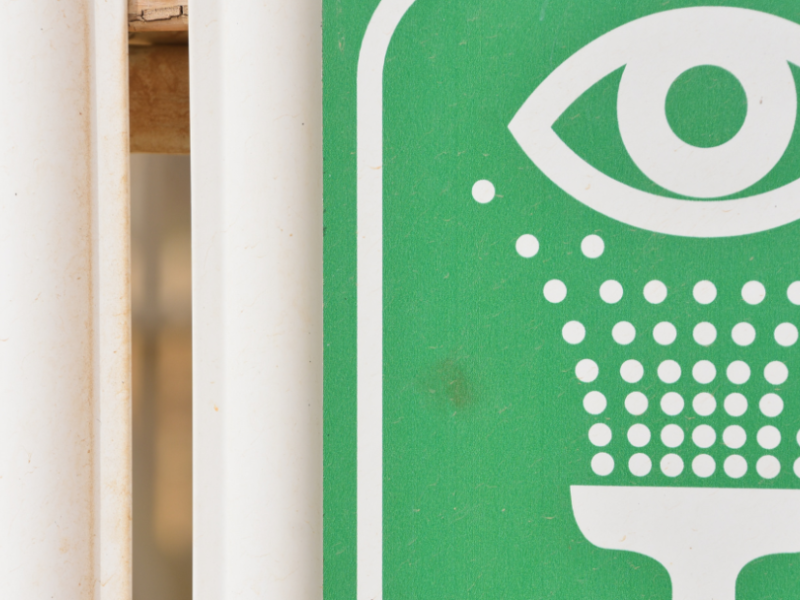
What Every Workplace Should Know about Eye Wash Stations
The eyes are among the most vulnerable parts of the body in any work environment. A splash of a chemical that would cause minor skin irritation can cause serious damage to the eye in seconds. That’s not an exaggeration. The cornea, which is the clear surface covering the front of the eye, is extremely sensitive and reacts quickly to contact with foreign substances. Without fast access to flushing equipment, what might have been a minor incident can turn into a permanent injury. This is why eye wash stations exist, and why having them in the right place, maintained properly, and accessible at all times is one of the more important safety provisions a workplace can make. How Eye Injuries Actually Happen at Work Eye injuries in the workplace are more common than most people expect. They happen in manufacturing plants, laboratories, construction sites, agricultural operations, automotive workshops, cleaning and maintenance environments, and even offices where cleaning chemicals are used. The most common causes include chemical splashes, dust and debris, UV radiation from welding or cutting, and impact from flying particles. Chemical splashes are particularly serious because the damage is not always immediately obvious. A person might feel a burning sensation but assume it’s minor. By the time they realise the extent of the damage, precious time for effective flushing has already been lost. Speed is the single most important factor in limiting damage from a chemical eye injury. The goal of emergency eye flushing is to dilute and remove the substance from the eye surface before it penetrates deeper tissue. For most chemicals, the critical window for effective flushing is within the first ten to fifteen seconds of exposure. That means the flushing equipment needs to be within ten seconds of where a worker might be exposed, not across the building in a first aid room. What an Eye Wash Station Provides An eye wash station delivers a controlled flow of clean, …
Track Your Press Release HERE:

Why Drip Trays Are One of the Most Practical Items in Any Industrial or Commercial Facility
Liquid leaks and drips are part of working with machinery, chemicals, fuel, and lubricants. It doesn’t matter how well equipment is maintained or how careful a team is. At some point, something drips, leaks, or overflows. The question is whether there’s something in place to catch it before it becomes a problem on the floor, in the soil, or in a stormwater drain. That’s exactly what drip trays are for, and yet they’re one of those items that facilities often overlook until something goes wrong. A small investment in containment upfront saves a lot of trouble later, including cleaning costs, floor damage, safety incidents, and in some cases regulatory fines. What Drip Trays Actually Do A drip tray is a containment basin placed beneath equipment, drums, containers, or any other item that stores or transfers liquid. Its job is simple: catch anything that escapes before it reaches the floor or the surrounding environment. The liquid being caught could be oil, fuel, hydraulic fluid, chemicals, water, or any other substance depending on what the facility handles. The tray sits there quietly doing its job, and most of the time nobody pays it much attention. That’s the point. When it’s working properly, it’s invisible. When it’s not there and something drips, the consequences are very visible and often costly. In environments where hazardous substances are stored or used, containment trays also serve a compliance function. Many health and safety regulations require that liquid storage be accompanied by secondary containment. A tray beneath a drum of chemicals or a fuel tank isn’t just a sensible precaution. In regulated industries, it’s often a legal requirement. Where They Get Used Drip trays are used across a wide range of industries and settings. Understanding where they’re most commonly deployed helps explain why the range of sizes and configurations available is so broad. Workshops and garages: Oil changes, hydraulic work, and general mechanical …
Track Your Press Release HERE:

Why Every Workplace Needs a Spill Kit and What to Do When Something Goes Wrong
Spills happen. In warehouses, workshops, factories, laboratories, and even office kitchens, liquid ends up where it shouldn’t. Most of the time it’s an inconvenience. Sometimes it’s a safety hazard. And in certain environments, it’s an environmental incident with regulatory consequences. Having the right equipment on hand changes how quickly and effectively a spill gets dealt with. Without it, people improvise. They grab rags, paper towels, or buckets, and they manage. But managing isn’t the same as containing properly, and in workplaces where chemicals, oils, or hazardous substances are present, improvising with the wrong materials can make a situation worse, not better. What a Spill Kit Actually Contains A spill kit is a packaged set of absorbent and containment materials designed to deal with liquid spills quickly and safely. The contents vary depending on the type of spill the kit is designed for, but a standard kit typically includes absorbent pads, absorbent socks or booms, a disposal bag, and gloves. Absorbent pads are flat sheets that soak up liquid from surfaces. They work well for spills on floors, workbenches, and around machinery. Absorbent socks are long, cylindrical pieces of material that get placed around the perimeter of a spill to stop it from spreading. They act like a barrier while the pads absorb what’s inside the contained area. The disposal bag is for used materials. Once the spill has been absorbed, the pads, socks, and gloves all need to go somewhere. Depending on what was spilled, that bag may need to be treated as hazardous waste and disposed of through a licensed facility rather than in the general rubbish. Gloves are included because handling absorbent materials that have soaked up chemicals, oils, or other substances without protection is a health risk. They seem like an obvious inclusion but they’re the item people most often skip in a rush, and they’re the item that prevents skin contact with whatever was …
Track Your Press Release HERE:
How ‘Climate Control’ Can Help Birds Survive Climate Change – Free Design
Birds, especially the urban variety, are feeling the effects of a warming planet. Higher temperatures and a lack of clean water correlate with lower bird diversity, but a new design solution is giving them relief from an unlikely source: air conditioners. With summer and winter temperatures highs breaking records all over the world, people in cities are keeping things cool inside with ever more reliance on air conditioning systems. At the same time, just outside the windows of offices and apartments, birds are vulnerable to physiological stress and have even suffered mass die-offs. Now a simple new invention is turning air conditioning into a solution birds are thirsty for. You’ve probably noticed the drips and drops that emerge from the outside pipes of air conditioners. These drops are, in fact, the condensation that results from the cooled air drawn from the interior. And the more intensively an air conditioner works, the more drops it produces – seven hours of operation can result in as much as ten litres of water from one unit. The bird waterer design is opensource and downloadable from the Drop of Life website, and print at any 3D print studio with an easy-to-install design Machine_ and Leo Burnett Ukraine, began a collaboration on how to turn these drops of water into a lifeline for urban birds. Pete Little, Chief Creative Officer, Publicis Groupe Africa, says: “If a city is hot enough that you need air conditioning, it’s hot enough for the city’s birds to need a fresh water sources.” The solution? A bird waterer that channels air conditioning drips into a bird-friendly water source. Partnering with ecologists and ornithologists, a waterer was designed that would not only look and feel natural to birds, it can also fit any air conditioning system. Prototyped models, followed by full 3D-printable versions were created. Water from air conditioners can now be channelled into the device, and birds have a clean, safe and sustainable water …