
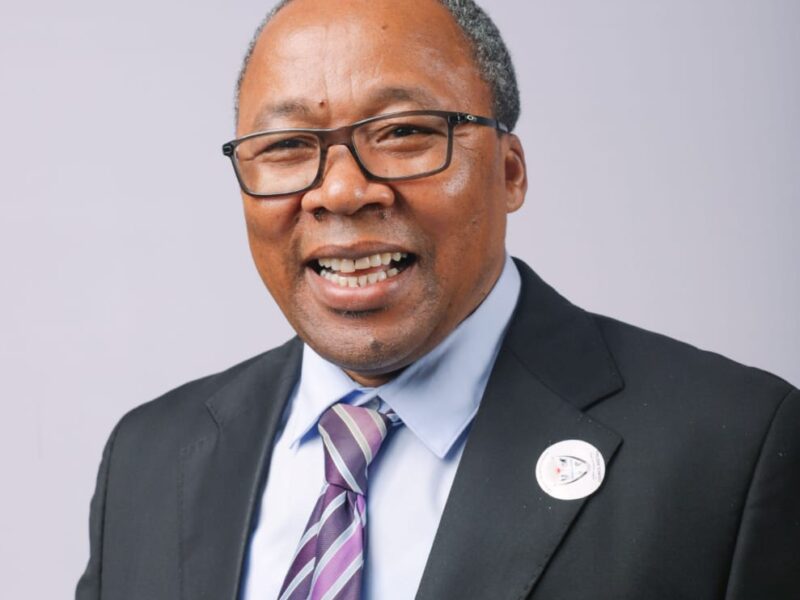
Dr Velenkosini Matsebula is a Senior Lecturer in Development Finance at Stellenbosch Business School. Every year the 20th of November is yet another reminder of how far behind Africa’s industrialisation is to the rest of the world. As we mark the Africa Industrialisation Day, we are not only provided the opportunity to take stock of the continent’s remarkable progress over the past couple of decades, but to equally acknowledge the persistent challenges hindering progress and economic transformation and identify possible solutions. The African continent is faced with persistent socioeconomic and developmental challenges. Industrialisation provides remedies to most if not all, as a key enabler for job opportunities, a proven driver for poverty reduction and financial inclusion. It increases economic productivity leading to a more robust formal financial sector. When industries thrive, stable jobs are created, allowing individuals access to formal financial services, such as transactional and savings accounts, credit facilities, investment, and insurance. This financial inclusion plays a crucial role for households and small businesses to better manage their risks, smoothen their daily consumption and invest in their futures. Africa’s economic landscape is, however, characterised by a disproportionate focus on the primary sector (particularly agriculture and extractive industries) and tertiary sector (mainly the financial and services industries), leaving a vacuum within the secondary sector (manufacturing and industry). While these sectors are crucial, they often lack the capacity to ensure the broad-based economic development required to tattle the challenges faced by Africa. The missing manufacturing and industry sectors are central to the African Inclusive Agenda. According to the African Development Bank, the African manufacturing sector only contributes about 11% to the continent’s gross domestic production (GDP), compared to the over 30% seen in …
The Case for an Industrial Revolution in Africa: Can South Africa’s Re-industrialisation be the spark?
Paul Terna Gbahabo is a research consultant and a PhD graduate in Development Finance at Stellenbosch Business School. Africa, a continent of immense potential, stands at a critical juncture. The call for an industrial revolution is not merely a suggestion but an economic imperative. Africa desperately needs an industrial revolution. Though daunting, it is not beyond reach – it has been accomplished elsewhere in Europe, North America, and recently in East Asia. Why can't Africa spearhead its own economic and technological revolution? This transformative change entails rapid enhancements in productivity growth, driven by increased technical proficiency and efficiency rates across all economic sectors. The agenda for this transformation must encompass strategic policies promoting mechanisation in production, especially in agriculture and artisanal economies. Digitalisation, particularly in service sectors and government operations, is crucial, along with ensuring a consistent and dependable energy supply — where nuclear energy could be a viable consideration. Additionally, leveraging labor-intensive manufacturing (such as food processing, textiles, and apparel) can be a potent policy tool to foster decent job creation and mitigate the continent's soaring unemployment rates. Significant improvements in transportation and communication infrastructure are also imperative. However, it's crucial to reflect on the context that highlights the urgency of this moment and characterises Africa's precarious realities, largely due to its failure to industrialise. Consider the stark reality faced by the African continent during the COVID-19 pandemic. The potential devastation loomed large if the pandemic had been deadlier, more virulent, and centered in Africa. The situation isn't far-fetched; think of the Bubonic plague that ravaged Europe's labor force in the 14th century, resulting in an estimated death toll averaging around 25 million in Europe alone. Despite …
Track Your Press Release HERE:

Pulling Rabbits Unveils Its Enchanting Blend of Magic and Marketing
Cape Town / 1 October 2023 : – In a world where marketing is often seen as a mundane endeavor, Pulling Rabbits is here to change the game. Founded in 2023 amid the vibrant creative and cultural AI explosion in this innovative startup is anything but ordinary. Pulling Rabbits isn't your typical marketing agency; it's a place where marketing transforms into a mesmerizing spectacle, and the Internet becomes a spellbook of endless possibilities. Think of it as a magical extravaganza where every digital click, like, and share is a part of a grand spectacle. Pulling Rabbits is a pioneering communications consultancy founded in 2023 by YLO, with a mission to transform brand narratives into mesmerizing spectacles. With a team of dedicated magicians, they use cutting-edge AI-assisted content to create digital narratives that resonate deeply with brands, driving authentic connections and tangible results. At Pulling Rabbits, the team isn't just about putting on a show; they make magic happen. By harnessing the power of cutting-edge AI-assisted content, they pull out precisely the digital 'rabbit' that clients envision from the vast expanse of the online world. The Enchanting Team Behind the Curtains Every enchanting act has its dedicated magicians, and at Pulling Rabbits, they've conjured quite the ensemble: Danielle, the Master Rabbit Co-ordinator, orchestrates the grand spectacle. Her strategic prowess ensures that every digital rabbit pulled isn't just any rabbit – it's the star of your marketing show. Steph, the conjurer of accounts and master of client management, ensures that everything aligns seamlessly, leaving clients spellbound with tangible results. Doug, the technical sorcerer, weaves the web of technical enchantment behind the scenes, powering the heart of Pulling Rabbits with expertise. A Origin Story The tale of Pulling Rabbits is as whimsical as its name. It all began with Doug, an enthusiast who deeply understood the beauty of …
Track Your Press Release HERE:
Inclusiveness in resources sector a necessity says Copper360 chair; company appoints specialist
Nababeep, Northern Cape: Transformation in the resources sector must be contemplated from a perspective of holistic inclusion said Copper360 chair Shirley Hayes. The copper producer this week launched a project to develop a white paper specifically to measure current levels of inclusion in the mining and resources sector. The intent is not only to trouble shoot but to interrogate potential solutions that could overcome hurdles preventing full integration of genders and people with disabilities into the sector. Hayes said: “Not enough is being done in terms of inclusion, and transformation also means more than redressing injustices of the past. It also means addressing inequalities that people still experience every day, particularly in areas like resources.” She said that not enough was being done in the sector to ensure inclusion. The White Paper on Inclusion will be shaped as a study and headed by former Ms. Wheelchair South Africa Tamelyn Bock, a Nababeep local with Copper360’s ESG officer Jennifer Barnard. Hayes said that the study, expected to take several months, will be published in the third quarter of 2023. Hayes said that role players in the resources sector are welcome to join in and extended an open invitation. She said: “This is about all of us and is for everyone.” Hayes said: “This is a project that aims to benefit all role players in the resources sector, from copper producers such as us through to mining giants. We all need to take heed of inclusion on a greater scale than what has been the case until now.” Hayes lists people with physical disabilities as a particular focus. She said: “When I looked at our own infrastructure, I realized that it must be incredibly unfriendly for anyone facing a physical challenge, visitor or potential employee. And while not every aspect of an industrial operation may be conducive to rehabilitate into a friendlier environment, a lot of it can be.” Tolerance and understanding, said Hayes, is also …
Track Your Press Release HERE:

AIM Extends Influence Nationally With BOSA
Fresh from being appointed Deputy Mayor of Nelson Mandela Bay, AIM's ViC (Volunteer in Chief), Mkhuseli Jack was appointed chairman of a new national federation - BOSA (Build One South Africa) under the stewardship of Mmusi Maimane. Continuing the aim of aligning the local movement with like minded people Jack was an honoured guest and speaker at the launch of BOSA on Heritage Day - Saturday, 24 September 2022. BOSA's aims are to welcome the support and input into the organisation from as many like minded individuals and associations as possible. Locally AIM is registered as a political party on a municipal level only and has no immediate intention to register on provincial and national levels. This leaves AIM open to seek like minded parties to align with on a national level. With the upcoming national elections AIM had been approached by many parties for support. In BOSA AIM has found a national political movement and party whose aims and values align closely with AIM’s. AIM will recommend BOSA to members and stakeholders come the national elections in 2024. The 2024 elections will be a watershed year for politics in South Africa as we witness the rise of intelligent young voters who seek a home of integrity, free from the baggage of corruption and failed promises. Video: AIM Extends Influence Nationally https://youtu.be/37LxI_Ao4Wg More Info on AIM Extends Influence Nationally here: Twitter: https://twitter.com/AimNmb Facebook: https://web.facebook.com/AIM4NMB CLICK HERE to submit your press release to MyPR.co.za. …
Track Your Press Release HERE:
AIM Secures Deputy Mayor Position in NMB
The Abantu Integrity Movement (AIM) congratulates it's ViC (Volunteer in Chief), Mkhuseli Jack, for being elected to the position of Deputy Mayor for the Nelson Mandela Bay Metropolitan Municipality after the grueling Vote of No Confidence in former Executive Mayor, Eugene Johnson, in the early hours of Thursday morning's council meeting - 22 September 2022. AIM is a fledgling movement in Nelson Mandela Bay that contested the 2021 local elections and secured one seat which propelled Jack onto council as a respected activist with the aim of making this city work for all it's citizens. After an initial failed coalition AIM is confident that Jack will be able to continue his positive influence on all parties in Nelson Mandela Bay under the newly formed coalition with the DA's Retief Odendaal as Executive Mayor. Jack, under the last coalition government was the MMC for Economic Development and Tourism and says of his role; "I was able to slip into that position with relative ease as I have a good background in economic development. This stood me in good stead with members of the portfolio committee and officials alike. Our committee meetings were well attended by all." Commenting on his new role as Deputy Mayor Jack acknowledged that the position demands a different skill set and that he remained determined to continue positively influencing all role-players and stakeholders to put people first. The AIM Members and Executive are immensely proud of Jack's new role and his continued ability to identify like minded people who put our City and South Africa first. Video: AIM Secures Deputy Mayor Position in NMB https://youtu.be/mbai1c-uFMA More Info on AIM Secures Deputy Mayor Position in NMB here: https://www.aim4change.org.za/ Twitter: https://twitter.com/AimNmb Facebook: https://web.facebook.com/AIM4NMB CLICK HERE to submit your press release to MyPR.co.za. …
Track Your Press Release HERE:
Saving The Wild Seeks US Sanctions Against South African Court Officials
In the lead-up to World Rhino Day on 22 September, Saving the Wild, in partnership with the Djimon Hounsou foundation, make an urgent plea for South Africa’s president, Cyril Ramaphosa, to: Acknowledge the serious allegations of bribery against suspended Kwazulu-Natal court president Eric Nzimande, who has been receiving his full salary of around 1.4 million Zar annually since his suspension on 5 October 2018, and four years on has still not gone through a disciplinary hearing Enforce accountability of all implicated justice officials who made payments into Nzimande’s bank account, and are under investigation by the magistrate's commission and the police. The police are unable to make arrests until the Kwazulu-Natal director of public prosecutions, Elaine Zungu, signs off on the charge sheet In October 2017, Saving the Wild exposed the “Blood Rhino Blacklist” - an alleged syndicate of corrupt judges, magistrates, prosecutors and defence attorneys who have for many years been taking bribes from those implicated in human trafficking, child rape and rhino poaching. One year later, on 5 October 2018, South Africa’s Ministry of Justice suspended the KZN Court President Eric Nzimande due to alleged rampant corruption in his courts and alleged sexual harassment. While on suspension for the last four years, Nzimande has received his full salary of roughly 1.4 million ZAR annually, but to date, not one justice official implicated in the investigation has been arrested, nor has anyone gone through a disciplinary hearing. “Both the Magistrates Commission and the National Prosecuting Authority have used every trick in the book to delay prosecution of these corrupt justice officials, while the Ministry of Justice claim they cannot interfere. It is an amazing disgrace,” says Jamie Joseph, Saving the Wild Director. “We call on the President of South Africa to acknowledge these atrocities and bring sanctity back to the courts. The government states that rhino …
Track Your Press Release HERE:

NMB Civil Society Coalition supports change in Bay leadership model
In the light of continued political bickering by the elected leaders of all parties in the Nelson Mandela Bay municipality, the Civil Society Coalition has decided to support the changing of the municipality from one led by an executive mayor to one led by an executive committee within a ward participatory system. The amendment has been gazetted by Eastern Cape Cooperative Governance and Traditional Affairs (CoGTA) MEC, Xolile Nqatha. “Our metro is on the verge of collapse and urgent action is needed to break the political stalemate and circus the council has become,” said Civil Society Coalition chair Mongameli Peter after a meeting of the coalition partners. “The decision to support the MEC is consistent with our position taken when it became clear that the coalitions were fragile and plagued by continued political bickering. What we need is a government of local unity”. There has been political instability since 2016, he says. “We have met with the main political parties and urged them to voluntarily cooperate in order to save the metro which has all but collapsed, but they continue to put party politics and personal agendas ahead of the needs of the residents”. The coalition is a broad affiliation of organisations representing business, labour, youth, the elderly, learning institutions, environmental and religious formations. It believes that the state of the metro, which has sewage running in the streets, a water crisis, unreliable power, potholes and hundreds of streetlights not working, is so serious that the metro is busy collapsing. “We cannot waste more time and resident’s money on endless legal challenges. “Council needs to meet in order to pass resolutions and budgets, and for the committees to do their work,” says Peter. “What we are fighting for is the life of the metro. “Our local economy is directly threatened by the failure to deliver basic services. “The metro has become a high risk operating environment for …
Track Your Press Release HERE:
Six months of the war, 31 years of independence: Why Ukraine matters.
Wednesday 24 August 2022, marks six months since Russia’s unprovoked war on the free and democratic Ukraine. It is also the country's day of independence – 31 years since Ukraine re-established its independence. It’s a day that deserves reflection – and a moment to take stock of what the threat to independence means for the world – and Africa. “Europe and the US have been hard-hit,” says Liubov Abravitova, ambassador of Ukraine in South Africa, Botswana and Mozambique. “And, the pain being suffered from the energy crisis is a strategic one. Dubbed as ‘energy blackmailing’, the Kremlin expects economic pressures brought about by significant reductions in energy resources as the heating season in the northern hemisphere kicks in will lead to war fatigue – and weaken the support provided to Ukraine.” And, after just six months, South Africa and the continent have powerfully felt the impact of this war. Immediately, the most pressing and visible consequences have been rising food and fuel prices – compounded by financial instability and inflation on a continent far from economically recovered from the Covid-19 pandemic. Economically speaking “Longer term,” says Abravitova, “we can expect this pain to be compounded. Ukraine’s trade turnover in the first half of 2022 is 21.3% less than in 2021. Approximately 12% of the continent’s wheat imports came directly from Ukraine between 2018 -2020, so the mid to long term consequences are cause for concern, as ongoing food shortages will translate into elevated food costs and shortages.” The hardest hit globally are societies in the lower income brackets – for whom the majority of their income is dedicated to transportation and food. Already, the UN’s Global Crisis Response Group has predicted a “cost of living crisis” – and it is Africa, with the intensified impact of its poor infrastructure (impacting logistics and food distribution), and fluctuating weather patterns which are reducing local crop yield, and the …
Track Your Press Release HERE:
Politics, state capture and SA’s energy crisis in sharp focus at News24’s On the Record summit
Politics, state capture and SA’s energy crisis in sharp focus at News24’s On the Record summit • News24's first ever summit will dissect key issues affecting South Africa's future, including our energy crisis and rampant culture of corruption. • On the Record with News24 will take place on 1 September in partnership with Nedbank at the Sandton Convention Centre. • It will feature a keynote address by Chief Justice Raymond Zondo and six panel discussions, and look at how to turn the country's many problems into possibilities. There's no denying that South Africa is at a crucial crossroads. The country is facing a range of intersecting obstacles, including deep-seated corruption, a failing governing party and a worsening electricity crisis. In an effort to help map out solutions to the South Africa's mounting challenges, News24 is hosting a summit on how to take the nation forward. Set down for 1 September at the Sandton Convention Centre, the leadership event will bring together some of the country's most prominent change agents and thought leaders to discuss SA's future. News24 editor-in-chief Adriaan Basson will welcome attendees alongside the master of ceremonies, award-winning investigative television journalist, Devi Sankaree Govender. Delegates will give an ear to keynote speaker, Chief Justice Raymond Zondo, who will set the tone for thoughtful debates on how to bring South Africa back from the brink. The full-day summit will feature six panel discussions, taking a closer look at some of the problems blocking South Africa's growth and innovation, and what is needed to solve them. News24's assistant editor for in-depth news, Pieter du Toit, will facilitate the first panel discussion focusing on state capture and rooting out corruption in South Africa. He'll be joined by Justice Minster Ronald Lamola, Investigating Directorate (ID) head advocate Andrea Johnson, and Lawson Naidoo, the executive secretary at the Council for the …