

Bloemfontein to Ballito, Paarl to Potchefstroom, Kimberley to Khayelitsha and Stellenbosch to Secunda, you name it, they did it! Thousands of men descended on the streets of Mzansi for the 2026 Hollard Daredevil Run, freeing themselves from the confines of traditional running gear to wear only a purple speedo, all united by one important cause. More than just a fun and memorable event, the Hollard Daredevil Run is an annual initiative that highlights the need for regular prostate and testicular cancers screening and encourages men to take proactive steps towards their health and wellbeing.? The main event took place at Zoo Lake in Johannesburg, with over 3 000 men causing quite a stir along Jan Smuts Avenue, Upper Park Drive, Oxford Road and surrounding suburbs. “Every year, the support from Daredevils across South Africa has been truly remarkable. While the run is undoubtedly fun, it’s the meaningful cause, the sense of brotherhood and the shared purpose of creating awareness of male cancers that keeps Daredevils coming back year after year,” says Adél Kriel, Hollard South Africa’s Head of Experiential Marketing. Across the country, hundreds of local runs brought communities together, spreading the message of men’s health and extending the impact of this nationwide movement. This year, the event carried the bold tagline “Lekker Balls. Lekker Life”, reinforcing the potentially life-saving importance of early detection. Over the last seventeen years, the Hollard Daredevil Run has raised millions of Rands for the Cancer Association of South Africa (CANSA) and the Prostate Cancer Foundation (PCF), supporting education, screening programmes and life-saving services for men across the country.? “At Hollard, we want to help men and their families navigate uncertainty with greater confidence by challenging stereotypes and encouraging screening and early detection. This year's tagline, "Lekker Balls, Lekker Life” celebrates the idea that taking care of your health …
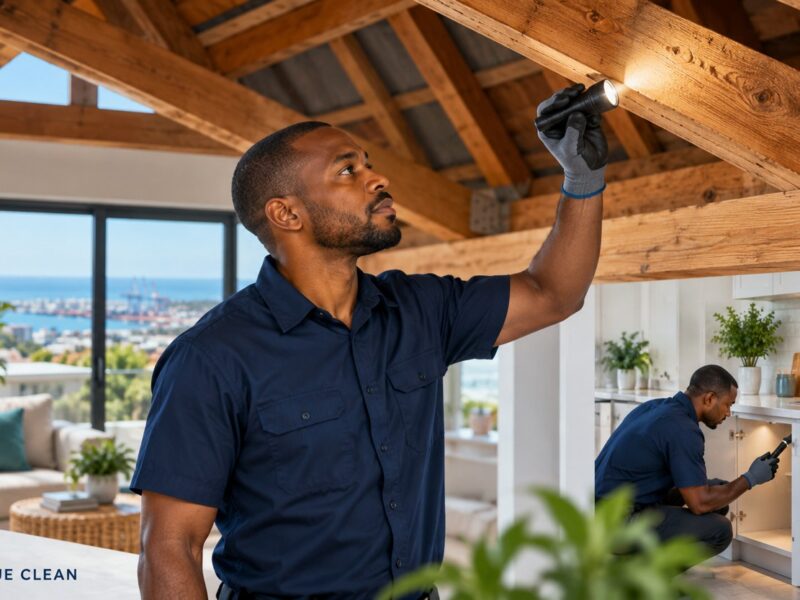
Customer Feedback Highlights True Clean’s Pest-Control Work
Gqeberha - Customer feedback offers a useful starting point for homeowners comparing pest-control companies in Port Elizabeth/Gqeberha. For True Clean, historical customer messages describe both the experience of dealing with the business and what customers noticed after visits. Following an inspection-and-certificate booking, one customer sent the company a recommendation they said they had also shared in a community group: “Just had a wonderful experience with True Clean Can recommend them for pest control and cleaning They really deliver Very happy customer” In another exchange, a customer thanked the team for returning to address continuing activity in a roof. In a later message, the customer described a substantial difference in roof noise, while remaining cautiously optimistic about the result. They also wrote, in Afrikaans: “Maar baie dankie weereens vir julle vriendelike en hoflikke diens.” In English: “But thank you very much again for your friendly and courteous service.” These are individual experiences. They give prospective customers something practical to consider alongside the scope of a service and the work proposed for their property. True Clean’s pest-control work includes cockroaches, ants, bed bugs, fleas and rodents. Its recorded approach to cockroach control starts with inspecting hiding places, including areas behind appliances and inside cupboard cavities. Follow-up visits assess remaining activity and where further attention is needed. The company also offers wood-borer inspections and certificates. Inspections cover timber that can be accessed and visually checked, which may include roof timbers, floors, skirtings and outside buildings. Concealed or inaccessible timber remains a limit on what the inspection can establish. For businesses, pest-control arrangements are assessed according to the site and the problem. Service reports record the pesticides used, quantities and treatment areas, with recommendations discussed …
Track Your Press Release HERE:

The Household Pest Mystery That Starts in the Roof
Gqeberha - Noise in the roof is one reason residents call True Clean about birds. Reports of tiny pests inside the house can be another, says Diederik Visser, whose enquiries sometimes lead from the living space to a nest overhead. The two complaints may reach him in different ways. A resident may have watched birds going through a gap, or be trying to explain what has started appearing indoors. Visser needs to investigate before identifying the pest or deciding on the work. Where birds may be involved, he asks the resident to show him where they enter and leave. Finding that opening helps him locate the nest and assess whether it can be reached. The answer is not always straightforward. A nest can sit beyond practical access. Visser describes situations where the work has to wait until the birds have moved out naturally before an opening can be closed. That changes the conversation with the owner. Locating a nest and being able to deal with it immediately are separate things. The proposed work has to account for what is there and what can be accessed. Then there is the roof itself. One opening may be relatively easy to assess; several possible entry points can make proofing a much larger job. Visser says some roofs have enough gaps for the extent and cost of the work to need a careful discussion. For residents, the most useful preparation is to describe what they have observed: where the noise comes from, where birds have been seen and which rooms have the reported pest activity. If the pest has not been identified, describe what is visible and let the inspection establish what it is. True Clean's bird-control information is available below. The inspection determines how the roof activity and the household complaint fit together, and what can be done next. https://www.trueclean.co.za/pest-control/bird-control/ Media And Customer Enquiries Diederik Visser | True Clean Phone/WhatsApp: 061 905 …
Track Your Press Release HERE:
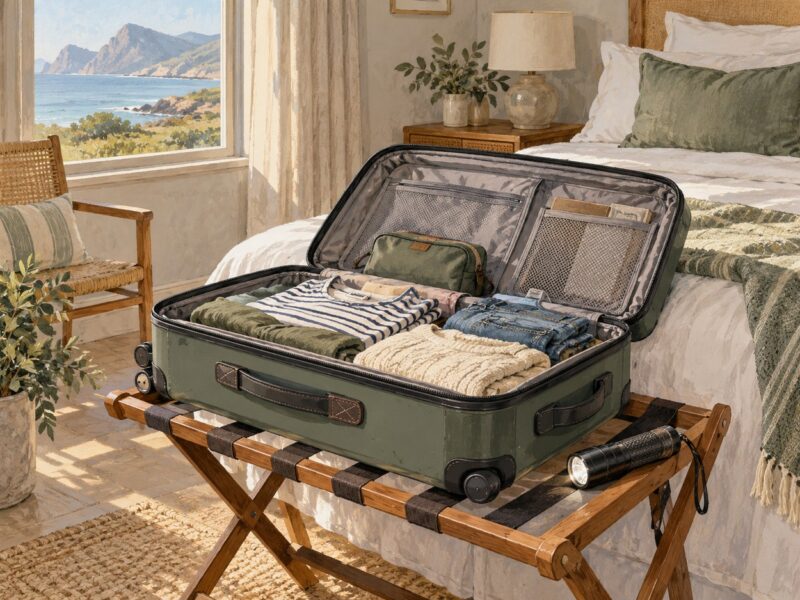
The Holiday Souvenir Nobody Wants: Bed Bugs in the Luggage
Gqeberha - The bags are unpacked and the holiday is over. If a household then calls True Clean about suspected bed bugs, recent travel is one of the things Diederik Visser wants to hear about. In his experience with clients, a weekend or week away is a common backstory. He describes bed bugs arriving home in luggage after a trip. But the history is only part of the enquiry. Visser has also arrived at homes where the caller was certain the problem was bed bugs, and found fleas instead. His inspection starts with places close to the bed: mattress seams, the headboard, behind it and nearby cupboards. He looks for insects, eggs and the marks around their hiding places. A description of bites alone does not settle the identification. The findings help establish which areas need attention and what work to propose. Treatment preparation and any follow-up are then discussed for that home. For anyone making an enquiry after travelling, useful details include when they returned, when the first signs appeared and where those signs have been noticed. Mention any products already used in the room as well. Travel gives Visser a lead to follow. The inspection establishes what he is dealing with. Further information about True Clean's bed-bug service is available below. https://www.trueclean.co.za/pest-control/bed-bugs/ Media And Customer Enquiries Diederik Visser | True Clean Phone/WhatsApp: 061 905 0514 Images: Links: Boilerplate and Editor's Notes. More Info on The Holiday Souvenir Nobody Wants: Bed Bugs In The Luggage here: LinkedIn: https://www.linkedin.com/company/true-clean Facebook: https://web.facebook.com/truecleanpe CLICK HERE to submit your press release to MyPR.co.za. …
Track Your Press Release HERE:
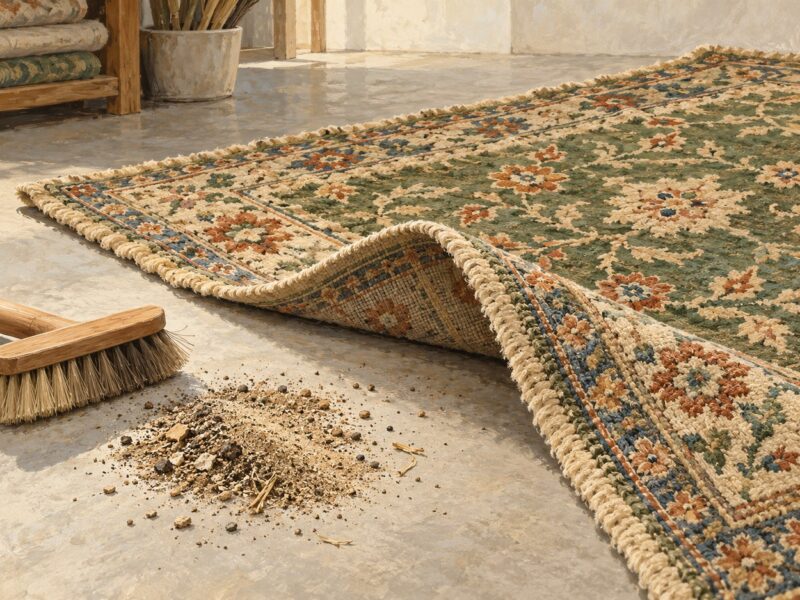
What Comes Out of a Rug Before the Washing Starts?
Gqeberha - Before a rug reaches the washing stage at True Clean, it goes onto a shaker table. Sand and grit are loosened from the base of the rug while it is still dry. A stain is easy to point out when booking a clean. The material worked down into the rug is less obvious. Yet that dry-soil removal is an early part of the process described by the Gqeberha cleaning business. The company's rug-cleaning guidance takes customers through what happens next: vacuuming, pre-spraying with a preparation chosen for the fibre, scrubbing and washing. Rugs in that process are then hung to dry and checked before being returned. There is a reason Diederik Visser pays attention to what comes out before the water goes in. In his recorded explanation of rug dusting, he describes loose material remaining in the rug and dirt moving back towards the surface during drying. The result, he explains, can be the brown marks associated with wicking. It gives homeowners something more specific to ask about than whether a rug will be washed. How is loose soil removed? What is the rug made of? How will the cleaner approach its marks and arrange its drying? Those questions also help explain why a loose rug is a different booking from fitted carpet. True Clean's service guidance describes workshop cleaning, collection and delivery, customer drop-off and collection, and an on-site option for rugs that should remain at the property. The suitable arrangement needs discussing for the rug concerned. Customers can begin with its approximate size and material, where it is used, and any particular marks or odours. A photograph can help explain which rug needs attention. If the material is unknown, say so rather than guessing when requesting a quote. The shaker table offers a look at a stage that is usually over before the customer sees the finished work. A clean-looking surface does not tell the whole story of what has collected underneath it. True Clean sets out its rug-cleaning …
Track Your Press Release HERE:

Desktop Pop-Ups Become the Compliance Channel Email Cannot Deliver
Targeted, trackable alerts on the employee screen deliver 90–95% policy completion in days — and the audit trail regulators now require. Johannesburg, South Africa: Organisations worldwide and across Africa are replacing email and Slack for critical compliance communications with direct-to-desktop pop-up alerts that appear in the employee’s line of sight, remain until acknowledged, and generate an attributable record of who saw which version and when. Emails get buried. Follow-up reminders pile up. Even then, large numbers of messages simply sit until forgotten. SnapComms research indicates only 19% of staff open compliance-related emails, with just 7% clicking through to the content. Average internal email open rates often fall to 20–45% for broad sends, and there is no reliable way to prove who actually engaged. Desktop pop-ups change the equation. Delivered directly onto the screen the employee is already using, they are hard to ignore. When used selectively for policy updates, security protocols, regulatory acknowledgements and other high-stakes items, they produce dramatically higher completion rates and a defensible audit trail. Why Email and Slack Fall Short for Compliance Email was never designed for mandatory, attributable delivery. Messages compete with newsletters, project updates and noise. Slack works well for team collaboration but lacks the forced visibility, mandatory acknowledgement and exportable proof required when an auditor asks for evidence. Both channels leave compliance teams chasing confirmations and reconstructing activity after the fact. Desktop platforms close that gap. Competitors such as SnapComms and DeskAlerts position pop-up alerts as the channel that bypasses the inbox, stays on screen until action is taken, and logs acknowledgement. SnapComms reports desktop alerts achieving high readership (one client recorded 80% message readership and up to 95% delivery for urgent IT communications) and claims the ability to drive toward …
Track Your Press Release HERE:

Reasons Why You Shouldn’t Use Your Company/Brand Name in a Press Release Title
How to make your press release stand out to journalists When using a brand or company name is a good thing How to help readers whilst helping yourself and/or your client MyPR's view is that any release with the company name in the title is immediately seen as an advert whereas a title that solves a problem is the one to aim for to get people's attention, time and action. The core difference between public relations and paid advertising can be seen in the press release title. When a journalist or editor scrolls through hundreds of press release headlines a day, a brand name in the title often acts as an immediate visual flag for "this is a corporate pitch." Here is a detailed breakdown of the arguments against and for including your brand name in a press release title, along with a look at when corporate crises demand it. Why You Should NOT Use Your Brand Name in the Title It Reads Like an Advertisement (Low Editorial Value) Journalists exist to inform, educate, or entertain their readers—not to publish free promotions. A title that reads "Company X Launches New Cloud Platform" immediately feels like a sponsored post or advertorial. Editors automatically filter out self-serving headlines. If the title announces a company accomplishment rather than an industry trend, problem, or news event, it is far more likely to be deleted unread. It Misses the Hook (Problem vs. Brand) Readers and journalists care about solutions, data, and outcomes, not who provided them (at least initially). Weak (Brand-First): "Straton Solar Launches New Solar Inverter for Small Businesses" Strong (Problem-First): "New High-Efficiency Inverters Cut Small Business Power Costs by 30%" SEO and Search Intent Favour the Topic, Not Your Brand Unless your company is a household name (e.g., Apple, Tesla, Google), non-brand keywords carry significantly higher search volume. People search Google for answers to problems ("how to cut load-shedding costs"), not for unknown …
Track Your Press Release HERE:

iCAUR V27 Brings Electric Efficiency and Long-Range Flexibility to Modern SUV Drivers
Built on the brand’s Golden REEV platform, the SUV offers up to 150 km of electric-only range and more than 1,000 km of combined driving range for cost-conscious consumers. The iCAUR V27 uses Golden REEV technology to deliver an electric-first driving experience with lower fuel consumption and reduced operating costs. A 34.3 kWh battery provides up to 150 km of electric-only range, while the full system extends total range to more than 1,000 km. With intelligent energy management and 6 kW V2L capability, the V27 is designed for both everyday practicality and longer-distance flexibility. Amid ongoing volatility in global energy markets and rising fuel prices, consumers are increasingly seeking mobility solutions that balance cost efficiency with flexibility and real-world practicality. This shift is accelerating demand for new energy vehicles that can adapt to diverse driving needs without compromising convenience or performance. iCAUR is responding to this transition with a broader vision for mobility, one that treats energy not simply as a power source, but rather as an integrated system shaping how vehicles perform in everyday life. At the centre of this approach is the iCAUR V27, an SUV built on the brand’s advanced Golden REEV (Range-Extended Electric Vehicle) architecture. Designed to address both daily commuting and long-distance travel, the V27 delivers a balance of electric efficiency and extended range, reducing dependence on charging infrastructure while maintaining a refined, electric-first driving experience. High-efficiency powertrain for lower operating costs The Golden REEV system represents a significant advancement over traditional range-extender technologies. It integrates a 1.5-litre turbocharged petrol engine (with a thermal efficiency of 45.79%), converting each litre of fuel into 3.71 kWh of electricity. This high conversion efficiency enables lower fuel consumption, reducing overall operating costs - particularly …
Track Your Press Release HERE:

True Clean Separates Lawn Spider Problems From Indoor Activity
Gqeberha: A lawn covered in spiders and activity around an indoor ceiling call for different assessments. True Clean is drawing on its customer correspondence and recorded field experience to explain why a spider enquiry needs a location as well as a description of the numbers. The company's historical chats distinguish outdoor walls and garden work from indoor treatment. One exchange separately discusses the lawn after a customer raises the amount of activity there. It is a practical example of why work outside the building needs describing in its own right. In his current published account, Diederik Visser describes extreme lawn jobs involving thousands of spiders. That is an observational description of exceptional jobs, not an insect count or a claim that such numbers are normal in Gqeberha gardens. Indoors, the inspection often has a high and a low part. Cornices near the ceiling and skirtings at floor level are considered alongside sheltered spaces, including behind a refrigerator. Some past jobs have also needed attention to a particularly affected ceiling area. Outside, the assessment looks around the building's base, doors, windows and reachable roof areas. A problem concentrated near those openings is different from widespread activity across a lawn. The distinction affects the proposed scope. True Clean does not automatically include the whole yard because spiders have been reported somewhere on the property. The amount and location of activity, access and permitted product use help determine the work. The company also asks about pets before the appointment. Customers receive instructions for keeping clear during the work and for returning to the particular treated areas. An old outdoor booking's arrangements should not be assumed to apply to a new indoor treatment. For a useful enquiry, residents can explain whether the activity is mainly inside, around the outside walls or out in the garden, and identify the areas where it is …
Track Your Press Release HERE:
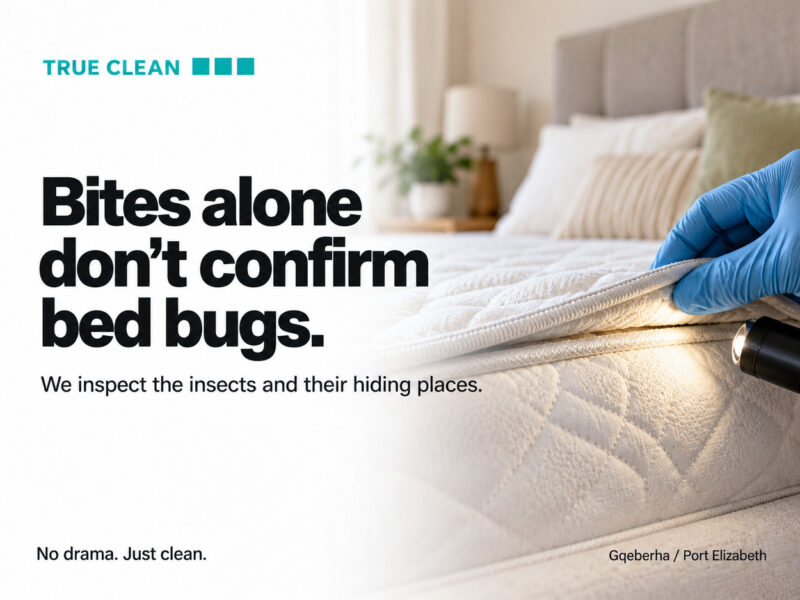
True Clean Explains Why Bed Bug Reports Need Checking
Gqeberha: Six bed-bug-related work descriptions in True Clean's records provide a practical starting point for explaining why a report of bites needs an inspection before treatment is chosen. Four descriptions mention spraying, three mention fogging and one mentions a follow-up. Some descriptions include more than one method or pest, so those figures are not separate treatment totals. They show why the proposed work needs explaining for the particular problem found. True Clean's customer chats contain questions about treating one room, treating the wider property and whether mattress cleaning alone addresses the problem. The company's current guidance resolves the starting point clearly: check what is actually there and assess the affected areas. Diederik Visser reports having attended enquiries described as bed bugs that turned out to be fleas. Bites or spots on bedding can prompt an inspection, but they do not confirm the pest by themselves. His first places to check include mattress seams, the headboard and the space behind it, and bedside cupboards. Looking only at the top of the mattress leaves those nearby hiding places unchecked. The inspection also considers whether activity extends into other rooms. Visible insects and eggs are vacuumed before further treatment. Work then follows the affected hiding places and the surfaces permitted by the selected product. ULV fogging is used on some jobs alongside treatment; it does not replace locating those areas or form an automatic part of every booking. The usual follow-up is one to two weeks after the first treatment. Preparation includes dealing with bedding and laundry as instructed, containing affected items when moving them and checking fabric care instructions before washing or heat drying. Residents should also describe any recent travel when enquiring. Visser's published experience identifies luggage after trips as a recurring introduction route among his customers, rather than a measured …