
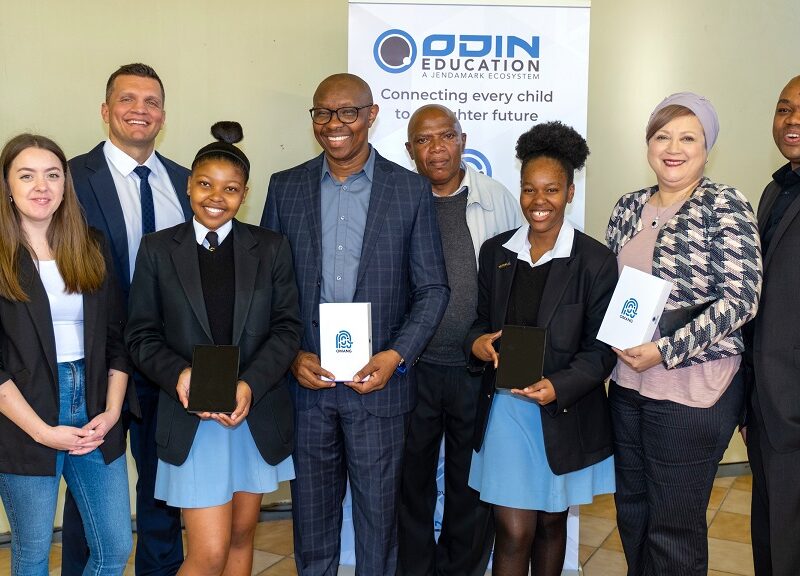
Aveng Trident Steel is helping to build the country’s access to digital education with a million rand investment in locally developed e-learning ecosystem Odin Education. Recently, the company handed over more than 200 dedicated educational technology tablets to the Grade 11 class at Cowan High School in Gqeberha. The sponsorship comes as learners started the second semester countdown towards their critical matric year. New Brighton-based Cowan High School achieved an 87% matric pass rate last year, which the class of 2023 will be hoping to improve upon with the aid of their devices. Currently used by almost 3 000 school learners in six provinces, the tablets are locked for educational purposes only and do not allow distracting social media or entertainment platforms. Each Cowan High learner received their own personalised tablet pre-loaded with mobile data and curriculum-aligned content that matches their subject choices and interests, as well as educational websites and resources to augment the learning process. A live helpdesk, providing access to technical and content support, is included in the ecosystem. According to Odin Education’s business development manager, Dean Gurney, the device will, over time, use artificial intelligence and analytics to learn each pupil’s unique interests and capabilities and push more of this content to their device, allowing them to explore and develop their natural curiosity and creativity. “As an educational technology company, we are driven by the idea that, through education, we can provide each and every child with an ecosystem to better themselves, their communities and wider society,” said Gurney. “We welcome support from forward-thinking partners like the Aveng Trident Steel, who are looking to make a significantly greater social impact.” Aveng Trident Steel’s financial director, Raven Brirajh, said the company was pleased to assist the country’s future leaders with technology that would enable …

Gamtoos farmers buckle under sixth year of stringent water quotas
SUCCESSIVE years of stringent water restrictions on farmers’ drawings from the Kouga Dam are taking their toll in the citrus-rich Gamtoos River Valley, with several commercial farmers having relocated or closing shop over the past 12 months. Last month, the Department of Water and Sanitation announced that the 128 citrus, cash crop and dairy farmers in the valley relying on the Kouga Dam would be permitted to draw just 20% of their usual water allocations from the dam for 2022/3. The dam is currently at 16.6% capacity. While farmers bear a cutback on their full allocations from the Kouga Dam of 80%, the Nelson Mandela Metro’s allocation from the dam is just 35% lower than normal. This means that the Bay’s water allocation for 2022/3 totals 15-million cubic metres, compared with 12-million cubic metres for valley farmers. It is the first time that the city’s allocation from the dam exceeds the farmers’ allocation. “A 20% allocation [for agricultural users] has a devastating effect on the economy of our valley,” said Rienette Colesky, chief executive of the Kouga Dam custodians, Gamtoos Irrigation Board (GIB). “Our emerging farmers have really been struggling and some of them have discontinued farming,” she said, adding: “At least five commercial farmers have left the agricultural industry or relocated to other areas during this past year.” For farmers, it is the sixth successive year of burdensome restrictions. “Last year our income went down by 61%,” said citrus farmer Khaya Katoo, of Threepence Farm. “Our fruit wasn’t a good size and we weren’t able to fetch good prices overseas.” Katoo said the lack of water meant that “we had to completely uproot some of our orchards, something we only intended doing in five years’ time”. “But we had to make the decision now if we wanted to keep going.” The immense pressure on commercial farmers is also felt by emerging farmers. Few of the emerging farmers farm independently. Many partner with larger …
Track Your Press Release HERE:

South Africa’s newest recycling champions announced
NINE individuals and organisations have been recognised for their innovative and impactful work in recycling, an expanding industry that is creating employment while cleaning up urban and rural landscapes. The sector is attracting a growing number of “wastepreneurs” – including waste pickers and buy-back centre entrepreneurs – who play a valuable role in diverting waste out of rapidly filling landfills and into the circular economy. Honouring these efforts is the PET Recycling Company NPC (PETCO), which announced its latest award winners at its annual general meeting on June 7. The winners have also been captured in an online documentary series hosted by actress Lindiwe Dim and directed by acclaimed actor and filmmaker, Louw Venter. The series to be aired in July, was produced by Pretty Neat, with creative direction by Livio Tronchin of Derrick Agency. Jointly recognised as winners in the Best Community Recycling Initiative category were Litter4tokens and Umphakathi Recyclers. [see full list of winners below, or watch their interviews on YouTube by clicking here] “For us, it’s about understanding that your waste has an alternative use. It doesn't have to go to landfill, it doesn't have to be dumped and it doesn't have to fill the environment,” said Sue Benningfield, the Litter4tokens area manager for KwaDukuza in KwaZulu-Natal. The organisation, with branches around the country, gives collectors tokens which they can redeem for household necessities and food in return for every bag of recyclable materials they bring in. About 1 230 families benefit from the programme each month. Umphakathi Recyclers in Soweto, recognised for using recycling to stimulate innovation, enables community members to bring in recyclables in cumulative exchange for items that will provide their loved ones with a dignified burial. The initiative employs six people while the burial scheme covers 438 households. Founder Smanga Mthembu believes waste only becomes trash when …
Track Your Press Release HERE:
Over 2 billion plastic bottles recovered for recycling in SA
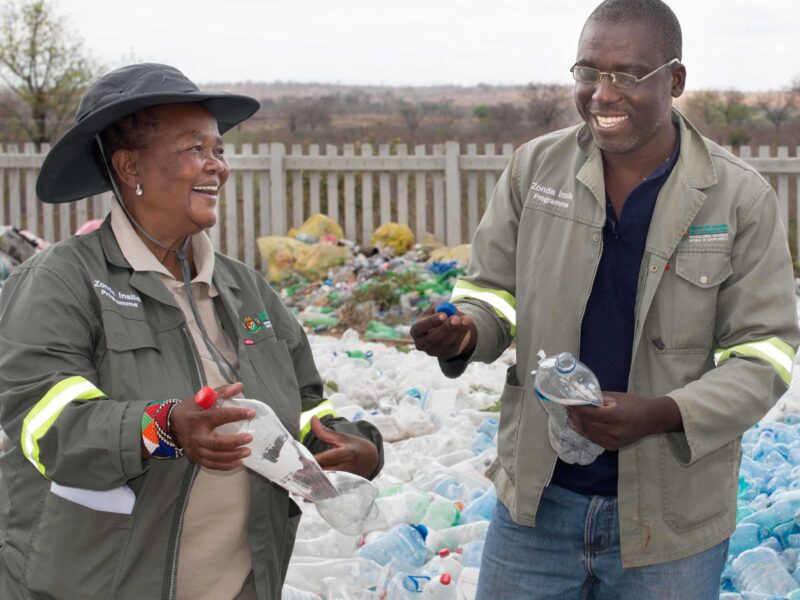
STATISTICS from South Africa’s longest-standing plastics producer responsibility organisation indicate that the country’s PET plastic recycling rates are recovering after the lockdown regulations resulting from the Covid-19 pandemic. According to figures released at the PET Recycling Company’s (PETCO) annual general meeting in June, 2.1 billion PET bottles were diverted from landfill last year thanks to the various recycling efforts in which it was involved. On the back of waste management experts warning that parts of South Africa could soon run out of landfill space, CEO Cheri Scholtz said PETCO’s efforts had saved an area equivalent to 560 495 cubic metres and prevented potential associated carbon emissions of 135 604 tonnes in 2021. Despite a challenging year for the paper and packaging sector, PETCO, which represents producers of polyethylene terephthalate (PET) packaging, grew its collection of post-consumer PET bottles for recycling by 14% – from 79 078 tonnes in 2020 to 90 402 tonnes in 2021. “In spite of the impact of prolonged Covid-19 lockdowns and curfews on collection rates, which restricted the movement of informal collectors, 63% of PET packaging that was placed on the market by PETCO members was collected for recycling in 2021,” Scholtz said. “Once lockdown regulations eased, PETCO made a concerted effort to stimulate collection by supporting informal waste pickers and formal collection businesses, buy-back centres, and recyclers, and encouraging them to grow capacity and capability.” With mandatory Extended Producer Responsibility (EPR) regulations laying down Year 1 targets for PET of 60% for beverage bottles, 7% for oil bottles, 9% for thermoforms and 60% for single-use products, she said the current collection rate places PETCO in good stead to meet these targets. “Although these targets are applicable for year one of mandatory EPR, comparatively speaking, these figures would indicate that we are well placed to be compliant …
Track Your Press Release HERE:

First primary school embraces SA-born ed-tech solution
A Thembisa-based primary school has become the first in the country to embrace the e-learning platform specifically developed for pupils in South Africa by local ed-tech business, Odin Education. Coinciding with National Youth Month celebrations, the full Grade 5 cohort of Phuthumani Primary School received their new Omang e-learning devices, which were sponsored by Sage Foundation, in partnership with the Attacq Foundation. This sponsorship represents a three-year commitment to equipping 196 learners with the digital learning tools they need to progress successfully through to Grade 7. It forms part of a holistic programme of support for the school, which has already included building three new classrooms, and the donation of 125 pairs of school shoes and uniforms. The renovation of 10 classrooms is currently underway, with a measurement and evaluation project also implemented to track the overall impact on the school and surrounding community. Currently used by more than 2 500 high school learners from 12 schools in five provinces, the Omang ed-tech tablets will be a welcome addition to the academic arsenal of the Phuthumani Primary pupils as they undertake the mid-year examinations. According to Phuthumani Primary deputy principal Thando Mbelwa, most of the school’s 1 400 learners hail from poverty-stricken families and rely on the national school nutrition programme for one nutritious daily meal. “I am passionate about using ICT [information and communications technology] to enhance education. Technology plays a big role in teaching and we are currently far behind,” said Mbelwa. He said both learners and teachers were excited to receive their Omang devices as the system would allow teachers to share essential resources like educational videos and learners to do more of their own research. Each learner received a personalised device pre-loaded with mobile data, curriculum-aligned content, educational apps and learning platforms. Over time, …
Track Your Press Release HERE:
Recycling pilot project provides insights into SA’s informal sector
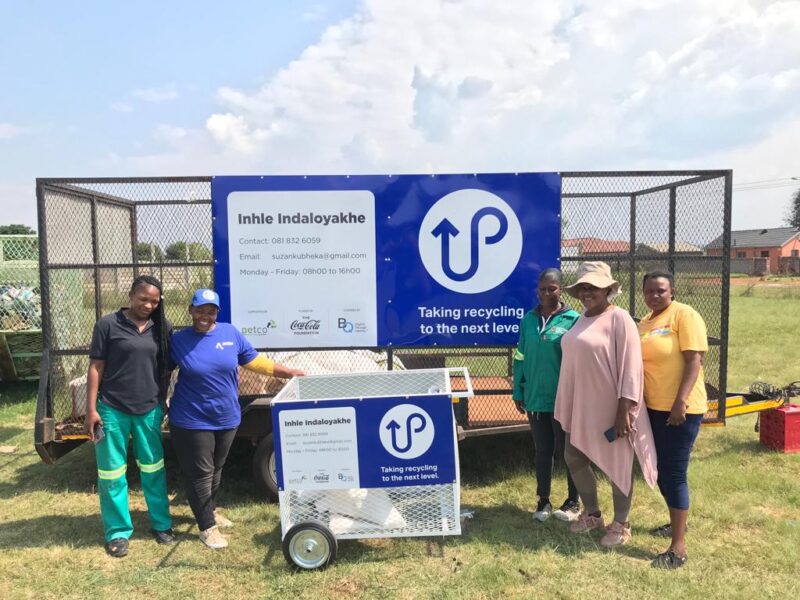
AN innovative pilot project being trialled at recycling buy-back centres across South Africa is yielding positive results just over a year in, helping grassroots businesses integrate into the formalised waste recycling sector. Project Up, an initiative of the PET Recycling Company (PETCO) with funding support from The Coca-Cola Foundation, uses BanQu blockchain technology to digitise and record transactions between the buy-back centres and waste pickers. For the first time, buy-back centres are able to digitally track the sorts of materials coming in and the value of those materials to their businesses, while waste pickers, for their part, have digital proof of the revenue they receive for the recyclate they sell. Interim data indicates that the introduction of the technology is not only helping to integrate the informal recycling sector with the formal recycling sector, but is also helping grow the volumes of recyclable plastics and other materials purchased by the buy-back centres. “I thought the app would be a lot of work, but it makes things much more efficient with regard to data capturing, and the ins and outs and operations of my business, which I think is more important than anything,” said Refilwe Ramadikela, chief executive of Hendrina Recycling in Mpumalanga. Through the use of the blockchain, South Africa is building a national digital record of recyclables which are collected by waste pickers and sold to buy-back centres, who in turn sell the materials to recycling companies. By providing a permanent record, buy-back centres give waste pickers digital – and legitimate – proof of the revenue they receive for the recyclate they sell, while buy-back centres benefit from detailed data on the kinds of materials they receive and the value of those materials to their businesses. This knowledge enables them to pinpoint potential new recycling streams to focus on to grow their revenue. “It allows us to have longevity because we know how to read …
Track Your Press Release HERE:

Gamtoos Valley programme helps shape future farmers
Nine young people from Hankey and Patensie graduate after 12-month internship in plant management and production NINE young people from Hankey and Patensie are well on their way to making a significant contribution to the Eastern Cape agricultural sector after completing a one-year internship in plant management. The programme, aimed at growing local farming talent, is a partnership between the Gamtoos Irrigation Board (GIB), local farmers and service provider, Ethics and Leadership Institute(ELI), whose singular purpose is the development of the agriculture sector in Africa. So successful has the programme been that already three of the nine students who graduated in February either have been permanently placed at farms or with GIB itself. During the 12-month course, the students gained a holistic understanding of plant-based commercial production rooted in expert guidance from local farmers. Both theoretical and practical aspects were covered, with the result that the graduates now have a firm grasp of what is required to manage farms effectively. All costs and coordination of programme activities were borne by GIB, with students receiving a monthly stipend for the duration of their training. GIB programme facilitator Nomazizi Tube said the students exceeded expectations. “At the beginning of the programme in March last year, the students assured us they would finish the course, and they were true to their word. They are very excited,” Tube said. For Tube, the programme has great value in that such opportunities are rare in the Patensie and Hankey areas. “Most young people usually only qualify as general farm workers, but the learnership has allowed them to look beyond that to become farm managers and owners themselves. “By working with managers at the farms they were allocated to, they were able to experience the different categories of farms and farming. “While our region is known for citrus, the students did not only work on …
Track Your Press Release HERE:
Conference calls for Pan-African response to plastic waste crisis
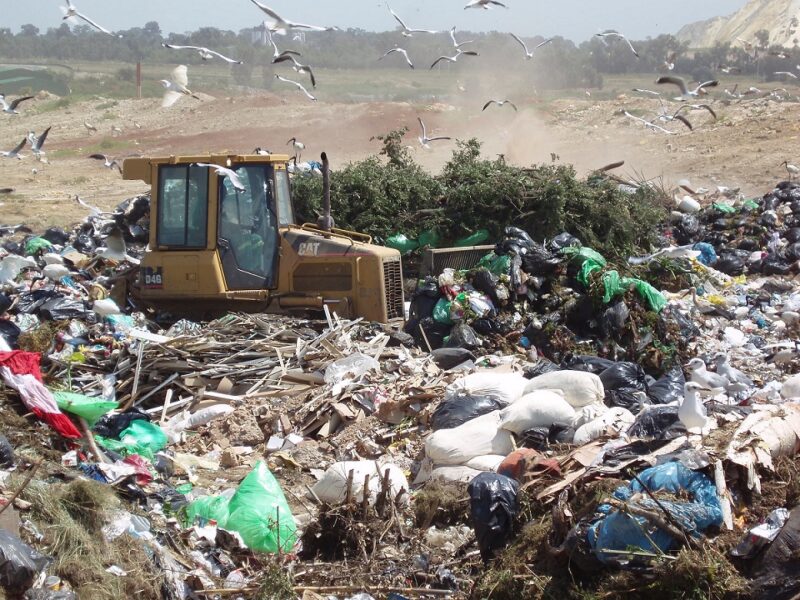
ADDRESSING Africa’s growing plastic pollution problem requires an urgent and comprehensive systems response by governments, businesses, sustainability experts, and civil society if countries are to avoid drowning in a sea of plastic waste, while also unlocking the economic benefits of proper waste management. This is the goal of the pan-African “Towards Zero Plastics to the Seas of Africa” conference (May 23-27), which is set to bring together top decision-makers across the plastics value chain, public and private sectors to formulate concrete action plans for Africa’s 54 continental and island states. Hosted by the Sustainable Seas Trust’s African Marine Waste Network in Nelson Mandela Bay, South Africa, the five-day conference is an outcomes-oriented event, where delegates will have the opportunity to contribute to a clear decision-making framework for the management of plastics. The Guide to the Development of National and Regional Action Plans is intended for publication by October this year. This pan-African conference comes in the wake of the UN Environmental Assembly’s (UNEA) resolution to develop a legally binding global treaty on plastic waste by 2024. “As the second most polluted continent, it’s important for us to take proactive steps and find uniquely African solutions for our own challenges,” said Dr Tony Ribbink, founding trustee and current CEO of Sustainable Seas Trust, and director of its African Marine Waste Network programme. No single-solution strategy “Strategies that work in other parts of the world don’t necessarily apply to Africa,” Ribbink said. “The draft decision-making framework also recognises that all African countries are not the same and that, for example, investing in recycling plants may not make economic sense for some island states or smaller, landlocked countries. “The developing guidebook spells out the alternatives and actions that need to be taken at every step of the value chain.” Ribbink said …
Track Your Press Release HERE:
New EPR legislation is a benefit, not a burden, one of Africa’s largest PET recyclers explains
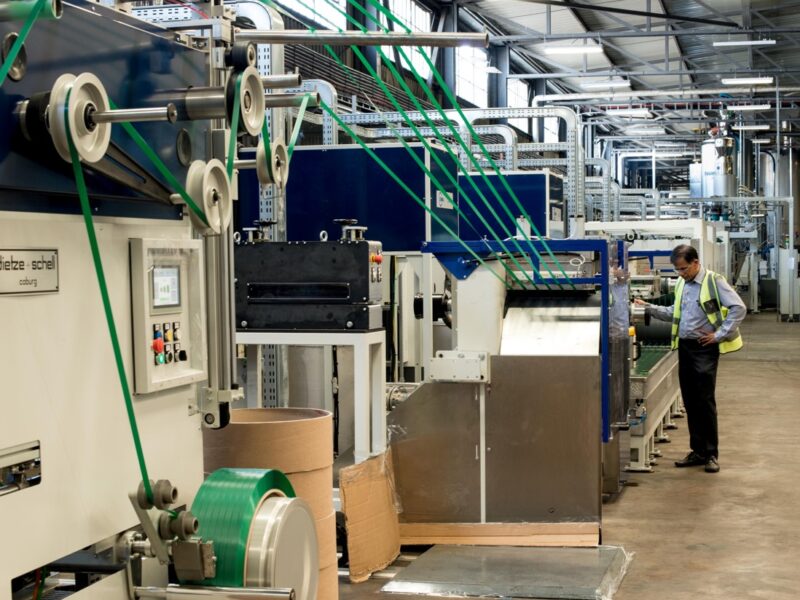
As companies navigate the new mandatory extended producer responsibility (EPR) landscape, a leading recycler in the plastics value chain has revealed the unexpected ease in managing its new reporting and compliance requirements as a producer. One of the biggest recyclers of PET plastic bottles on the African continent, Extrupet, has been guided in its journey by long-standing producer responsibility organisation PETCO. At the same time – and in a first for South Africa – Extrupet is helping its long-time partner to develop an additional end-use market for recycled PET (rPET) in the manufacture of rPET industrial strapping. Plastic strapping is used extensively to secure unstable goods during transit. From a circular economy perspective, both PET bottles and PET strapping can be diverted from landfill, and economically recovered and recycled into new products, without compromising the quality of the end product. As a manufacturer of strapping, Extrupet, like other packaging producers, is now obligated to either join an existing producer responsibility organisation (PRO), start a new PRO or run an individual compliance scheme, as part of the National Environmental Management Waste Act (NEMWA) Section 18 mandatory EPR regulations, which came into effect on November 5 last year. Extrupet is currently the only strapping producer registered to meet its mandatory EPR obligations with the Department of Forestry, Fisheries and the Environment. In terms of the regulations, producers must take practical and financial responsibility for the full lifecycle of their products. This means designing packaging with recyclability and circularity in mind and also including more recycled content in their products. “Many companies are still importing rPET strapping, so closing the loop locally provides another high-value end-use for rPET, aside from bottle-to-bottle recycling, or turning it into polyester staple fibre,” said Extrupet joint managing director Chandru …
Track Your Press Release HERE:
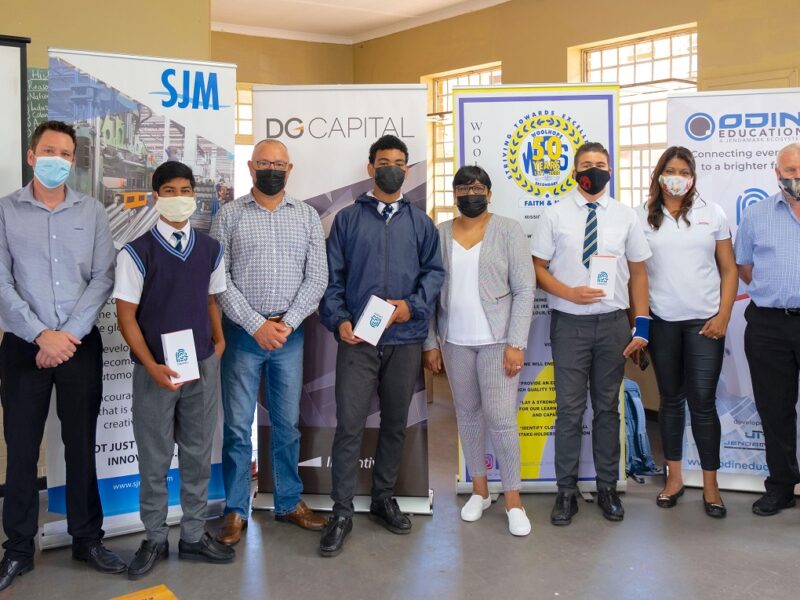
Pupils get e-learning boost for the new school year
Ed-tech support for pupils provides critical assistance after turbulent two years Over 2,000 pupils in the Eastern Cape, Limpopo, KwaZulu-Natal and Free State – many of them underprivileged – have been given a kickstart to the new school year thanks to a cutting-edge, South African-developed e-learning system. The next province lined up to receive the unique e-learning system – which is being distributed privately through corporate social investment initiatives – is the Western Cape. Developed by ed-tech business Odin Education, a division of Jendamark Automation, the system comprises a locked digital tablet that can only be used for educational purposes, curriculum-aligned content personalised for each user, and full-time online support. The aim of the system is to supplement in-person schooling. Loaded with mobile data, leading educational apps and learning platforms, and tailored to each pupil’s subject choices, the device also gathers information from its user’s interactions and serves them more of the academic and extramural content in which they are interested. Some 215 Grade 12 pupils at Gqeberha’s Woolhope Secondary School recently (January 25) received their digital devices, thanks to a sponsorship by SJM Flex, DG Capital and Rockwell Automation. Speaking at the handover event, Woolhope principal AJ Jaram said Odin Education’s ed-tech system helped equip pupils for the Fourth Industrial Revolution, which was changing the way the world lived and worked. “This is magic,” Jaram said, in reference to the digital device. “I know that if this is used effectively, every pupil who has one will benefit.” Student leader Beyonce Jacobs, who, together with some of her classmates, had the opportunity to trial the Odin Education system in the latter part of the disrupted 2021 school year, described the experience as “amazing” and said it helped deliver a 100% pass rate for her Grade 11 class. Jacobs said she and her fellow pupils felt the …